Loading, please wait...

Use mousewheel to zoom in and out, click to enlarge

Details

LOT 0593

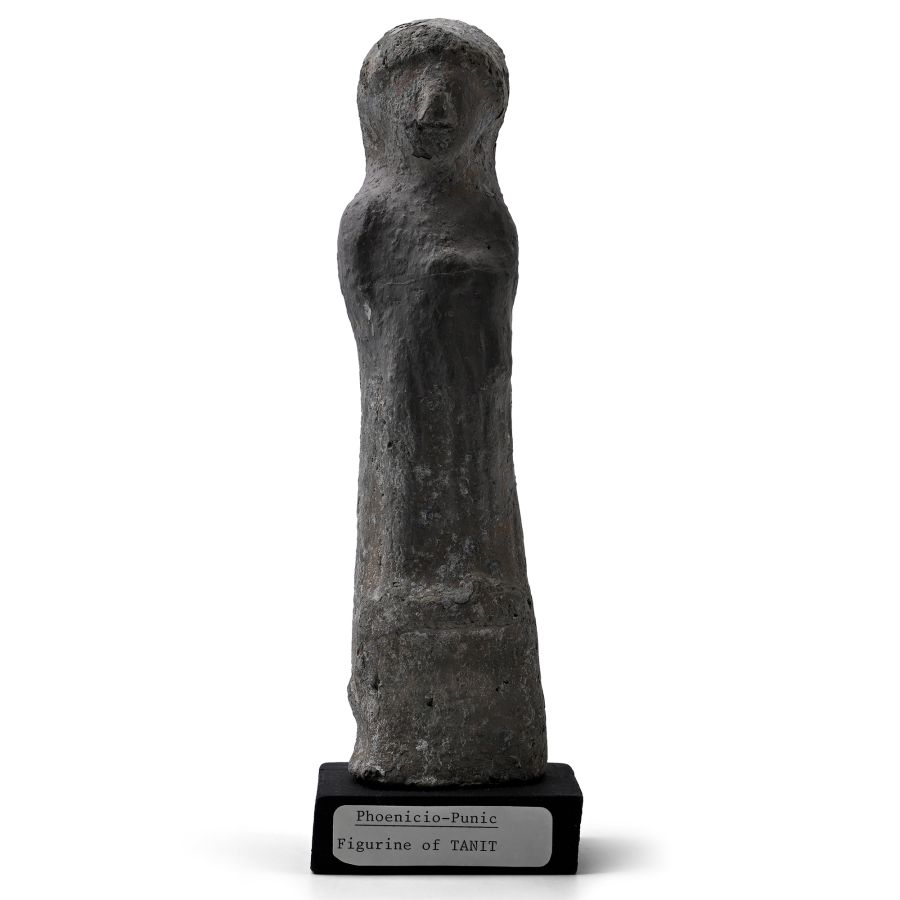
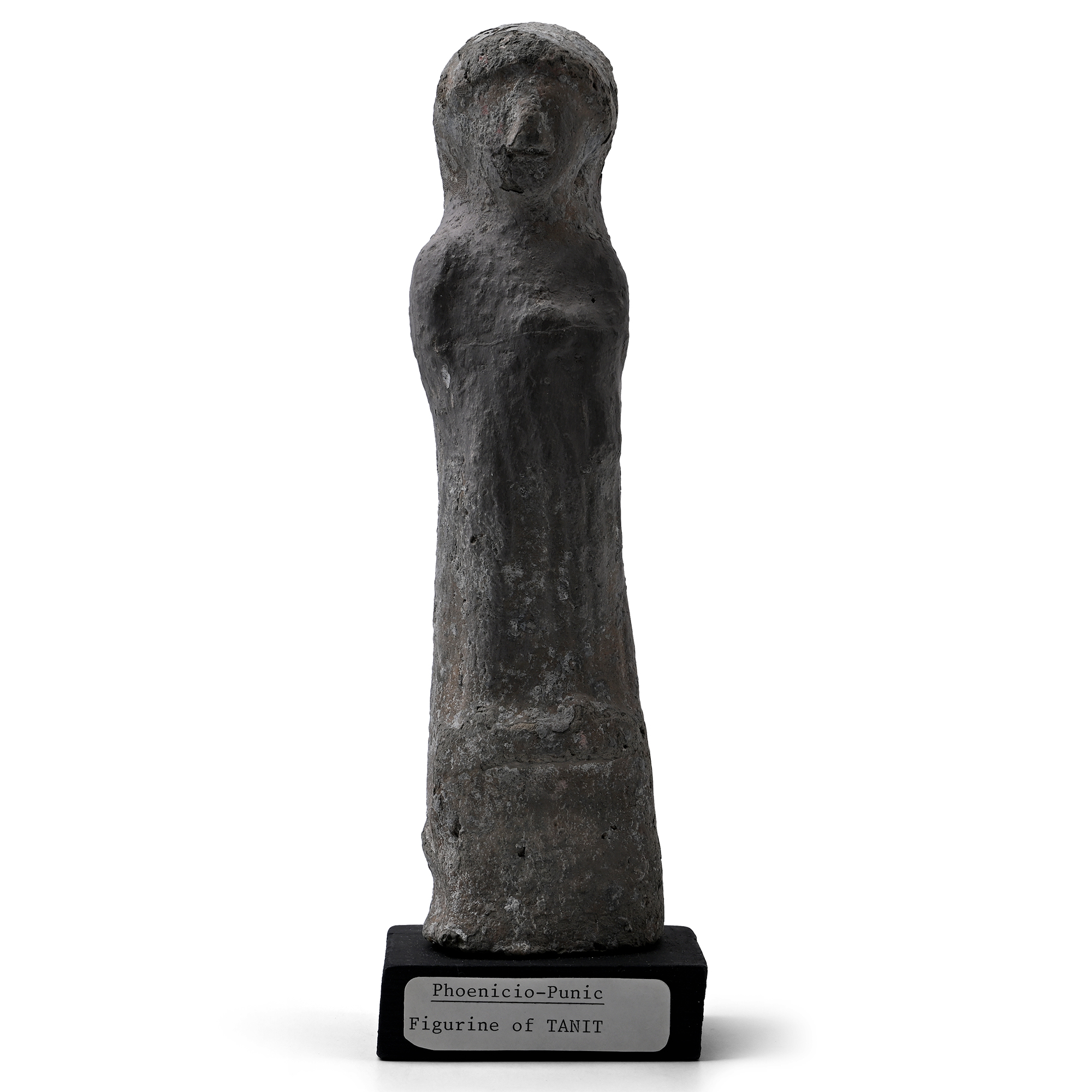
Phoenicio-Punic Terracotta Goddess Tanit Figure

LATE 1ST MILLENNIUM B.C.

7 1/2 in. (275 grams, 19.2 cm).

Modelled in the round, wearing a long dress and a veil, standing on a pedestal with her arms raised at her chest; mounted on a custom-made display stand with an old collector's sticker. [No Reserve]

Provenance

From the private collection of Mr Brian Edwards, New Malden, Surrey, UK, formed from the late 1970s-early 1980s; thence by descent.

Accompanied by a collector's data information card with collection reference no.113.

CONDITION

VETTING:

TimeLine Auctions follows a vetting process to ensure the authenticity and legality of all items, reinforcing our commitment to integrity and responsible trading. Each antiquity, antique, and coin lot undergoes thorough examination by a vetting committee of at least ten external specialists, professional trade association members, scientists, and archaeologists: Our Vetting Process


AUCTIONS:

TimeLine is a leading auction house specialising in antiquities, ancient art, collectables, natural history, coins, medals, and books. Our auctions offer museums, collectors, historians, and enthusiasts the opportunity to acquire unique and historically significant pieces.

LOT 0593

Phoenicio-Punic Terracotta Goddess Tanit Figure

Sold for (Inc. bp): £208

Print page

RELATED LOTS

  • Scythian Gold Ibex Plaque Pair
    Scythian Gold Ibex Plaque Pair
    Circa 7th century B.C.

    Estimate: £7,000 - 9,000 (+bp*)

    Current Winning Bid: £3,500

    Each a profile ibex with head reversed, horn returned to attach at the neck, pellet eye, beaded ring-and-dot motif to the shoulder and hip; thick attachment loop to the reverse. 15.6 grams total, 34-34.2 mm


    Acquired in the 1980s. Private collection, London, UK. Accompanied by an academic report by Dr Raffaele D'Amato. This lot has been checked against the Interpol Database of stolen works of art and is accompanied by search certificate number no.13253-252971.

    It is possible to hypothesise that these two elements were bridle plaques, like the two wolf-shaped bridle plaques, in a similar position and style, found in the Kurgan of Pazyrik (Piotrowskij, 1987, p.107, no.137). Belt plaques with zoomorphic motifs illustrate not only the recognised unity of the zoomorphic art of the Steppes, but also the links between the Scythians and the eastern nomadic groups.

    Lot Details

  • Greek Terracotta Head of an Actor Vase
    Greek Terracotta Head of an Actor Vase
    Circa 4th century B.C.

    Sold for (Inc. bp): £2,730

    An expressive polychrome vase formed as the head of an actor wearing rosette earrings, open mouth and applied pupils, short neck with everted rim above and a small strap handle to the rear. 69.3 grams, 75 mm


    Ex Louis-Gabriel Bellon, France, (1819-1899). with Galerie Rhéa, Zurich, Switzerland. This lot has been checked against the Interpol Database of stolen works of art and is accompanied by a search certificate number no.12667-236389.

    In Greek theatre, actors wore masks made from materials like linen and leather, which amplified expressions and helped actors take on multiple roles within a single play. Aristotle, in his Poetics, highlighted the importance of masks in conveying emotion and character, especially in large outdoor theatres. This terracotta, representing the satirical mask of a woman, with its lively and expressive features, would have brought both humour and recognisable character traits to the stage, engaging audiences with the playful spirit of Greek comedy.

    Lot Details

  • Phoenician Terracotta Bulla with a Dolphin
    Phoenician Terracotta Bulla with a Dolphin
    5th century B.C.

    Estimate: £120 - 170 (‡+bp*)

    Current Winning Bid: £67

    Plano-convex in profile with impressed dolphin and legend. 1.05 grams, 17.71 mm


    Acquired in 1994. Private collection, Switzerland, thence by descent. Private collection, since the late 1990s.

    This Phoenician terracotta bulla, decorated with a dolphin, reflects the strong maritime identity of the Phoenician world. Bullae were typically used to seal documents or goods, serving both a practical and symbolic function in trade and administration. The dolphin, a creature closely associated with the sea, would have held particular meaning for the Phoenicians, whose culture and prosperity were deeply tied to seafaring and commerce across the Mediterranean. Often seen as a symbol of protection, guidance, and safe passage, the dolphin adds an additional layer of meaning to the object, suggesting not only its use in everyday transactions but also a connection to the wider beliefs and environment of the ancient coastal world.

    Lot Details

Stay up-to-date with the latest from TimeLine Auctions by joining our mailing list