
Loading, please wait...
LOT 0468
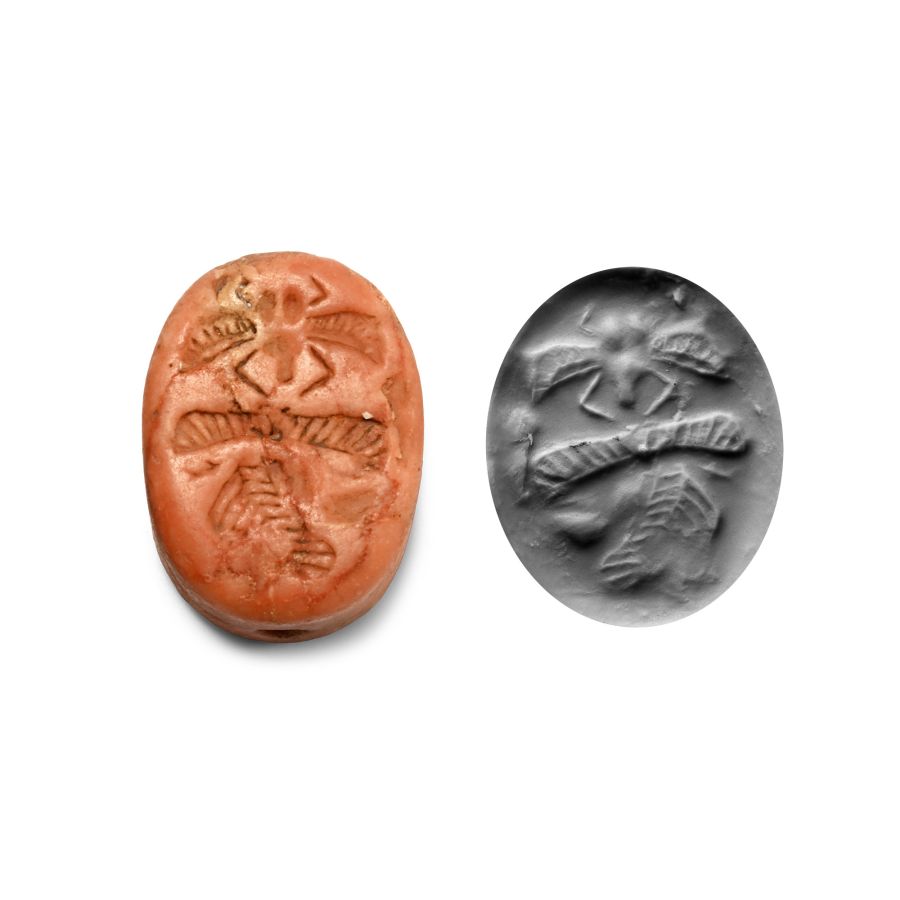
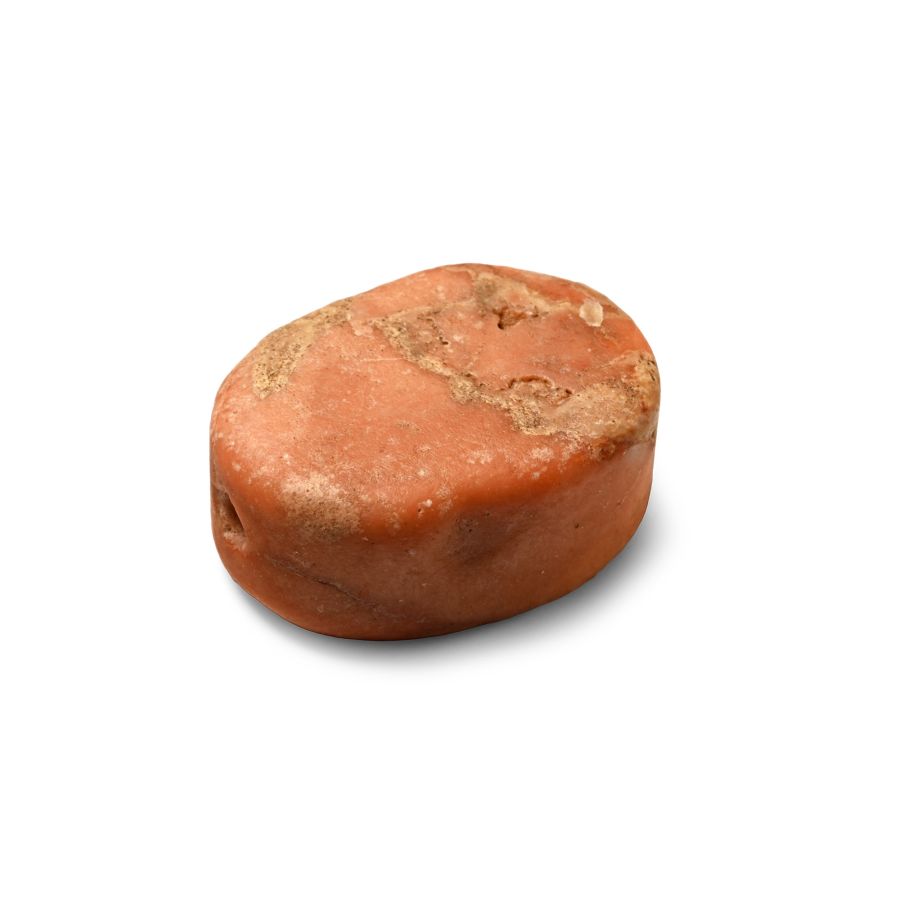
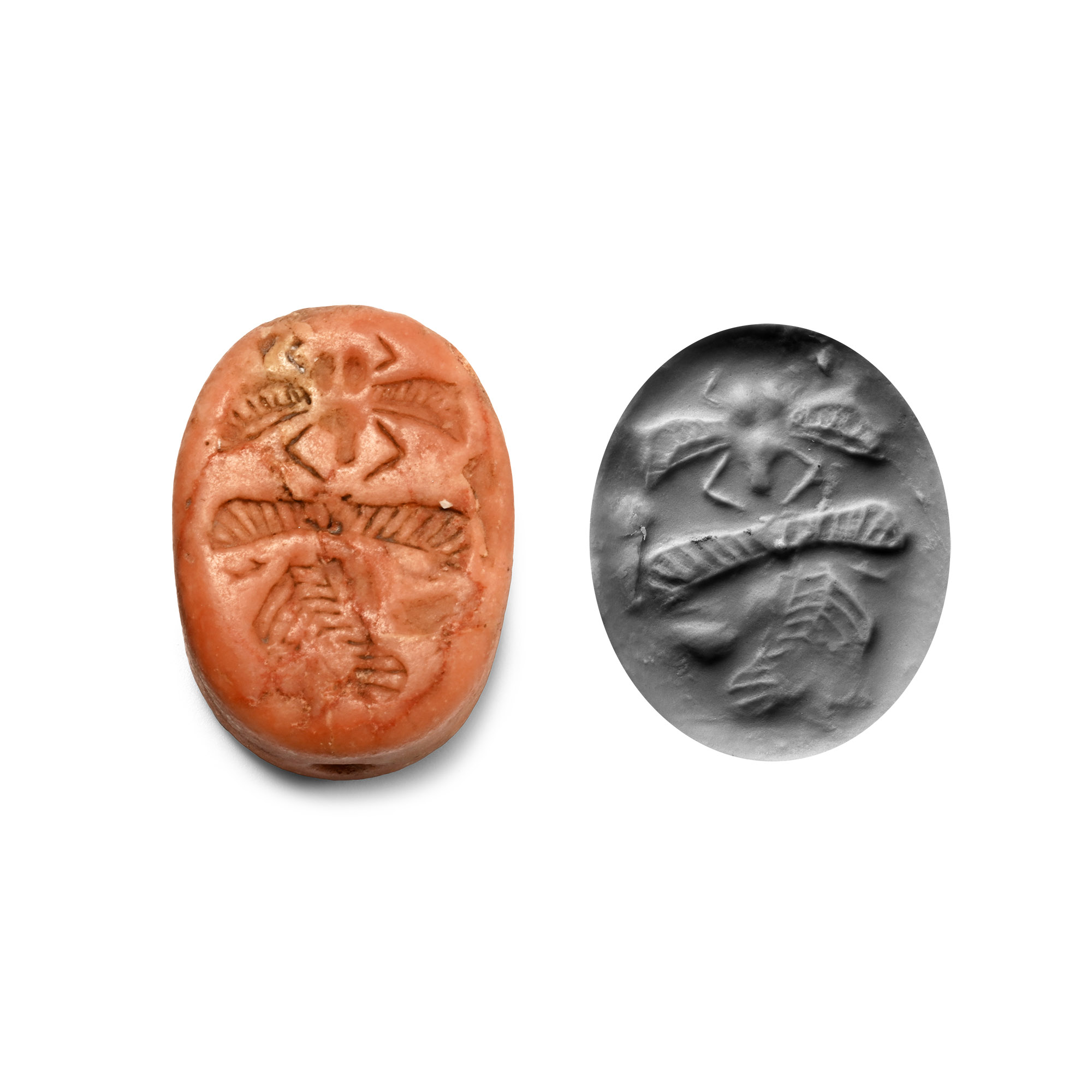
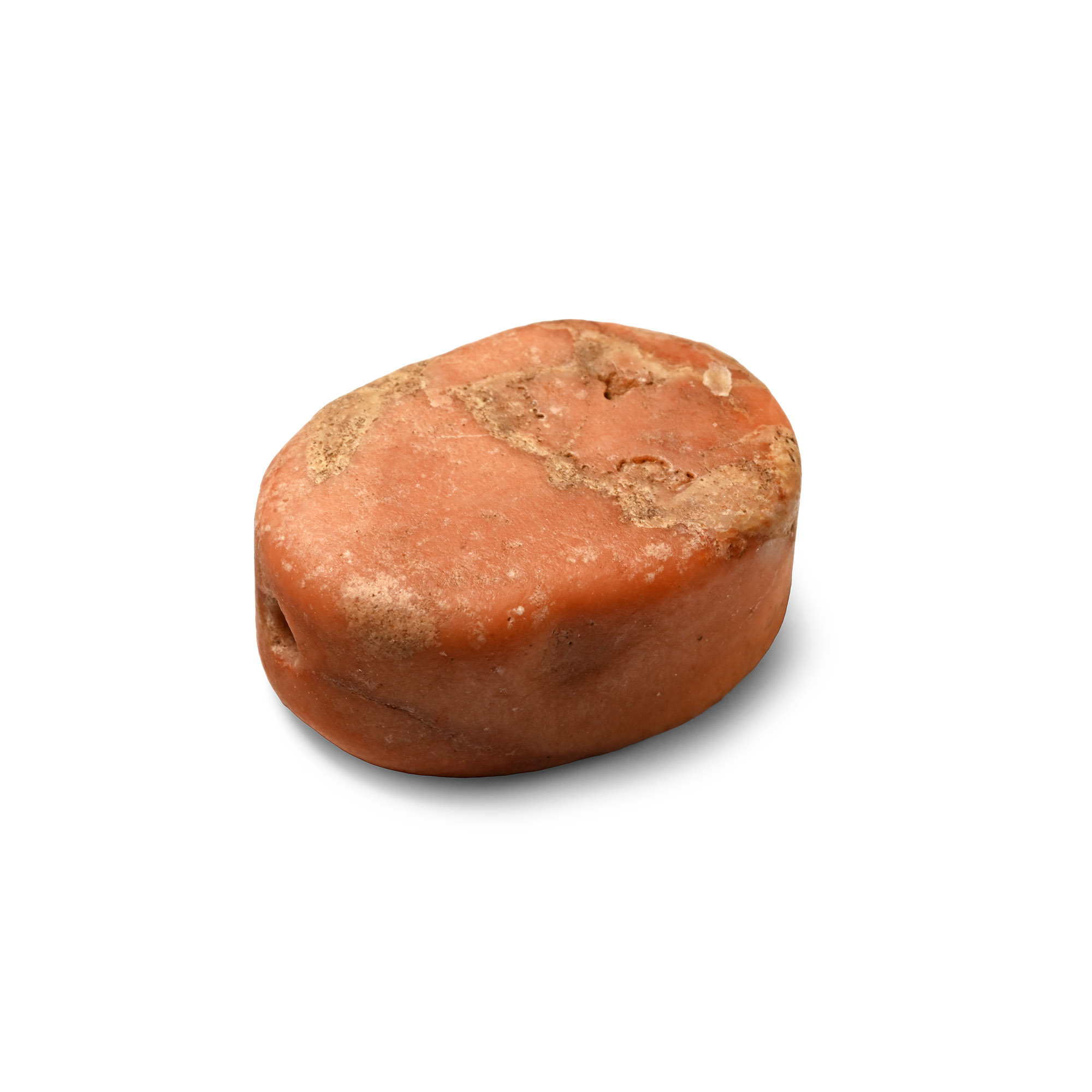
Phoenicio-Egyptian Orange Stone Scaraboid
1ST MILLENNIUM B.C.
1 in. (13 grams, 27 mm).
Ellipsoid in plan with frieze comprising a large Maat feather, a winged sun disc, and a winged Khepri beetle.
ProvenanceEx collection of the late Mr S. M., London, UK, 1970-1990s.
LiteratureCf. Ben-Tor, D., The Scarab: A Reflection of Ancient Egypt, Tel Aviv, 1993, p. 81, no. 28, for a scarab that employs multiple similar winged motifs.
CONDITIONTimeLine Auctions follows a vetting process to ensure the authenticity and legality of all items, reinforcing our commitment to integrity and responsible trading. Each antiquity, antique, and coin lot undergoes thorough examination by a vetting committee of at least ten external specialists, professional trade association members, scientists, and archaeologists: Our Vetting Process
AUCTIONS:
TimeLine is a leading auction house specialising in antiquities, ancient art, collectables, natural history, coins, medals, and books. Our auctions offer museums, collectors, historians, and enthusiasts the opportunity to acquire unique and historically significant pieces.
LOT 0468
Phoenicio-Egyptian Orange Stone Scaraboid
Estimate £350 - 450€410 - 520 (for guidance only)$470 - 610 (for guidance only)
-
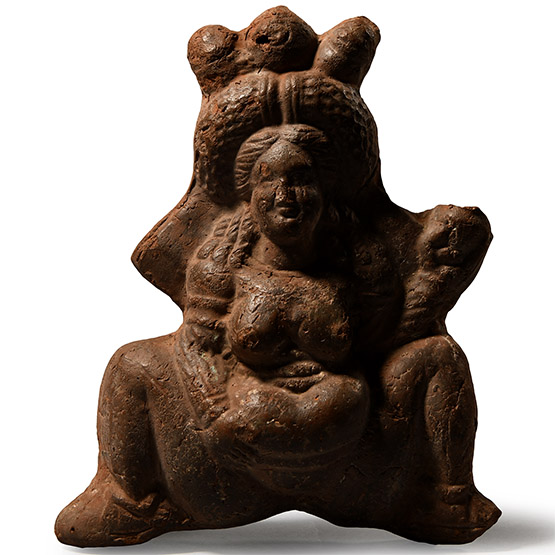
Large Romano-Egyptian Terracotta Figure of Baubo
Ptolemaic Period, 332-30 B.C.Estimate: £800 - 1,000 (+bp*)
Opening Bid: £400
Modelled as a seated plump female figure; the right hand touching the pubic area beneath the rounded abdomen, wearing a tall headdress of thick braids, falling on her shoulders, smooth back with a vent hole; chipped at left foot and arm. 373 grams, 15.5 cm
with Superior Galleries, Los Angeles, USA. Ex Dr W. Benson Harer, Los Angeles, USA, March 1985.
Baubo was a minor divinity of the Greek mythology, linked to the cult of Demeter and Persephone. The statuette belongs to the second type of Baubo figurines, widespread in the last Ptolemaic and Roman period in Egypt. The Egyptian Baubo figures are split into two groups, and this one belongs to the first group depicting a woman seating frontally whilst holding a musical instrument. In some of these figurines her right hand is touching her genitalia. Many of them were used as amulets or as ex-voto. -
.jpg)
Egyptian Steatite Fish Amulet with Horse
New Kingdom, 1550-1070 B.C.Sold for (Inc. bp): £130
A bifacial rectangular amulet with incised fish in profile to the obverse, a standing horse to the reverse; drilled for suspension. 3.04 grams, 20 mm
Ex Constable collection, 1990s. Ex P. Morris collection. Accompanied by an old photograph dated 'London 1997'.
This amulet depicts a ‘Tilapia nilotica’ or ‘bolti’, a prevalent fish species found in the Nile. Not only was it esteemed for its delicious taste, but it was also regarded as a symbol of rebirth and resurrection due to its unique ability to carry its eggs in its mouth, symbolising self-creation. -
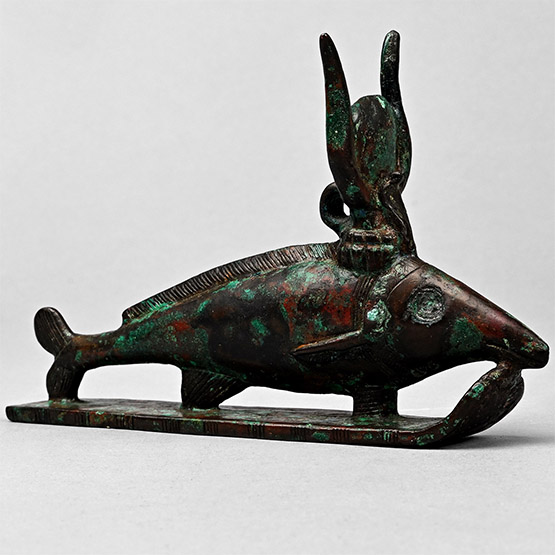
Very Large Egyptian Bronze Oxyrhynchus Fish of Per-Medjed with Hieroglyphic Inscription
Late-Ptolemaic Period, 664-30 B.C.Estimate: £4,500 - 6,500 (‡+bp*)
Opening Bid: £2,222
Modelled in the round on a sledge attached by ventral and pectoral fins, a forked tail, a dorsal ridge, and a tapering nose, featuring recessed circular eyes filled with enamel, a horned sun disc headdress fronted by a uraeus, and a suspension loop behind; a few hieroglyphs of a dedication remain visible on the underside of the sledge, which may be interpreted as ‘….the great give life (to)…’ (…t wr rdi͗ Ꜥnḫ t….); presumably, 'the great' followed the name of a deity, now lost. 585 grams, 17 cm
Acquired from Gallery Reiner, Paris, France, 1981. Private collection, Europe. Accompanied by a copy of French passport no.150583 dated 29 November 2013. This lot has been checked against the Interpol Database of stolen works of art and is accompanied by a search certificate number no.12375-226676.
The Medjed, a type of elephant-snout fish (Mormyrus kannume), was revered in ancient Egyptian religion, particularly in Per-Medjed, better known by its Greek name, Oxyrhynchus Polis. This version of the name, meaning "city of the sharp-nosed," reflects the fish's distinctive appearance as depicted in Egyptian art. These fish were believed to have consumed the penis of Osiris, the god who was dismembered and scattered by his brother Seth. As sacred creatures, figurines of the Medjed were often adorned with a horned sun-disc headdress worn by the goddesses Hathor and Isis, suggesting a close association with both. Some figurines, like this example, featured suspension loops, allowing them to be worn as pendant amulets.
