
Loading, please wait...
LOT 0435
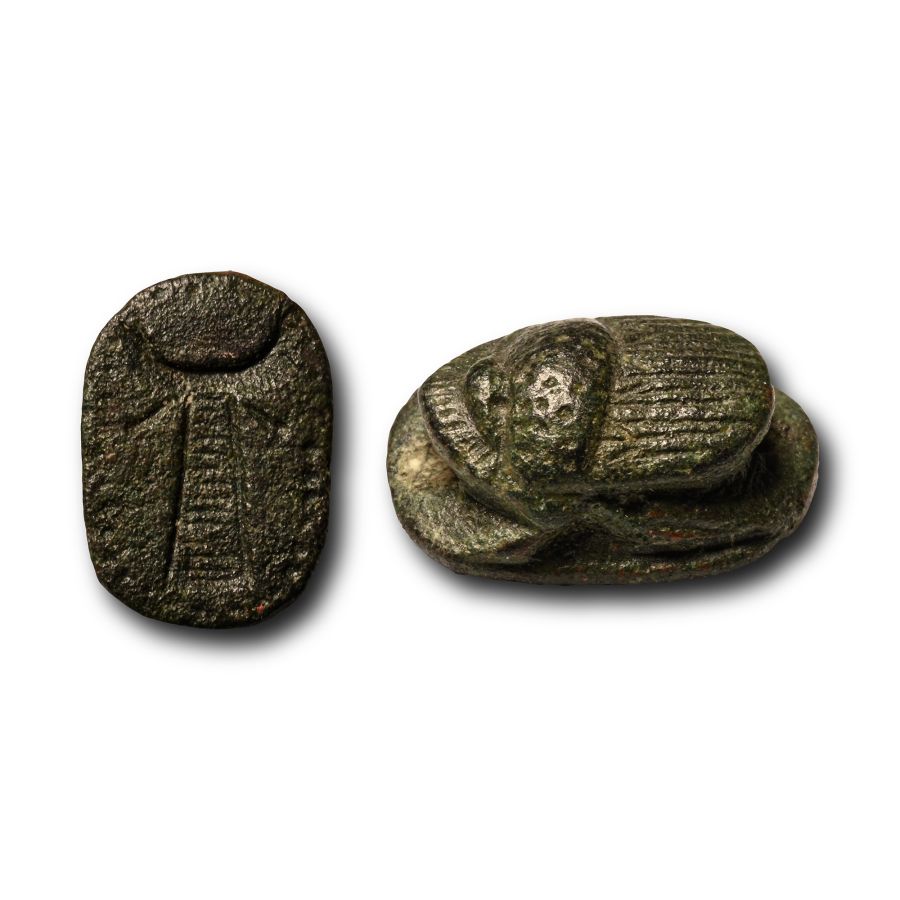
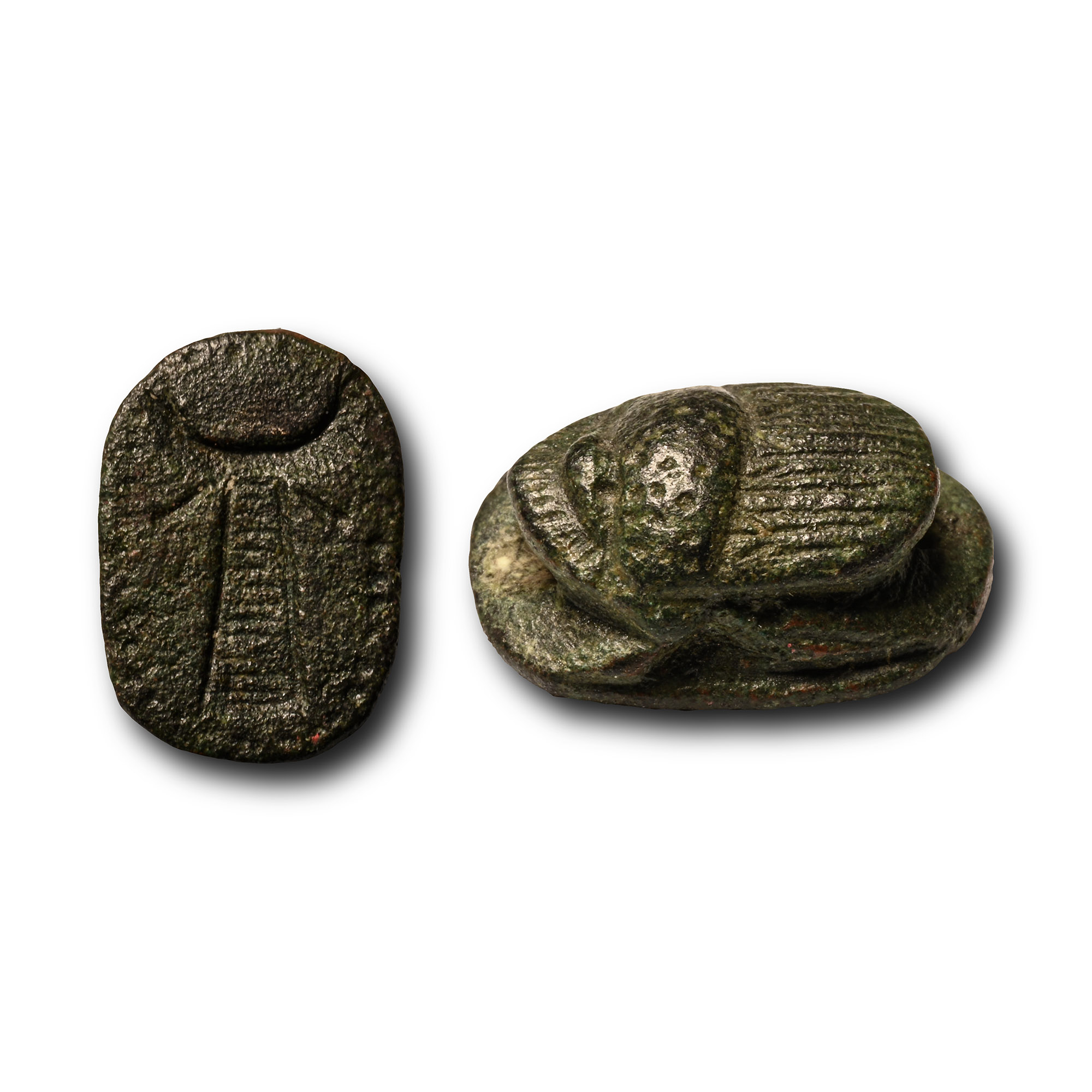
Phoenicio-Egyptian Dark Green Stone Scarab
CIRCA 9TH-8TH CENTURY B.C.
5/8 in. (3.94 grams, 15 mm).
With textured carapace, bull-horned column to the reverse, possibly a symbol of Tanit.
ProvenanceFrom the property of the late Mr SM, London, UK, 1969-1999.
This lot is accompanied by an illustrated lot declaration signed by the Head of the Antiquities Department, Dr Raffaele D’Amato.
Cf. Moscati, S., I Fenici (The Phoenicians), Milano, 1988, p.395, for examples of Phoenician scarabs; Boschloos, V., “Tyre, Achziv and Kition. Evidence for a Phoenician Iron Age II Scarab Seal Workshop,” in: Lohwasser, A. (ed.) Skarabäen des 1. Jahrtausends: Ein Workshop in Münster am 27. Oktober 2012, Orbis Biblicus et Orientalis 269, Ruprecht, 2014, p. 16, pl. 3.1, for a more stylised Tanit-like symbol.
FootnotesThe widespread adoption of the scarab, both as a symbol linked to the concept of rebirth, and in its function as a seal, exemplifies the extent of Egyptian influence on Phoenician culture, from its origins in the Levant to its spread across the Mediterranean.
CONDITIONTimeLine Auctions follows a vetting process to ensure the authenticity and legality of all items, reinforcing our commitment to integrity and responsible trading. Each antiquity, antique, and coin lot undergoes thorough examination by a vetting committee of at least ten external specialists, professional trade association members, scientists, and archaeologists: Our Vetting Process
AUCTIONS:
TimeLine is a leading auction house specialising in antiquities, ancient art, collectables, natural history, coins, medals, and books. Our auctions offer museums, collectors, historians, and enthusiasts the opportunity to acquire unique and historically significant pieces.
LOT 0435
Phoenicio-Egyptian Dark Green Stone Scarab
Estimate £250 - 350€290 - 410 (for guidance only)$340 - 470 (for guidance only)
-
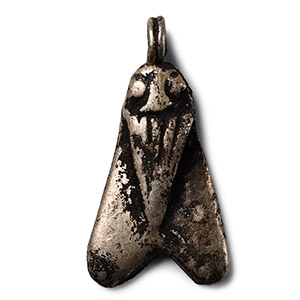
Egyptian Silver Fly Amulet
Late-Ptolemaic Period, 664-30 B.C.Sold for (Inc. bp): £208
With linear detailing to wings, raised eyes, suspension loop above the head. 1.28 grams, 20 mm
From an early 20th century collection. This lot is accompanied by an illustrated lot declaration signed by the Head of the Antiquities Department, Dr Raffaele D’Amato.
Small fly amulets first appeared in burials during the Naqada II Period, c. 3200 B.C. These amulets grew in popularity and the materials used to make them expanded during the New Kingdom. They are crafted from a variety of materials such as gold, silver, lapis lazuli, carnelian, amethyst, faience, and bone. These amulets were thought to protect against insect bites and to ward off troublesome flying creatures through apotropaic magic. Some believe they may have even been intended to symbolise the fly’s fecundity. Additionally, pharaohs would bestow gold fly-shaped pendants as military awards to honour the bravery and fly-like persistence of soldiers in battle. -
.jpg)
Egyptian Orange Carnelian Poppy Head Amulet
New Kingdom, 18th Dynasty, 1550-1292 B.C.Sold for (Inc. bp): £124
Polished and with integral suspension loop. 0.3 grams, 12 mm
Ex UK gallery, early 2000s. This lot is accompanied by an illustrated lot declaration signed by the Head of the Antiquities Department, Dr Raffaele D’Amato.
Amulets in the form of poppies were used to heal and alleviate pain and to ward off death. These types of amulets were also linked to Osiris, the Egyptian deity of agriculture, death, and the afterlife. -
.jpg)
Egyptian Limestone Relief Fishing Scene
Saite Period, 664-525 B.C.Sold for (Inc. bp): £13,000
Irregular fragment of a low-relief frieze showing the hips and legs of two standing figures: left, torso with short kilt gathered at the waist and portions of legs below, body of a fish behind with long dorsal and ventral fins, small tail; right, torso of a figure similarly clad with right forearm and hand gripping a fishing line and upper portion of a fish attached; applied red-maroon pigment to skin areas; mounted in an old stand. 675 grams, 23 cm wide including stand
Private collection, Europe. with Sotheby's, London, July 1991, no.162. Acquired by the current owner from the above. Accompanied by a copy of the relevant Sotheby's catalogue pages. This lot has been checked against the Interpol Database of stolen works of art and is accompanied by a search certificate number no.12585-232180. This lot has been cleared against the Art Loss Register database, and is accompanied by an illustrated lot declaration signed by the Head of the Antiquities Department, Dr Raffaele D’Amato.
The crisp and detailed carving and colour palette are reminiscent of reliefs from the grand Theban tomb of Montuemhat, Mayor and Fourth Priest of Amun (circa 700-650 B.C.).
