
Loading, please wait...
LOT 0449
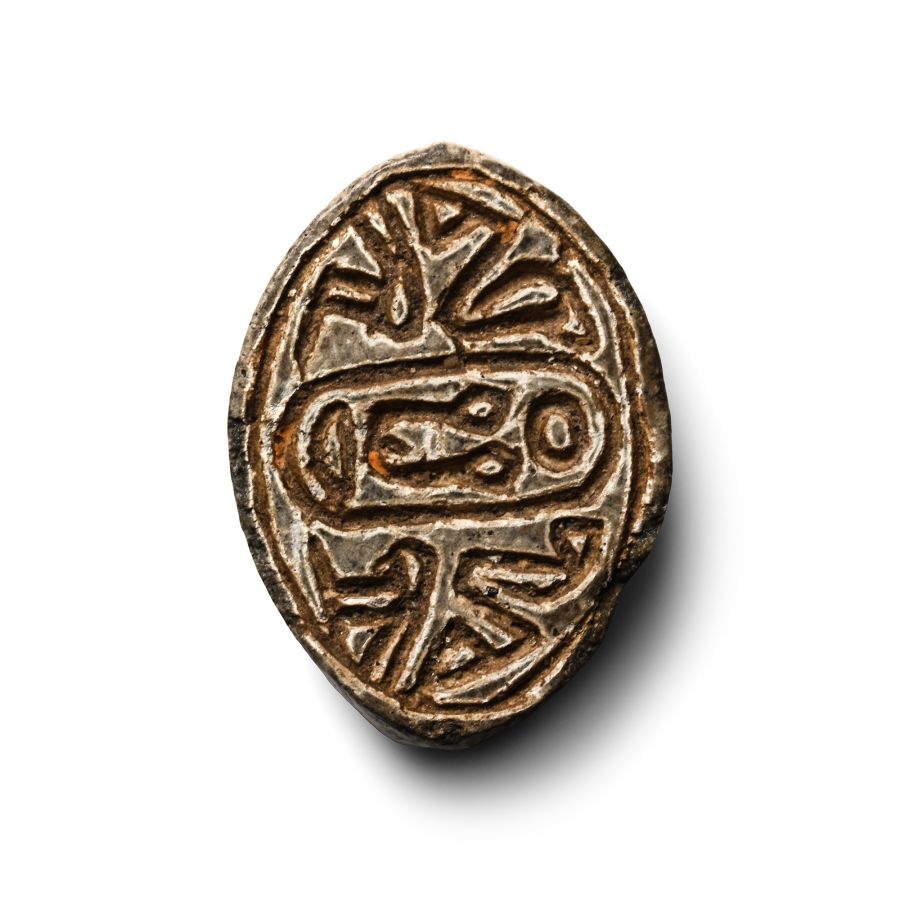
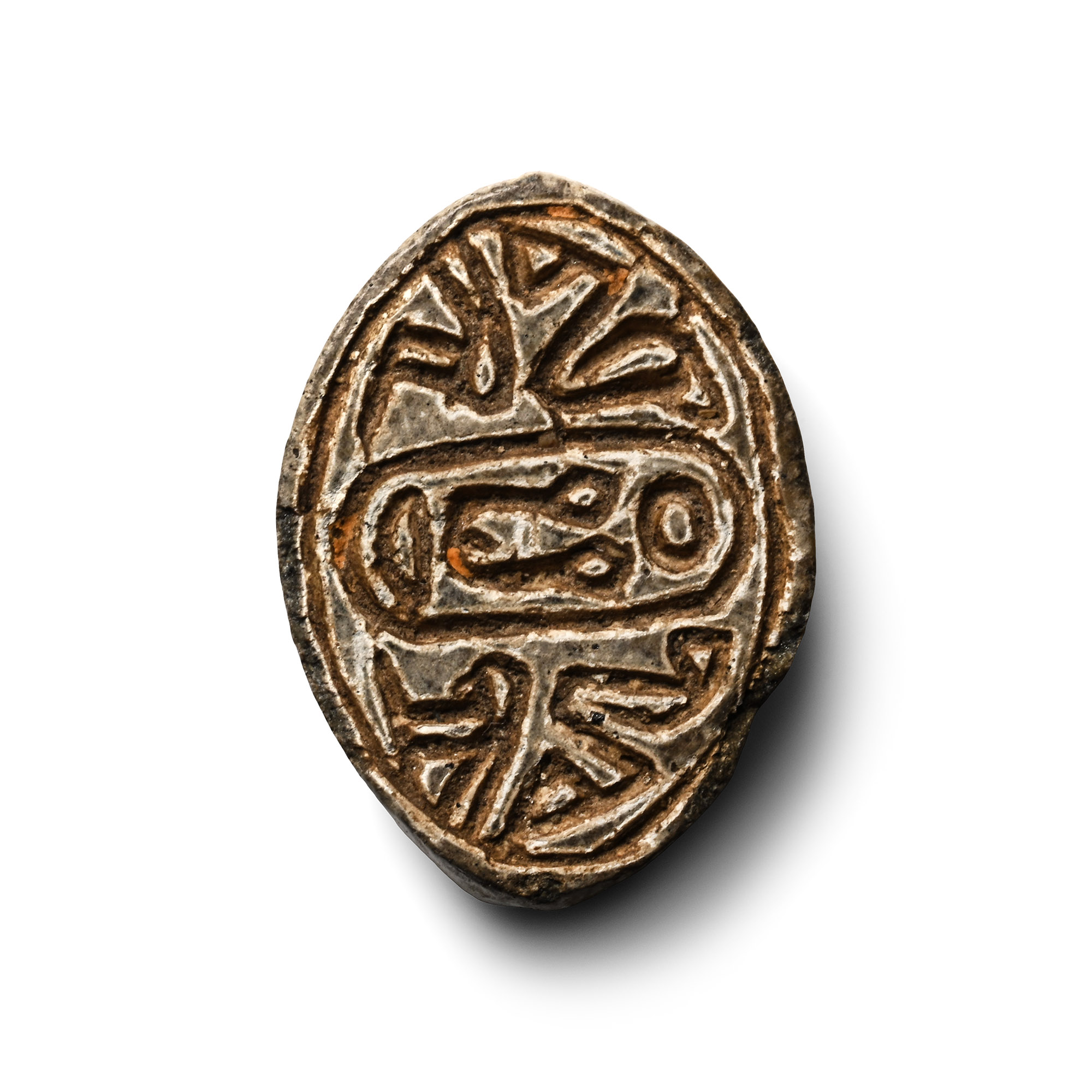
Phoenician White Steatite Cowroid Amulet
SECOND INTERMEDIATE PERIOD, CIRCA 1600 B.C.
3/4 in. (1.67 grams, 19 mm).
Oval body with domed upper face and piecrust rim, underside with a cartouche containing the signs neb-ka-raand flanked by stylised cobra and falcon signs. [No Reserve]
ProvenanceFrom the private collection of a European gentleman (1942-2024), formed since the 1970s.
LiteratureCf. Ben-Tor, D., Scarabs, Chronology, and Interconnections: Egypt and Palestine in the Second Intermediate Period, Fribourg/Göttingen, 2007, pl. 36, no. 11, for a scarab with a similar design format.
CONDITIONTimeLine Auctions follows a vetting process to ensure the authenticity and legality of all items, reinforcing our commitment to integrity and responsible trading. Each antiquity, antique, and coin lot undergoes thorough examination by a vetting committee of at least ten external specialists, professional trade association members, scientists, and archaeologists: Our Vetting Process
AUCTIONS:
TimeLine is a leading auction house specialising in antiquities, ancient art, collectables, natural history, coins, medals, and books. Our auctions offer museums, collectors, historians, and enthusiasts the opportunity to acquire unique and historically significant pieces.
-
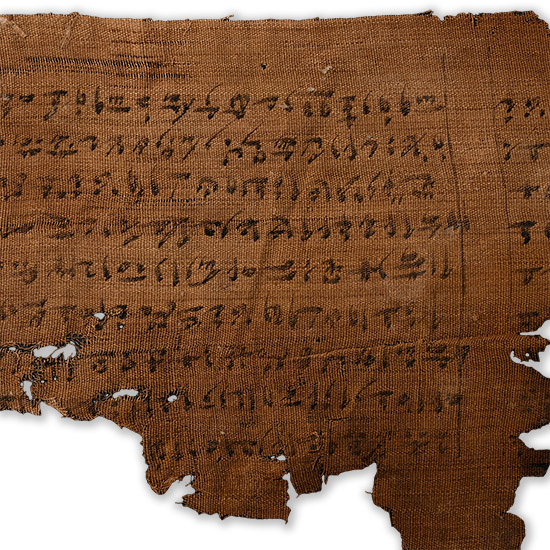
Egyptian Funerary Linen Fragment with Hieratic Text from the Book of the Dead for Ta-sherit-n-ta-ihet
Graeco-Roman Period, circa 3rd century B.C.-2nd century A.D.Sold for (Inc. bp): £1,690
Bearing a portion of Chapter 17, a spell written in late hieratic script executed in black ink on woven linen, consistent with funerary bandages of the Graeco-Roman period; the inscription identifies the owner as a woman named Ta-sherit-n-ta-ihet, with her mother named Iset-(m-)khebit; as is typical for funerary manuscripts of this period, the father’s name is not recorded. 5.08 grams, 22 cm wide
Found inside an 18th-century Bible and believed to be a souvenir acquired in the 19th century. From the private collection of a North American lady. An academically identified and unpublished fragment, offering potential for further scholarly study and publication. Accompanied by a report in progress dated 28 April 2026 by Holly Lund.
Spell 17 is among the most important and widely transmitted compositions in the Book of the Dead, concerned with cosmology, divine knowledge, and the transformation of the deceased in the afterlife. Even in fragmentary form, such texts provide valuable insight into funerary belief and scribal practice during the later phases of ancient Egyptian religion. This description was prepared using information provided by Dr Ann-Katrin Gill, Academic Assistant at the Egyptological Institute, University of Leipzig, and a separate assessment by Steve Vinson, Professor and Director of Graduate Studies in the Department of Middle Eastern Languages and Cultures at Indiana University, Bloomington. The linen fragment may derive from a nineteenth-century mummy unwrapping, a practise widely attested in this period. -
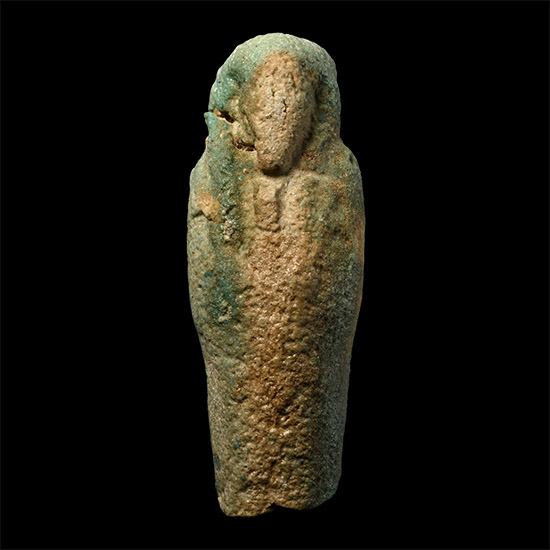
Egyptian Faience Shabti
Late Period, 664-332 B.C.Sold for (Inc. bp): £59
Plano-convex in section with moulded piriform face and wig, tools in the crossed hands, accompanied by an old handwritten note 'faience. Ceramic composed of crushed quartz or quartz sand with small amounts of lime and plant ash or naron. Coated with a bright blue or green glaze or soda[...]' and to verso 'Late period 700-400 BC Ex Margaret Seton-Jones from Flinders Petrie'. 10.5 grams, 49 mm
Ex Margaret Seton-Jones from Flinders Petrie. From the private collection of a Canadian gentleman living in Essex, UK, formed since the 1920s-circa 1990. Property of an Essex lady until the late 1990s; thence by descent. From the private collection of an Essex gentleman since the late 1990s. Accompanied by a handwritten slip with description and provenance. -
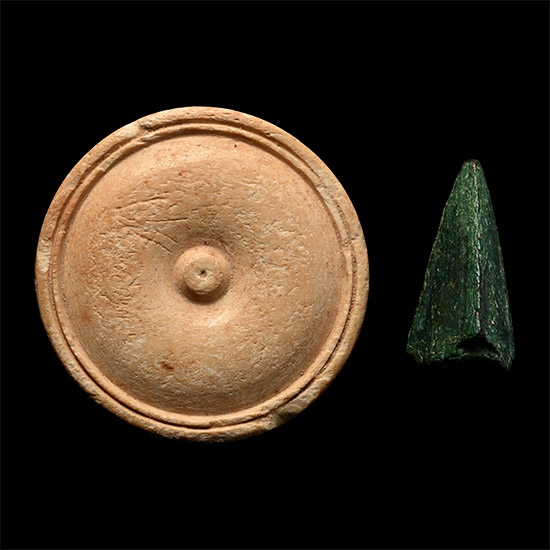
Egyptian Bone Gaming Counter and Bronze Arrow Tip
Graeco-Roman Period, circa 3rd century B.C.-2nd century A.D.Sold for (Inc. bp): £52
Comprising: turned discoid counter with raised tiered rim and central boss, plain reverse with incised 'L · III' legend (numeral '53'); triangular-section arrowhead with low flanges to one face and mounting hole, socket to rear. 4.82 grams total, 17-26 mm
Ex John Cummings Ltd., Lincolnshire, UK. From the private collection of a Canadian gentleman living in Essex, UK, formed since the 1920s-circa 1990. Property of an Essex lady until the late 1990s; thence by descent. From the private collection of an Essex gentleman since the late 1990s. Accompanied by an old information card.
