Loading, please wait...

Use mousewheel to zoom in and out, click to enlarge

Details

LOT 0481

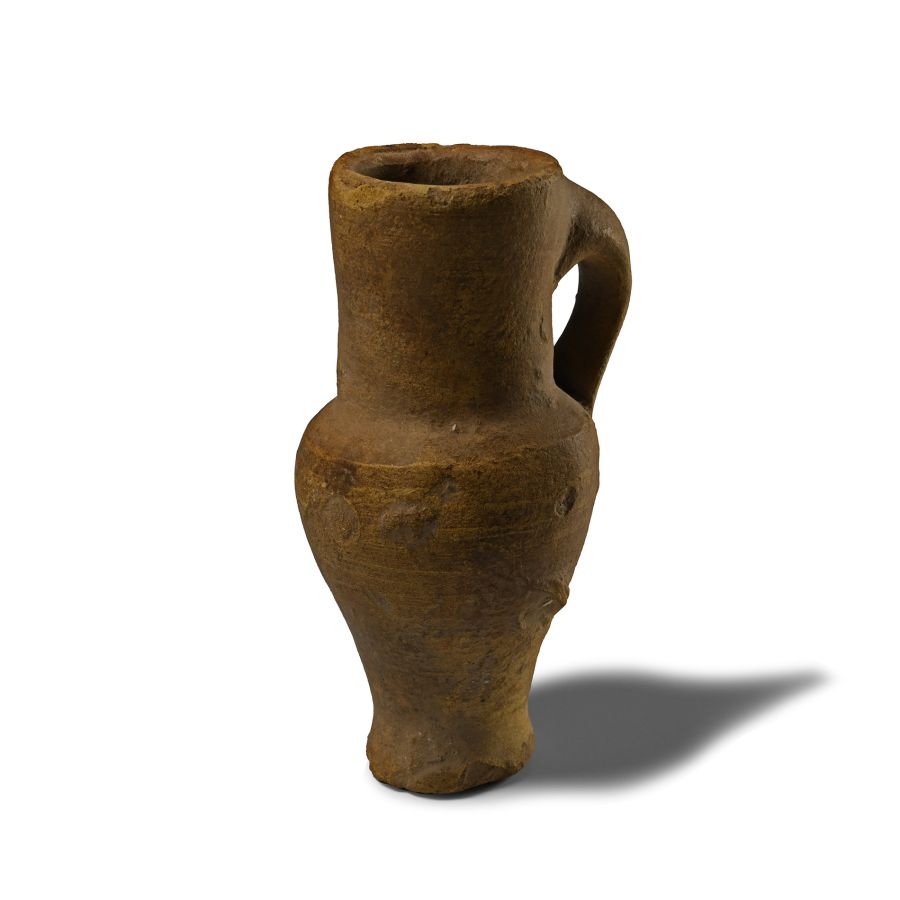
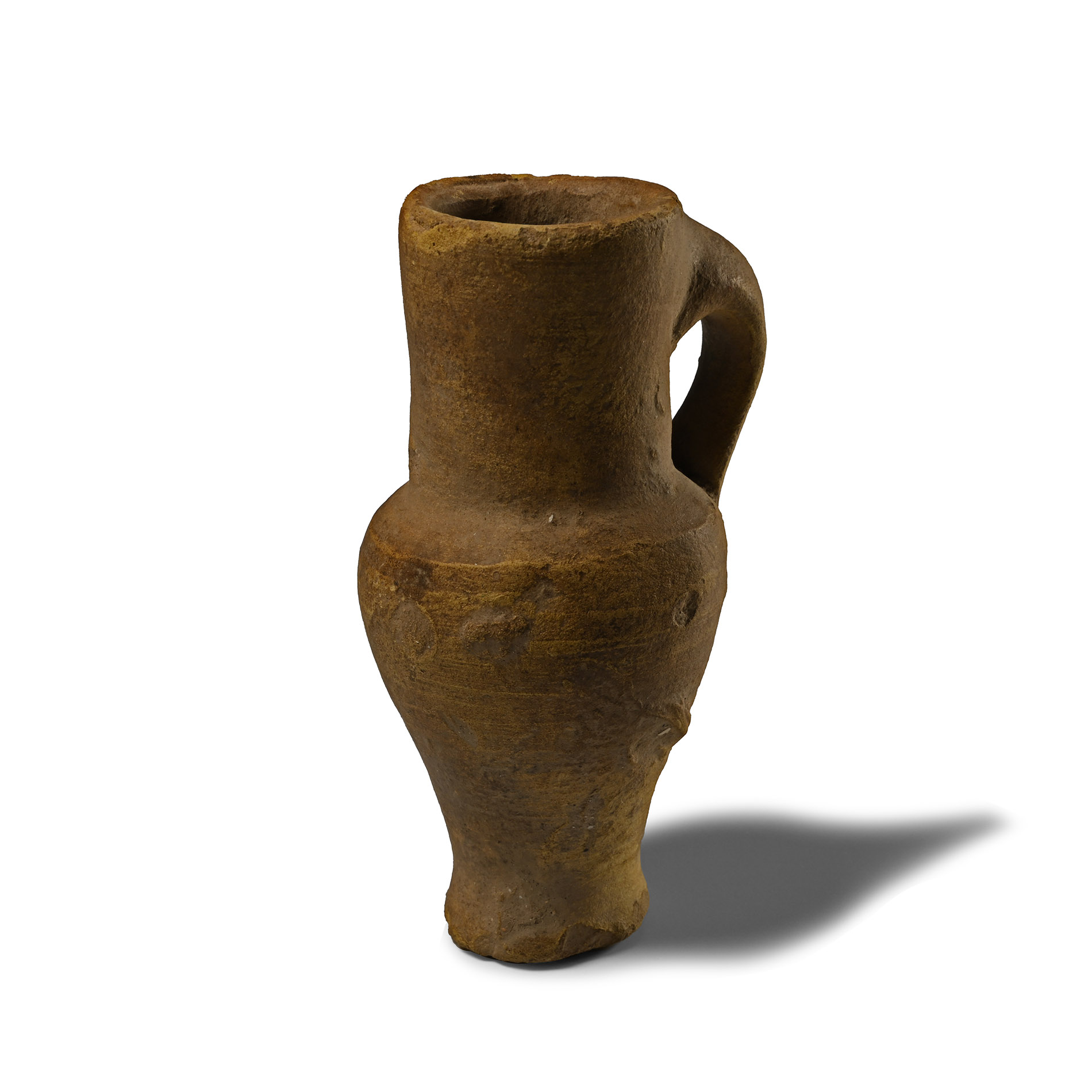
Phoenician Terracotta Juglet

CIRCA 5TH CENTURY B.C.

3 3/4 in. (97 grams, 94 mm).

Narrow in profile with tapering body and flared foot, tubular neck with strap handle to rear. [No Reserve]

Provenance

From North Africa, UK.
Ian Wilkinson collection, Nottinghamshire, UK, formed since 1985.

Accompanied by an old handwritten dealer's tag.
This lot is accompanied by an illustrated lot declaration signed by the Head of the Antiquities Department, Dr Raffaele D’Amato.

CONDITION

VETTING:

TimeLine Auctions follows a vetting process to ensure the authenticity and legality of all items, reinforcing our commitment to integrity and responsible trading. Each antiquity, antique, and coin lot undergoes thorough examination by a vetting committee of at least ten external specialists, professional trade association members, scientists, and archaeologists: Our Vetting Process


AUCTIONS:

TimeLine is a leading auction house specialising in antiquities, ancient art, collectables, natural history, coins, medals, and books. Our auctions offer museums, collectors, historians, and enthusiasts the opportunity to acquire unique and historically significant pieces.

LOT 0481

Phoenician Terracotta Juglet

Sold for (Inc. bp): £78

Print page

RELATED LOTS

  • Romano-Egyptian Terracotta Figurine with Large Phallus and Apotropaic Eye
    Romano-Egyptian Terracotta Figurine with Large Phallus and Apotropaic Eye
    1st century B.C.-2nd century A.D.

    Estimate: £300 - 400 (‡+bp*)

    Opening Bid: £135

    Representing a slave or a dwarf in a crouched position, dressed in a short tunic leaving the left shoulder uncovered (exomis), a large curving phallus emerging from underneath the tunic topped with a large apotropaic eye; accompanied by a display stand. 64 grams, 81 mm (80 grams total, 10 cm high including stand)


    The Erotica Collection Christian von Faber-Castell, Küsnacgt ZH, Switzerland, since the late 1970s. This lot is accompanied by an illustrated lot declaration signed by the Head of the Antiquities Department, Dr Raffaele D’Amato.

    Except for the enormous phallus, the figure is human in all aspects. The apotropaic aspect, symbolised also by the eye, is combined with the erotic. It should be pointed out that according to the physiognomic conceptions held in the ancient world, from the 4th century B.C. onwards, small-scale sculptures developed a rich repertoire of grotesque types. These so-called grotesques were a development of the Hellenistic interest in the human body and its imperfections. They range from representations of individuals with clinically diagnosable disfigurements to those with exaggerated physical features. According to some scholars, terracotta (and bronze) figurines of this kind were life-like representations of beggars and others who gathered at big feasts in temples or at the houses of the wealthy. In the latter case, they indicated the importance and wealth of the host because the more beggars an event attracted, the greater the fortune of the event organizer. By implication, the bronze and terracotta portraits of these marginal people could have become symbols and charms of good luck that would have been placed in private houses. Christian von Faber-Castell (born 1950) is a renowned German entrepreneur and art collector, best known as a member of the prominent Faber-Castell family, famed for their iconic writing instruments. A passionate advocate for art and culture, Christian von Faber-Castell curated an extensive and diverse private collection of erotica, spanning centuries and cultures. His collection reflects a deep appreciation for the interplay of beauty, sensuality, and artistic expression, bringing together rare and unique works that explore themes of intimacy and human connection. Pieces from this collection have been featured in notable exhibitions and are celebrated for their artistic and historical significance. This offering represents a rare opportunity to acquire works from one of the most fascinating and eclectic private collections of its kind.

    Lot Details

  • Egyptian Steatite Scarab with Bes
    Egyptian Steatite Scarab with Bes
    Late Period, 664-332 B.C.

    Estimate: £120 - 170 (+bp*)

    Opening Bid: £67

    Plano-convex in section with detailed obverse, the underside with the figure of Bes flanked by adoring baboons and sun discs. 10.7 grams, 31 mm


    Ex London, UK collection, 1990s. This lot is accompanied by an illustrated lot declaration signed by the Head of the Antiquities Department, Dr Raffaele D’Amato.

    Bes became one of ancient Egypt's most popular apotropaic deities from the New Kingdom onwards. Despite his somewhat fearful appearance, Bes was the patron and protector of pregnant women and children and believed to protect the wearer from snakes. The depiction of baboons flanking Bes with their arms raised before the sun disk was a common feature on temple wall reliefs. In ancient Egyptian religious literature, baboons heralded the dawn and, thus, the rebirth of the sun.

    Lot Details

  • Phoenician Stone Scaraboid Seal
    Phoenician Stone Scaraboid Seal
    Levant, circa 10th century B.C.

    Estimate: £400 - 600 (+bp*)

    Opening Bid: £200

    Engraved stylised detailing to the domed carapace, the underside with quadrupeds and caterpillars in exergue; pierced longitudinally; accompanied by a museum-quality impression. 3.35 grams, 18 mm


    From the 'S' collection, acquired 1970-1990s. The collection was seen and studied by W.G. Lambert, late Professor of Assyriology at the University of Birmingham, 1970-1993. Accompanied by a copy of a report from Peter Gert Van der Veen, senior lecturer of Levantine Archaeology Johannes Gutenberg-Universität Mainz. This lot is accompanied by an illustrated lot declaration signed by the Head of the Antiquities Department, Dr Raffaele D’Amato.

    Lot Details

Stay up-to-date with the latest from TimeLine Auctions by joining our mailing list