
Loading, please wait...
LOT 0550
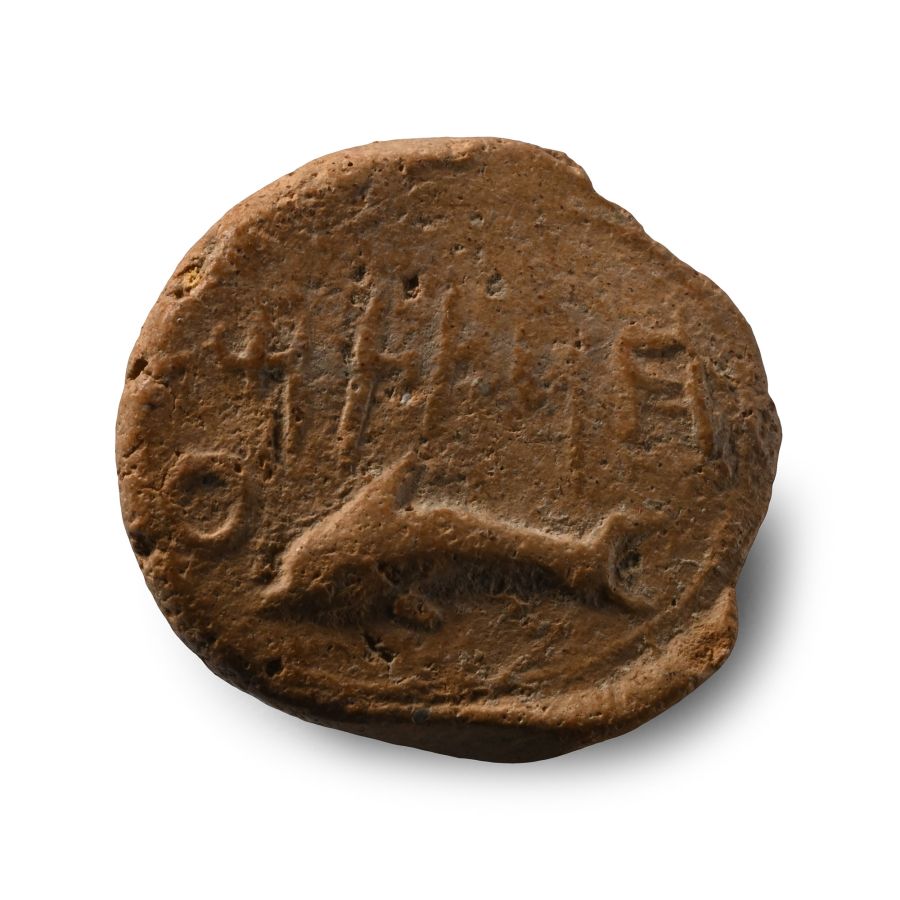
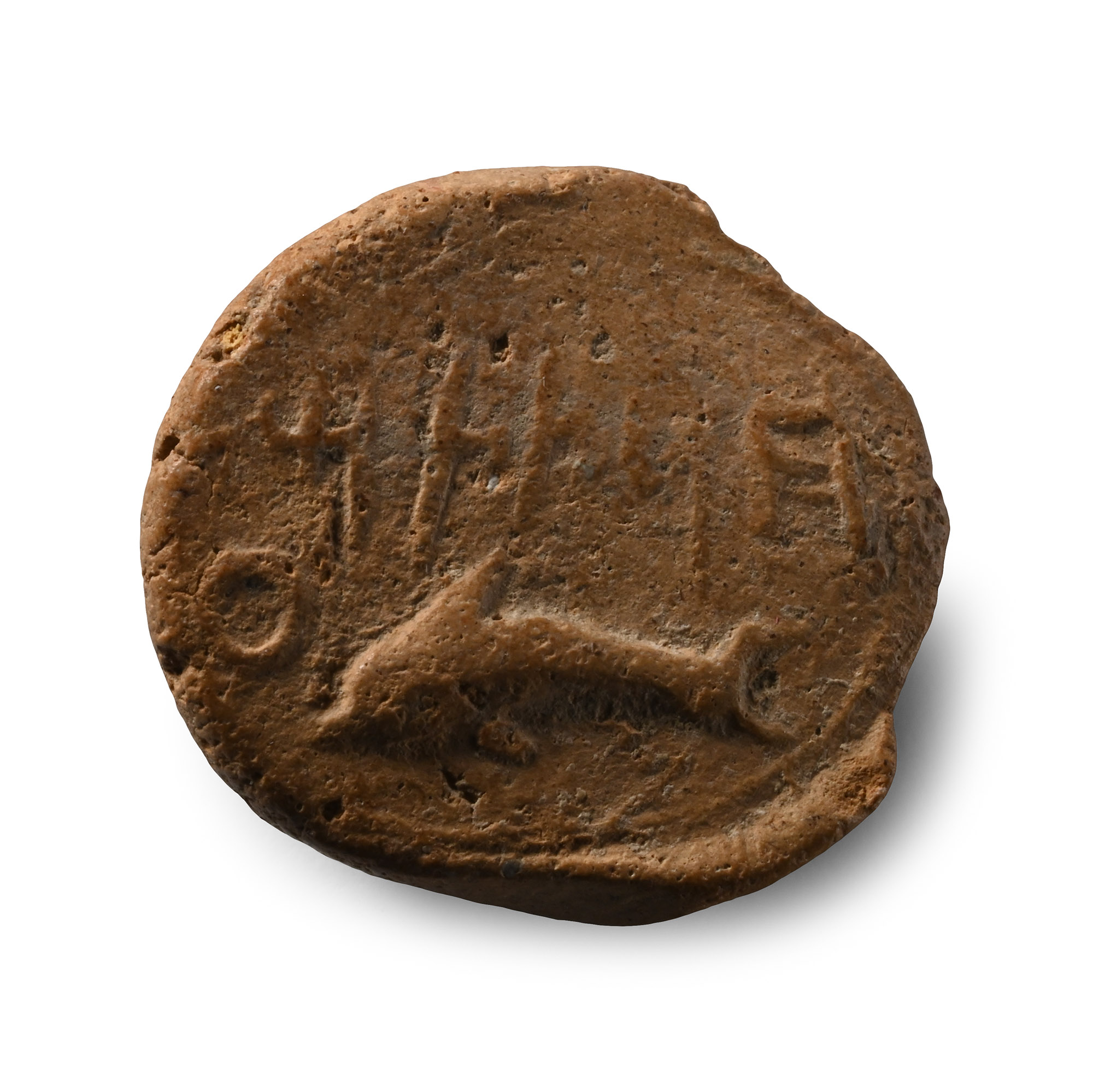
Phoenician Terracotta Bulla with a Dolphin
5TH CENTURY B.C.
5/8 in. (1.05 grams, 17.71 mm).
Plano-convex in profile with impressed dolphin and legend.
ProvenanceAcquired in 1994.
Private collection, Switzerland, thence by descent.
Private collection, since the late 1990s.
This Phoenician terracotta bulla, decorated with a dolphin, reflects the strong maritime identity of the Phoenician world. Bullae were typically used to seal documents or goods, serving both a practical and symbolic function in trade and administration. The dolphin, a creature closely associated with the sea, would have held particular meaning for the Phoenicians, whose culture and prosperity were deeply tied to seafaring and commerce across the Mediterranean. Often seen as a symbol of protection, guidance, and safe passage, the dolphin adds an additional layer of meaning to the object, suggesting not only its use in everyday transactions but also a connection to the wider beliefs and environment of the ancient coastal world.
CONDITIONTimeLine Auctions follows a vetting process to ensure the authenticity and legality of all items, reinforcing our commitment to integrity and responsible trading. Each antiquity, antique, and coin lot undergoes thorough examination by a vetting committee of at least ten external specialists, professional trade association members, scientists, and archaeologists: Our Vetting Process
AUCTIONS:
TimeLine is a leading auction house specialising in antiquities, ancient art, collectables, natural history, coins, medals, and books. Our auctions offer museums, collectors, historians, and enthusiasts the opportunity to acquire unique and historically significant pieces.
LOT 0550
Phoenician Terracotta Bulla with a Dolphin
Estimate £120 - 170€140 - 200 (for guidance only)$160 - 230 (for guidance only)
-
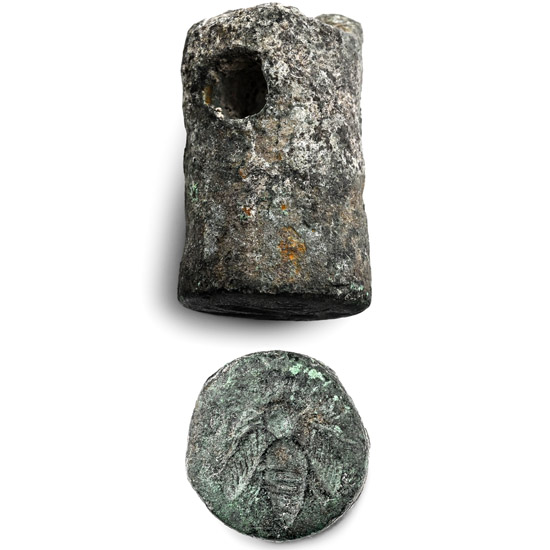
Greek Die with Ephesus Bee
2nd-1st century B.C.Sold for (Inc. bp): £468
A copper-lead alloy columnar block with broad piercing, a transverse channel to the upper face; incuse bee image with enigmatic text. 13.71 grams, 19 mm
From the collection of a gentleman, acquired on the London art market in the 1990s. -
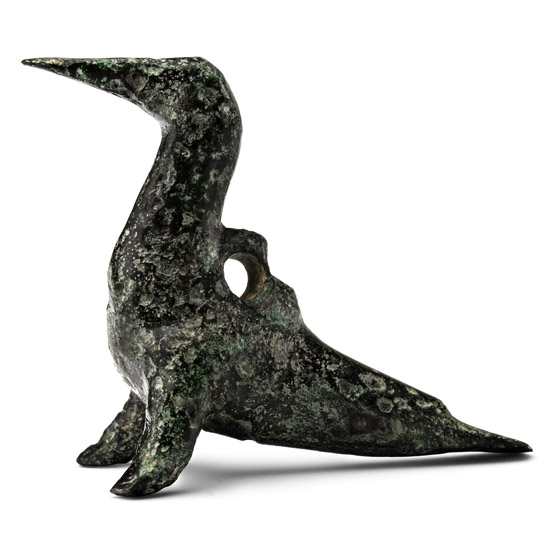
Greek Bronze Bird Pendant
Geometric Period, 8th-7th century B.C.Estimate: £100 - 140 (+bp*)
Opening Bid: £50
Modelled in the round with a long beak and splayed, short legs, pierced through the upper body. 14.7 grams, 35 mm
Ex German art market, 2000s. Acquired from an EU collector living in London. From the collection of a Surrey, UK, gentleman. -
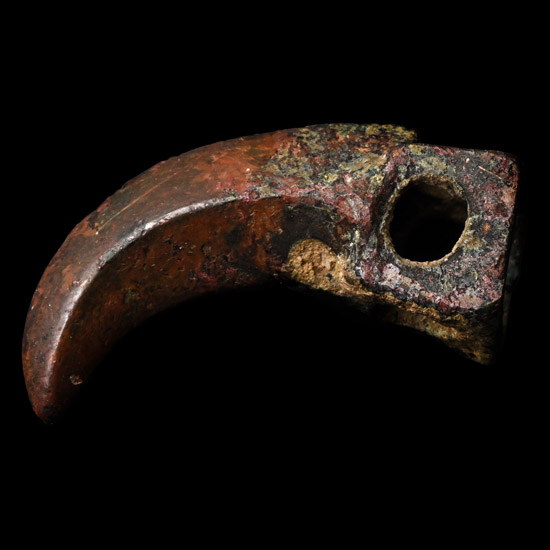
Scythian Bronze Eagle's Talon Pendant
Circa 6th century B.C.Sold for (Inc. bp): £156
Curved square-section hook with cuboid finial pierced on all four sides and to the top. 12.45 grams, 36.19 mm
From the private collection of a European gentleman (1942-2024), formed since the 1970s.
