Loading, please wait...

Phoenician Terracotta Anthropomorphic Vessel Phoenician Terracotta Anthropomorphic Vessel Phoenician Terracotta Anthropomorphic Vessel Phoenician Terracotta Anthropomorphic Vessel Phoenician Terracotta Anthropomorphic Vessel Phoenician Terracotta Anthropomorphic Vessel
Use mousewheel to zoom in and out, click to enlarge
Details

LOT 0042

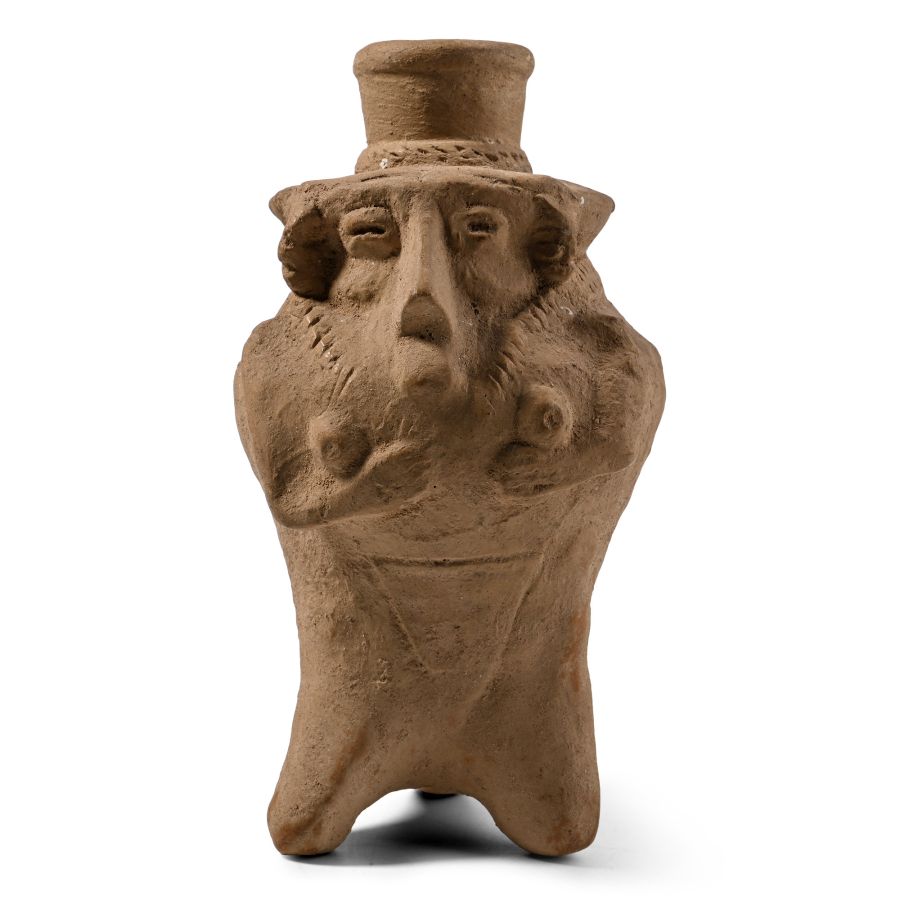
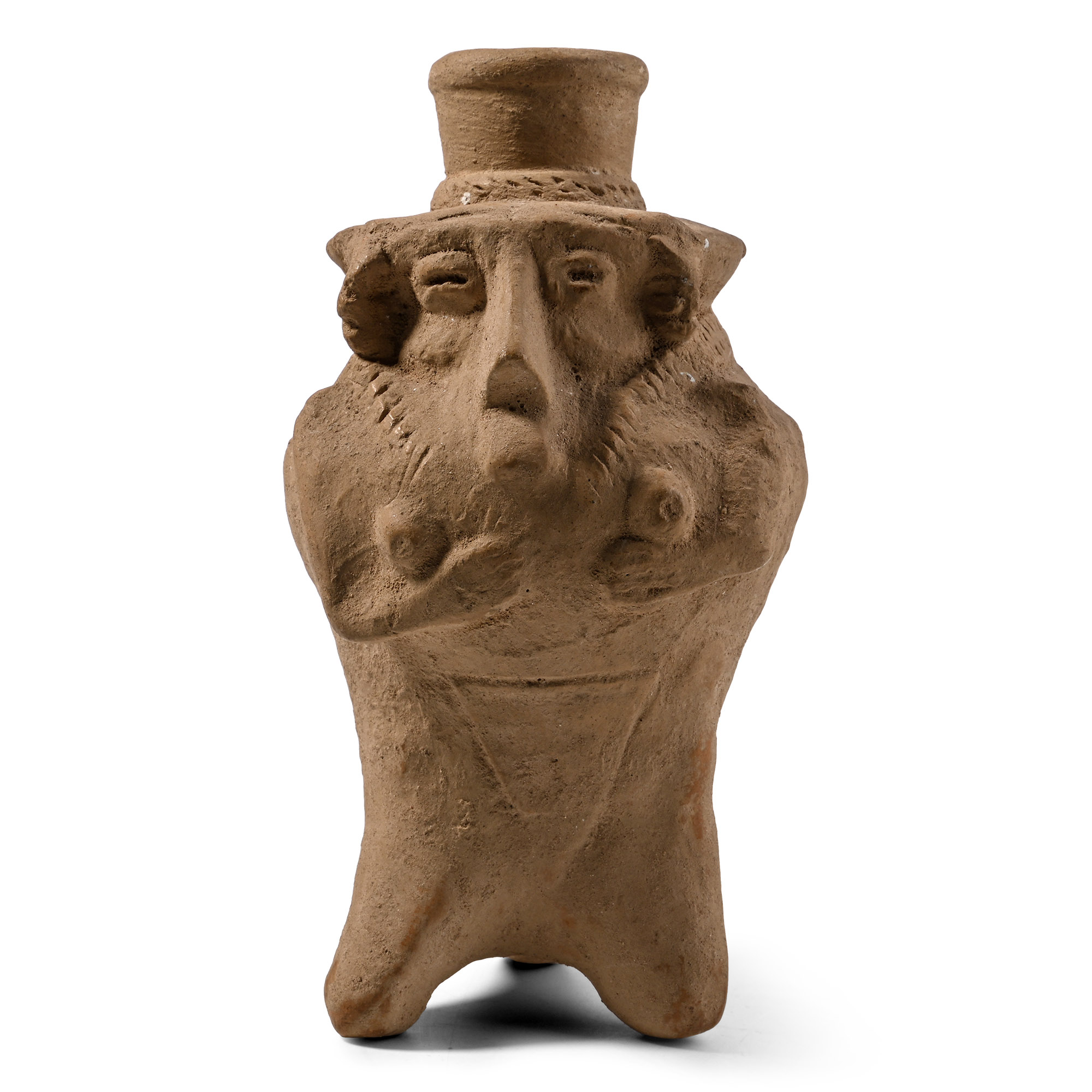
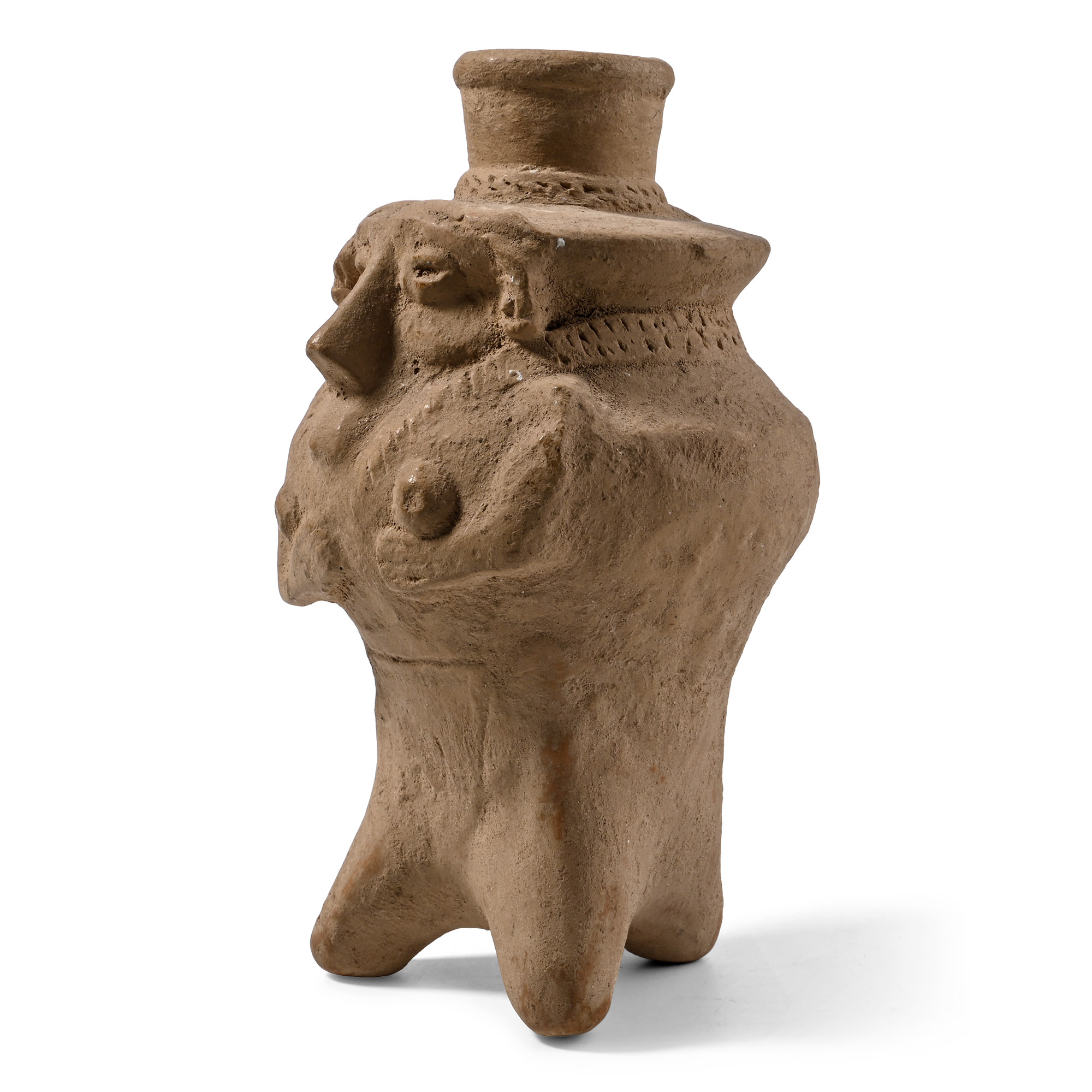
Phoenician Terracotta Anthropomorphic Vessel

3RD CENTURY B.C.

6 in. (514 grams, 15.2 cm).

With three splayed stub feet, tubular body with flared shouder and neck; applied facial detailing, pointillé circlet and collar, arms bent beneath the breasts, incised loincloth detail.

Provenance

with J.F. collection, Madrid.
Ex Ars Historica Arqueologia, 7 October 2019.

CONDITION
VETTING:

TimeLine Auctions follows a vetting process to ensure the authenticity and legality of all items, reinforcing our commitment to integrity and responsible trading. Each antiquity, antique, and coin lot undergoes thorough examination by a vetting committee of at least ten external specialists, professional trade association members, scientists, and archaeologists: Our Vetting Process


AUCTIONS:

TimeLine is a leading auction house specialising in antiquities, ancient art, collectables, natural history, coins, medals, and books. Our auctions offer museums, collectors, historians, and enthusiasts the opportunity to acquire unique and historically significant pieces.

LOT 0042

Phoenician Terracotta Anthropomorphic Vessel

Estimate £1,200 - 1,700€1,390 - 1,970 (for guidance only)$1,620 - 2,300 (for guidance only)

Opening Bid
£667 (EUR 773; USD 900) +BP*

Sign in to Bid

Please enter a e-mail
Please enter a password
Or Create Account here.
Please confirm to accept TC and Privacy policy

Bids: 0
RELATED LOTS
  • Greek Gold Ring and Carnelian Gemstone with Asclepius and Hygeia
    Greek Gold Ring and Carnelian Gemstone with Asclepius and Hygeia
    Hellenistic, 1st century B.C.-1st century A.D.

    Estimate: £2,000 - 3,000 (+bp*)

    Opening Bid: £1,000

    Comprising a gold wire hoop with panels of baluster detailing, scrolled and securing a gold cell with an inset cabochon gemstone; to the domed face, the god Asclepius with caduceus symbol; to the flat face, goddess Hygeia standing holding a serpent; some usage wear. 2.12 grams, 22.48 mm overall, 14.21 x 16.13 mm internal diameter (approximate size British F 1/2, USA 3, Europe 4.3, Japan 4)


    Private collection, UK. This lot has been checked against the Interpol Database of stolen works of art and is accompanied by search certificate number no.13357- 259200.

    Asclepius, son of Apollo and Coronis, was the Graeco-Roman god of medicine, healing and prophecy. He had two daughters with Epione, the goddess of soothing - Hygeia (goddess of health) and Panacea (goddess of healing).

    Lot Details

  • Greek Black-Figure Alabastron with Fighting Warriors
    Ex Louis-Gabriel Bellon (1819-1899) Collection
    Greek Black-Figure Alabastron with Fighting Warriors
    Attic, 500-480 B.C.

    Estimate: £20,000 - 30,000 (‡+bp*)

    Opening Bid: £11,111

    Of ovoid shape, short neck and expanded flat rim; painted in horizontal bands with black vertical strokes the shoulder, ovules in the upper part, the central scene representing a Greek Ekdromos fighting a Scythian archer; the Greek warrior, wearing a light sleeveless chiton, and a crested Corinthian helmet, carrying a wide hoplon shield, and a long spear with which he is slashing his opponent; the Scythian archer is wearing a typical tall cap flowing backwards and his long coat-suit, carrying a gorytos, (quiver) and composite bow with arrow; horizontal black stripes below; accompanied by a custom-made display stand. 262 grams total, 16 cm high including stand


    Louis-Gabriel Bellon (1819-1899) collection, France. European private collection, 2009. Accompanied by an academic report by Dr Raffaele D’Amato. This lot has been checked against the Interpol Database of stolen works of art and is accompanied by a search certificate number no.13019-246753.

    The importance of this alabastron is linked to its iconography, which represents episodes of the Persian Wars, fought 490-480 B.C. Such alabastra are part of a series realised during the period of the conflict and after, and they are an important source of information on the Persian and Greek armies. Here, the two opponents evoke the Greek victories, with a light-armed Greek ekdromos (hoplite fighting in light equipment) killing a Scythian archer, who formed part of the Persian army. The representation of Scythian costume in vase-painting reached its height of popularity between c. 530 and 490 B.C., and went out of fashion after the Graeco-Persian wars, when these clothes began to be associated with the Persian ethnic identity rather than the original Scythian.

    Lot Details

  • Etruscan Carnelian Scarab of a Charioteer in Gold Ring
    Etruscan Carnelian Scarab of a Charioteer in Gold Ring
    Late 4th century B.C.

    Estimate: £2,500 - 3,500 (+bp*)

    Opening Bid: £1,250

    Opaque scaraboid engraved in globolo style with a dynamic scene of a charioteer driving a biga with his whip raised; set in a later sheet-gold mount and swivel ring, possibly 19th century; supplied with a museum-quality impression. 4.26 grams, 25.07 mm overall, 17.77 x 16.22 mm internal diameter (approximate size British O, USA 7, Europe 14.98, Japan 14)


    Private English collection, formed between the late 1970s and early 1990s. Private collection, UK. This lot has been checked against the Interpol Database of stolen works of art and is accompanied by search certificate number no.12948-245985.

    In line with trends introduced from the Eastern Mediterranean increasing use was made by the Etruscans of war chariots, even more luxurious in appearance and faced with embossed sheets of bronze. In addition to transporting warriors, they proved an effective means of controlling outlying areas, and in case were status symbols of great prestige. The Orientalizing period also saw the importation of swift and nimble breeds that were particularly suited for use as cavalry mounts.

    Lot Details