Loading, please wait...
LOT 0482
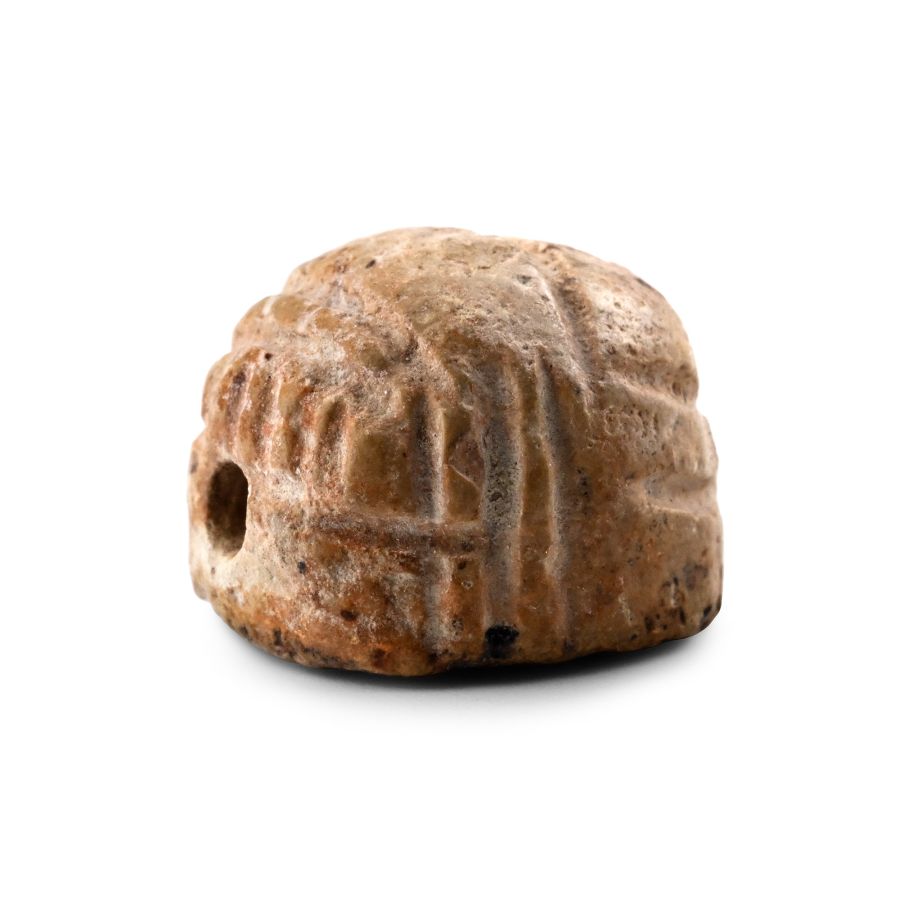
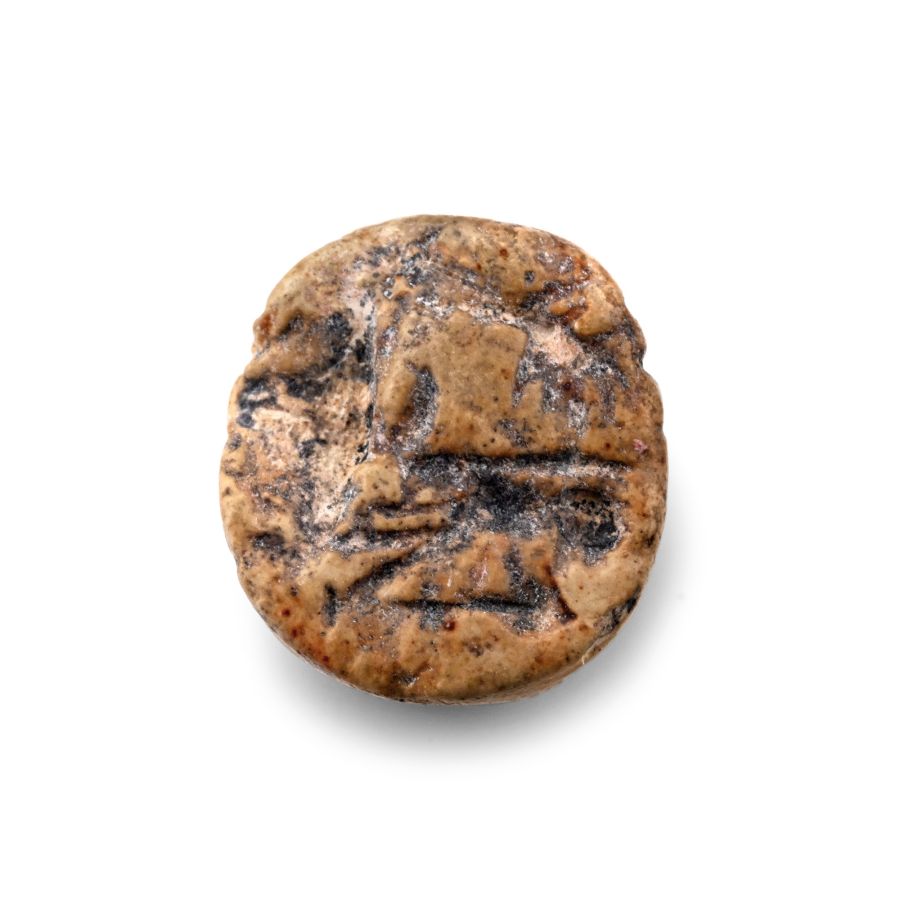
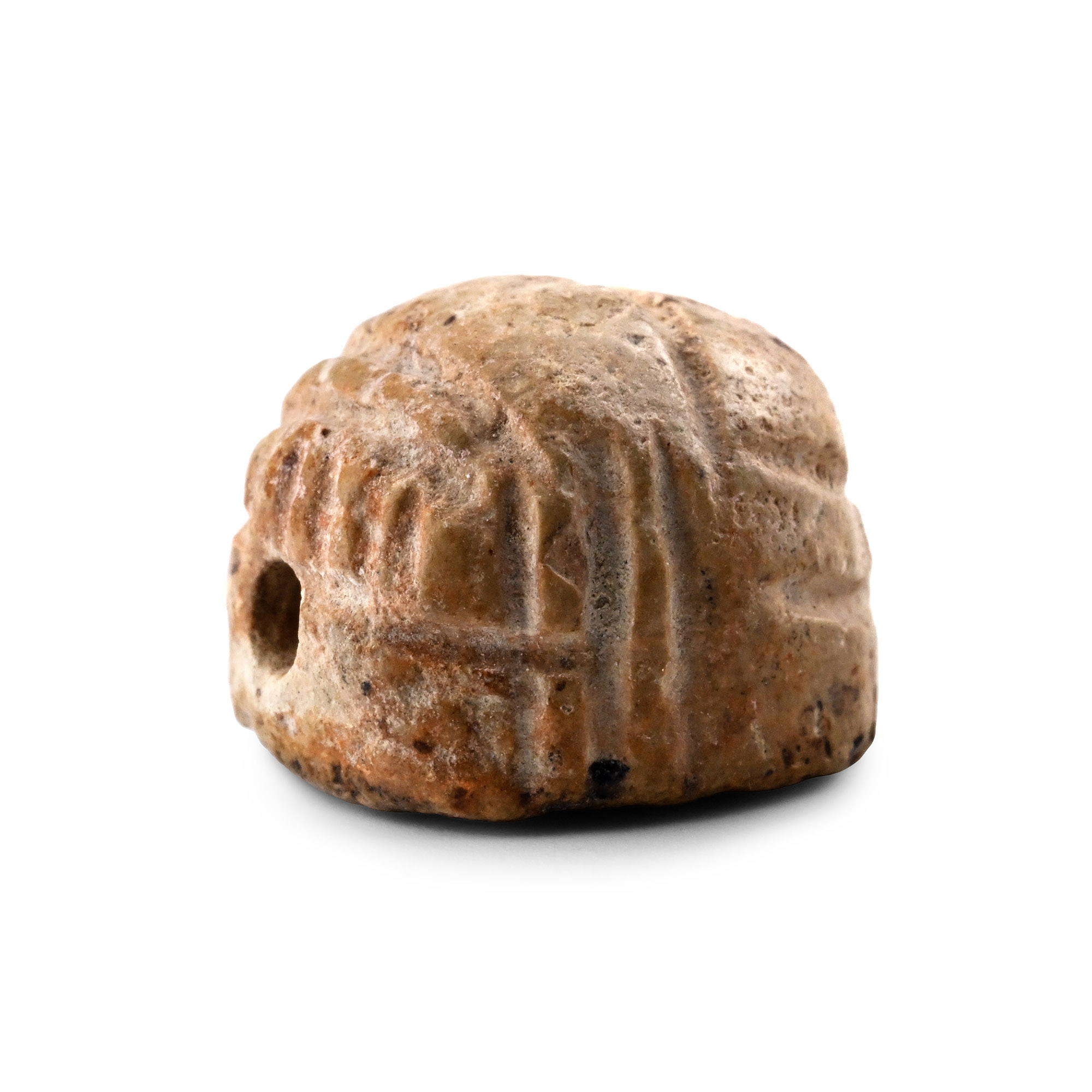
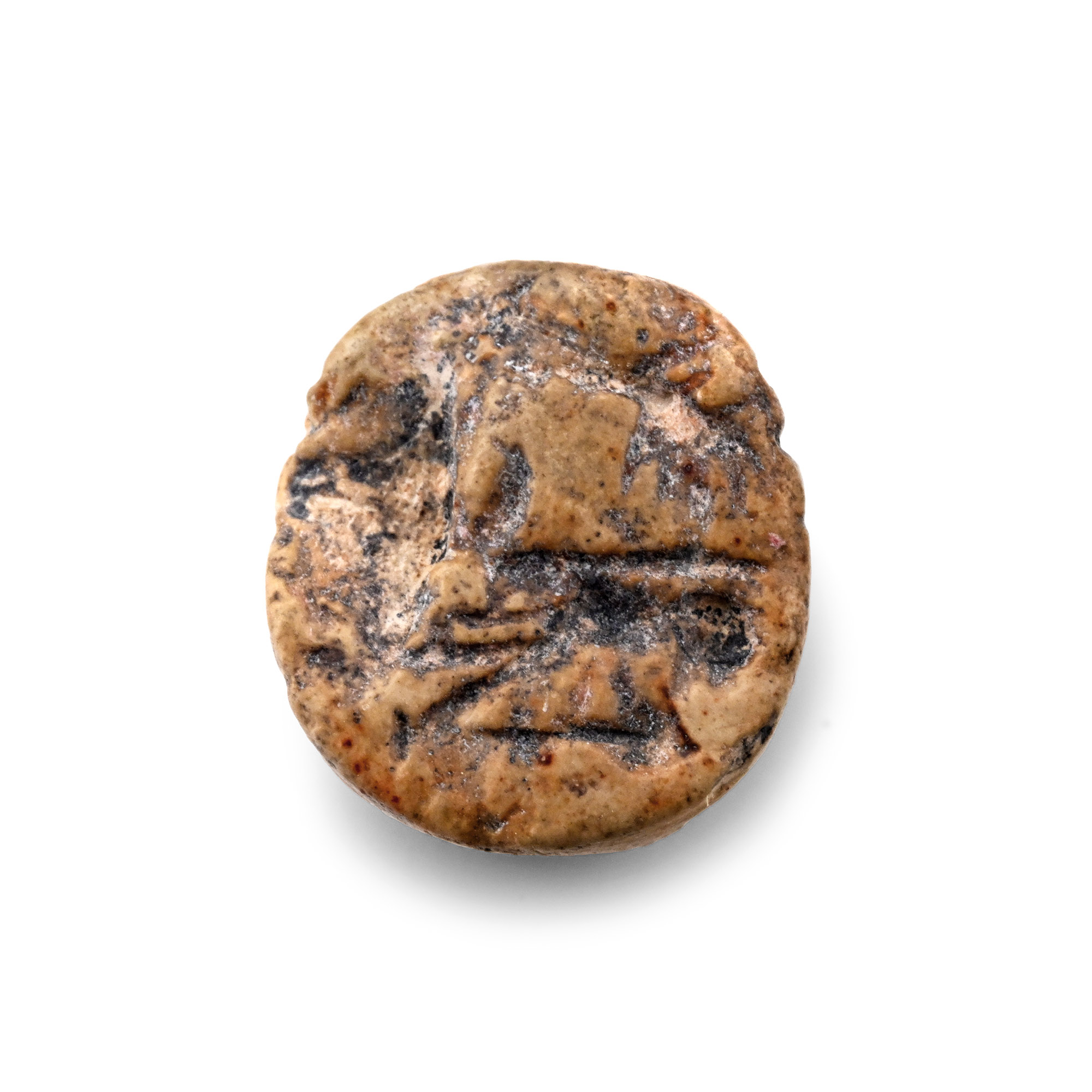
Phoenician Stone Scaraboid with Man Working in a Field
1ST MILLENNIUM B.C.
5/8 in. (3.21 grams, 15 mm).
Domed body with incised detailing, underside showing a man tending his land. [No Reserve]
ProvenanceFrom a late Warwickshire numismatic collector, his collection formed from the early 1980s.
CONDITIONTimeLine Auctions follows a vetting process to ensure the authenticity and legality of all items, reinforcing our commitment to integrity and responsible trading. Each antiquity, antique, and coin lot undergoes thorough examination by a vetting committee of at least ten external specialists, professional trade association members, scientists, and archaeologists: Our Vetting Process
AUCTIONS:
TimeLine is a leading auction house specialising in antiquities, ancient art, collectables, natural history, coins, medals, and books. Our auctions offer museums, collectors, historians, and enthusiasts the opportunity to acquire unique and historically significant pieces.
-
Very Large Egyptian Expedition Lithograph of a View of Alexandria
Early 19th century A.D.Sold for (Inc. bp): £91
Proof etching on laid paper of plate 98 from Description de l'Égypte : ou, Recueil des observations et des recherches qui ont été faites en Égypte pendant l'expédition de l'armée française. entitled Vue de l'Esplanade ou Grande Place du port neuf et de l'Enceinte des Arabes, Seconde partie. 233 grams, 105 x 66.5 cm
From the collection of a North American priest. Acquired between 1981-1996. Property of a North American collector.
Produced between February 1802 and 1830 on the orders of Napoleon Bonaparte; published between 1809 and 1828. Just 1,000 copies were distributed to various institutions, printed on laid paper with an 'Égypte ancienne et moderne' watermark. The book is subtitled Recueil des observations et des recherches qui ont été faites en Égypte pendant l’expédition de l’Armée française, publié par les ordres de Sa Majesté l’Empereur Napoléon le Grand (Gathering of observations and discoveries which were made in Egypt during the expedition of the French army, published on the orders of His Majesty the Emperor Napoleon the Great). It was the world's first encyclopedia devoted exclusively to the remains of ancient Egypt. The plates of this book are the first to present the archaeological sites of Thebes (Luxor). -
Egyptian Basalt Bassinophore Fragments for the Customs Official Wahibre, son of Paeftchawy
Late Period, 26th Dynasty, Reign of Amasis, circa 570-525 B.C.Estimate: £80,000 - 100,000 (+bp*)
Opening Bid: £40,000
Modelled in the round kneeling on an integral base and wearing a broad rounded wig, holding a fragmentary offering basin before him; dorsal pillar engraved with a single vertical column of hieroglyphs, translating: 'The Count, Overseer of the Entrance to the Hill Countries, Chief Supervisor of the Shrines [of Neith], Wahibre, son of Paeftchawy'; upper rim of the basin further inscribed with a ritual formula intended to be recited during the presentation of its contents. 107.7 kg total, figure: 40 cm high, fragments: 47-58 cm wide including stand
For the two basalt sections: UK private collection, formed 1970s-1990s. Princely collection, until 2014; thence to a private foundation. Acquired by the current owner from Rupert Wace, London, UK. For the kneeling basalt figure: European private collection, since the mid-19th century. Sold at Christie’s, New York, 8 June 2001, no.114. Sold at Drouot-Richelieu, Paris (Boisgirard), 14 February 2005, no.313. European private collection, acquired at the above sale; thence by descent to the previous owners. This lot has been checked against the Interpol Database of stolen works of art and is accompanied by search certificate number no.13193-250115.
The figure on this vessel represents the customs official Wahibre, son of Paeftchawy, a well-attested individual known from at least fourteen other sculptures. Additional evidence for Wahibre’s identity is provided by a fragment of his mummiform sarcophagus, found at el-Hagar, within the territory of his native city of Sais. The titles inscribed on his surviving monuments reflect a career that combined priestly responsibilities with significant administrative and military authority. In southern Egypt, Wahibre served as chief customs officer and commanded a contingent of foreign troops tasked with protecting the frontier, probably Greek mercenaries from Caria. -
Egyptian Faience Triad Amulet
Late Period, 664-332 B.C.Estimate: £400 - 600 (+bp*)
Opening Bid: £200
Depicting in high-relief the Osirian triad (Isis, Horus, Nephthys) standing side by side on an integral plinth against a dorsal pillar; Nephthys (right) and Isis (left) are shown frontally, wearing headdresses with their specific attributes, each holding the hands of the central Horus figure, shown naked and with the side-lock of youth; a ribbed loop at the top for suspension. 8.56 grams, 33 mm
From the collection of a Swedish noble family, 1920s.
Isis and Nephthys operate as complementary sister deities who guard both Osiris and the deceased through mourning, magical protection, and ritual lamentation, while Horus, the child of Isis, signifies renewal and legitimate kingship. On amulets, the triad translates into a compact visual statement of protection: the deceased is imagined as being held within the sisters’ magical and ritual care, while Horus embodies the successful outcome of that protection in the form of rebirth and continuity.