
Loading, please wait...
_900x900.jpg "Phoenician Stone Scarab with Inscription")
_200x200.jpg "Phoenician Stone Scarab with Inscription")
_900x900.jpg "Phoenician Stone Scarab with Inscription")
_200x200.jpg "Phoenician Stone Scarab with Inscription")

.jpg "Phoenician Stone Scarab with Inscription")
.jpg "Phoenician Stone Scarab with Inscription")
LOT 0019
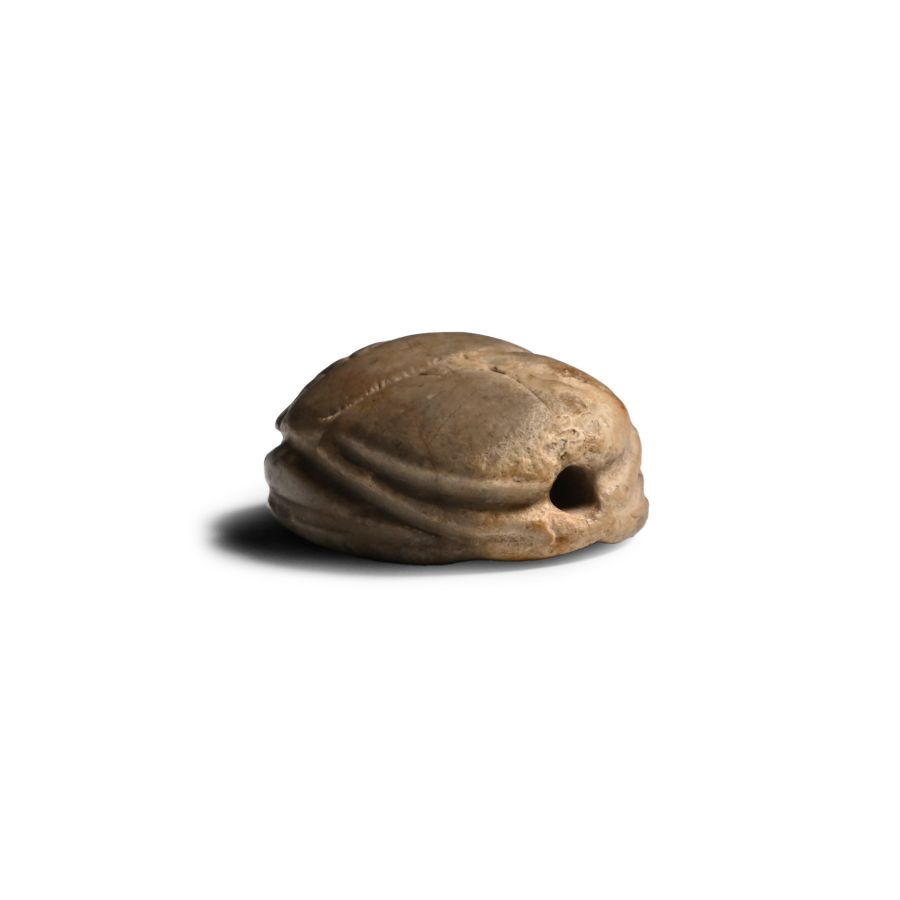
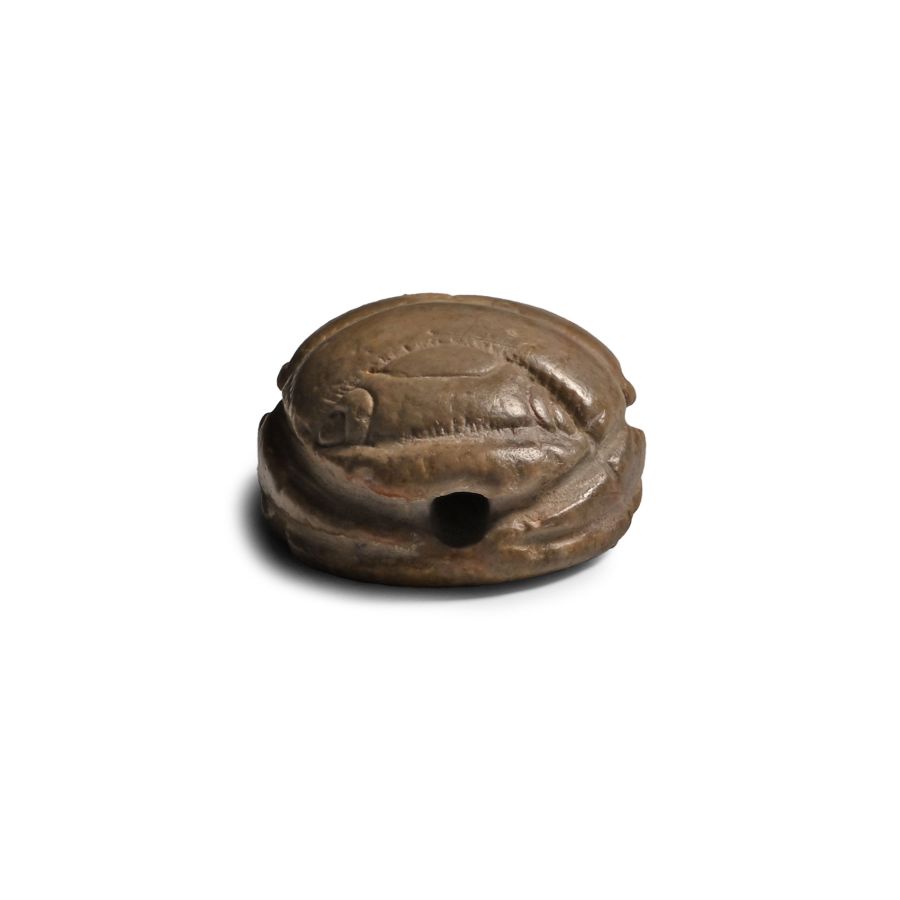
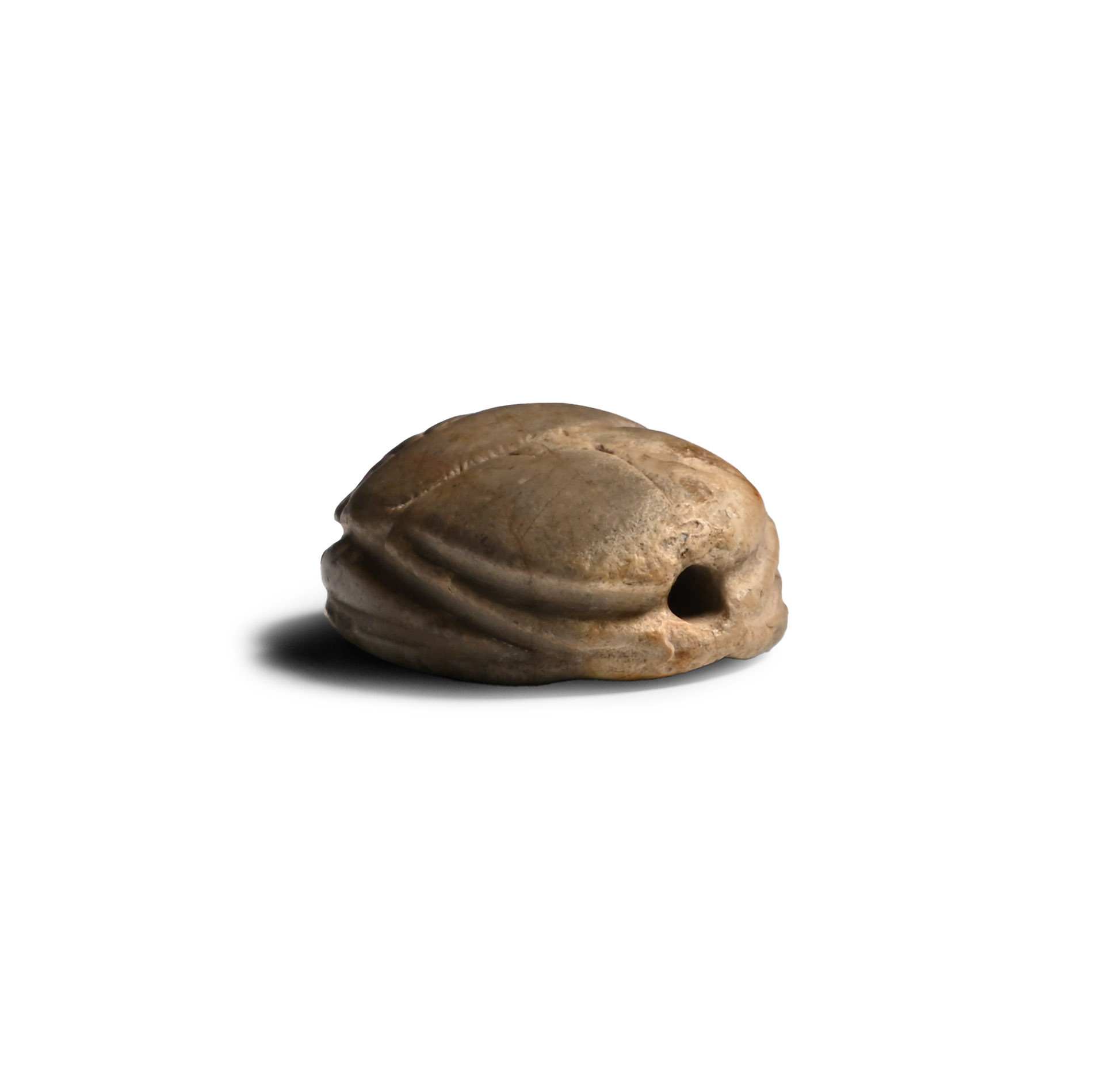
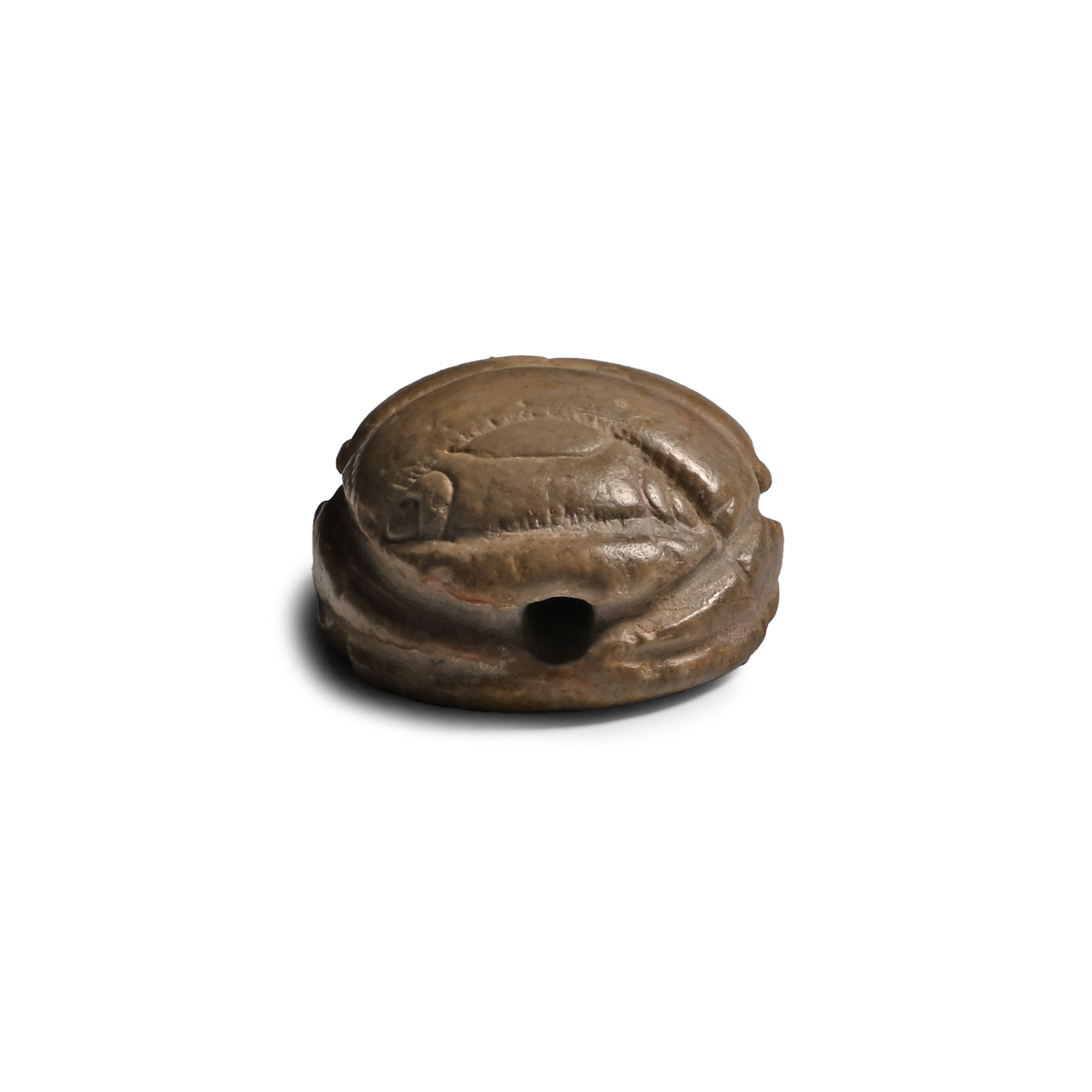
Phoenician Stone Scarab with Inscription
1ST MILLENNIUM B.C.
1 in. (9.7 grams, 27 mm).
With detailing to the carapace, the underside divided into four registers, the top and bottom with a winged Horus plaque, one register with a winged scarab flanked by two falcons, the register below with lying sphinxes flanking an ankh; pierced longitudinally.
ProvenanceAcquired in the mid 1980s-1990s.
Private collection, Switzerland, thence by descent.
Private collection, since the late 1990s.
Cf. A scarab (accession number:76.30.1924) in The Israel Museum, Jerusalem, for a Phoenician scarab with a similar double-winged scarab.
CONDITIONTimeLine Auctions follows a vetting process to ensure the authenticity and legality of all items, reinforcing our commitment to integrity and responsible trading. Each antiquity, antique, and coin lot undergoes thorough examination by a vetting committee of at least ten external specialists, professional trade association members, scientists, and archaeologists: Our Vetting Process
AUCTIONS:
TimeLine is a leading auction house specialising in antiquities, ancient art, collectables, natural history, coins, medals, and books. Our auctions offer museums, collectors, historians, and enthusiasts the opportunity to acquire unique and historically significant pieces.
-
.jpg)
Egyptian Limestone Relief of a Ptolemaic King
Ptolemaic Period, 332-30 B.C.Sold for (Inc. bp): £14,300
Trapezoidal fragment bearing a low-relief depiction of a Ptolemaic king shown in profile, with characteristic plump cheeks, slightly upturned mouth, and internally detailed ear, wearing a long false beard, the Red or Dual Crown of Egypt with uraeus to the front, and a broad collar; the lower part of a cartouche to the right. 405 grams, 11 cm
Léon Rodrigues-Ely (1924–1973), Marseille, France. with Christie's, Paris, 6 May 2015, no.93. Private collection, Europe. Accompanied by a copy of an Art Loss Register certificate no.S00104585. This lot has been checked against the Interpol Database of stolen works of art and is accompanied by a search certificate number no.12369-226941.
Léon Rodrigues-Ely (1924–1973) was a prominent French collector based in Marseille, known for his keen interest in fine art and antiquities. Throughout his life, Rodrigues-Ely assembled an eclectic and esteemed collection, particularly focusing on European and Mediterranean artifacts. His passion for collecting was fuelled by a deep appreciation for history and culture, and he was well-regarded among art dealers and scholars alike. Many of the pieces in his collection were acquired from significant galleries and private collections across Europe, reflecting his dedication to preserving cultural heritage. Rodrigues-Ely’s collection continued to be highly sought after following his death, with several pieces passing through prestigious auction houses, cementing his legacy in the art world. -
.jpg)
Egyptian Blue-Glazed Faience White Lotus Chalice
New Kingdom-Third Intermediate Period, 1315-945 B.C.Estimate: £5,000 - 7,000 (+bp*)
Opening Bid: £2,500
The lotiform cup modelled as an open lotus flower with incised petal detailing to the outer face, short stem and flared foot; some restoration. 205 grams, 12 cm
Acquired 1970s-1996. Property of a North American collector. London collection, 2016. This lot has been checked against the Interpol Database of stolen works of art and is accompanied by search certificate no.12100-214087.
Faience chalices shaped like the flowers of the white lotus (Nymphaea albicans) first appeared in the 18th Dynasty, and are thought to be drinking vessels. -
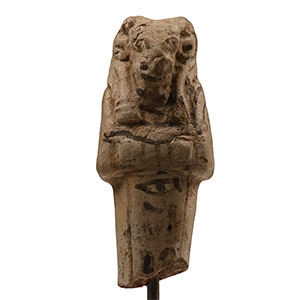
Egyptian Faience Bull-Headed Shabti from the Serapeum at Saqqara
New Kingdom, Ramesside Period, 1295-1069 B.C.Sold for (Inc. bp): £3,250
Pale faience figurine representing a bull-headed mummy adorned with a tripartite wig and human arms crossed over the chest with hands holding a pick and a hoe; only the lower legs and feet missing; the opening part of a central panel of hieroglyphic inscription reads: Wsir ͗ ḥp, 'the Osiris Apis'; mounted on a custom-made display stand. 152 grams total, 15 cm including stand
Probably found at the Serapeum at Saqqara in the 19th century. From the private collection of the late Mr M.S.C., Norfolk, UK, formed 1950s-1960s. Accompanied by an academic report by Egyptologist Paul Whelan.
While most shabtis served as substitutes or servants of the deceased and were placed in the tomb, some, like this example, were votive objects deposited in places of great sanctity. Virtually all known Apis shabtis come from excavations in the Serapeum catacombs led by Auguste Mariette from 1850 to 1853. They all belong to activity dating to the 19th and 20th Dynasties (circa 1295-1069 BC) and were unearthed in various chambers where they had been placed as votive offerings to honour the deified Apis bulls.
