
Loading, please wait...
LOT 0473
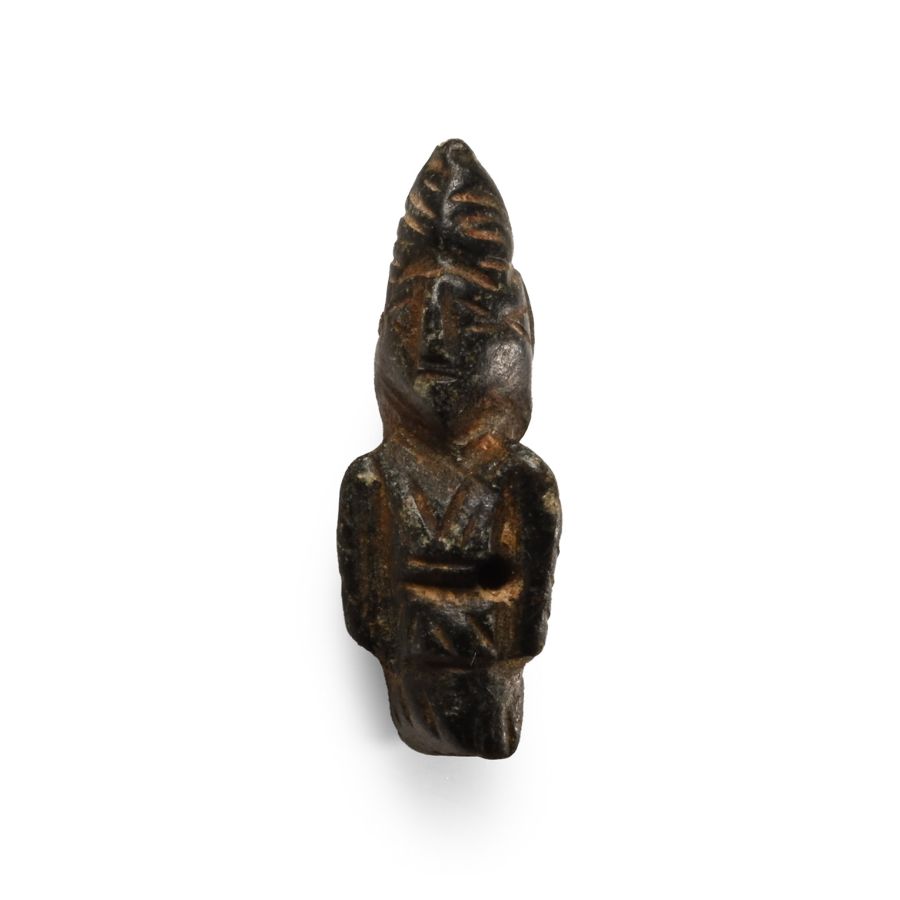
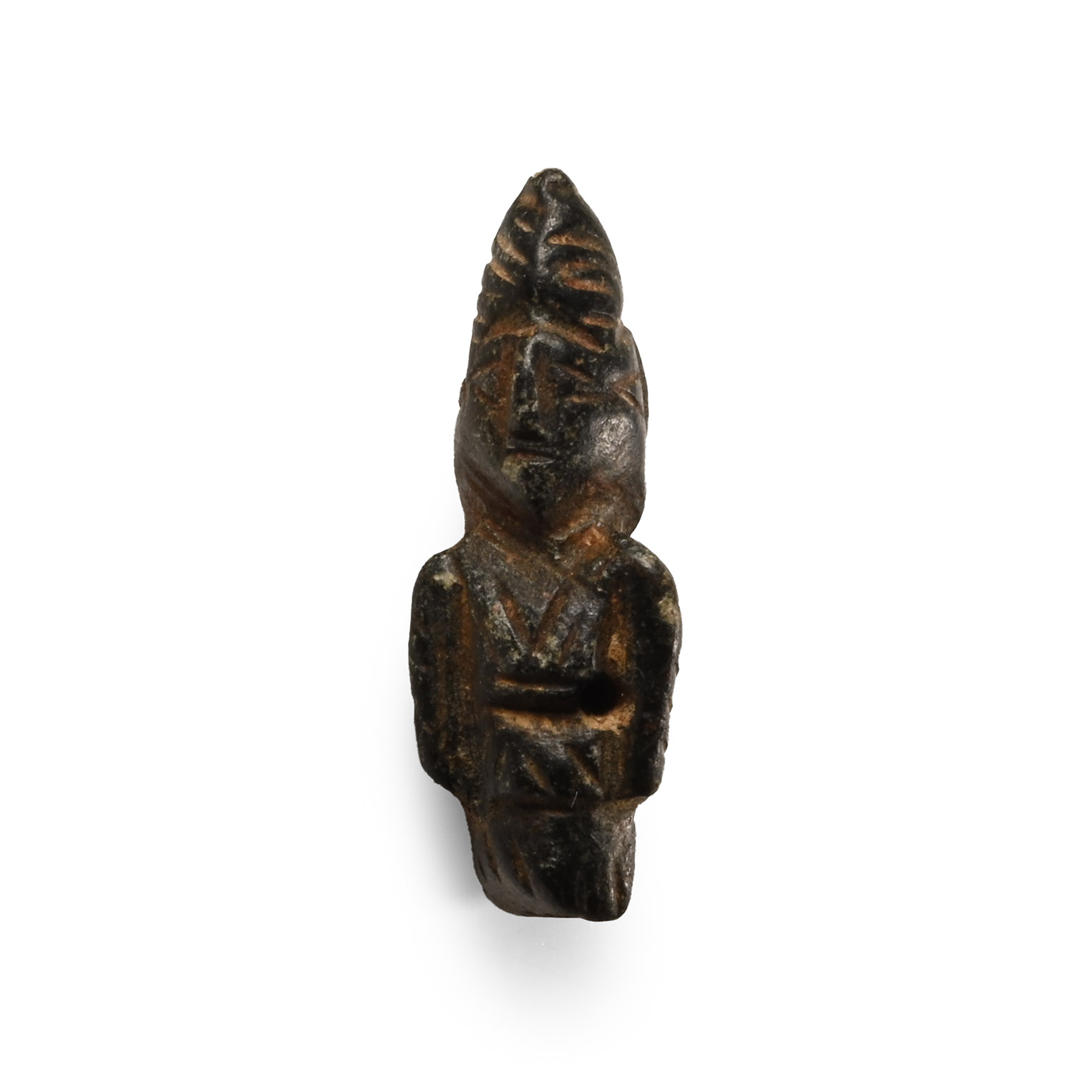
Phoenician Steatite Multi-Bodied Astarte Amulet
CIRCA 6TH CENTURY B.C.
1 in. (1.70 grams, 23 mm).
Carved as three radiating figures with conical headdress; the hair, limbs and other features shared by the three separate personae; pierced for suspension.
ProvenanceFrom the collection of Mr S.M., London, UK, formed from 1969-1999.
This lot is accompanied by an illustrated lot declaration signed by the Head of the Antiquities Department, Dr Raffaele D’Amato.
TimeLine Auctions follows a vetting process to ensure the authenticity and legality of all items, reinforcing our commitment to integrity and responsible trading. Each antiquity, antique, and coin lot undergoes thorough examination by a vetting committee of at least ten external specialists, professional trade association members, scientists, and archaeologists: Our Vetting Process
AUCTIONS:
TimeLine is a leading auction house specialising in antiquities, ancient art, collectables, natural history, coins, medals, and books. Our auctions offer museums, collectors, historians, and enthusiasts the opportunity to acquire unique and historically significant pieces.
LOT 0473
Phoenician Steatite Multi-Bodied Astarte Amulet
Estimate £100 - 140€120 - 160 (for guidance only)$140 - 190 (for guidance only)
-
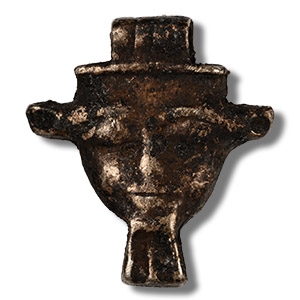
Egyptian Silver Hathor Amulet
Late-Ptolemaic Period, 664-30 B.C.Sold for (Inc. bp): £98
D-shaped mask representing the human-headed Hathor with cow ears and a short beard, with a ribbed suspension loop above. 0.66 grams, 10 mm
From an early 20th century collection. This lot is accompanied by an illustrated lot declaration signed by the Head of the Antiquities Department, Dr Raffaele D’Amato. -
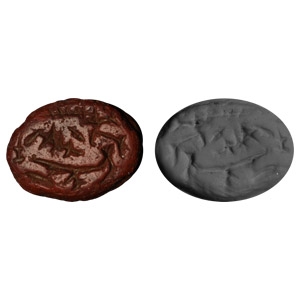
Phoenician Stone Scaraboid Seal
Levant, circa 10th century B.C.Estimate: £400 - 600 (+bp*)
Opening Bid: £200
Engraved stylised detailing to the domed carapace, the underside with quadrupeds and caterpillars in exergue; pierced longitudinally; accompanied by a museum-quality impression. 3.35 grams, 18 mm
From the 'S' collection, acquired 1970-1990s. The collection was seen and studied by W.G. Lambert, late Professor of Assyriology at the University of Birmingham, 1970-1993. Accompanied by a copy of a report from Peter Gert Van der Veen, senior lecturer of Levantine Archaeology Johannes Gutenberg-Universität Mainz. This lot is accompanied by an illustrated lot declaration signed by the Head of the Antiquities Department, Dr Raffaele D’Amato. -
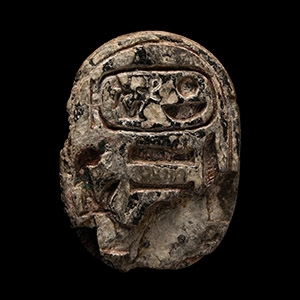
Large Egyptian Stone Hieroglyphic Scarab with Cartouche of Amenhotep III
New Kingdom, 1386-1349 B.C.Estimate: £700 - 900 (‡+bp*)
Opening Bid: £350
Naturalistically modelled with detailing to the upper body and legs; damaged base with the throne name 'neb-maat-re' of Amenhotep III in cartouche and the god's name Amun-Re below; pierced for suspension. 41 grams, 44 mm
Ex R. Liechti (1934-2010) Geneva, Switzerland, collection between 1950-1990s. This lot is accompanied by an illustrated lot declaration signed by the Head of the Antiquities Department, Dr Raffaele D’Amato.
