
Loading, please wait...
LOT 0516
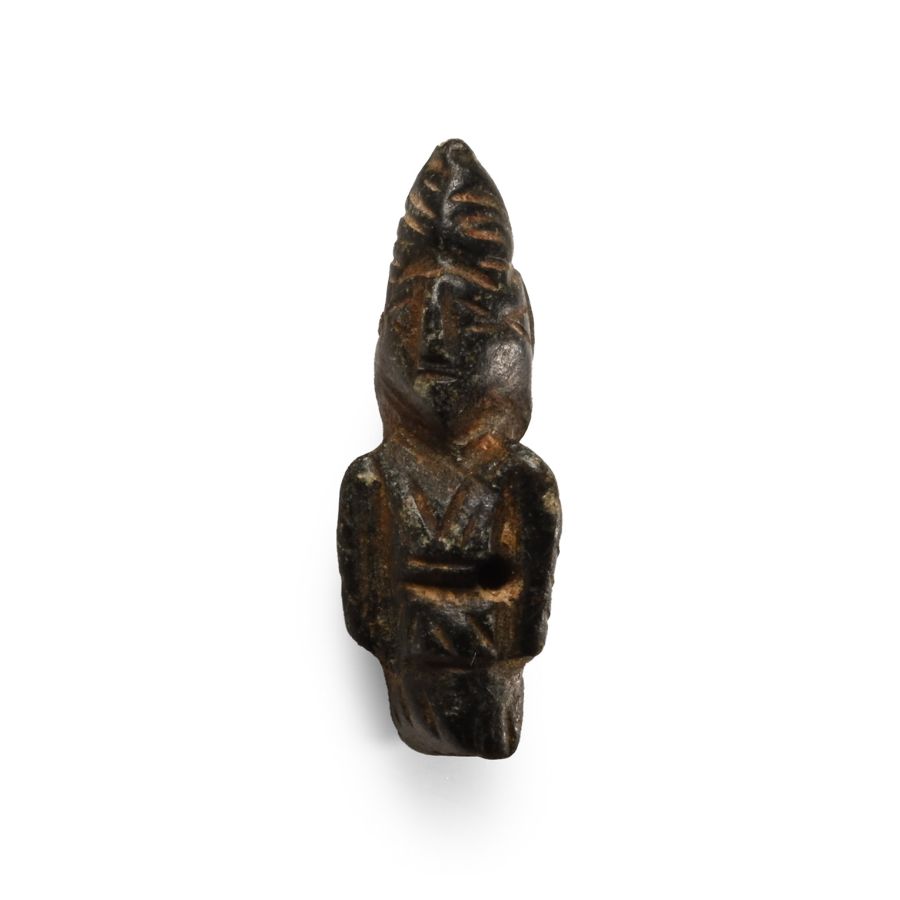
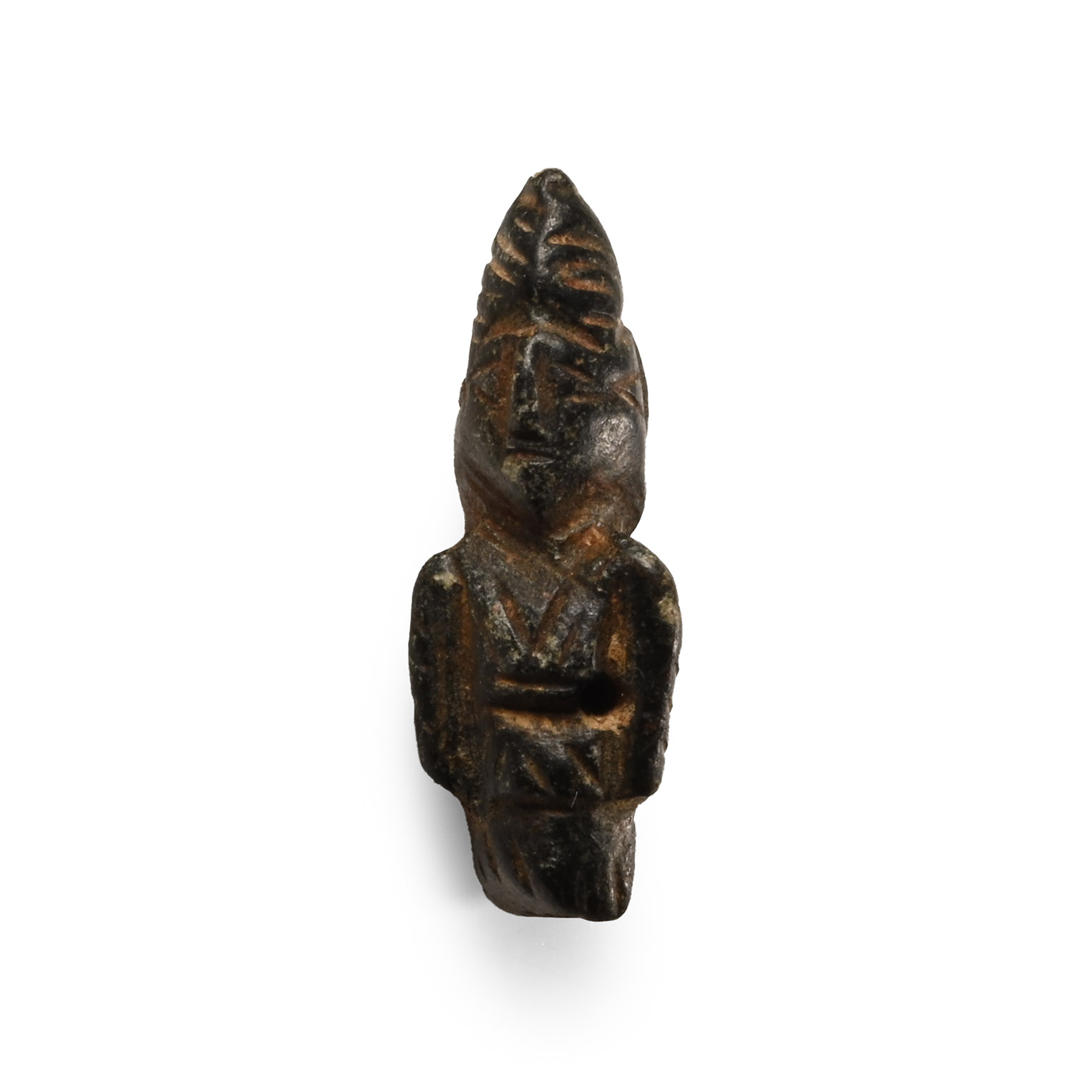
Phoenician Steatite Multi-Bodied Astarte Amulet
CIRCA 6TH CENTURY B.C.
1 in. (1.70 grams, 23 mm).
Carved as three radiating figures with conical headdress; the hair, limbs and other features shared by the three separate personae; pierced for suspension.
ProvenanceFrom the collection of Mr S.M., London, UK, formed from 1969-1999.
CONDITIONTimeLine Auctions follows a vetting process to ensure the authenticity and legality of all items, reinforcing our commitment to integrity and responsible trading. Each antiquity, antique, and coin lot undergoes thorough examination by a vetting committee of at least ten external specialists, professional trade association members, scientists, and archaeologists: Our Vetting Process
AUCTIONS:
TimeLine is a leading auction house specialising in antiquities, ancient art, collectables, natural history, coins, medals, and books. Our auctions offer museums, collectors, historians, and enthusiasts the opportunity to acquire unique and historically significant pieces.
LOT 0516
Phoenician Steatite Multi-Bodied Astarte Amulet
Estimate £100 - 140€120 - 160 (for guidance only)$140 - 190 (for guidance only)
-
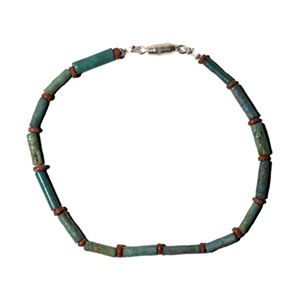
Egyptian Faience Bead Bracelet
New Kingdom, 1552-1069 B.C.Sold for (Inc. bp): £33
Restrung group of blue tubular beads and red discoid beads; modern clasp. 2.46 grams, 21 cm
Ex J. Cummings collection, UK, 1980s-1990s. Accompanied by a dealer's information display card. -
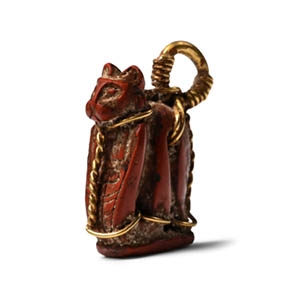
Egyptian Jasper Lion-Headed Cobra Amulet in Gold Frame
6th century B.C.Estimate: £2,000 - 3,000 (‡+bp*)
Opening Bid: £1,000
The S-curved body resting on a tongue-shaped based, detailed hood, and delicate details to the head of a lioness; wrapped in a gold frame with suspension loop. 2 grams, 18 mm
Private collection of Mr K.A. Private collection, Europe, 26 June 2009.
This amulet likely represents a goddess, either Sekhmet or Wadjet. Sekhmet is typically depicted as a lioness or lion-headed woman, while Wadjet appears in the form of a cobra. The lion-headed cobra form can be an allusion to the uraeus, worn on the crowns of royalty and deities for protection. -
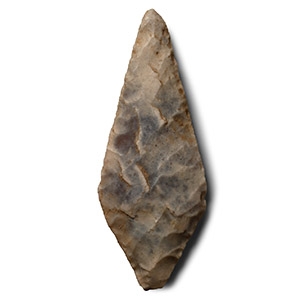
Egyptian Flaked Arrowhead
4th-2nd millennium B.C.Sold for (Inc. bp): £59
Lentoid in section and lozengiform in plan with two cutting edges. 1.48 grams, 35 mm
From the collection of Mr S.M., London, UK, formed from 1979-1999.
