
Loading, please wait...
LOT 0096
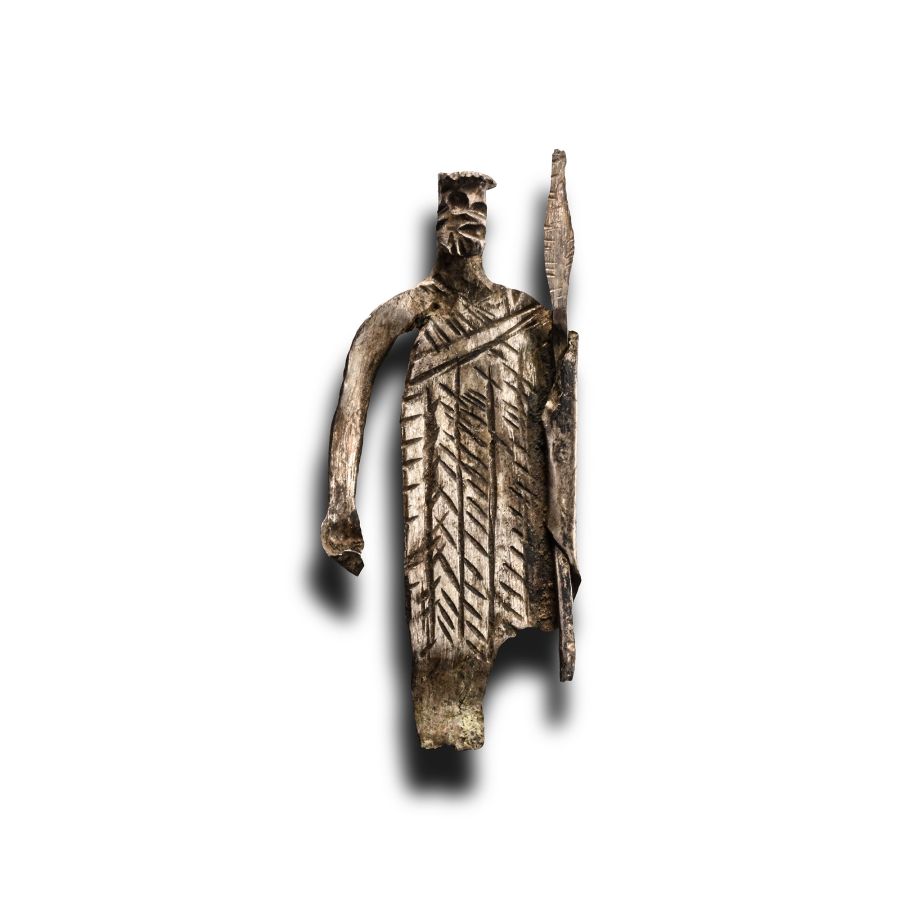
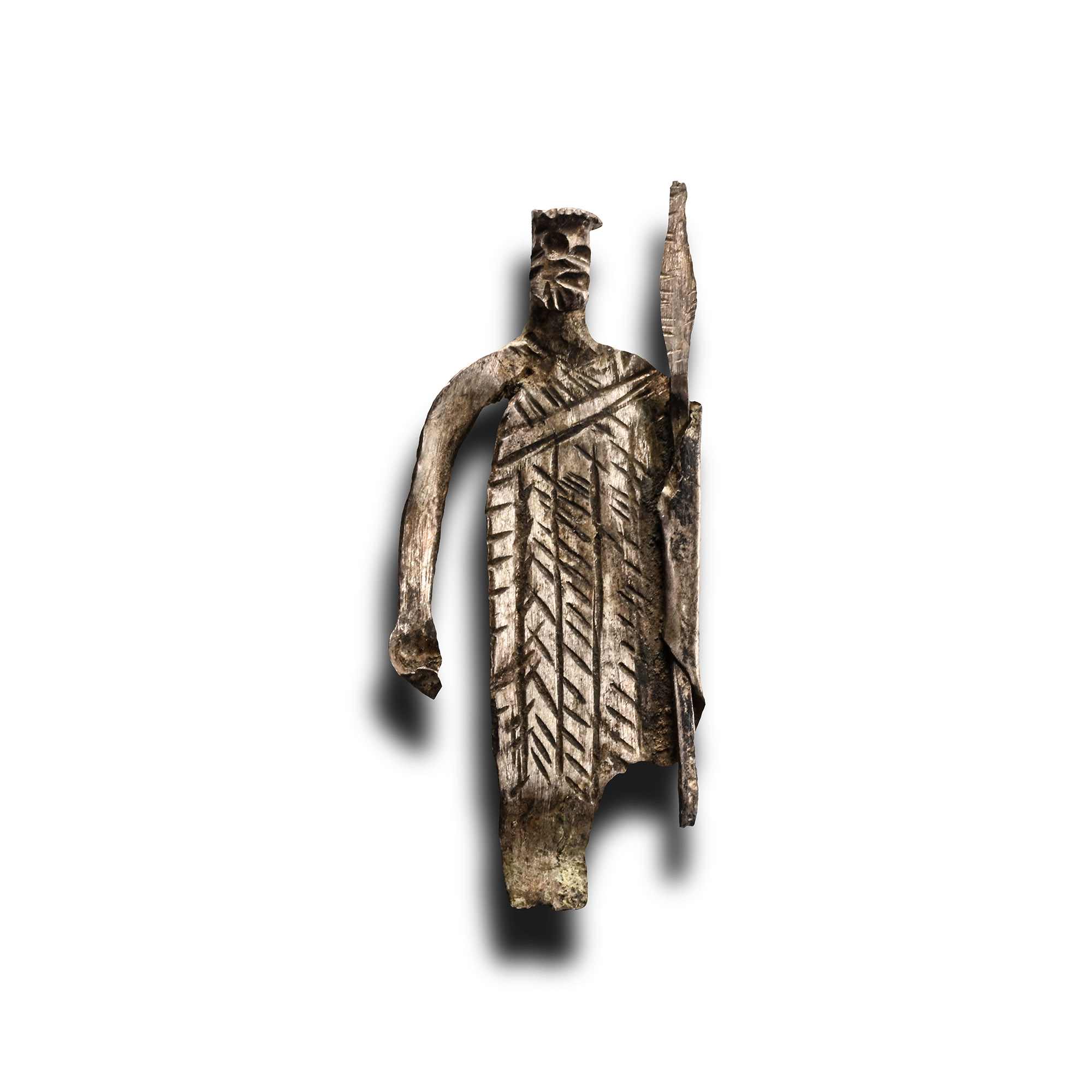
Phoenician Silver Votive Warrior Figure
6TH-4TH CENTURY B.C.
1 7/8 in. (3.57 grams, 47 mm).
Sheet-silver figure with vertical banding to the cloak, one curled edge enfolding the shaft of a spear; old collector's label '4' to the reverse.
ProvenanceAcquired in the late 1980s-early 1990s.
Important North West London collection.
TimeLine Auctions follows a vetting process to ensure the authenticity and legality of all items, reinforcing our commitment to integrity and responsible trading. Each antiquity, antique, and coin lot undergoes thorough examination by a vetting committee of at least ten external specialists, professional trade association members, scientists, and archaeologists: Our Vetting Process
AUCTIONS:
TimeLine is a leading auction house specialising in antiquities, ancient art, collectables, natural history, coins, medals, and books. Our auctions offer museums, collectors, historians, and enthusiasts the opportunity to acquire unique and historically significant pieces.
LOT 0096
Phoenician Silver Votive Warrior Figure
Estimate £400 - 600€460 - 700 (for guidance only)$540 - 810 (for guidance only)
-
Greek Terracotta Vessel Fragment Group
Circa 7th-3rd century B.C.Sold for (Inc. bp): £442
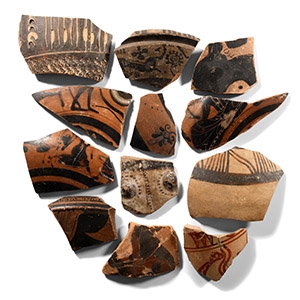
Comprising a variety decorated fragments including: four figural black-figure fragments; one with raised line decoration; one with raised bosses; a fragment with a gazelle facing back; one with painted motifs in red; and three other fragments with painted motifs. 264 grams total, 5.3-10.5 cm
Acquired early 20th century. Ex property of UK lady by descent. Property of a Nottinghamshire gentleman. -
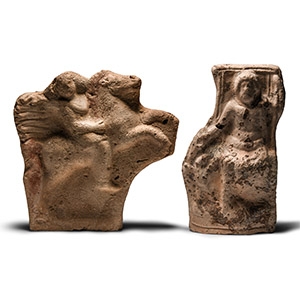
Parthian Terracotta Statuette Group
3rd century B.C.Sold for (Inc. bp): £351
Hollow-formed, comprising: a rider on a rearing horse with chlamys extended in the wind, and wearing wide Persian trousers (saravara), red pigment in the field; Zeus enthroned, facing with an eagle at his feet, hole to the reverse. 598 grams total, 15.5 cm each
Ex private European collection. with Genève Enchères, 14 December 2017, lot 863.
The costume of Parthian nobles consisted of a tunic or wrapped jacket, trousers and boots/footwear, generally typical of a riding dress. Interestingly, the right side of the tunic was knee-length (such as those seen om early Sassanian noblemen depicted in the Persepolis graffiti) but the left side of the tunic, for many Parthian cavalrymen, appeared shorter and only reached to the upper thigh. -
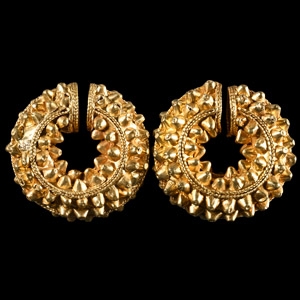
Etruscan Gold Leech Earring Pair
3rd century B.C. or laterEstimate: £1,200 - 1,700 (‡+bp*)
Opening Bid: £600
Formed as hollow penannular hoops with eight rows of hollow cones and double filigree ropework band, two rows of filigree hoops to the terminals. 18.92 grams total, 33 mm each
From the collection of a North American gentleman, formed in the 1990s.
