
Loading, please wait...
LOT 0072
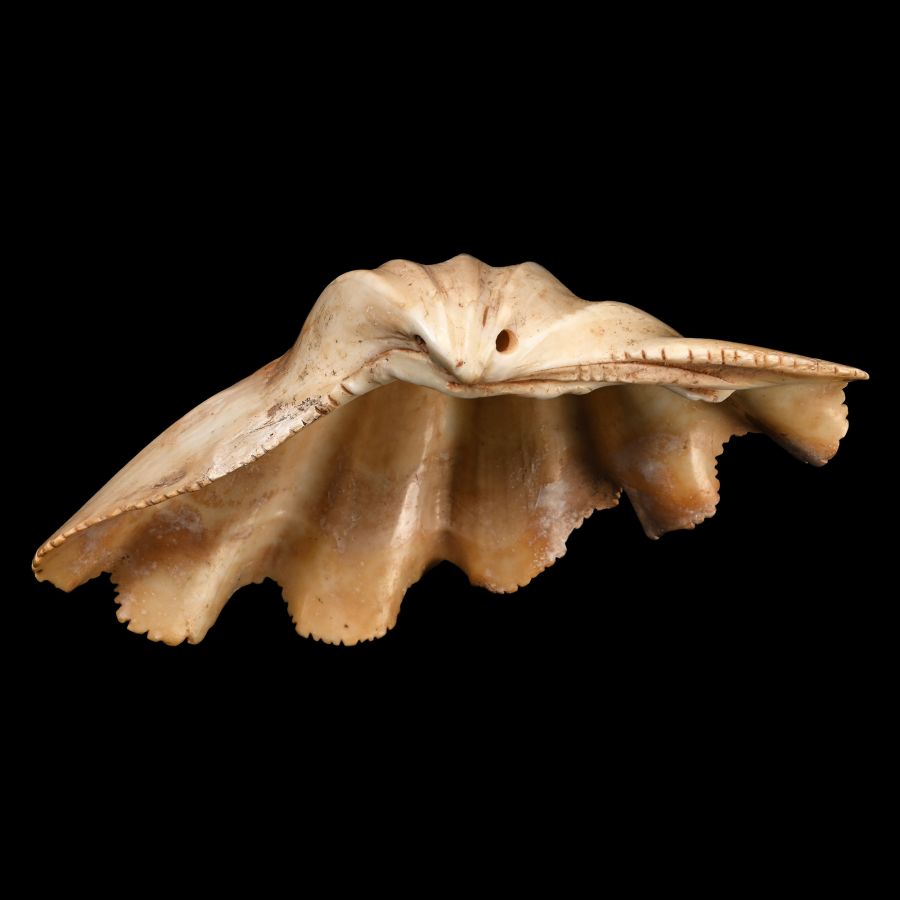
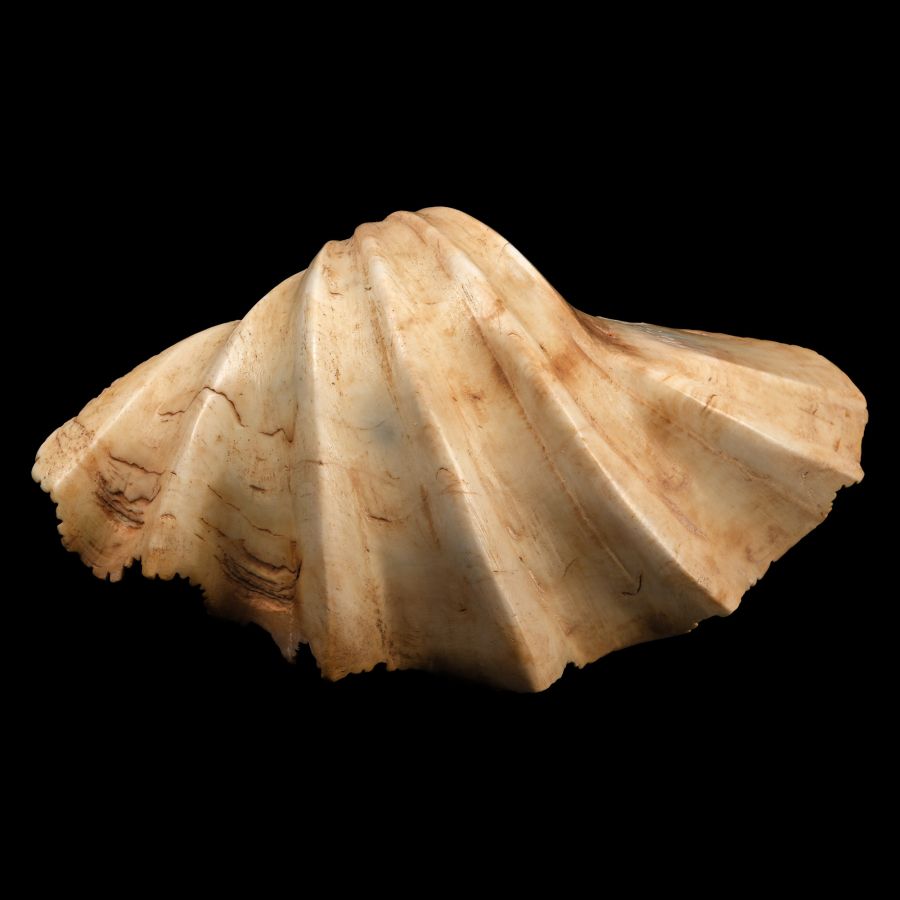
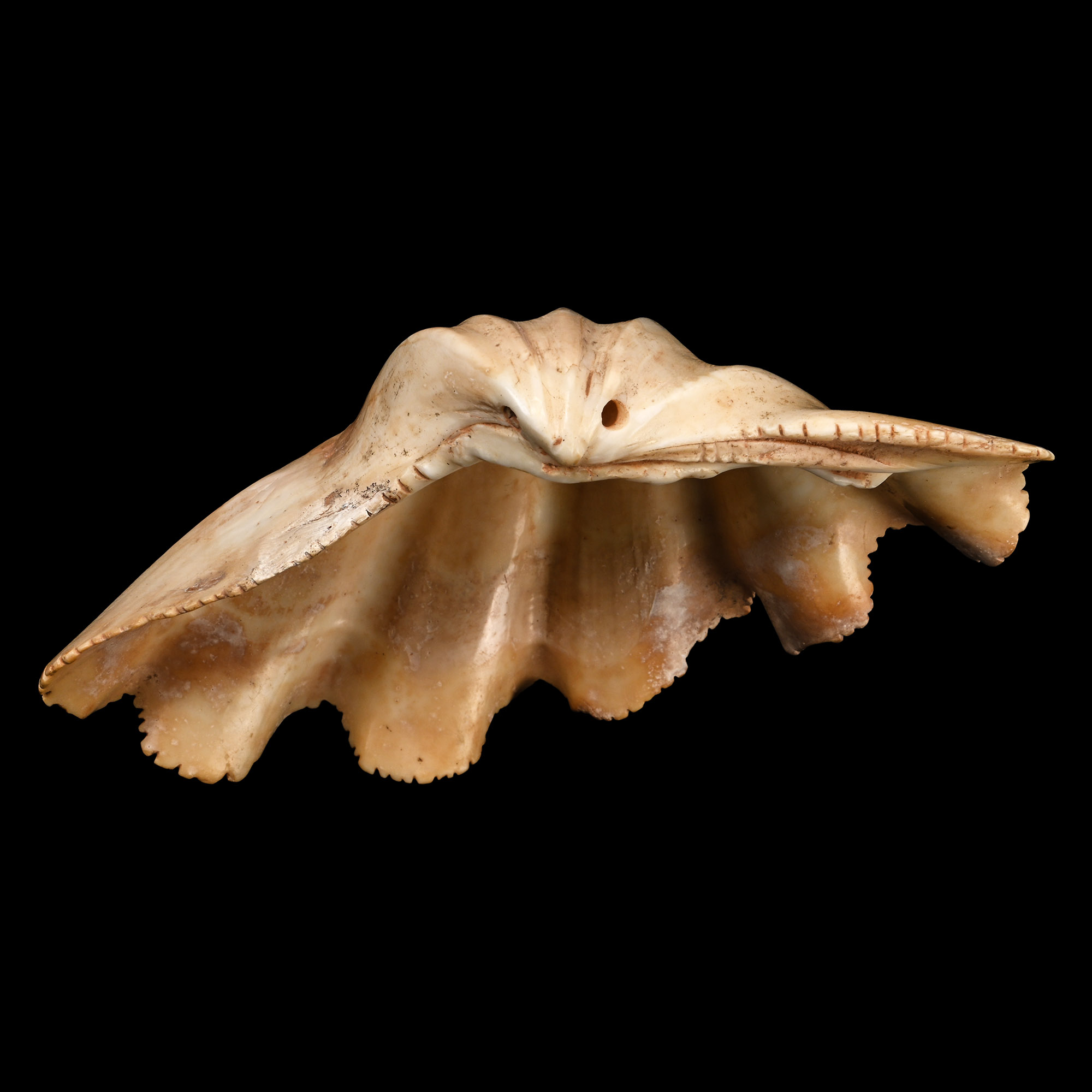
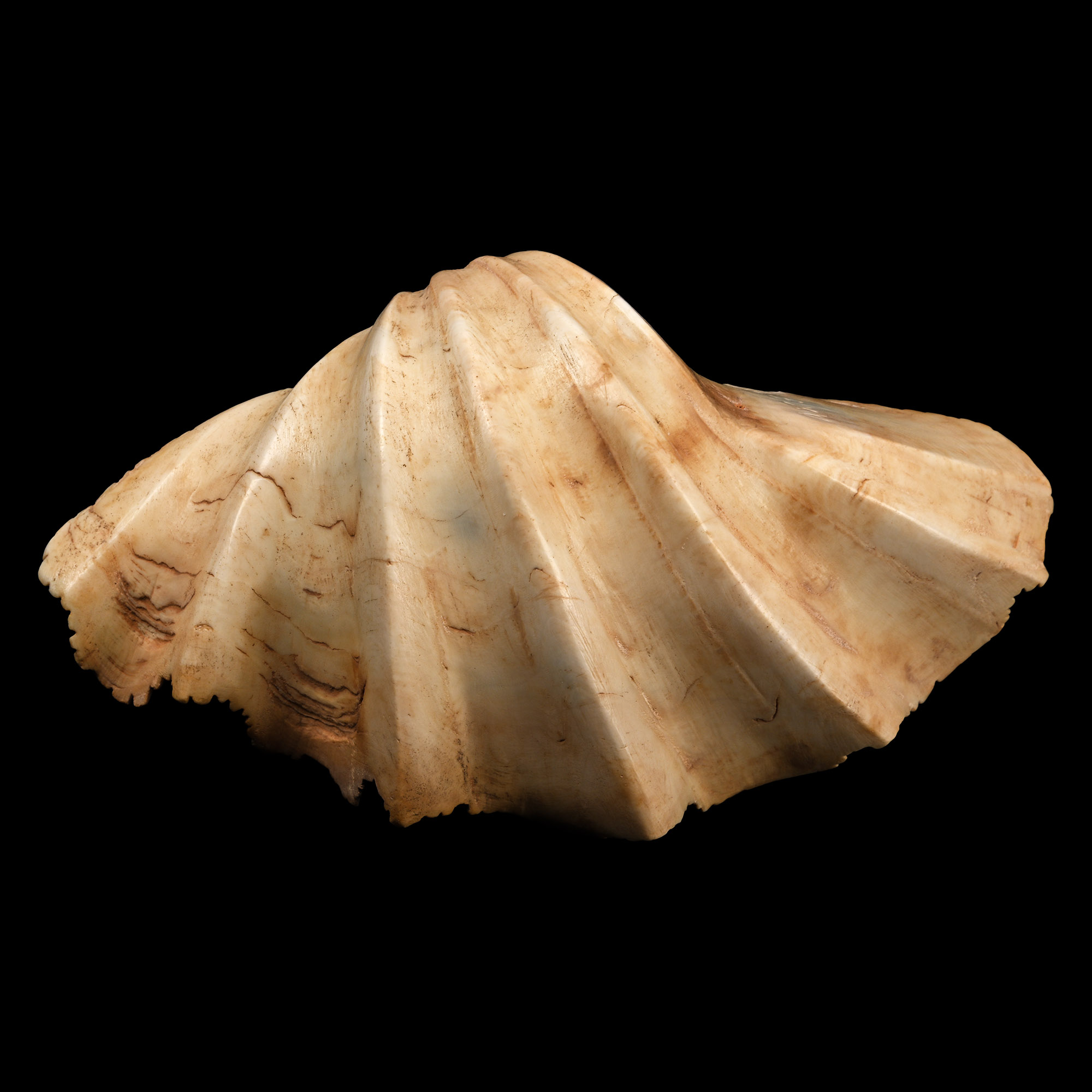
Phoenician Shell Cosmetic Vessel with Carved Eyes
CIRCA 7TH-6TH CENTURY B.C.
5 3/4 in. (110 grams, 14.6 cm).
A tridacna squamosa shell with drilled eyes on the apex, the edges decorated with parallel cuts.
ProvenanceAcquired before 1983.
Ex London gallery, 1990s.
Private collection, London, UK.
See The British Museum, London, museum number 1852,0112.3, for a cosmetic vessel carved with a human head.
CONDITIONTimeLine Auctions follows a vetting process to ensure the authenticity and legality of all items, reinforcing our commitment to integrity and responsible trading. Each antiquity, antique, and coin lot undergoes thorough examination by a vetting committee of at least ten external specialists, professional trade association members, scientists, and archaeologists: Our Vetting Process
AUCTIONS:
TimeLine is a leading auction house specialising in antiquities, ancient art, collectables, natural history, coins, medals, and books. Our auctions offer museums, collectors, historians, and enthusiasts the opportunity to acquire unique and historically significant pieces.
-
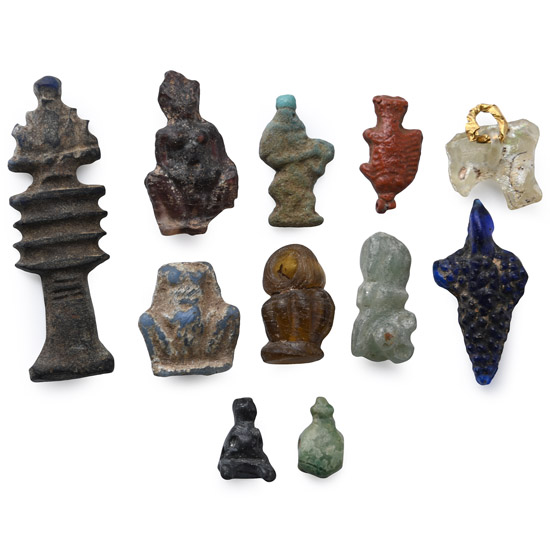
Egyptian Faience and Glass Amulet Collection
New Kingdom-Late Period, circa 1550-332 B.C.Sold for (Inc. bp): £221
Comprising eleven amulets, including two baubo amulets, a dancing Bes, a tilapia fish, a bunch of grapes, a crowned djed pillar, two lion amulets, and others. 9.11 grams total, 9.53-36.46 mm
From the private collection of a European gentleman (1942-2024), formed since the 1970s. -
.jpg)
Egyptian Bronze Figure of Khnum, the Creator God
Late Period, 664-332 B.C.Sold for (Inc. bp): £11,700
A substantial figure of the ram-headed god Khnum advancing, wearing a tripartite wig with low central modius drilled for a separately cast headdress and finely pleated kilt, with ram's horns and eyes recessed for inlay, raised left hand, the right arm along the side; mounted on a custom-made stand. 466 grams, 22 cm high (803 grams total, 23.8 cm high including stand)
Bronze H: 19.6 cm, W: 5.4 cm, D: 6.9 cm Condition Surface has been extensively cleaned, in fair condition.
With Stendahl Art Gallery, Los Angeles, by at least circa 1950s, accompanied by an inventory card #39, with a matching number on the original base, and a photograph. Private collection, Hollywood, California, acquired from the above, circa 1950s. Accompanied by a copy of an Art Loss Register certificate, no.S00256888. This lot has been checked against the Interpol Database of stolen works of art and is accompanied by search certificate no. 13240-251804.
The god Khnum (or Khnemu), the 'Moulder', was one of the earliest gods of Egypt, worshipped especially at Philae and Elephantine, both in Nubia. He was thought to have made mankind out of clay on a potter's wheel. It was Khnum who helped Isis to gather the severed fragments of the body of the god Osiris and reassemble them. He was considered the father of the gods, along with Amun-Ra and Ptah. -
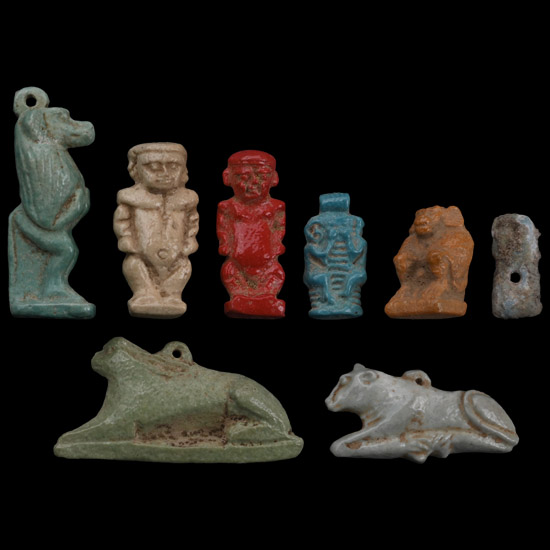
Egyptian Faience Amulet Collection
Late Period-Ptolemaic Period, 664-30 B.C.Sold for (Inc. bp): £572
Including a crouching baboon, a baboon standing in an adoring pose, two Pataikos, a hare, and other types. 22.97 grams total, 17-41 mm
From the collection of a gentleman, acquired on the London art market in the 1990s.
