
Loading, please wait...
LOT 0444
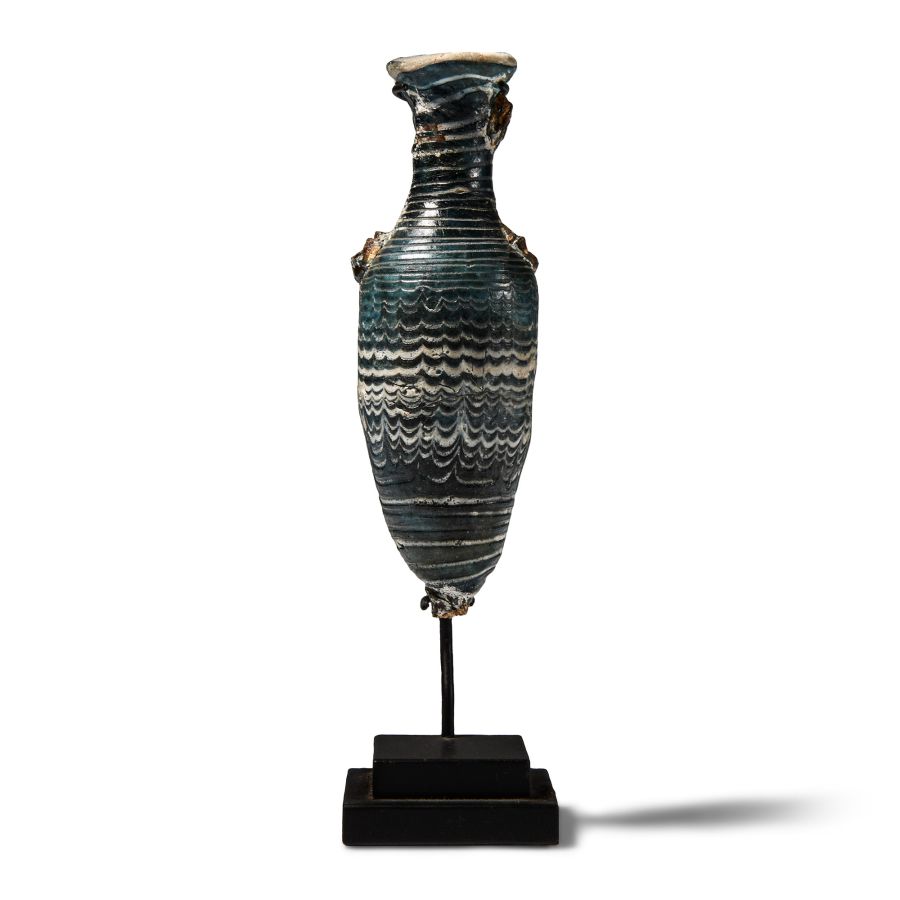
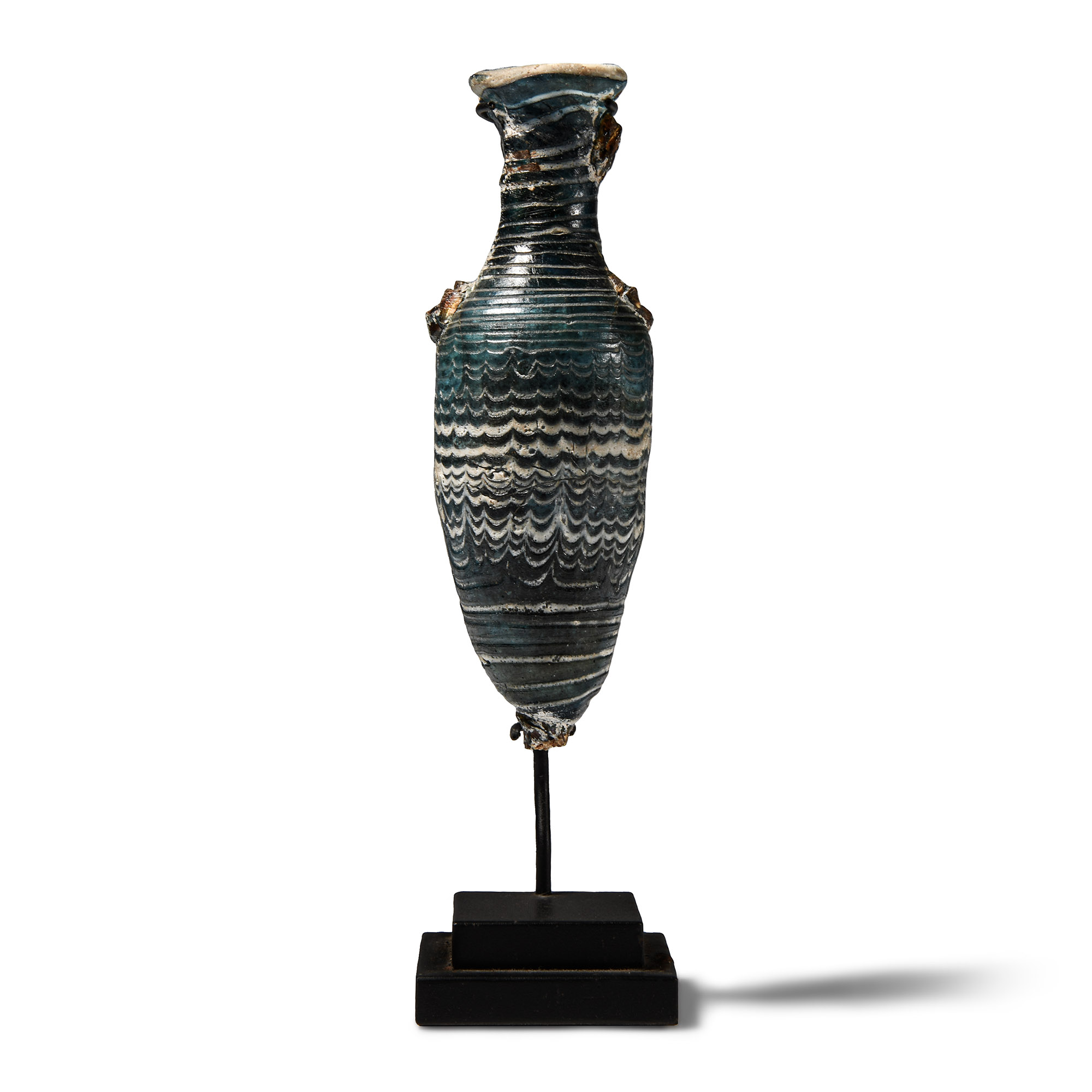
Phoenician Marvered Glass Amphoriskos
5TH-4TH CENTURY B.C.
7 1/4 in. (404 grams total, 18.5 cm including stand).
Elegantly proportioned vessel with marvered trails to the body, neck and mouth; handles absent; mounted on a custom-made stand. [No Reserve]
ProvenanceAcquired from Arte Primitivo, New York City, U.S.A., circa 2010.
Private collection of Professor Kenneth Graham, London, UK.
TimeLine Auctions follows a vetting process to ensure the authenticity and legality of all items, reinforcing our commitment to integrity and responsible trading. Each antiquity, antique, and coin lot undergoes thorough examination by a vetting committee of at least ten external specialists, professional trade association members, scientists, and archaeologists: Our Vetting Process
AUCTIONS:
TimeLine is a leading auction house specialising in antiquities, ancient art, collectables, natural history, coins, medals, and books. Our auctions offer museums, collectors, historians, and enthusiasts the opportunity to acquire unique and historically significant pieces.
-
.jpg)
Egyptian Bone Cosmetic Spoon
Late New Kingdom, 1550-664 B.C.Sold for (Inc. bp): £2,600
The naked female figure standing on a lotus column and holding an elongated shallow cosmetic spoon above her head. 32 grams, 19.5 cm
Acquired in Egypt in the early 20th century. Private collection of Mr T.H., Norfolk, UK. -
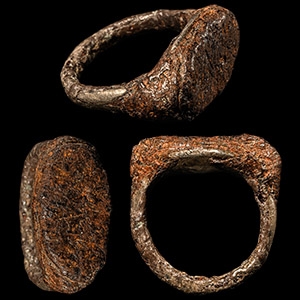
Egyptian Silver Signet Ring
Late Period, 664-332 B.C.Sold for (Inc. bp): £156
With a round-section hoop, the wide bezel encrusted but with decoration beneath. 7.11 grams, 26.03 mm overall, 18.22 mm internal diameter (approximate size British O 1/2, USA 7 1/4, Europe 15.61, Japan 15)
Collected from 1969-1999. From the collection of the late Mr S.M., London, UK. -
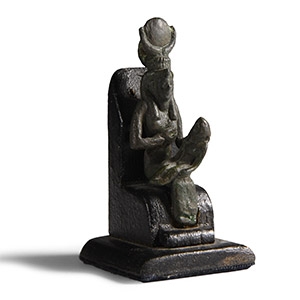
Egyptian Bronze Figure of Isis and Horus
Late Period, 664-332 B.C.Sold for (Inc. bp): £572
Amuletic pendant of seated Isis, wearing a cow's horn headdress with a solar disc, suckling the infant Horus with sidelock of youth, resting on her lap; mounted on a custom-made throne-shaped stand. 30.8 grams total, 65 mm high including stand
Acquired on the London art market prior to 2000. Private collection of Anthony Scammel (1937-2019). Ex Artemission, London SW5, UK. Private collection of Mr T.H., Norfolk, UK. Accompanied by a previous dealer's certificate of authenticity and invoice.
