
Loading, please wait...
LOT 0678
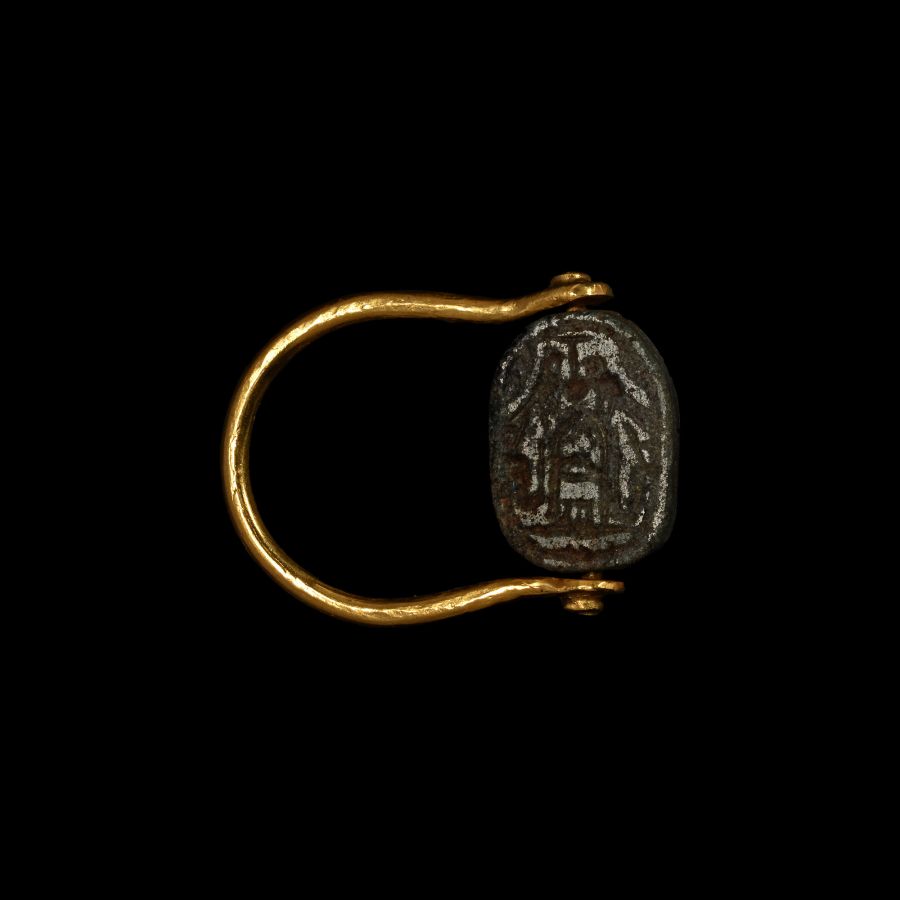
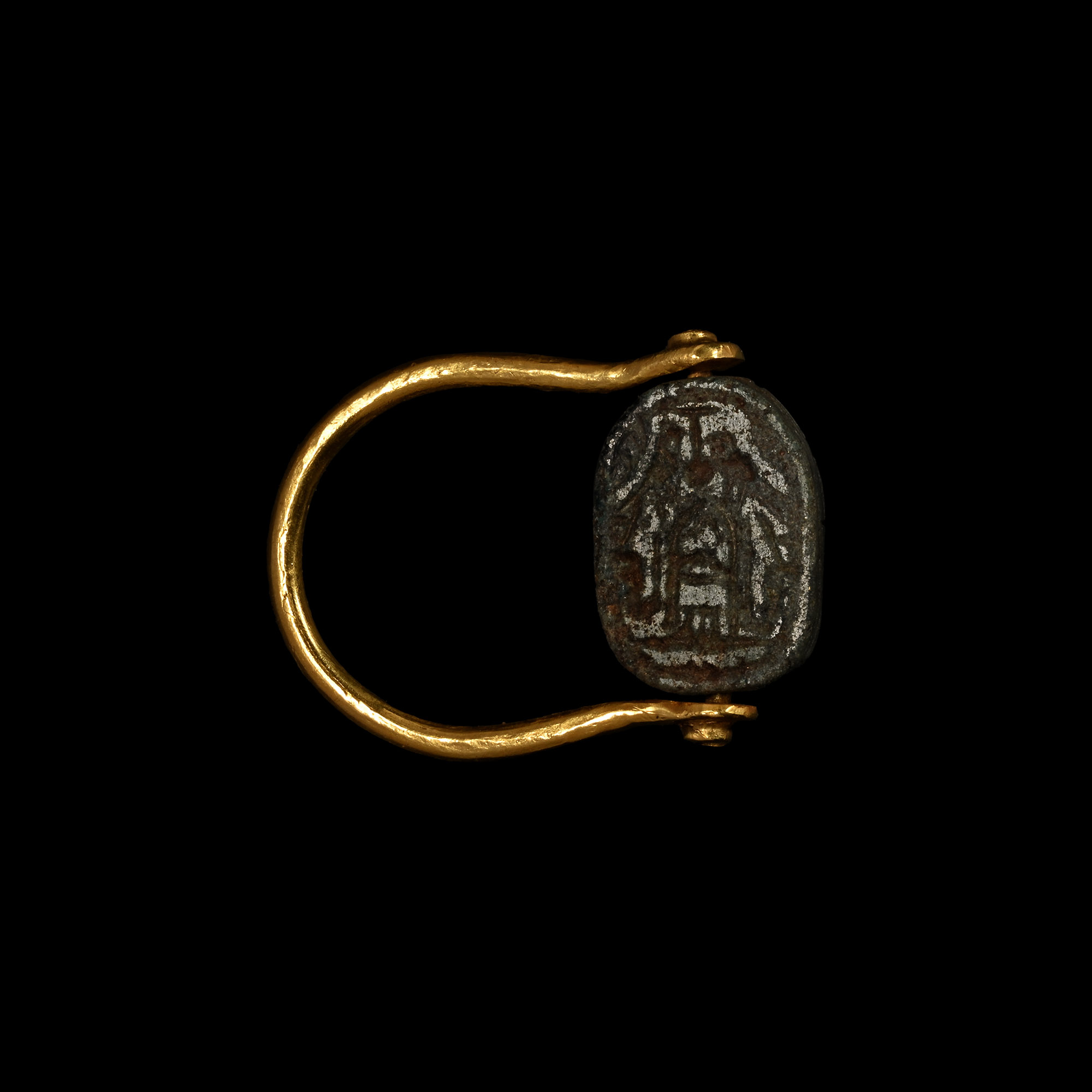
Phoenician Lapis Lazuli Scarab in Gold Swivel Ring
6TH-4TH CENTURY B.C. AND LATER
1 in. (4.34 grams, 26.44 mm overall, 15.68 mm internal diameter (approximate size British J 1/2, USA 5, Europe 9.32, Japan 9)).
With lightly incised anatomical detailing to the scarab; the underside with a central cartouche flanked by two rearing crowned uraei, a pair of falcons standing above the cartouche facing a smꜣ hieroglyph symbolising union (of the two lands, Upper and Lower Egypt); set into a later gold swivel ring.
Provenancewith Bonhams, London, UK, 21 October 1999, no.36.
Private collection, Europe.
This lot has been checked against the Interpol Database of stolen works of art and is accompanied by a search certificate number no.12370-226696.
Cf. Chadour, A.B., Rings. The Alice and Louis Koch Collection, volume I, Leeds, 1994, items 1,2, for earlier examples of the type.
CONDITIONTimeLine Auctions follows a vetting process to ensure the authenticity and legality of all items, reinforcing our commitment to integrity and responsible trading. Each antiquity, antique, and coin lot undergoes thorough examination by a vetting committee of at least ten external specialists, professional trade association members, scientists, and archaeologists: Our Vetting Process
AUCTIONS:
TimeLine is a leading auction house specialising in antiquities, ancient art, collectables, natural history, coins, medals, and books. Our auctions offer museums, collectors, historians, and enthusiasts the opportunity to acquire unique and historically significant pieces.
LOT 0678
Phoenician Lapis Lazuli Scarab in Gold Swivel Ring
Estimate £1,200 - 1,700€1,390 - 1,970 (for guidance only)$1,620 - 2,300 (for guidance only)
Opening Bid
£600 (EUR 696; USD 810) ‡+BP*
-
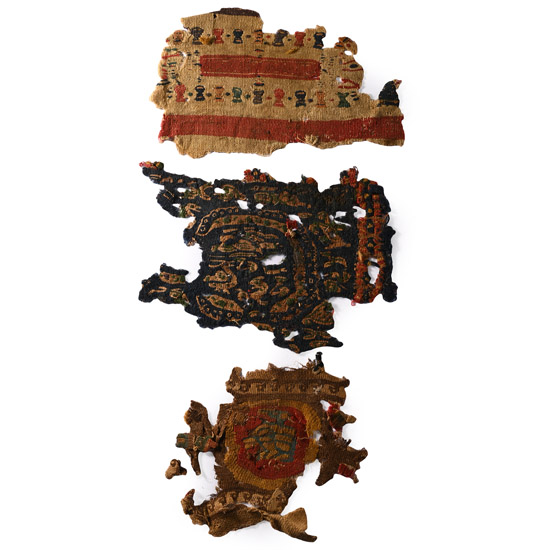
Egyptian Coptic Tunic and Tapestry Textile Fragments with Animals and Geometric Ornamets
Circa 7th-8th century A.D.Estimate: £80 - 100 (+bp*)
Opening Bid: £5
Comprising: a tapestry fragment (part of a pillow?) decorated with red bands and alternating figures of cups in green, red, blue, purple and yellow wool on linen; a large fragment of a segmentum from a tunic in coarse wool, consisting of a central medallion with a bird in red, yellow, light blue and yellow colour, with the borders decorate with meanders, tapestry, S-swift; a large portion of a tapestry with a central medallion ornamented with animals (lion, fish, birds) surrounded on the outside by dancing human figures and birds, one side circumscribed by a red stripe with vegetal ornaments, in red, blue-purple and yellow wool. 27 grams total, 15-22 cm
Acquired 1970s-1996. Property of a North American collector. London collection, 2016.
Large fragments of Coptic textiles display figures associated with the Dionysian retinue (lions, birds); however, they may date to the early period of the Islamic conquest, when tunic ornamentation began to take on an increasingly abstract and geometric character, preserving only stylised traces of the ancient Pagan symbology. -
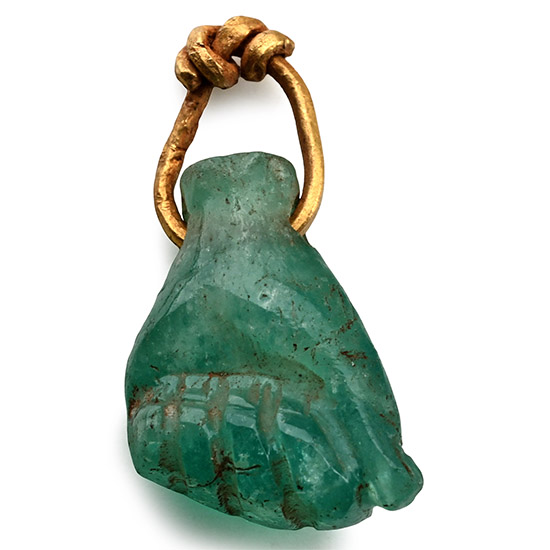
Egyptian Emerald Hand Amulet on Gold Loop
Late Period-Ptolemaic Period, circa 664-30 B.C.Estimate: £500 - 700 (+bp*)
Bids: 4 | Current Bid: £450
Modelled as clenched fist with slender wrist, drilled for suspension with a coiled gold wire. 2.00 grams, 22 mm
From the collection of an American gentleman, London, UK, 1980s. -
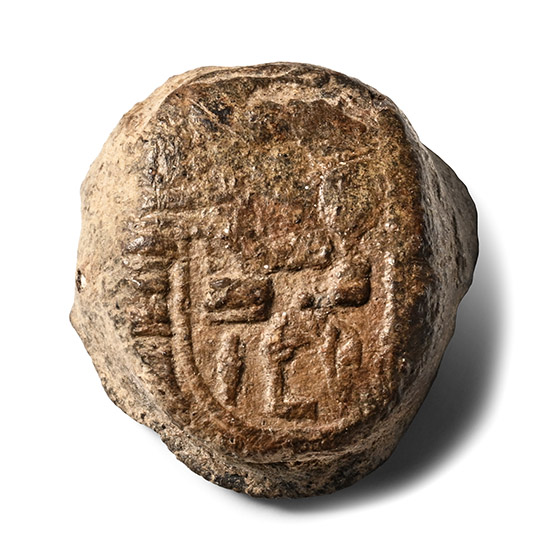
Egyptian Terracotta Bulla with Royal Cartouche
New Kingdom, circa 1400-1292 B.C.Estimate: £60 - 80 (+bp*)
Bids: 1 | Current Bid: £5
Discoid seal impression with one face preserving a partial impressed cartouche, the other side bearing the impression of a cord and linen. 1.92 grams, 17 mm
London, UK, art market, 1980s. Private collection, London, UK.
Clay seals were used to secure doors and containers holding valuable commodities and goods. The impression on the underside of this example indicates that it once sealed a linen bag or a linen lid cover.
