
Loading, please wait...
LOT 0466
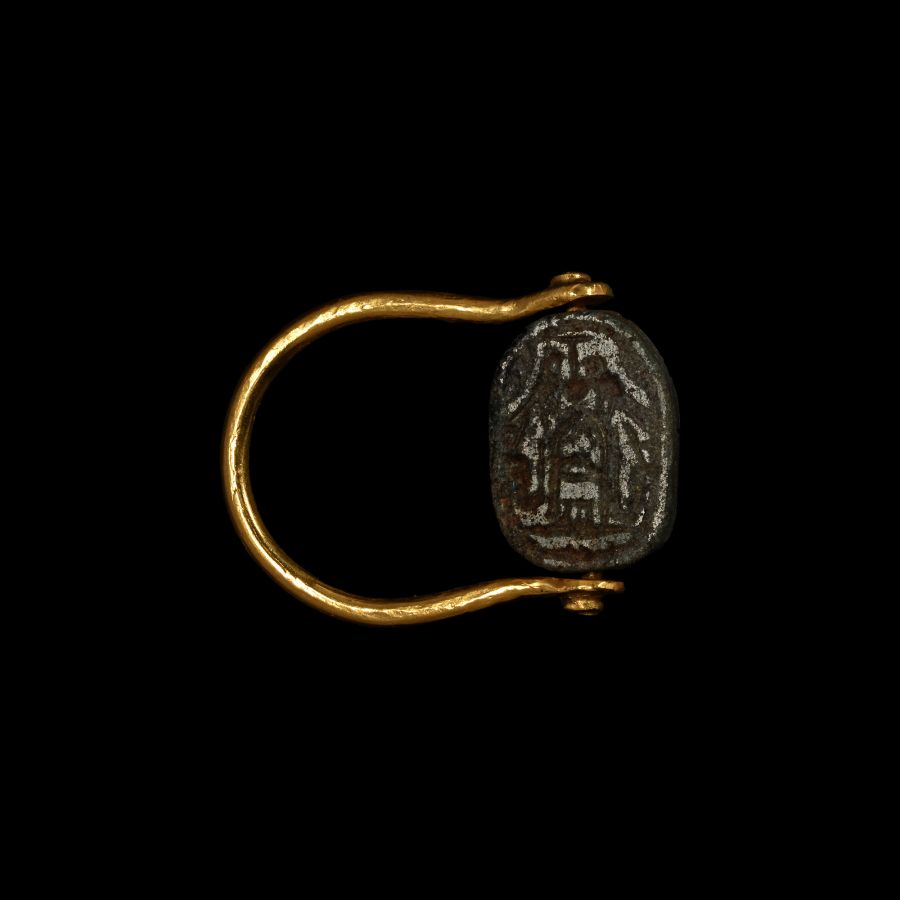
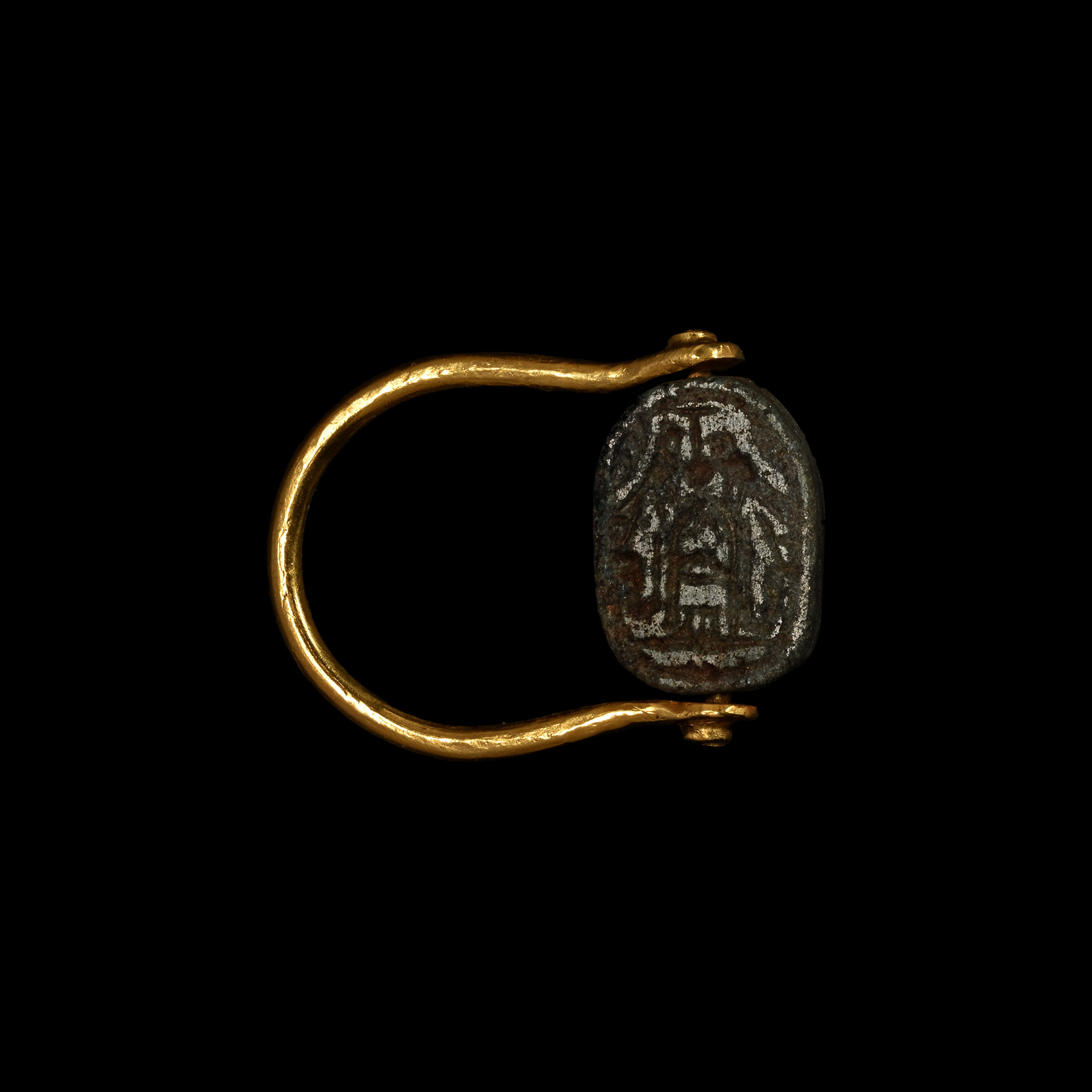
Phoenician Lapis Lazuli Scarab in Gold Swivel Ring
6TH-4TH CENTURY B.C. AND LATER
1 in. (4.34 grams, 26.44 mm overall, 15.68 mm internal diameter (approximate size British J 1/2, USA 5, Europe 9.32, Japan 9)).
With lightly incised anatomical detailing to the scarab; the underside with a central cartouche flanked by two rearing crowned uraei, a pair of falcons standing above the cartouche facing a smꜣ hieroglyph symbolising union (of the two lands, Upper and Lower Egypt); set into a later gold swivel ring.
Provenancewith Bonhams, London, UK, 21 October 1999, no.36.
Private collection, Europe.
This lot has been checked against the Interpol Database of stolen works of art and is accompanied by a search certificate number no.12370-226696.
Cf. Chadour, A.B., Rings. The Alice and Louis Koch Collection, volume I, Leeds, 1994, items 1,2, for earlier examples of the type.
CONDITIONTimeLine Auctions follows a vetting process to ensure the authenticity and legality of all items, reinforcing our commitment to integrity and responsible trading. Each antiquity, antique, and coin lot undergoes thorough examination by a vetting committee of at least ten external specialists, professional trade association members, scientists, and archaeologists: Our Vetting Process
AUCTIONS:
TimeLine is a leading auction house specialising in antiquities, ancient art, collectables, natural history, coins, medals, and books. Our auctions offer museums, collectors, historians, and enthusiasts the opportunity to acquire unique and historically significant pieces.
LOT 0466
Phoenician Lapis Lazuli Scarab in Gold Swivel Ring
Estimate £1,000 - 1,400€1,160 - 1,620 (for guidance only)$1,350 - 1,890 (for guidance only)
-
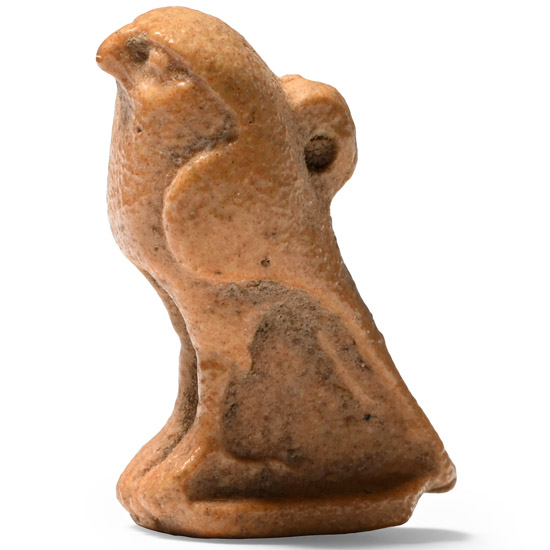
Egyptian Horus Amulet
Late Period, 664-332 B.C.Sold for (Inc. bp): £182
Perching falcon with detailing to wings and head; rectangular base and suspension loop on the back. 1.24 grams, 19 mm
Ex London gentleman's collection, by descent 1980s.
Horus is one of the most significant and widely worshipped gods in ancient Egyptian mythology. His importance covers many aspects of Egyptian religion, including serving as a symbol of the living king, offering protection, representing the sky, and symbolising the sun. -
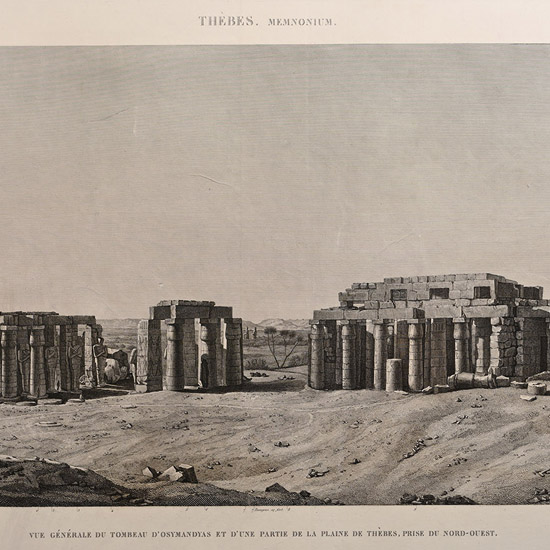
Very Large Egyptian Expedition Lithograph of the Memnonium at Thebes
Early 19th century A.D.Sold for (Inc. bp): £91
Proof etching on laid paper of plate 23 from Vol.II of Description de l'Égypte : ou, Recueil des observations et des recherches qui ont été faites en Égypte pendant l'expédition de l'armée française. entitled Thèbes. Memnonium. Vue générale du tombeau d'Osymandyas et d'une partie de la plaine de Thèbes prise du ord-ouest. 226 grams, 105 x 69.5 cm
From the collection of a North American priest. Acquired between 1981-1996. Property of a North American collector.
Produced between February 1802 and 1830 on the orders of Napoleon Bonaparte; published between 1809 and 1828. Just 1,000 copies were distributed to various institutions, printed on laid paper with an 'Égypte ancienne et moderne' watermark. The book is subtitled Recueil des observations et des recherches qui ont été faites en Égypte pendant l’expédition de l’Armée française, publié par les ordres de Sa Majesté l’Empereur Napoléon le Grand (Gathering of observations and discoveries which were made in Egypt during the expedition of the French army, published on the orders of His Majesty the Emperor Napoleon the Great). It was the world's first encyclopedia devoted exclusively to the remains of ancient Egypt. The plates of this book are the first to present the archaeological sites of Thebes (Luxor). The "Memnonium" is the Greek name for the mortuary temple of Ramesses II, now known as the Ramesseum. -
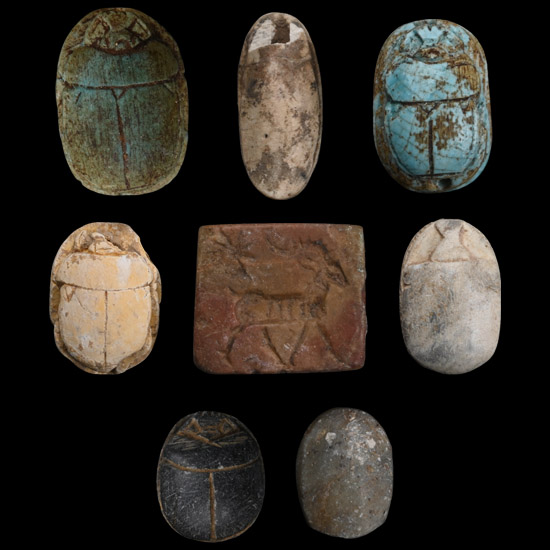
Egyptian Stone Scarab and Amulet Collection
Hyksos Period-Late Period, 1650-332 B.C.Sold for (Inc. bp): £585
Group consisting of scarabs, scaraboid and other types, some with hieroglyphs on the underside, including the cartouche of Amenhotep II (Akheperure) with the legend "Beloved of Amun". 15.71 grams total, 13-19 mm
From the collection of a gentleman, acquired on the London art market in the 1990s.
