
Loading, please wait...
LOT 0530
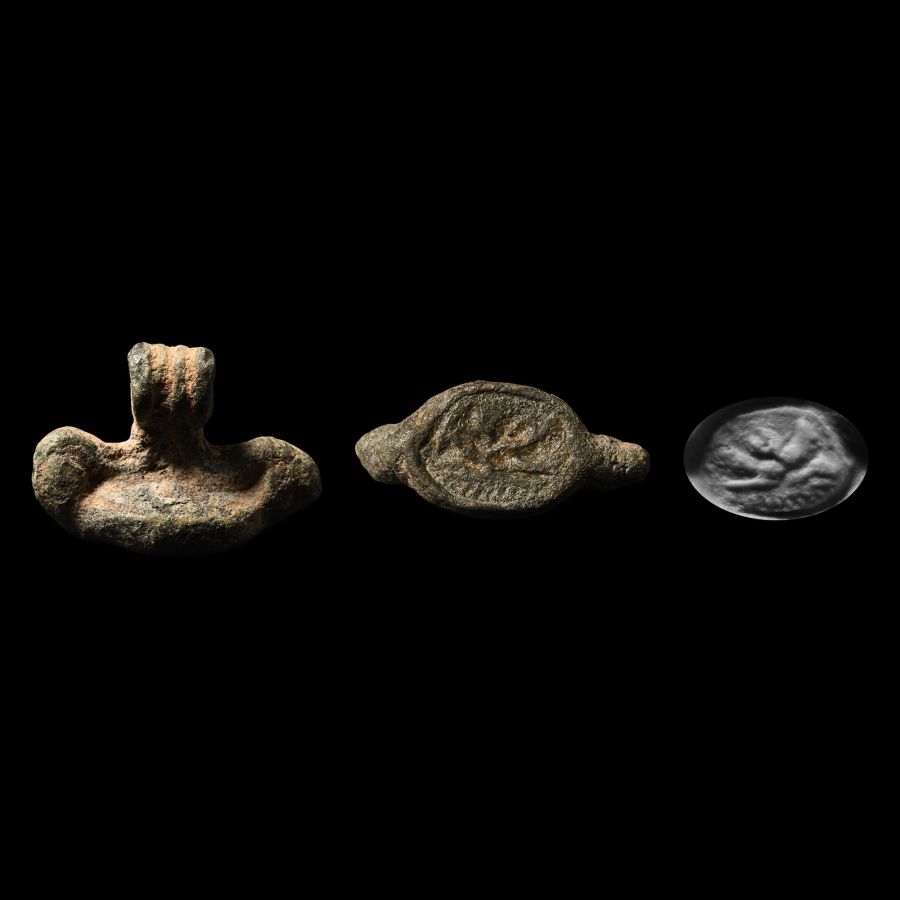
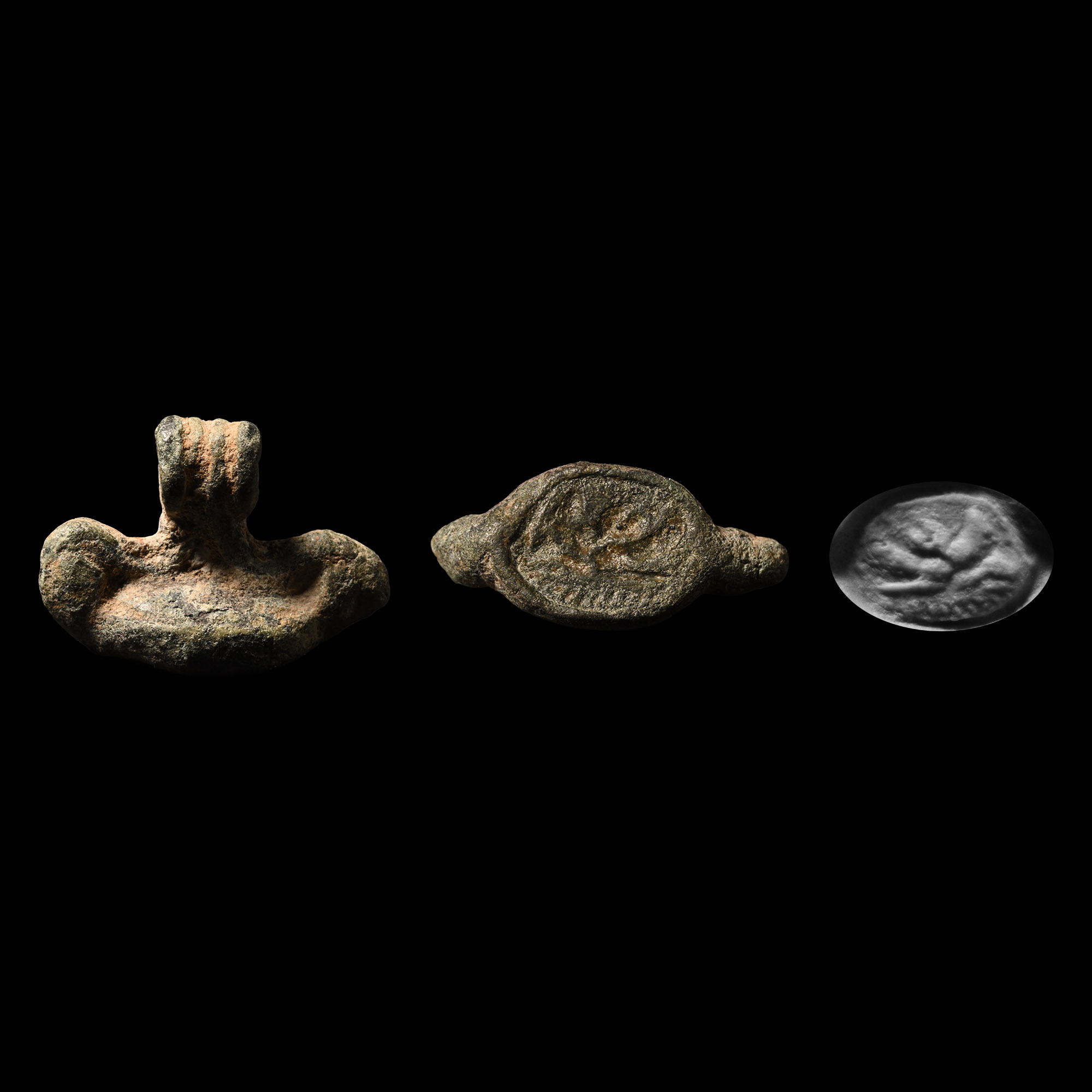
Phoenician Inscribed Bronze Scaraboid Seal
600-400 B.C.
1 in. (10.9 grams, 26 mm wide).
With ribbed loop and ellipsoid face, gryphon motif. [No Reserve]
ProvenanceEx London, UK, gentleman, 1990.
CONDITIONTimeLine Auctions follows a vetting process to ensure the authenticity and legality of all items, reinforcing our commitment to integrity and responsible trading. Each antiquity, antique, and coin lot undergoes thorough examination by a vetting committee of at least ten external specialists, professional trade association members, scientists, and archaeologists: Our Vetting Process
AUCTIONS:
TimeLine is a leading auction house specialising in antiquities, ancient art, collectables, natural history, coins, medals, and books. Our auctions offer museums, collectors, historians, and enthusiasts the opportunity to acquire unique and historically significant pieces.
-
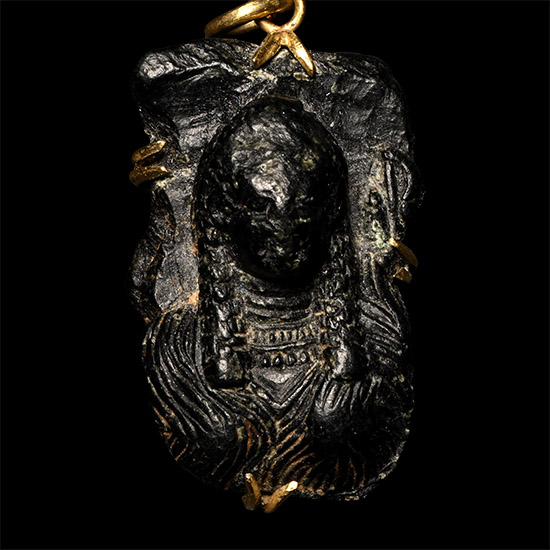
Egyptian Steatite Bust in a Gold Pendant
Ptolemaic Period, 332-30 B.C.Estimate: £800 - 1,000 (+bp*)
Opening Bid: £400
Fragment of a carved panel or vessel depicting a female bust - possibly a queen or Isis - modelled in half-round relief, wearing a loosely draped tunic, a tiered wesekh collar, and a heavy curled, tripartite wig; reverse with lotus flower ropework and other ornamentation; mounted in a later gold suspension frame. 8.75 grams, 38 mm
Private collection, Southern France, 1970s. Acquired on the English art market. -
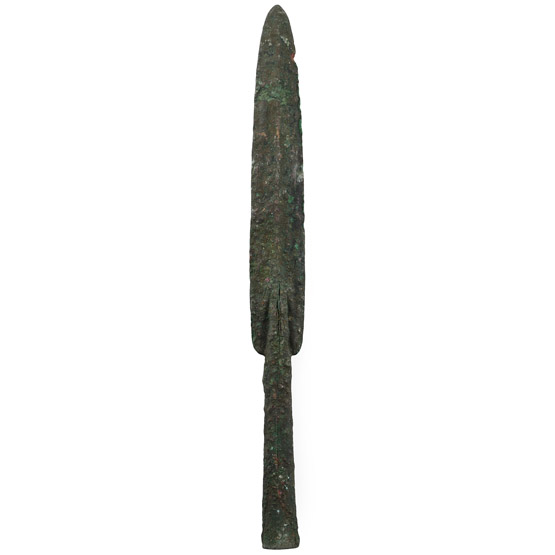
Egyptian Bronze Socketted Spearhead
New Kingdom, 15th-14th century B.C.Sold for (Inc. bp): £338
Foliate blade and tapering, short tubular shaft, marked mid-rib and rounded shoulders. 204 grams, 28 cm
Ex Abelita family collection, 1980s-2000s.
With the introduction of the socketted spearhead in the Middle East in the second half of the 3rd millennium BC, by the middle of the 2nd millennium, socketted spearheads became dominant throughout the ancient East and Egypt, and spearhead design has remained virtually unchanged since then. -
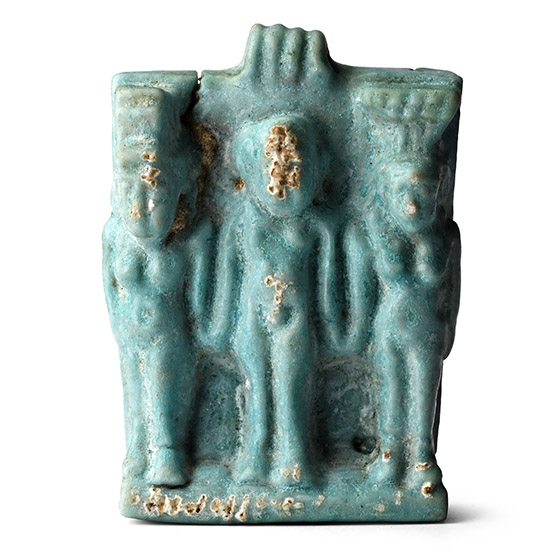
Egyptian Faience Triad Amulet
Late Period, 664-332 B.C.Estimate: £400 - 600 (+bp*)
Opening Bid: £222
Depicting in high relief the Osirian triad (Isis, Horus, Nephthys) standing side by side on an integral plinth against a dorsal pillar; Nephthys (right) and Isis (left) are shown frontally, wearing headdresses with their specific attributes, each holding the hands of the central Horus figure, shown naked and with the side-lock of youth; a ribbed loop at the top for suspension. 8.56 grams, 33 mm
From the collection of a Swedish noble family, 1920s.
Isis and Nephthys operate as complementary sister deities who guard both Osiris and the deceased through mourning, magical protection, and ritual lamentation, while Horus, the child of Isis, signifies renewal and legitimate kingship. On amulets, the triad translates into a compact visual statement of protection: the deceased is imagined as being held within the sisters’ magical and ritual care, while Horus embodies the successful outcome of that protection in the form of rebirth and continuity.
