
Loading, please wait...
LOT 0471
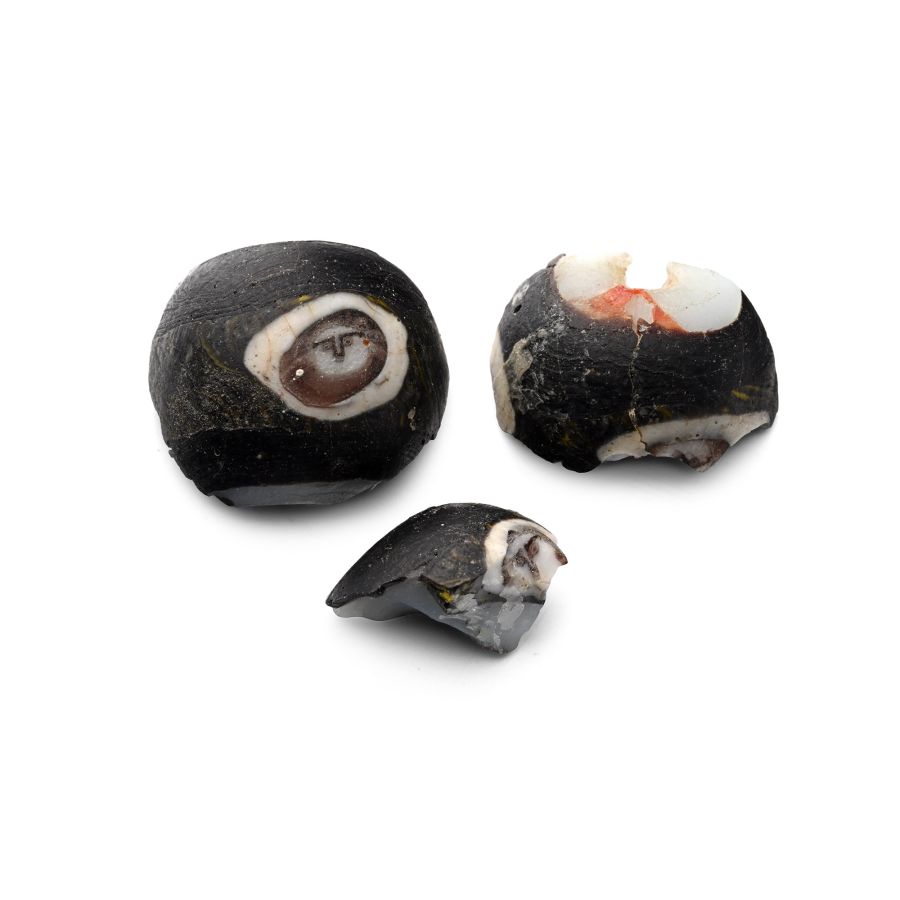
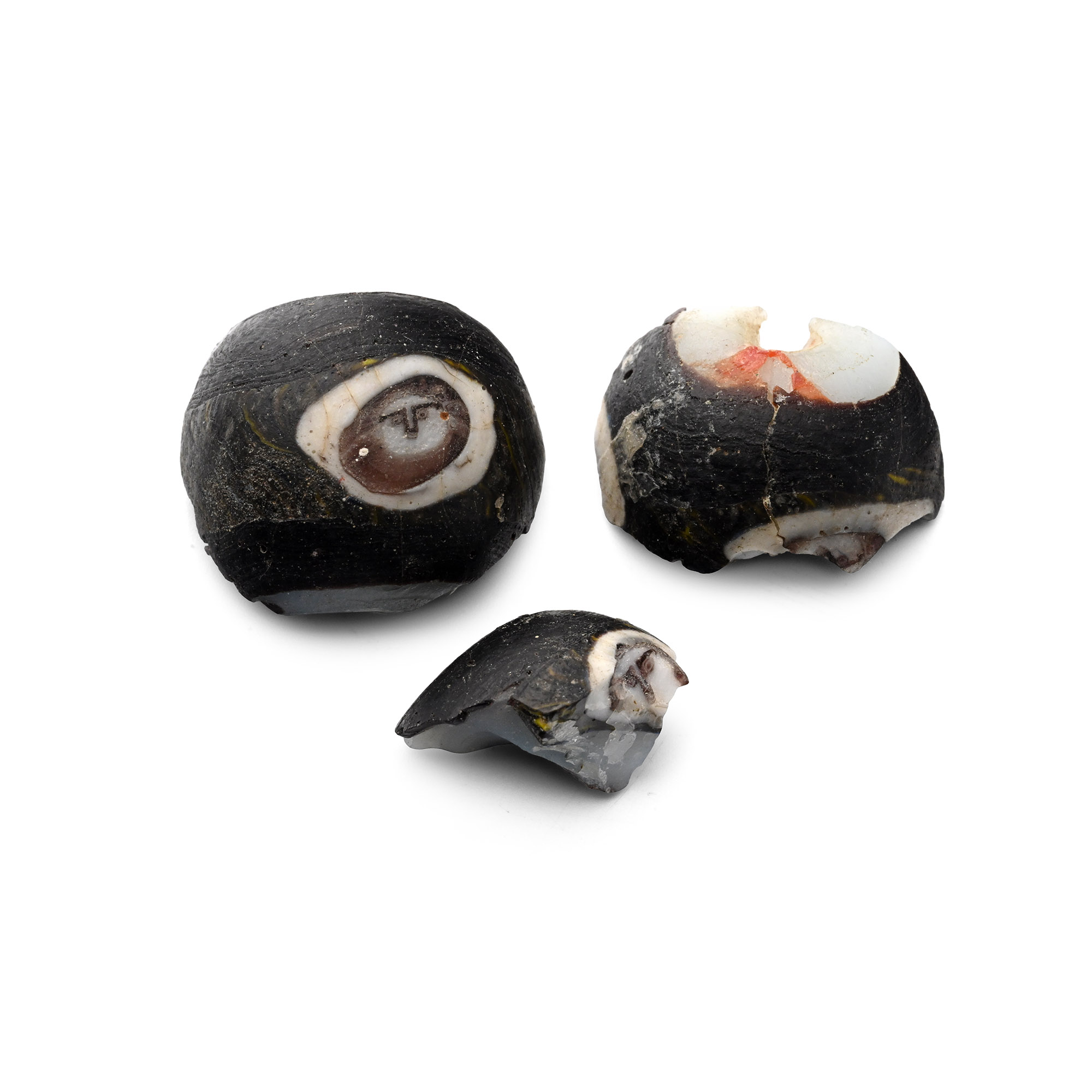
Phoenician Glass Eye Bead Fragments
1ST CENTURY B.C.-1ST CENTURY A.D.
3/4 in. (6.9 grams, 15-18 mm).
Glass fragments from spherical beads with eyes within a white panel on black field. [3]
ProvenanceFrom the collection of a gentleman, acquired on the London art market in the 1990s.
This lot is accompanied by an illustrated lot declaration signed by the Head of the Antiquities Department, Dr Raffaele D'Amato.
Cf. Sangiorgi, G., Collezione di Vetri Antichi, no.254.
CONDITIONTimeLine Auctions follows a vetting process to ensure the authenticity and legality of all items, reinforcing our commitment to integrity and responsible trading. Each antiquity, antique, and coin lot undergoes thorough examination by a vetting committee of at least ten external specialists, professional trade association members, scientists, and archaeologists: Our Vetting Process
AUCTIONS:
TimeLine is a leading auction house specialising in antiquities, ancient art, collectables, natural history, coins, medals, and books. Our auctions offer museums, collectors, historians, and enthusiasts the opportunity to acquire unique and historically significant pieces.
-
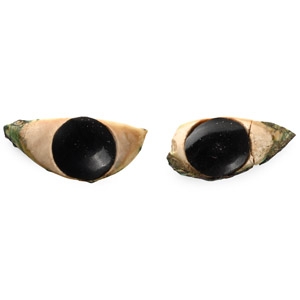
Egyptian Stone Eye Inlay Pair
Ptolemaic Period, 332-30 B.C.Sold for (Inc. bp): £208
White stone sclera with black stone iris, green stains visible on edges from copper rims. 10.5 grams total, 30-32 mm
Acquired on the UK art market, 1977-1979. Private collection, London. This lot is accompanied by an illustrated lot declaration signed by the Head of the Antiquities Department, Dr Raffaele D'Amato.
Egyptian coffin eye inlays were both decorative and symbolic, intended to make the coffin appear lifelike and assist the deceased in the afterlife. Typically, they featured a white sclera (glass, alabaster or quartz), a dark iris (glass or often obsidian), and sometimes red paint at the inner corner. The eyes were often set in bronze or copper frames, occasionally with faience or bronze eyebrows. -
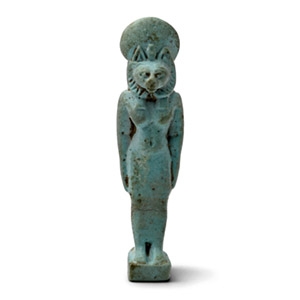
Egyptian Faience Amulet Representing Sekhmet
Late Period, 664-332 B.C.Sold for (Inc. bp): £650
With rectangular base and dorsal pillar pierced behind the shoulders, standing figure of the goddess in lioness-headed form with tripartite wig and solar disc, human body. 9.98 grams, 60 mm
Private collection, Carouge, Switzerland, assembled in the 1980s-1990s. Thence by descent to the collection of Mr S.P., since 2020. This lot is accompanied by an illustrated lot declaration signed by the Head of the Antiquities Department, Dr Raffaele D'Amato. -
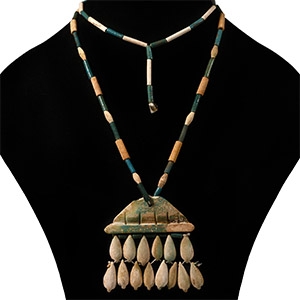
Egyptian Faience Necklace with Pendant
New Kingdom, 1400-1100 B.C.Estimate: £600 - 800 (‡+bp*)
Opening Bid: £333
Restrung group of tubular and fusiform faience beads with D-shaped pendant and two tiers of dangles beneath. 48 grams, 80 cm long
Acquired in the mid 1980s-1990s. Private collection, Switzerland, thence by descent. Private collection, since the late 1990s. This lot is accompanied by an illustrated lot declaration signed by the Head of the Antiquities Department, Dr Raffaele D’Amato. This lot is accompanied by an illustrated lot declaration signed by the Head of the Antiquities Department, Dr Raffaele D'Amato.
