
Loading, please wait...
LOT 0445
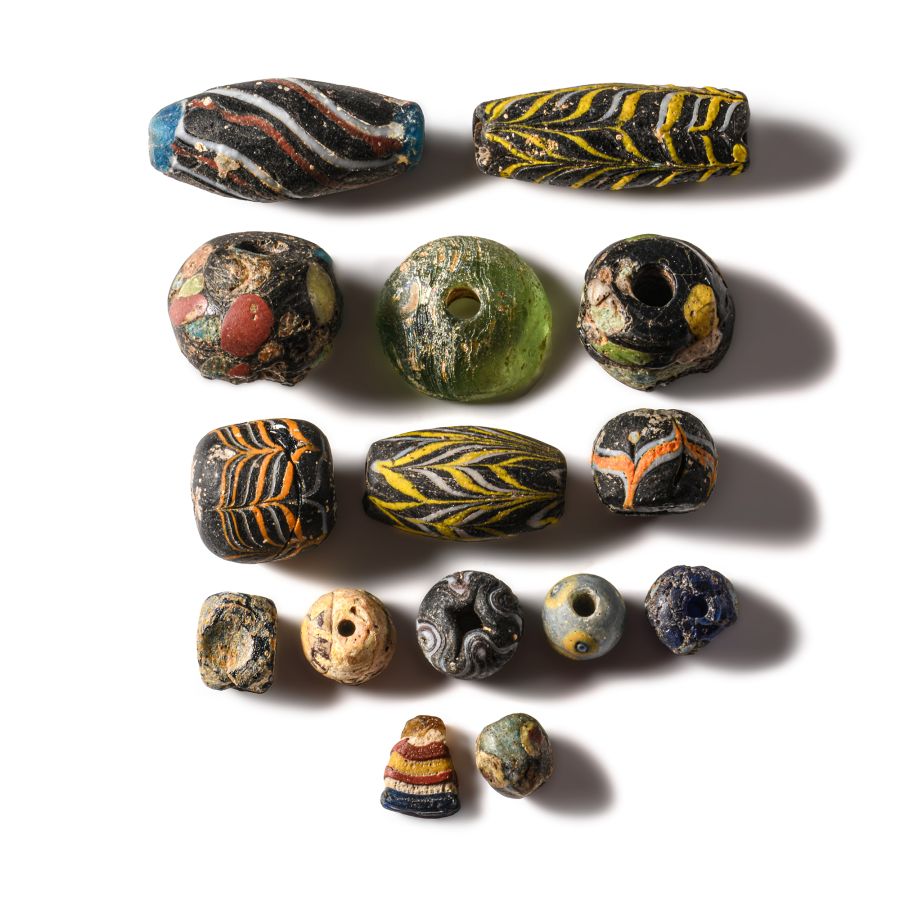
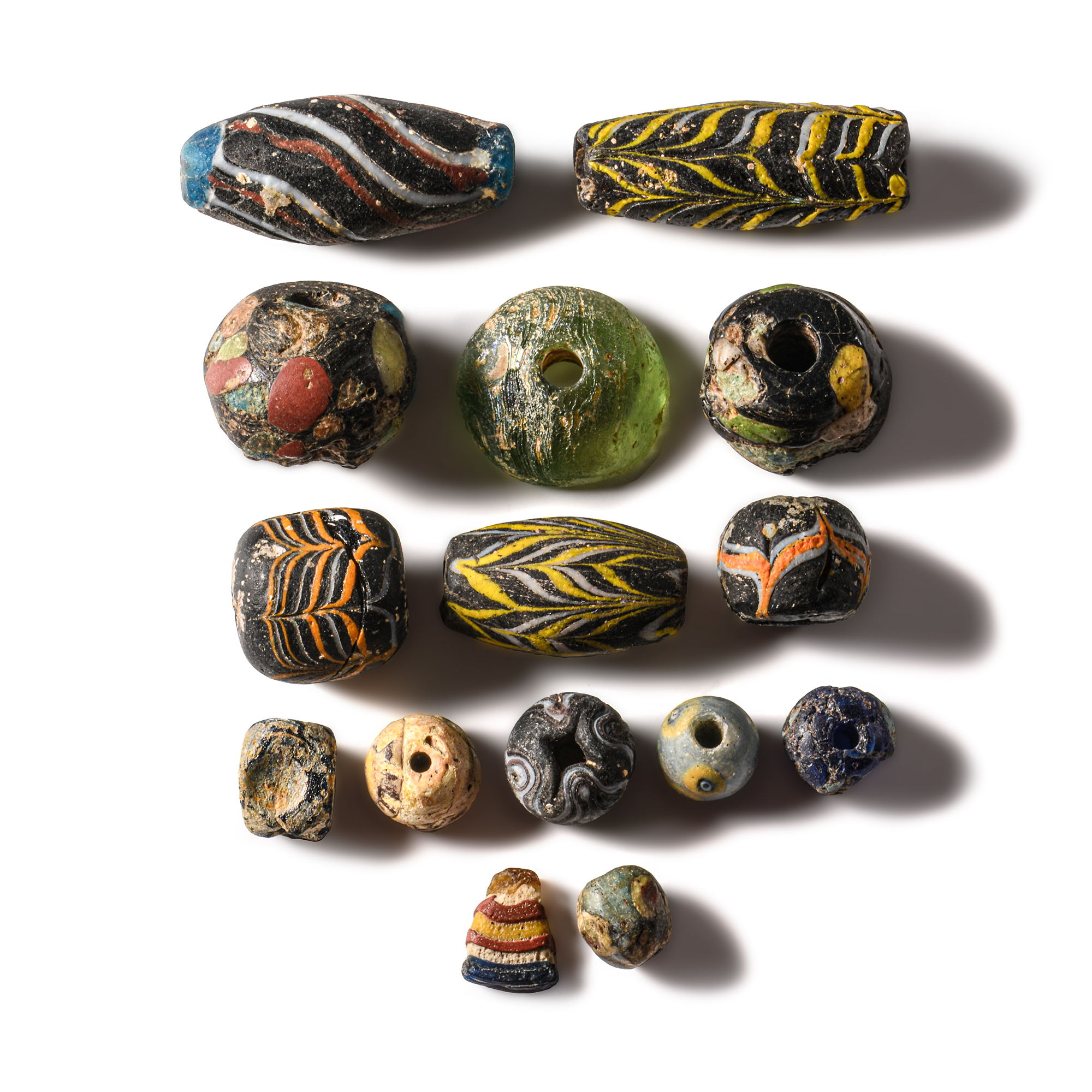
Phoenician Glass Bead Collection
CIRCA 6TH-4TH CENTURY B.C. AND LATER
3/8 - 1 1/4 in. (58 grams total, 9-32 mm).
Comprising mainly black glass beads with dragged trails in contrasting colours; a pale blue bead with eye motifs; a hemispherical green glass bead or weight; and a triangular pendant with red, yellow, blue and white banding. [15, No Reserve]
ProvenanceUK private collection formed 1970s-1990s.
Property of an East Sussex, UK, gentleman.
TimeLine Auctions follows a vetting process to ensure the authenticity and legality of all items, reinforcing our commitment to integrity and responsible trading. Each antiquity, antique, and coin lot undergoes thorough examination by a vetting committee of at least ten external specialists, professional trade association members, scientists, and archaeologists: Our Vetting Process
AUCTIONS:
TimeLine is a leading auction house specialising in antiquities, ancient art, collectables, natural history, coins, medals, and books. Our auctions offer museums, collectors, historians, and enthusiasts the opportunity to acquire unique and historically significant pieces.
-
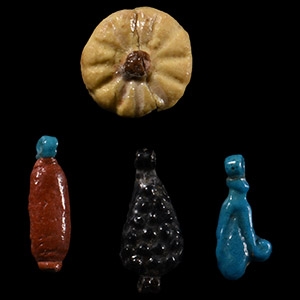
Egyptian Faience Amulet Collection
New Kingdom, 1550-1070 B.C.Sold for (Inc. bp): £182
Comprising: black bunch of grapes; red date; blue palmette frond; white daisy rosette. 1.51 grams, 12-16 mm
From the M.S. Ciappara collection, 1930s-1950s; and the flower amulet from a UK collection, 19202-1940s. Ex Den of Antiquity, Cambridgeshire, UK, and Ancient Art, London N14, UK. Private collection of Mr T.H., Norfolk, UK. Accompanied by two previous dealer's certificates of authenticity. -
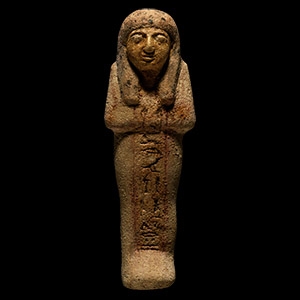
Egyptian Painted Limestone Shabti for Abet-iyiry
Late New Kingdom, circa 1100 B.C.Estimate: £1,000 - 1,400 (+bp*)
Opening Bid: £500
With remains of pigment to the tripartite wig, face and eyes; vertical band of hieroglyphic inscription in black on the front giving dedication: 'sḥḏ wsir Ꜣbt-iyiry(?) mꜢʾ ḫrw' ‘The illuminated, the Osiris, Abet-iyiry(?), true of voice’; with remains of red borders and red detailing to the back. 162 grams, 13.3 cm
Acquired 1970s-1996. Property of a North American collector. London collection, 2016. -
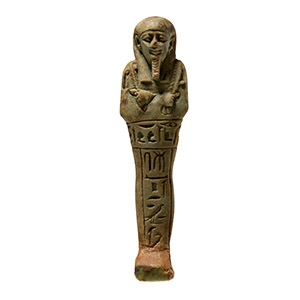
Egyptian Green Faience Shabti with Hieroglyphic Inscription
Late Period, 664-332 B.C.Sold for (Inc. bp): £650
Olive-green glazed composition with detailed facial features, hands, tools, seed bag, dorsal pillar; T-shaped hieroglyphic text: 'sḥḏ wsir nb pḥ.ty ..ns(?) mꜢʾ ḫrw ms n ipt-wrt(?)' ‘The illuminated, the Osiris, Lord of Strength ..ns(?), true of voice’ born to Ipet-weret(?)’; mounted on a custom-made stand. 169 grams total, 15 cm high including stand
Part of an old collection dating back to the 19th century. Ex property of a gentleman, acquired before the 1980s. Private collection of Mr T.H., Norfolk, UK.
