
Loading, please wait...
LOT 0462
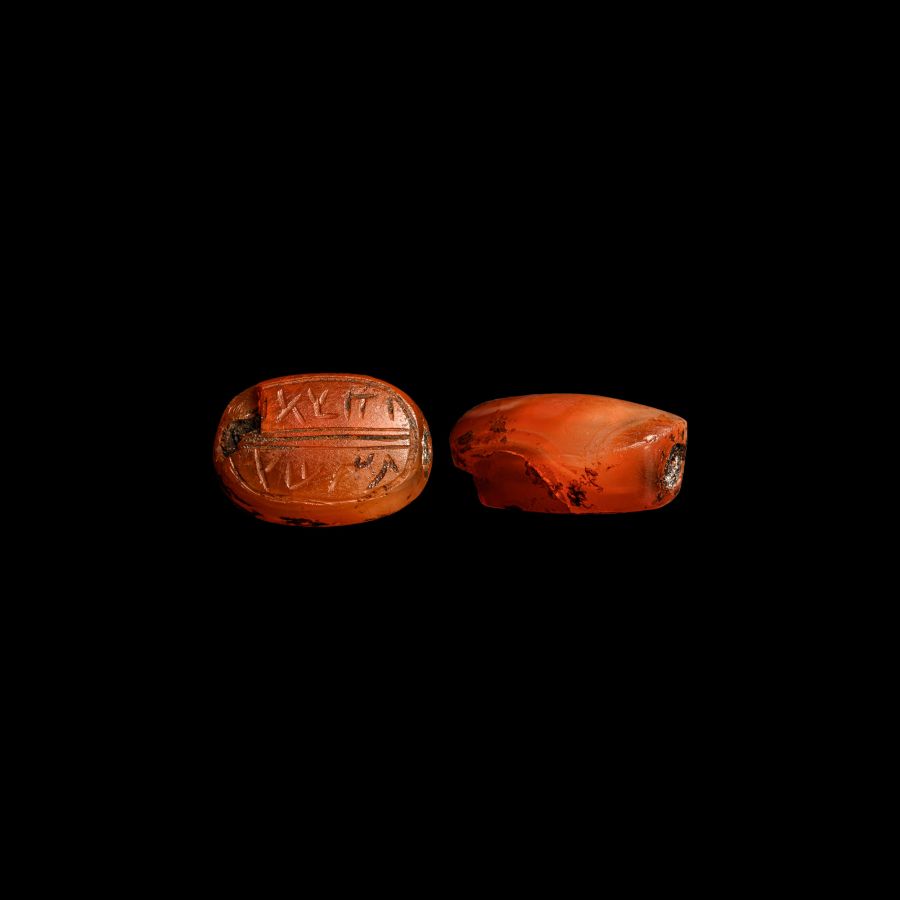
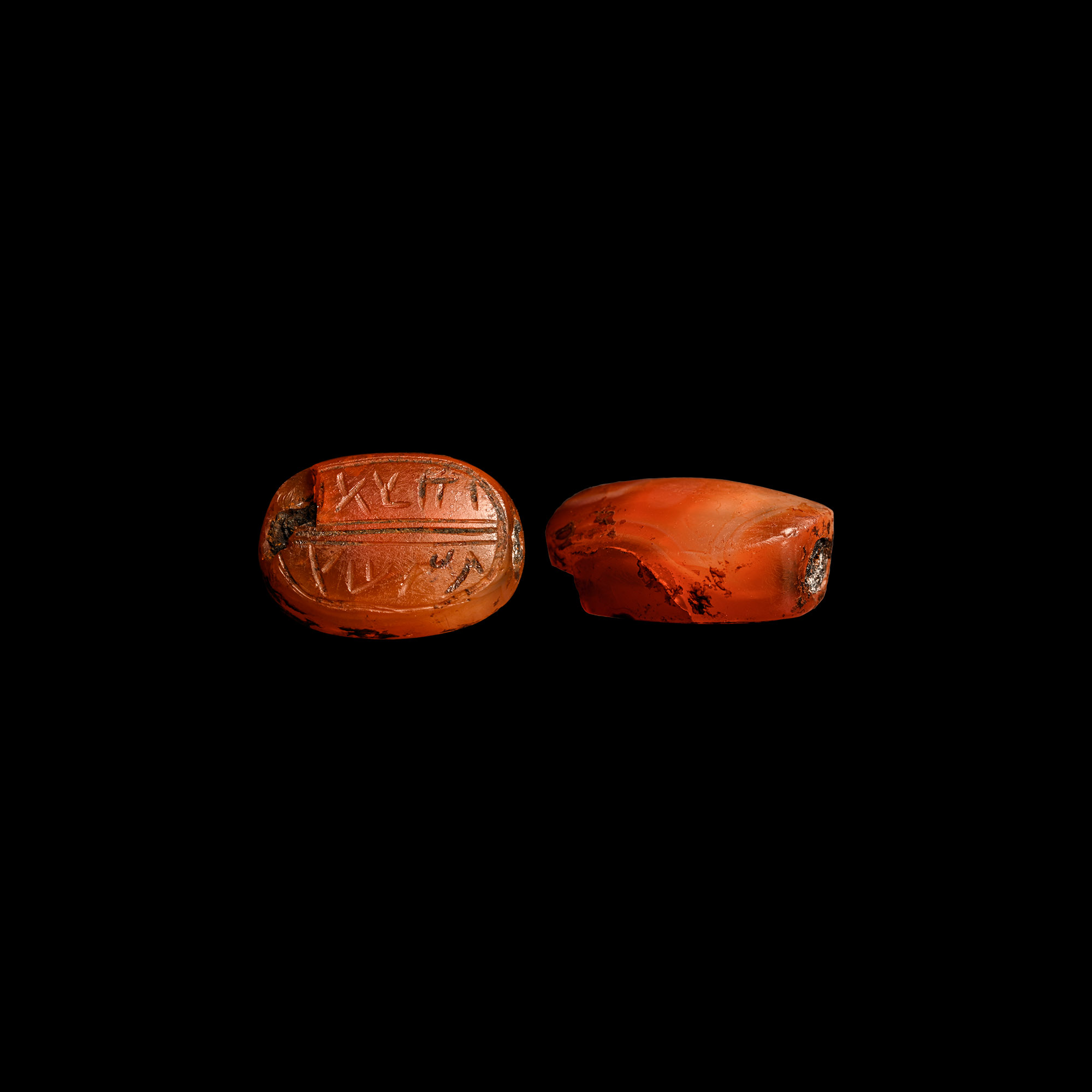
Phoenician Carnelian Scaraboid with Semitic Inscription
8TH-7TH CENTURY B.C.
5/8 in. (1.9 grams, 15 mm).
With a domed upper face and bevelled side edge; base inscribed over two lines or columns separated by three lines; pierced for suspension; chip to base. [No Reserve]
ProvenanceFrom an old French collection, formed in the 1980s-1990s.
Property of a North London antiquary.
TimeLine Auctions follows a vetting process to ensure the authenticity and legality of all items, reinforcing our commitment to integrity and responsible trading. Each antiquity, antique, and coin lot undergoes thorough examination by a vetting committee of at least ten external specialists, professional trade association members, scientists, and archaeologists: Our Vetting Process
AUCTIONS:
TimeLine is a leading auction house specialising in antiquities, ancient art, collectables, natural history, coins, medals, and books. Our auctions offer museums, collectors, historians, and enthusiasts the opportunity to acquire unique and historically significant pieces.
LOT 0462
Phoenician Carnelian Scaraboid with Semitic Inscription
Sold for (Inc. bp): £520
-
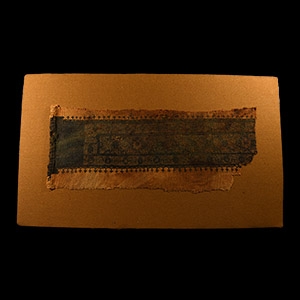
Egyptian Mounted Coptic Textile with Crenellated Blossoms
Circa 5th-7th century A.D.Sold for (Inc. bp): £78
Part of a tunic, the rectangular segment in yellow and green linen and wool, the central part decorated with interlaced geometric motifs, surrounded by an edge of similar motifs and border edged of crenellated blossoms. 264 grams, 64 x 37 cm
Acquired 1970s-1996. Property of a North American collector. London collection, 2016.
Among the many fragments from wool tunics are several long strips that match to form nearly full-length central pectoral clavi. They are patterned with a profusion of small figures or interlaced abstract designs, birds, plants and animals with a contrasting border filled with geometric motifs. -
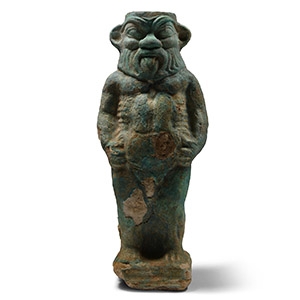
Massive Egyptian Blue Faience Bes Statue
Late Period, 664-332 B.C.Sold for (Inc. bp): £546
With integral square base and shallow socket to the top of the head; Bes shown standing nude with hands on hips, bearded and with grotesque features, protruding tongue, lattice to the rear of the head; face restored. 1.6 kg, 32.2 cm high
Acquired 1970s-1996. Property of a North American collector. London collection, 2016.
Due to its size, this is more probably an architectural and devotional item than a purely amuletic one, probably from a domestic context. It is an ambitious example of moulding in the round in faience (glazed composition). -
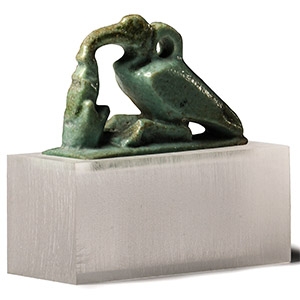
Egyptian Faience Amulet with Thoth as Ibis and Maat
Late New Kingdom-Late Period, 1550-332 B.C.Estimate: £1,500 - 2,000 (‡+bp*)
Opening Bid: £750
On a wedge-shaped base and decorated in turquoise glaze; suspension loop on the neck of the bird; collector's inventory number E509' on the underside; accompanied by a custom-made display base. 22 grams total, 43 mm wide including stand
Ex Reine Margot, 1973. Ex R. Liechti (1934-2010) Geneva, Switzerland, collection between 1950-1990s.
In the judgment of the dead (Book of the Dead saying 125), Thoth, who is often represented in ibis form, records the result of weighing the heart of the deceased. The god is therefore mostly depicted in connection with the goddess Maat, whose feather was used as a counterbalance to the purity of the heart; such amulets were thus aimed at protecting the deceased from failing in the decision of the court of the dead.
