
Loading, please wait...
LOT 0502
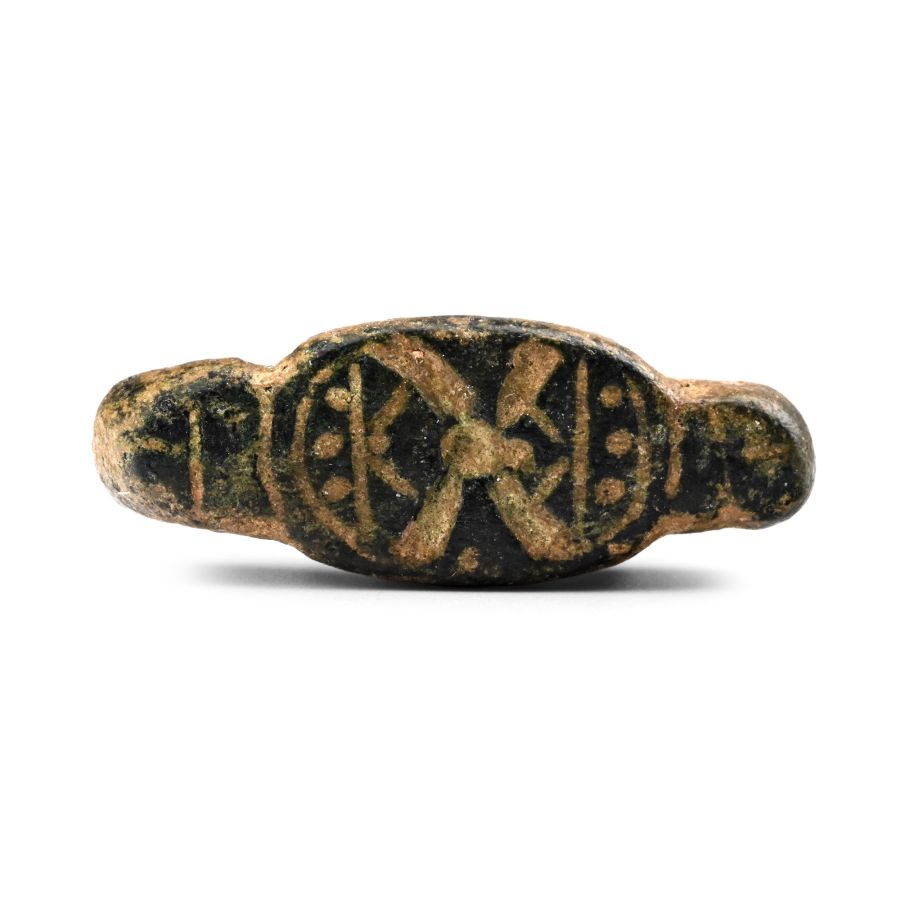
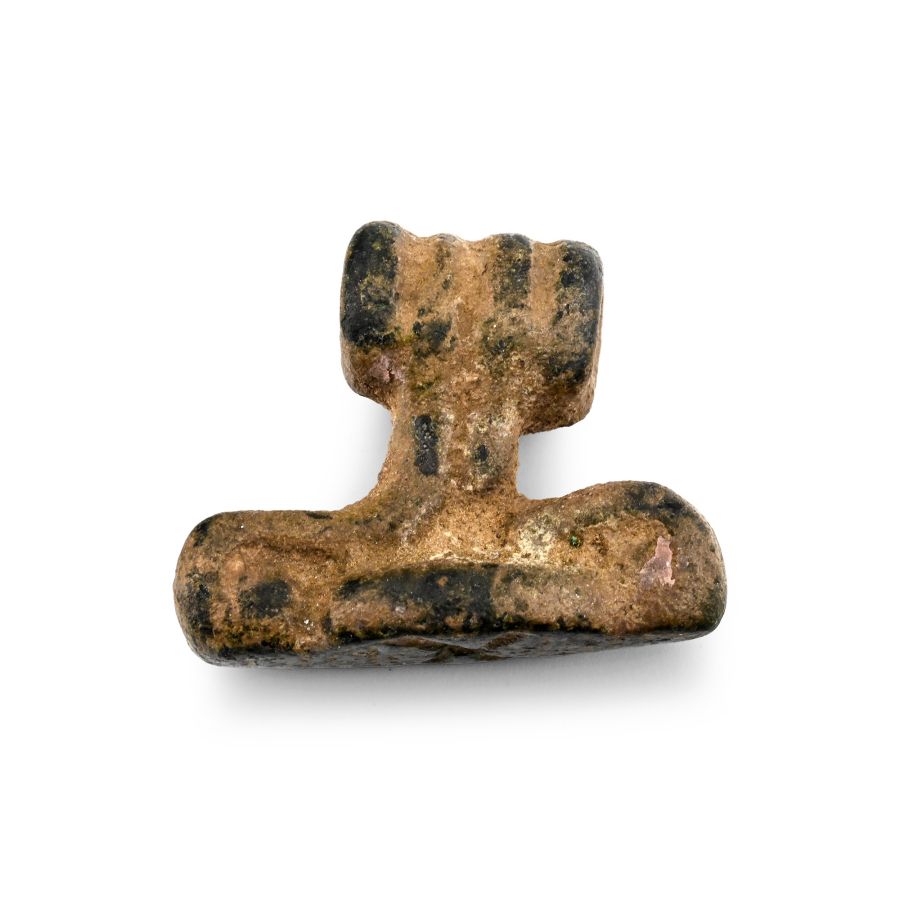
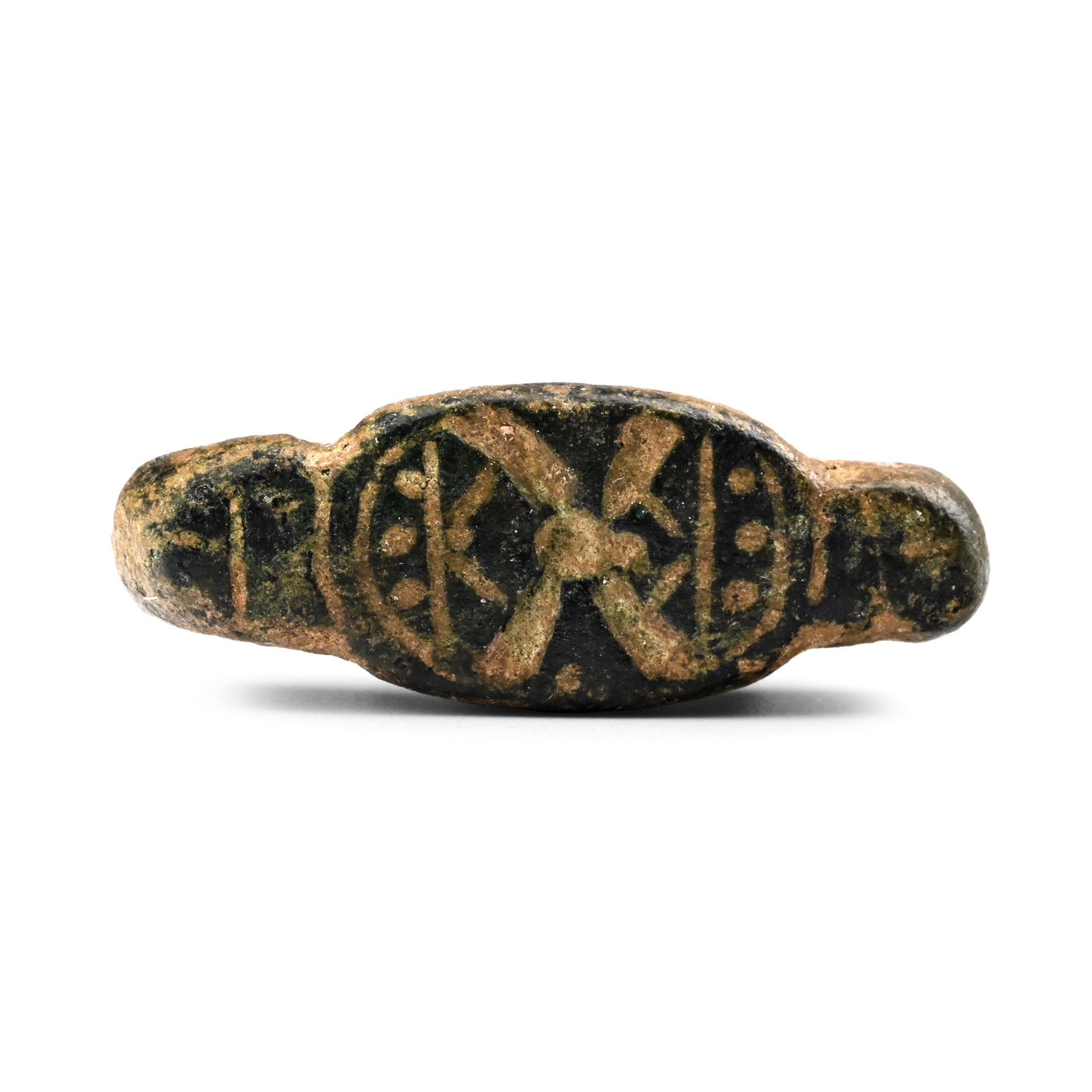
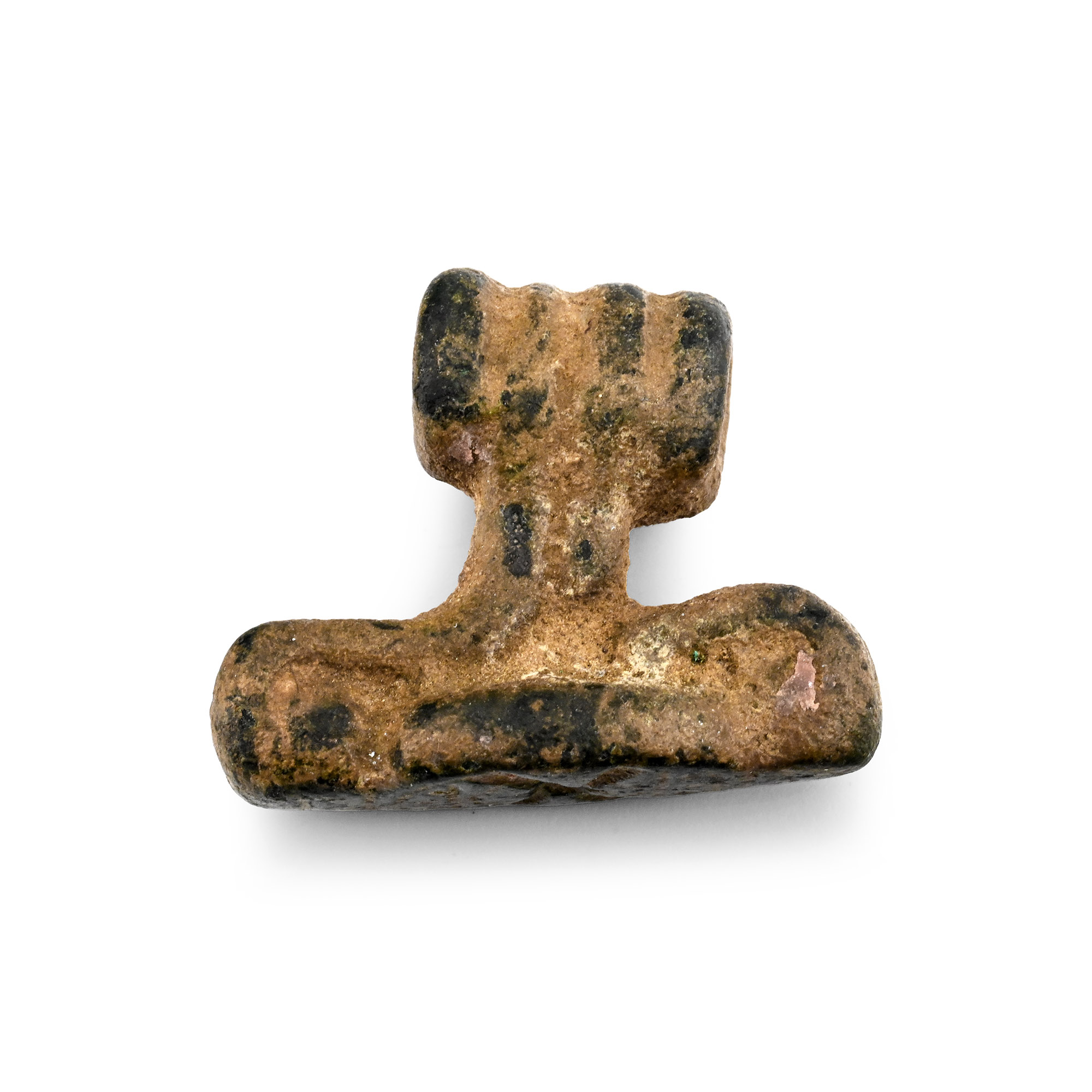
Phoenician Bronze Seal Pendant
LATE 1ST MILLENNIUM B.C.
1 in. (16.35 grams, 27 mm wide).
Formed as a ribbed lop with short neck, ellipsoid plaque with incuse saltire and pellets.
ProvenanceFrom the collection of a gentleman, acquired on the London art market in the 1990s.
CONDITIONTimeLine Auctions follows a vetting process to ensure the authenticity and legality of all items, reinforcing our commitment to integrity and responsible trading. Each antiquity, antique, and coin lot undergoes thorough examination by a vetting committee of at least ten external specialists, professional trade association members, scientists, and archaeologists: Our Vetting Process
AUCTIONS:
TimeLine is a leading auction house specialising in antiquities, ancient art, collectables, natural history, coins, medals, and books. Our auctions offer museums, collectors, historians, and enthusiasts the opportunity to acquire unique and historically significant pieces.
LOT 0502
Phoenician Bronze Seal Pendant
Estimate £250 - 350€290 - 410 (for guidance only)$340 - 470 (for guidance only)
-
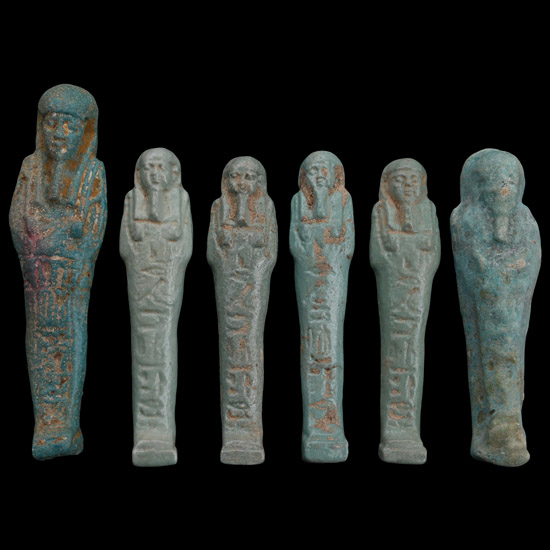
Egyptian Faience Shabti Collection
Late Period-Ptolemaic Period, 664-30 B.C.Sold for (Inc. bp): £754
All are typical mummiform figures, each wearing a lappet wig and false beard, holding a pick, a hoe, and a seed bag, with an impressed column of hieroglyphs on the front and a pillar at the back. 74.88 grams total, 70-85 mm
From the collection of a gentleman, acquired on the London art market in the 1990s. -
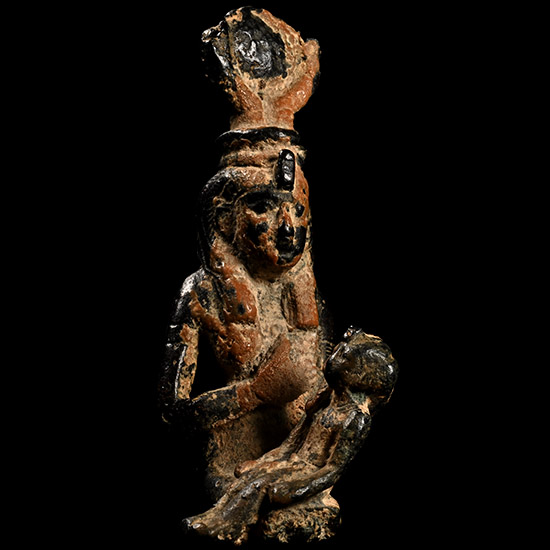
Egyptian Bronze Figure of Isis and Horus
Late Period, 664-332 B.C.Sold for (Inc. bp): £520
Isis enthroned wearing a cow's horn headdress with a solar disc fronted by uraeus, suckling the infant Horus on her lap; Horus with a side-lock of youth. 73.4 grams, 68 mm
Acquired in the mid 1980s-1990s. Private collection, Switzerland, thence by descent. Private collection, since the late 1990s.
In ancient Egyptian mythology, Isis was the sister-wife of Osiris and the mother of the sky god Horus. She is associated with aspects of fertility and motherhood and is often depicted in various artworks seated in a nursing pose with her son Horus on her lap, as here. -
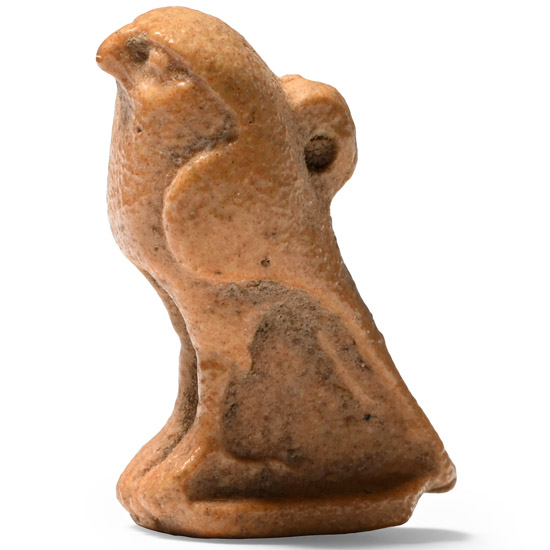
Egyptian Horus Amulet
Late Period, 664-332 B.C.Sold for (Inc. bp): £182
Perching falcon with detailing to wings and head; rectangular base and suspension loop on the back. 1.24 grams, 19 mm
Ex London gentleman's collection, by descent 1980s.
Horus is one of the most significant and widely worshipped gods in ancient Egyptian mythology. His importance covers many aspects of Egyptian religion, including serving as a symbol of the living king, offering protection, representing the sky, and symbolising the sun.
