
Loading, please wait...



LOT 0491
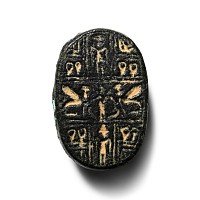
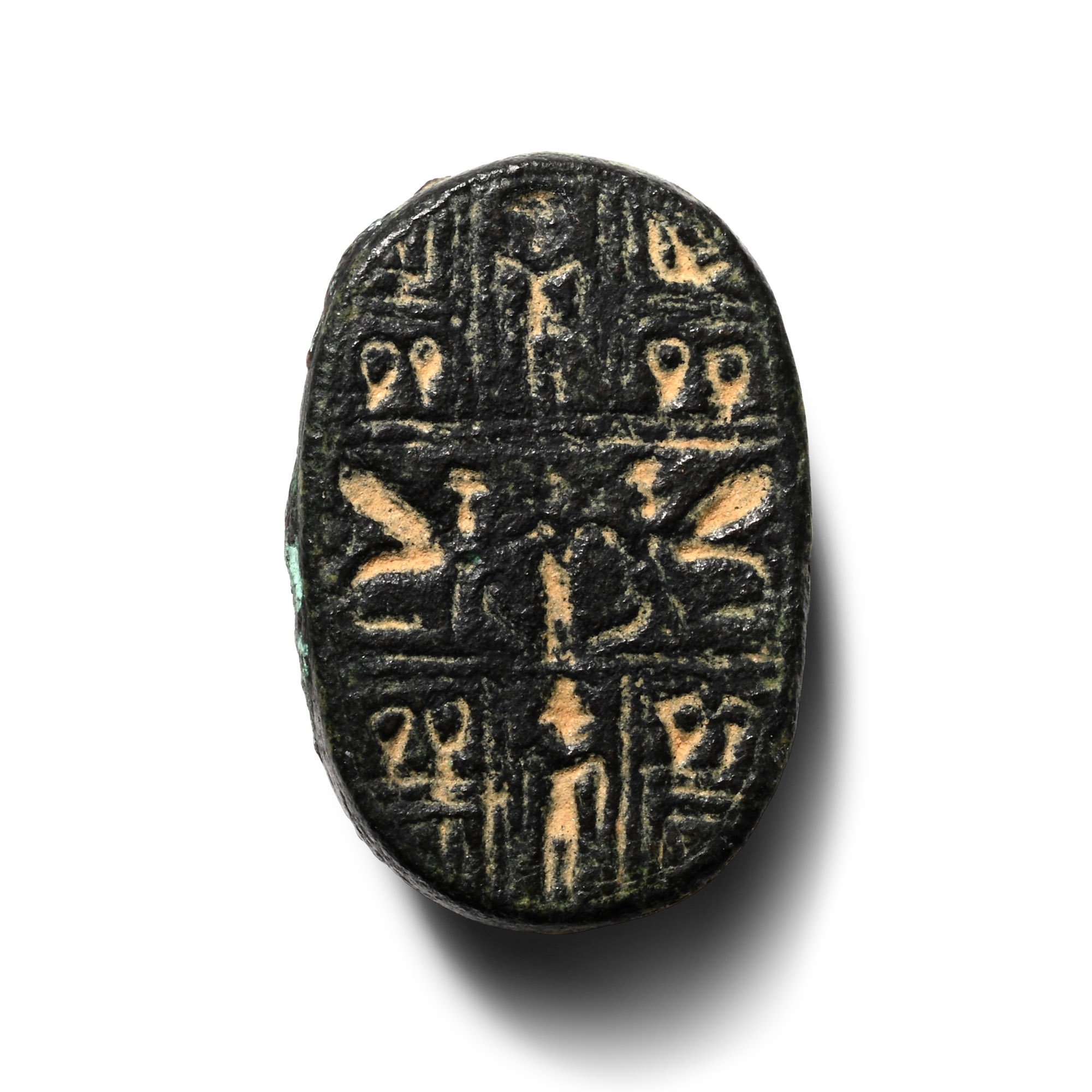
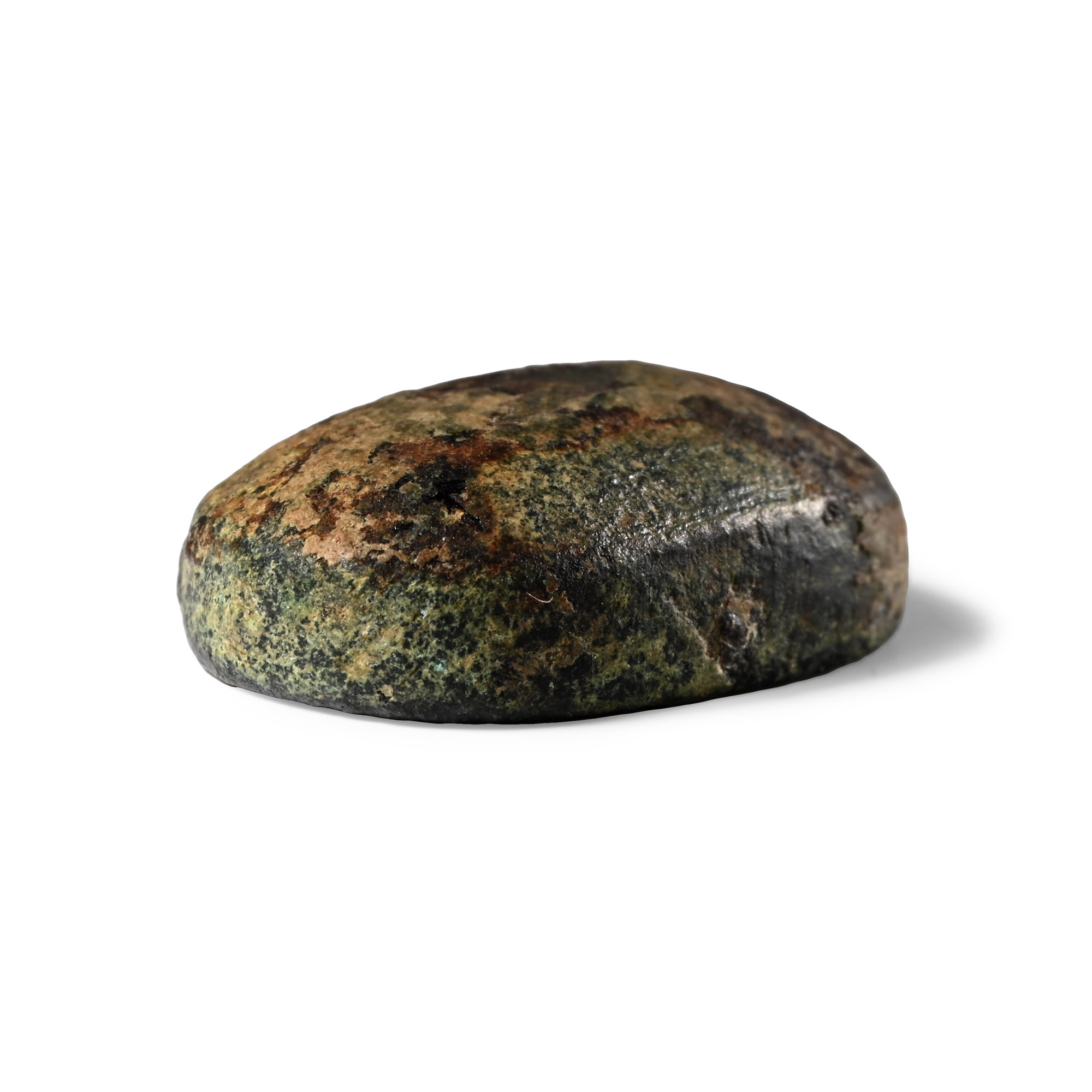
Phoenician Bronze Scarab
LATE 1ST MILLENNIUM B.C.
5/8 in. (6.54 grams, 17 mm).
Scaraboid with incised detailing to the underside, with a central column depicting standing figures top and bottom, each flanked by two ankh symbols, and a central motif of a standing figure grasping a sceptre and winged serpent in each hand.
ProvenanceFrom an early 20th century Home Counties, UK, collection.
CONDITIONTimeLine Auctions follows a vetting process to ensure the authenticity and legality of all items, reinforcing our commitment to integrity and responsible trading. Each antiquity, antique, and coin lot undergoes thorough examination by a vetting committee of at least ten external specialists, professional trade association members, scientists, and archaeologists: Our Vetting Process
AUCTIONS:
TimeLine is a leading auction house specialising in antiquities, ancient art, collectables, natural history, coins, medals, and books. Our auctions offer museums, collectors, historians, and enthusiasts the opportunity to acquire unique and historically significant pieces.
LOT 0491
Phoenician Bronze Scarab
Estimate £350 - 450€410 - 520 (for guidance only)$470 - 610 (for guidance only)
-
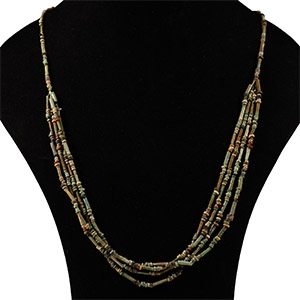
Egyptian Multi-Stranded Faience Mummy Bead Necklace
Late Period, 664-332 B.C.Sold for (Inc. bp): £234
Multi-stranded designer necklace composed of beads of mainly annular and tubular types. 23 grams, 78 cm
Acquired before 1979. From the private collection of Mr F.A., South Kensington, London, UK; thence by descent 2014.
For thousands of years, artisans in Egypt created vibrant ceramics to echo the beauty of rare jewels. These ornaments were created with almost every material, colour, and texture imaginable and they come from across Egypt and beyond: vibrant blue lapis lazuli from Afghanistan, glossy black obsidian from Turkey, and aqua-green turquoise from the Sinai. They were worn in life and, after death, they served as precious ornamentation for mummies. -
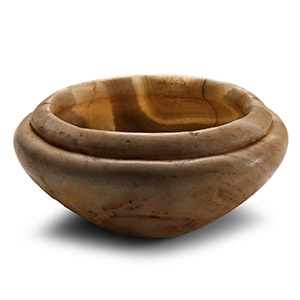
Egyptian Alabaster Bowl
1st Dynasty, circa 3000 B.C.Estimate: £1,500 - 2,000 (‡+bp*)
Opening Bid: £750
Of conical profile with flattened base, carinated shoulder and stepped rounded rim, possibly for accepting a lid. 380 grams, 11.6 cm wide
Property from an American deceased estate, acquired between 19770-1989. with Bonhams, London, 28 October 2009, no.16 (Part). Private European collection. Accompanied by copies of the relevant Bonhams catalogue pages. This lot has been checked against the Interpol Database of stolen works of art and is accompanied by a search certificate number no.12071-215259. -
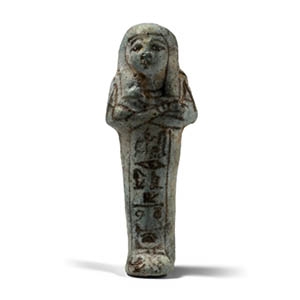
Egyptian Faience Shabti of Qenu-khayes
New Kingdom, 19th-20th Dynasty, circa 1292-1069 B.C.Estimate: £1,000 - 1,400 (+bp*)
Opening Bid: £550
Light blue faience mummiform shabti with details added in black line, adorned with a tripartite wig and collar, and the arms crossed over the chest with hands holding a pick and hoe, seed bag and water pots, the back decorated with a curved yoke with pots and a brick mould; a central panel of hieroglyphs on the lower half of the figure giving the dedication: sḥḏ wsı͗r ḳnw ḫꜤs mꜢꜤ ḫrw, ‘The illuminated one, the Osiris Qenu-khayes, true of voice’. 152 grams, 13 cm
Formerly in North American collection, 1990s. From the collection of a London, UK, gentleman.
