
Loading, please wait...
LOT 0535
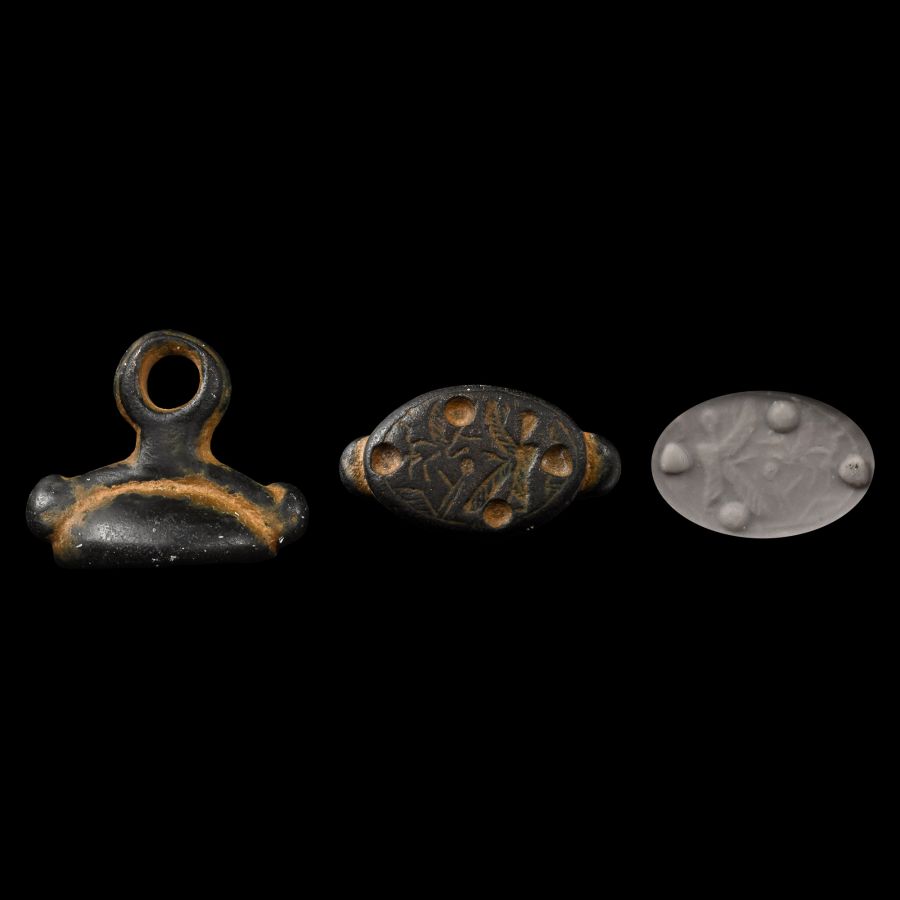
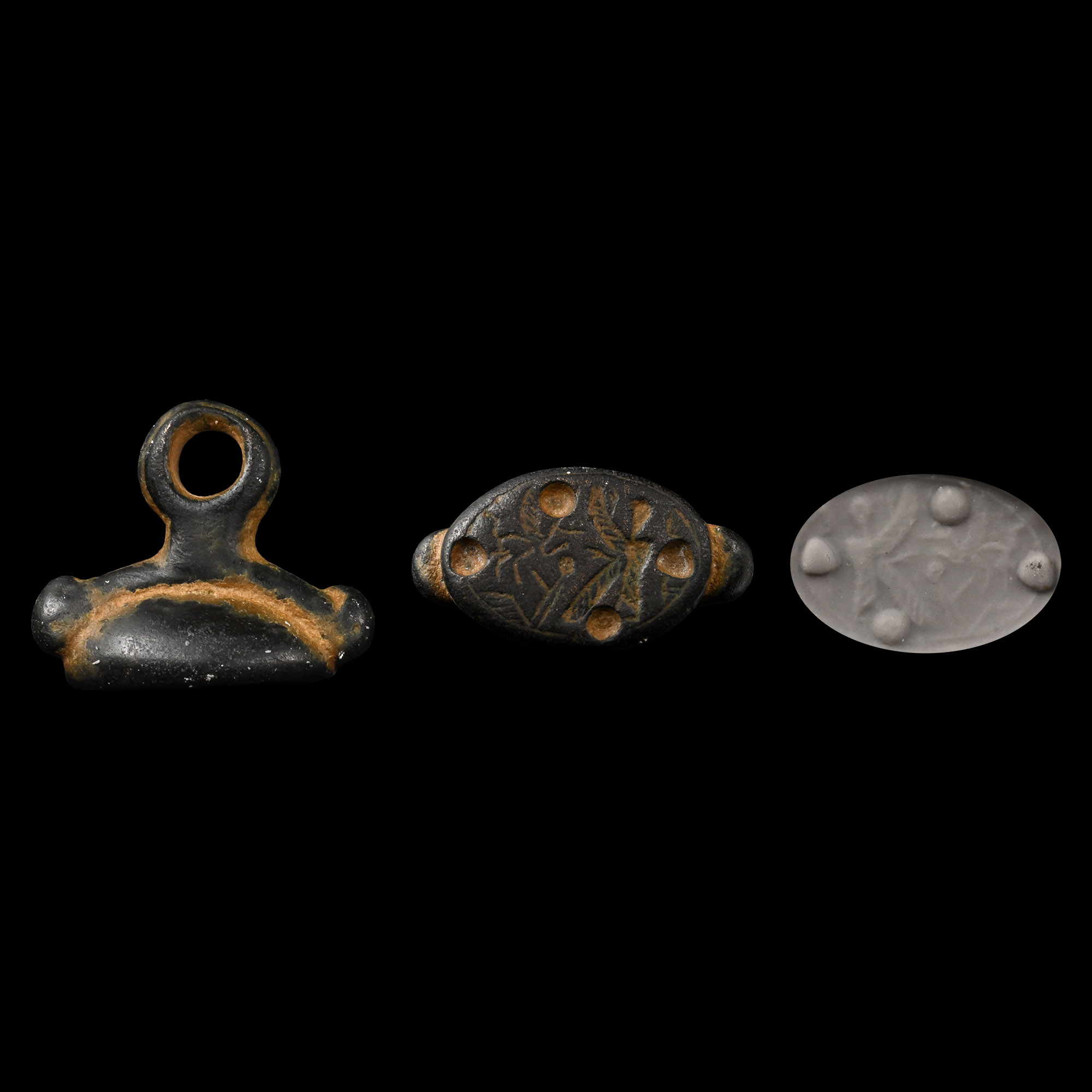
Phoenician Bronze Scarab Pendant
6TH-4TH CENTURY B.C.
1 in. (13.5 grams, 23 mm).
With suspension loop and frame, intaglio figural scene including stylised birds and winged scarabs, with recesses; with museum-quality impression.
ProvenanceEx London, UK, gentleman 1980-2000s.
This lot is accompanied by an illustrated lot declaration signed by the Head of the Antiquities Department, Dr Raffaele D'Amato.
TimeLine Auctions follows a vetting process to ensure the authenticity and legality of all items, reinforcing our commitment to integrity and responsible trading. Each antiquity, antique, and coin lot undergoes thorough examination by a vetting committee of at least ten external specialists, professional trade association members, scientists, and archaeologists: Our Vetting Process
AUCTIONS:
TimeLine is a leading auction house specialising in antiquities, ancient art, collectables, natural history, coins, medals, and books. Our auctions offer museums, collectors, historians, and enthusiasts the opportunity to acquire unique and historically significant pieces.
LOT 0535
Phoenician Bronze Scarab Pendant
Estimate £250 - 350€290 - 410 (for guidance only)$340 - 470 (for guidance only)
-
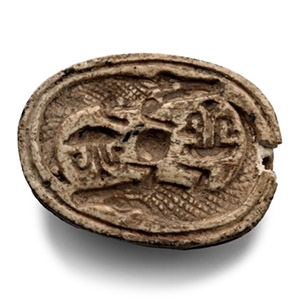
Large Egyptian Steatite Scarab
Late Period, 664-332 B.C.Sold for (Inc. bp): £520
Modelled body of a beetle with detailed carapace and legs; underside with two crocodiles enclosing a central sun disc flanked by two papyrus clumps atop neb signs. 19.8 grams, 38 mm
From the collection of a gentleman, acquired on the London art market in the 1990s. This lot is accompanied by an illustrated lot declaration signed by the Head of the Antiquities Department, Dr Raffaele D'Amato.
The design could be interpreted as ‘Sobek-Ra, lord of the Delta’. Sobek was mainly associated with water, fertility, and the Nile, as well as strength and military prowess. His worship spans much of ancient Egyptian history, from at least the Old Kingdom to the Roman period, and he was honoured not only as a force of nature but also as a god of healing, protection, and royal authority. He was associated with various other deities, most often with the sun god in the form of Sobek-Ra. His primary cult centres were situated in the Faiyum region, especially in the city of Crocodilopolis, and also at Kom Ombo in Upper Egypt. -
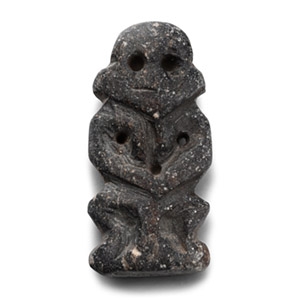
Egyptian Black Serpentine Pataikos Amulet
Late Period, 664-332 B.C. or laterSold for (Inc. bp): £72
Standing nude with hands clasped to the midriff, pierced at the shoulders and with drilled eyes, pierced across the head for suspension. 7.76 grams, 35 mm
Fine condition.
Property of a London gentleman; acquired in the 1970s. From the private collection of John Meredith, acquired since the 1990s; thence by descent. This lot is accompanied by an illustrated lot declaration signed by the Head of the Antiquities Department, Dr Raffaele D'Amato.
From the New Kingdom onward, Bes became one of ancient Egypt's most popular apotropaic deities. Despite his somewhat fearsome appearance, Bes served as the patron and protector of pregnant women and children, and was also believed to shield them from snakes. -
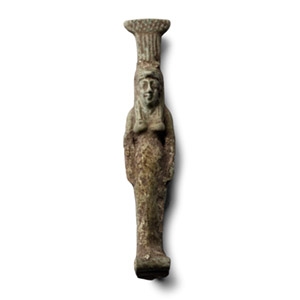
Egyptian Faience Amulet Representing Nephthys
Late Period, 664-332 B.C.Sold for (Inc. bp): £182
Modelled in the round on a small base, wearing columnar headdress, with dorsal pillar pierced behind the elbows. 4.15 grams, 55 mm
Private collection, Carouge, Switzerland, assembled in the 1980s-1990s. Thence by descent to the collection of Mr S.P., since 2020. This lot is accompanied by an illustrated lot declaration signed by the Head of the Antiquities Department, Dr Raffaele D'Amato.
Nephthys was a protective goddess linked to mourning, magic, and the afterlife. As the sister of Isis, she played a vital role in the funerary rites of Osiris. Amulets like this were placed on the deceased to invoke her protection and aid in rebirth. Typically made of faience or semi-precious stone, they were especially common in the Late Period.
