
Loading, please wait...


LOT 0463
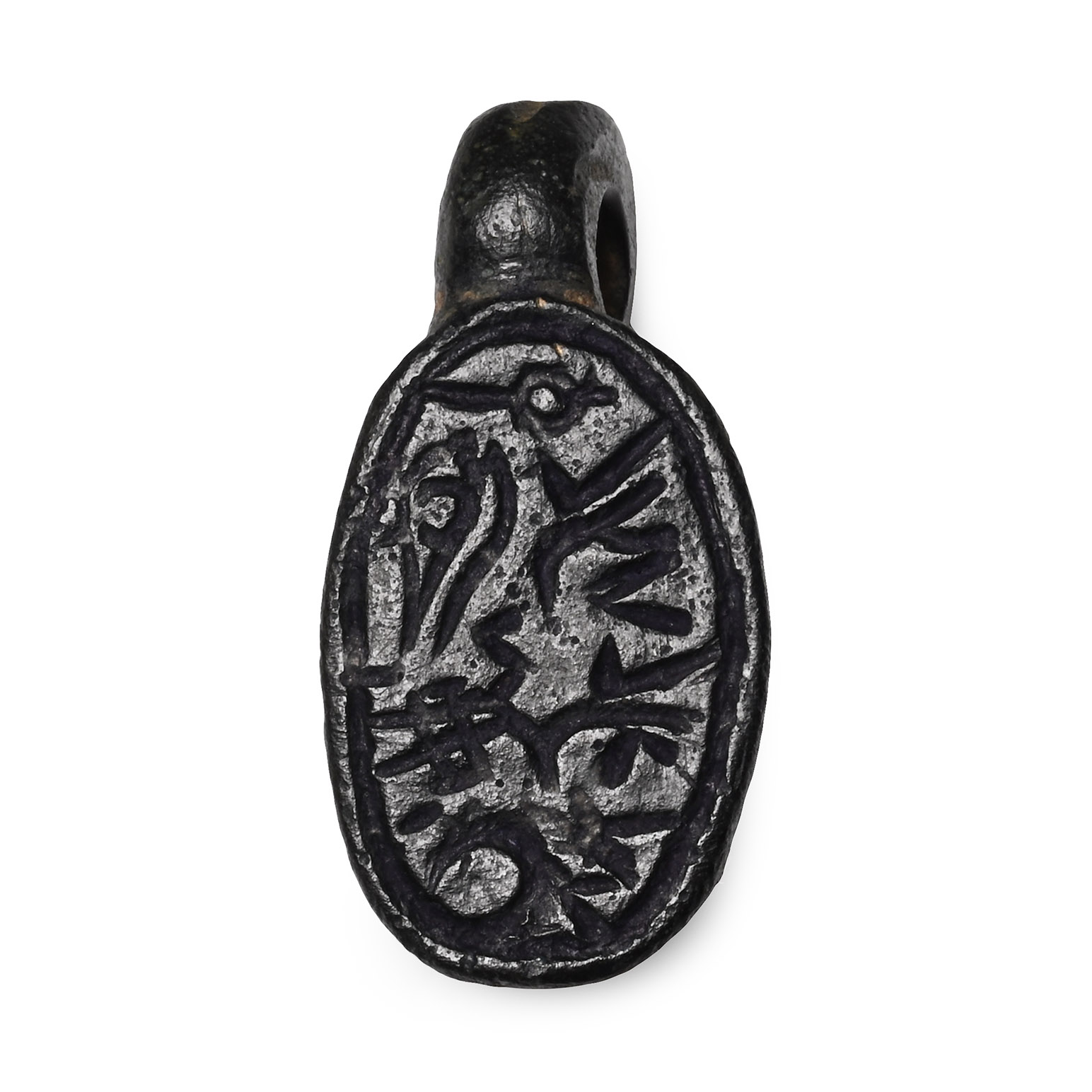
Phoenician Bronze Black Scaraboid Pendant
1ST MILLENNIUM B.C.
1 in. (7.7 grams, 25 mm).
Smooth-fronted with a sturdy suspension loop at the top, the back incised with various signs, comprising a nefer hieroglyph, an eye, a quadruped, a standing figure with a headdress, and a sun disc.
ProvenanceFrom the collection of a gentleman, acquired on the London art market in the 1990s.
CONDITIONTimeLine Auctions follows a vetting process to ensure the authenticity and legality of all items, reinforcing our commitment to integrity and responsible trading. Each antiquity, antique, and coin lot undergoes thorough examination by a vetting committee of at least ten external specialists, professional trade association members, scientists, and archaeologists: Our Vetting Process
AUCTIONS:
TimeLine is a leading auction house specialising in antiquities, ancient art, collectables, natural history, coins, medals, and books. Our auctions offer museums, collectors, historians, and enthusiasts the opportunity to acquire unique and historically significant pieces.
-
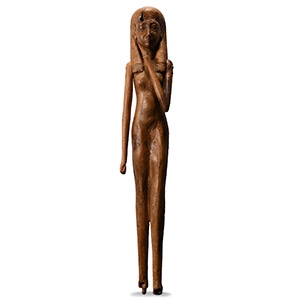
Large Egyptian Wooden Striding Female Figure
Circa 700 B.C. or earlierSold for (Inc. bp): £2,860
Modelled in the round, standing nude with left leg extended, wearing a tripartite wig with beads to the lower edges, the arms modelled separately and attached, left arm bent round to the chest, right arm straight to the side; mounting peg to the right leg, feet absent. 210 grams, 40 cm
Acquired on the German art market, 1989-1995. with The Museum Gallery, 19 Bury Place, London, WC1, UK, 1998-2003. Property of a London based academic, 2003-present. This lot has been checked against the Interpol Database of stolen works of art and is accompanied by a search certificate number no.12377-226045. -
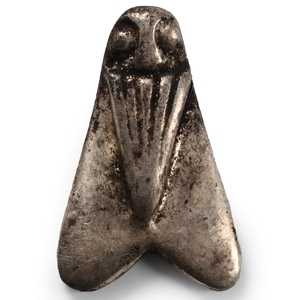
Egyptian Silver Fly Amulet
Late Period, 664-332 B.C.Sold for (Inc. bp): £98
D-shaped in section with two triangular wings and robbed body with pellet eyes. 1.07 grams, 16 mm
From an early 20th century collection.
Small fly amulets first appeared in burials during the Naqada II Period, c. 3200 B.C. These amulets grew in popularity and the materials used to make them expanded during the New Kingdom. They are crafted from a variety of materials such as gold, silver, lapis lazuli, carnelian, amethyst, faience, and bone. These amulets were thought to protect against insect bites and to ward off troublesome flying creatures through apotropaic magic. Some believe they may have even been intended to symbolise the fly’s fecundity. Additionally, pharaohs would bestow gold fly-shaped pendants as military awards to honour the bravery and fly-like persistence of soldiers in battle. -
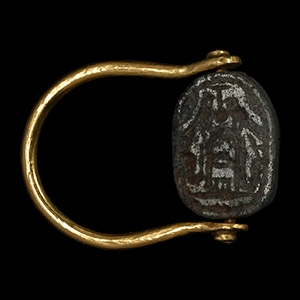
Phoenician Scarab in Gold Swivel Ring
8th-5th century B.C.Estimate: £2,000 - 3,000 (‡+bp*)
Opening Bid: £1,000
The scarab with lightly incised anatomical detailing, the underside with a central cartouche flanked by two rearing crowned uraei, a pair of falcons standing above the cartouche facing a smꜣ hieroglyph symbolising union (of the two lands, Upper and Lower Egypt); set into a later gold swivel ring. 4.34 grams, 26.44 mm overall, 15.68 mm internal diameter (approximate size British J 1/2, USA 5, Europe 9.32, Japan 9)
with Bonhams, London, 21 October 1999, no.36. Private collection, Europe. This lot has been checked against the Interpol Database of stolen works of art and is accompanied by a search certificate number no.12370-226696.
