
Loading, please wait...


LOT 0331
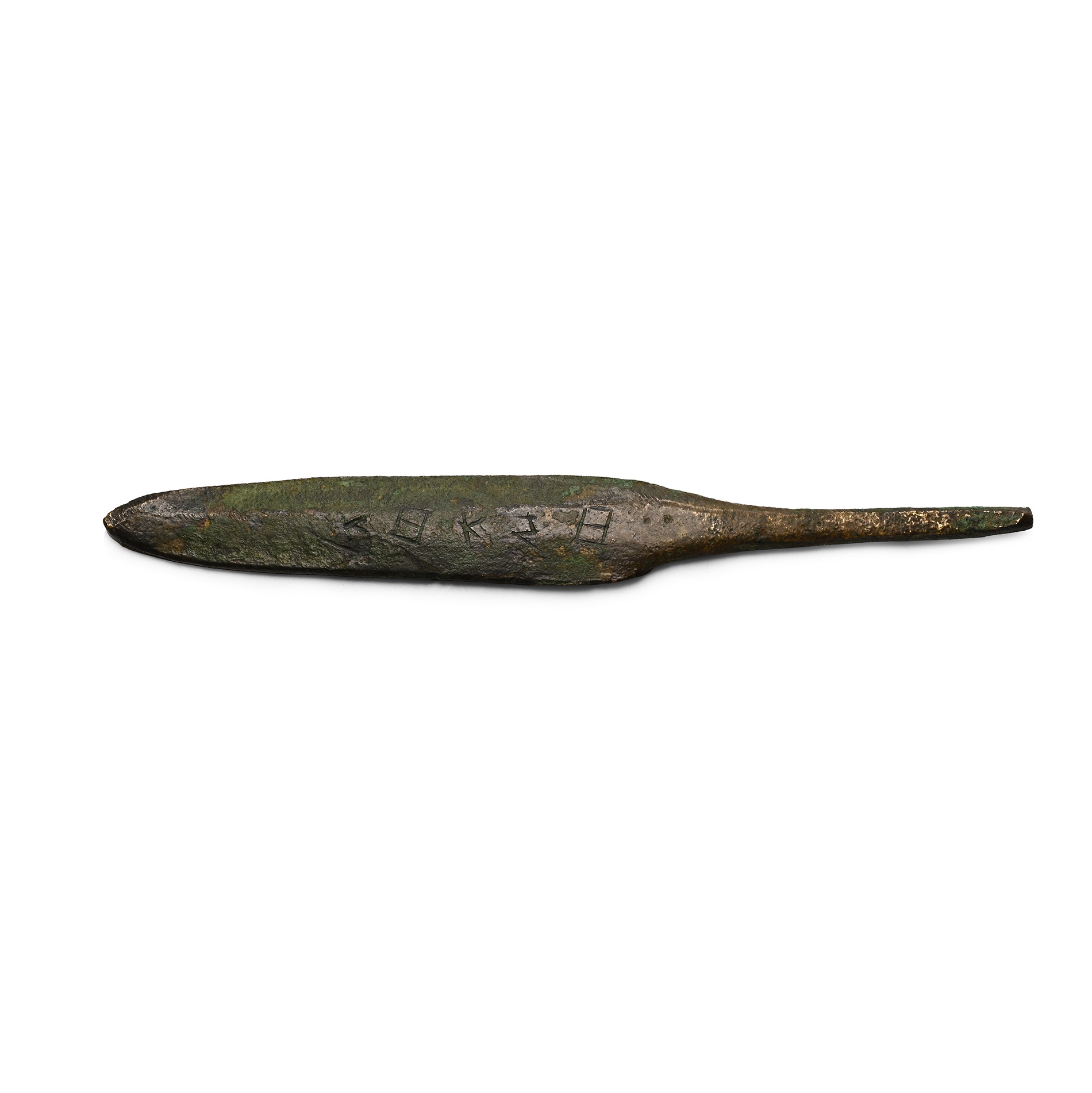
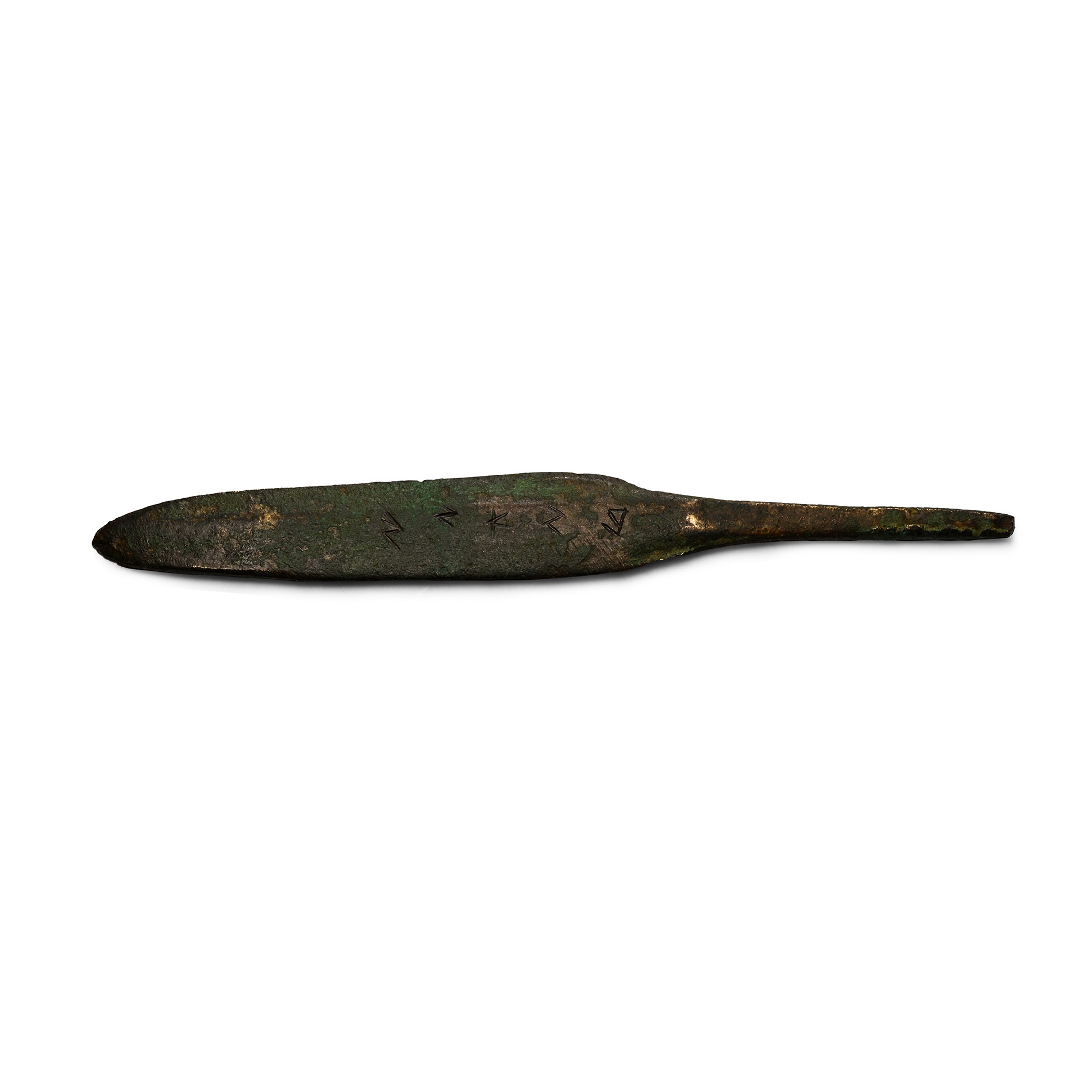
Phoenician Bronze Arrowhead with Inscriptions
CIRCA 12TH-11TH CENTURY B.C.
4 1/8 in. (14.2 grams, 10.6 cm).
Slender leaf-shaped two-edged blade with broad neck and sturdy tang; impressed inscriptions to both faces.
ProvenanceAcquired on the UK art market.
Property of an Essex, UK, collector.
Cf. Röllig, W., ‘Onomastic and Palaeographic Considerations on Early Phoenician Arrow-Heads’ in Fantar, M. (ed.), Actes du IIIe Congrès International des Études Phéniciennes et Puniques, Tunis, 11-16 November 1991, Vol. II (1995), pp. 348-355; Elayi J., ‘Four New Inscribed Phoenician Arrowheads’ in SEL, 22, 2005, pp.33-45, pl.IV.
FootnotesThe arrowhead seems to carry a Proto-Aramaic or Phoenician inscription like many arrows found in the Levant and Israel. They are usually reporting proper names like ‘Suwar, retainer of Abday’. As far as the function of these arrowheads is concerned, we know that the name inscribed on them was the owner's because successive owner's names were incised on two palimpsest examples. The central rib of this arrow bears on both sides a ten letter inscription, which is relatively deep and firmly incised. The inscription should be read 'ḤŞ…BN…NY = ‘arrow of K…son of…ANAY’.
CONDITIONTimeLine Auctions follows a vetting process to ensure the authenticity and legality of all items, reinforcing our commitment to integrity and responsible trading. Each antiquity, antique, and coin lot undergoes thorough examination by a vetting committee of at least ten external specialists, professional trade association members, scientists, and archaeologists: Our Vetting Process
AUCTIONS:
TimeLine is a leading auction house specialising in antiquities, ancient art, collectables, natural history, coins, medals, and books. Our auctions offer museums, collectors, historians, and enthusiasts the opportunity to acquire unique and historically significant pieces.
-
Western Asiatic Mottled Black Stone Mace Head
3rd-2nd millennium B.C.Sold for (Inc. bp): £117
Piriform in profile with vertical socket expanding towards the base, short neck. 459 grams, 80 mm
Ex London gentleman's collection, 1990s. -
Luristan Bronze Spearhead
13th-7th century B.C.Estimate: £250 - 350 (+bp*)
Opening Bid: £130
Composed of a leaf-shaped blade with tapering socket. 161 grams, 31.5 cm
Acquired 1980-2015. Ex Abelita family collection. -
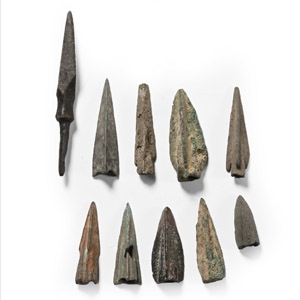
Greek Bronze Arrowhead Collection
Circa 5th-3rd century B.C.Sold for (Inc. bp): £52
Mainly socketted and triangular in section. 23 grams total, 15-49 mm
From a private Barnsley, UK, family collection.
