
Loading, please wait...
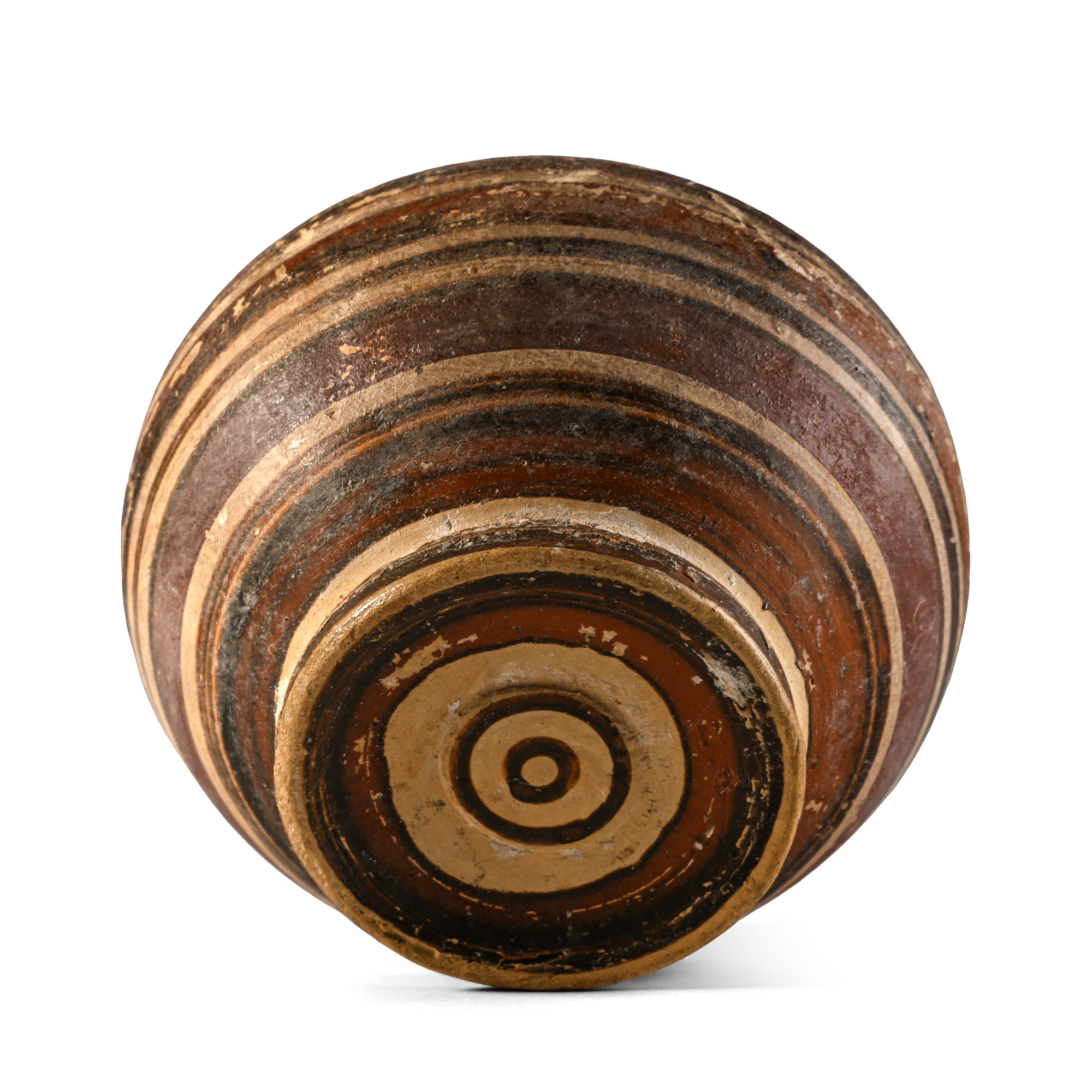
LOT 0057
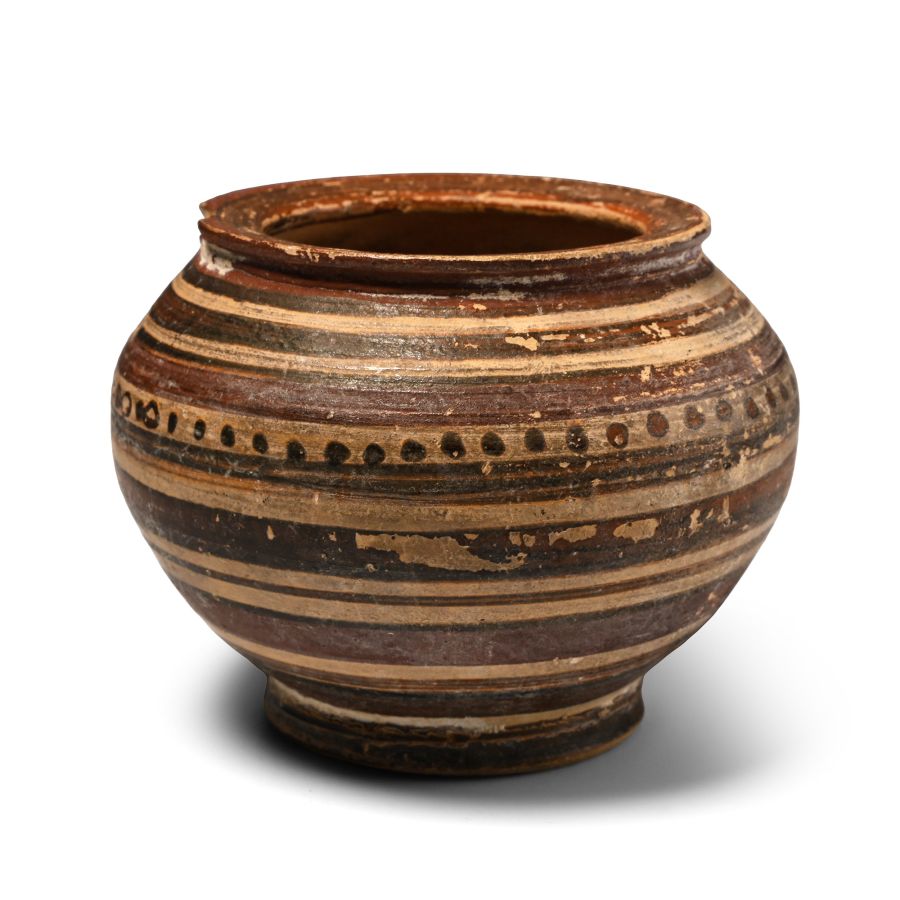
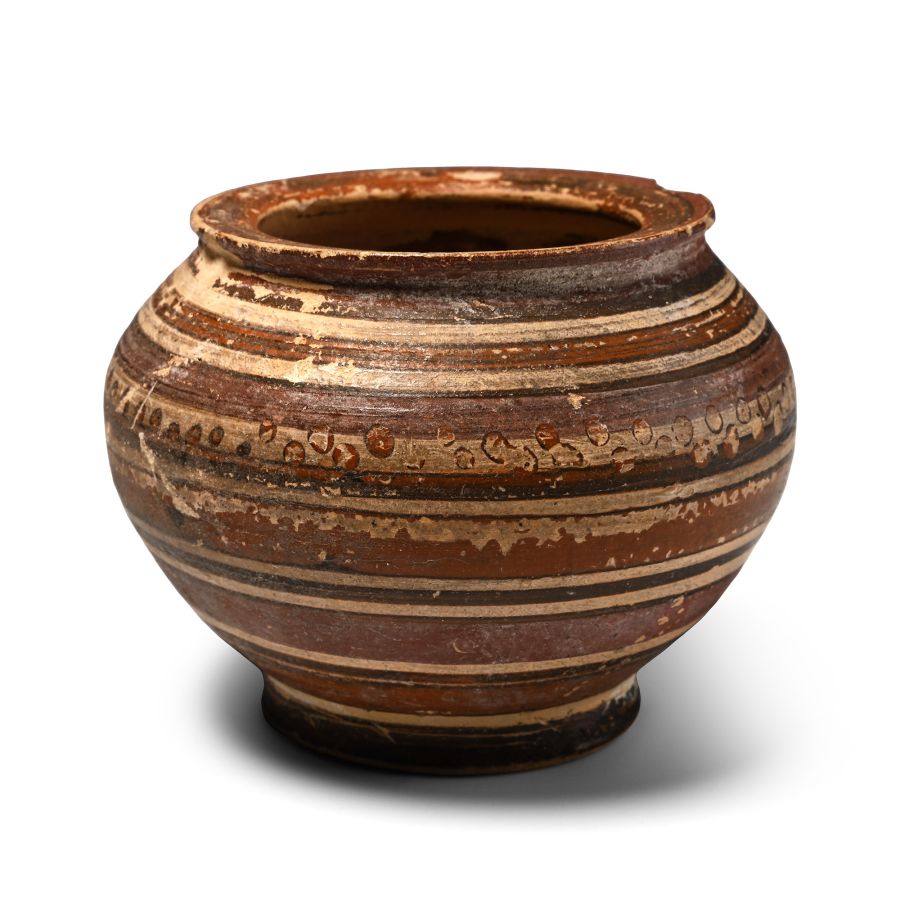
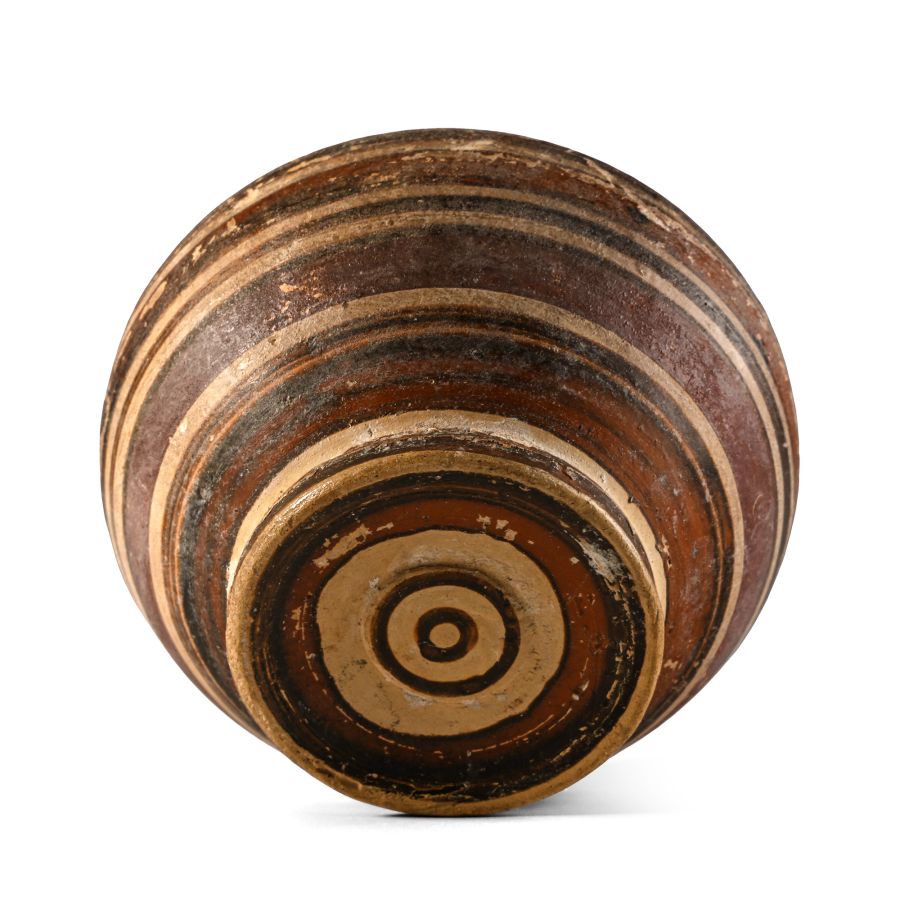
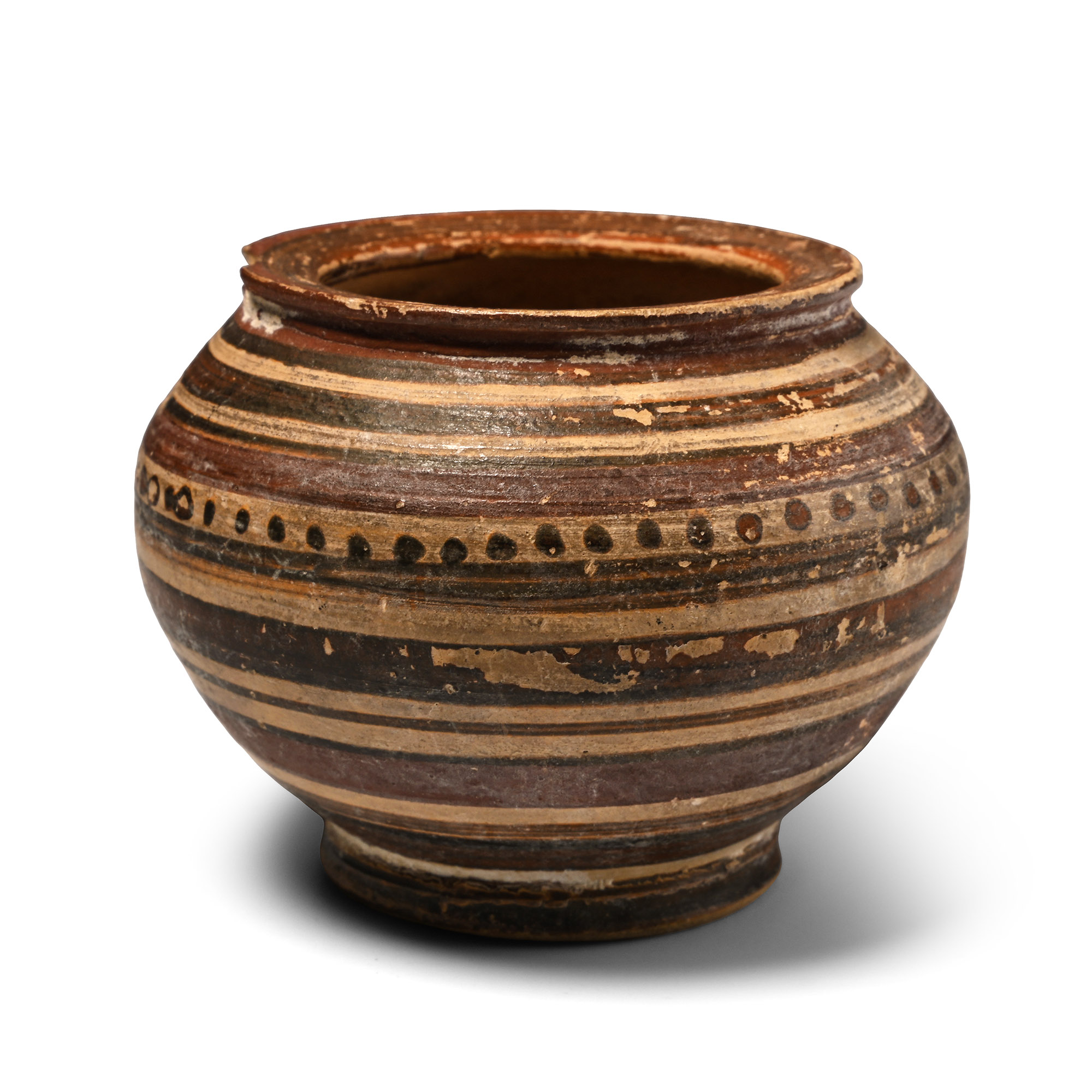
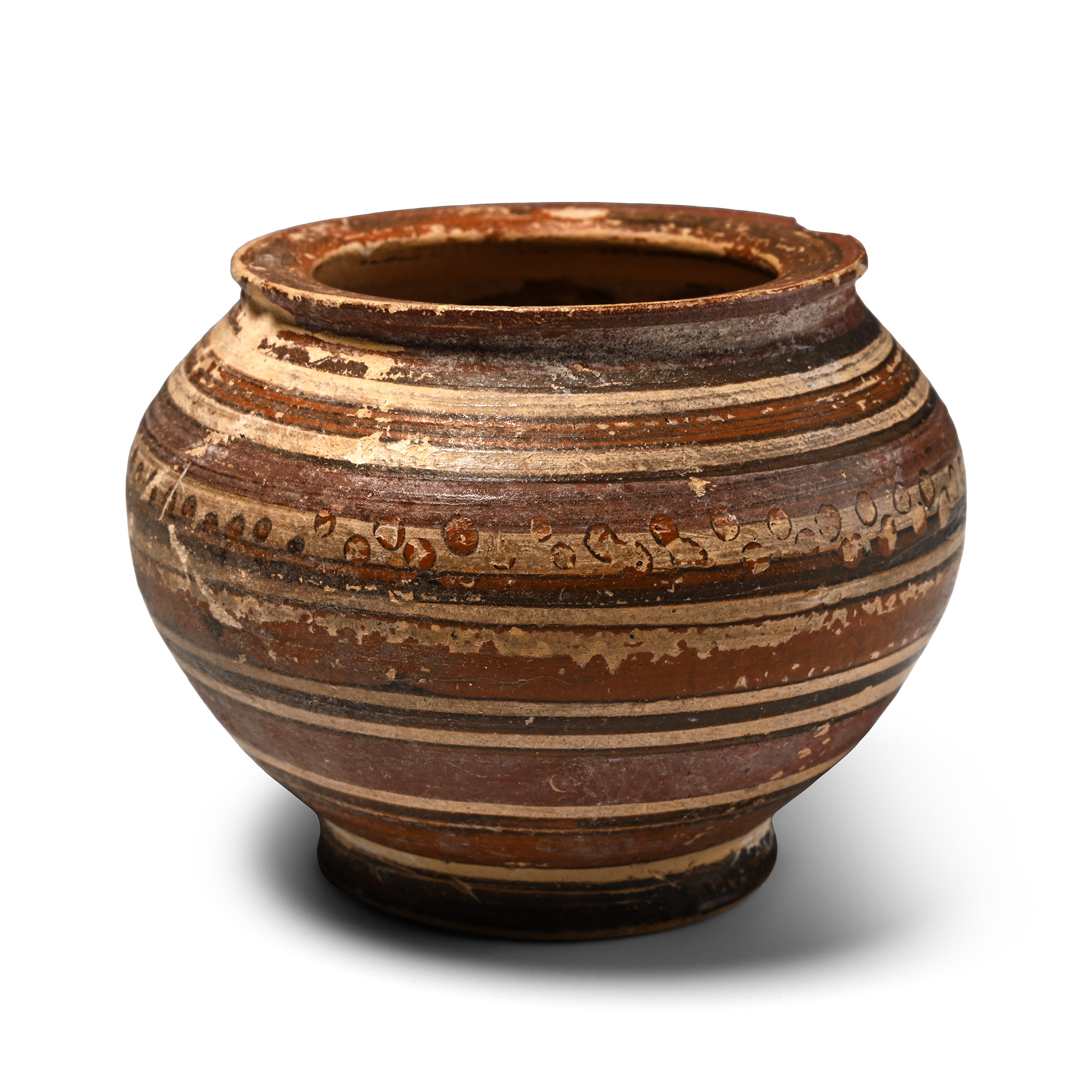
Phoenician Bowl with Crimson and Black Decorations
4TH CENTURY B.C.
2 3/8 in. (49.2 grams, 63 mm).
With a narrow basal ring, a flared rim, and painted circumferential bands.
ProvenancePrivate collection, Los Angeles, USA.
Acquired on the American art market.
European private collection.
Cf. identical Bowl without decoration in Moscati, S., I Fenici, Milano, 1988, p.125.
FootnotesSimilar pottery has been found in the Phoenician necropolis of Villaricos near Madrid (tomb 1082), although undecorated. The pottery seems to be of Iberian-Phoenician style, being bowls of similar type and decorated found also in the necropolis of Tutugi, Galera, Granada, Andalusia.
CONDITIONTimeLine Auctions follows a vetting process to ensure the authenticity and legality of all items, reinforcing our commitment to integrity and responsible trading. Each antiquity, antique, and coin lot undergoes thorough examination by a vetting committee of at least ten external specialists, professional trade association members, scientists, and archaeologists: Our Vetting Process
AUCTIONS:
TimeLine is a leading auction house specialising in antiquities, ancient art, collectables, natural history, coins, medals, and books. Our auctions offer museums, collectors, historians, and enthusiasts the opportunity to acquire unique and historically significant pieces.
-
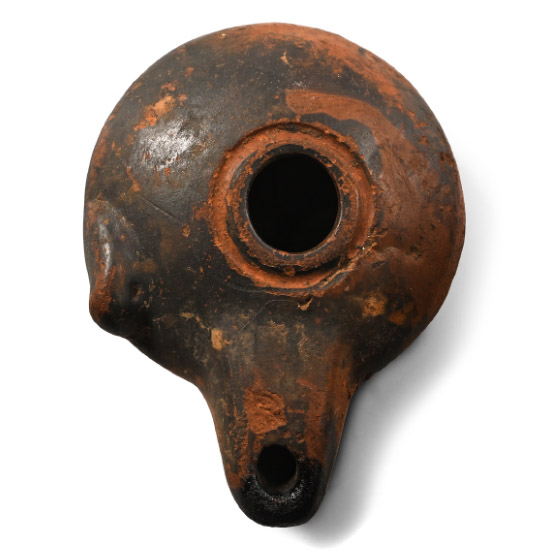
Greek Terracotta Oil Lamp
Hellenistic, circa 3rd-2nd century B.C.Sold for (Inc. bp): £59
Rounded body with large central filler hole and pointed lug on the shoulder, the rim with a low-relief ovolo decoration, elongated nozzle with scooped nozzle; low basal ring. 103 grams, 99 mm
From a UK collection formed in the 1980s. Property of an Essex, UK, gentleman. -
.jpg)
Etruscan Amber Head Pendant
Etruria, 5th century B.C.Sold for (Inc. bp): £2,210
Carved from translucent red-brown amber as a profile head with stylised Archaic features, large almond eye beneath a defined brow ridge, a softly smiling mouth, and carefully delineated hair arranged in striated bands sweeping back from the face; a drilled perforation at the crown indicates its original function as a suspended ornament; accompanied by a display stand. 23 grams, 50 mm (242 grams total, 81 mm including stand)
Sotheby's, London, 14-15 December 1981, no.206. American private collection; acquired at the above sale. This lot has been checked against the Interpol Database of stolen works of art and is accompanied by search certificate number no.13329-257968.
Amber was a prestigious imported material in Etruria, highly prized for its rarity, colour, and perceived apotropaic power. From the late 6th century B.C. onwards, figured amber pendants appear in elite tombs, particularly those of women, reflecting both personal identity and a protective role within funerary belief systems. The prominent, wide-open eye here may have served as a talismanic motif, thought to ward off malign forces and ensure the wearer’s vigilance and well-being in life and beyond the grave. This piece reflects the distinctive aesthetic of Etruscan amber carving, in which Mediterranean influences are reinterpreted with a locally expressive sculptural style. -
.jpg)
Etruscan Variegated Agate Scaraboid Gemstone with Dancing Satyrs
4th century B.C.Sold for (Inc. bp): £182
Scaraboid type with incuse design to the underside of two opposed dancing satyrs, heads and arms missing, possibly unfinished or cut down from a depiction of a lion and hero; supplied with a museum-quality impression. 2.75 grams, 17 mm
From the private collection of a European gentleman (1942-2024), formed since the 1970s.
