
Loading, please wait...
LOT 0418
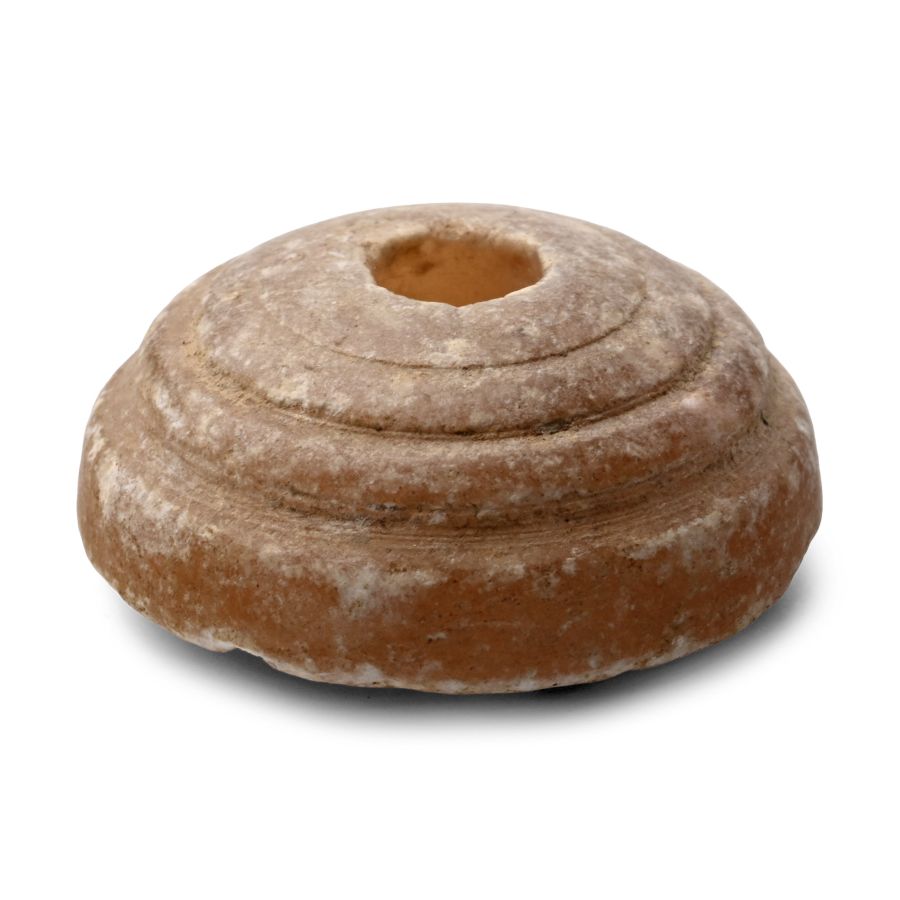
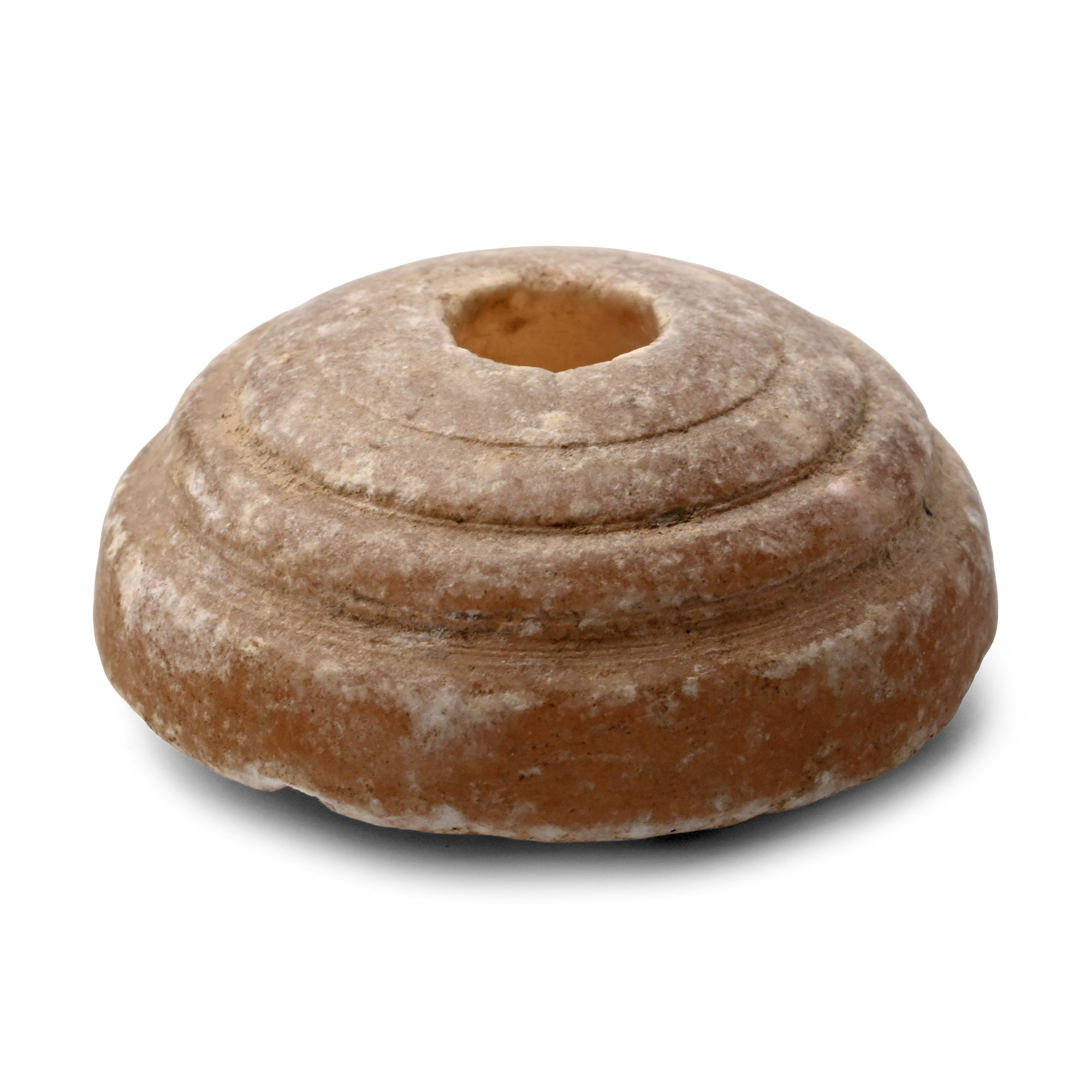
Phoenician Alabaster Spindle Whorl
1ST MILLENNIUM B.C.
1 1/4 in. (16.52 grams, 32 mm).
Plano-convex in section with stepped profile to dome and underside. [No Reserve]
ProvenanceFound in Lebanon before 1980.
From the private collection of Kenneth Machin (1936-2020), Buckinghamshire, UK; his collection of antiquities and natural history was formed since 1948; thence by descent.
This lot is accompanied by an illustrated lot declaration signed by the Head of the Antiquities Department, Dr Raffaele D'Amato.
TimeLine Auctions follows a vetting process to ensure the authenticity and legality of all items, reinforcing our commitment to integrity and responsible trading. Each antiquity, antique, and coin lot undergoes thorough examination by a vetting committee of at least ten external specialists, professional trade association members, scientists, and archaeologists: Our Vetting Process
AUCTIONS:
TimeLine is a leading auction house specialising in antiquities, ancient art, collectables, natural history, coins, medals, and books. Our auctions offer museums, collectors, historians, and enthusiasts the opportunity to acquire unique and historically significant pieces.
-
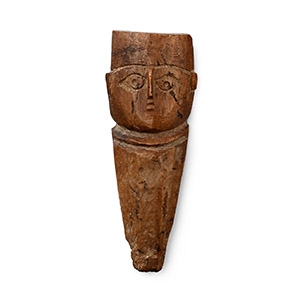
Egyptian Coptic Bone Doll's Head
4th-6th century A.D.Sold for (Inc. bp): £130
A carved face and chest from a figurine or doll, with incised eyes, mouth and brow, reserved ears and nose. 7.47 grams, 55 mm
Very fine condition.
Property of a London gentleman; acquired in the 1970s. From the private collection of John Meredith, acquired since the 1990s; thence by descent. This lot is accompanied by an illustrated lot declaration signed by the Head of the Antiquities Department, Dr Raffaele D'Amato. -
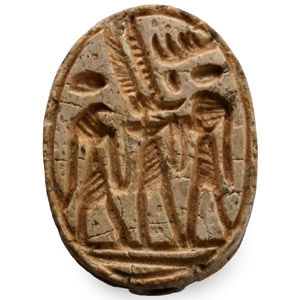
Egyptian Stone Scarab
Late Period, 664-332 B.C.Sold for (Inc. bp): £169
Incised detailing to the carapace and legs, pierced longitudinally; underside with three deities (possibly Amun-Ra, flanked by figures of Re). 3.74 grams, 20 mm
From the Gustave Mustaki collection before 1948. Ex London, UK, gallery. From a private UK collection. This lot is accompanied by an illustrated lot declaration signed by the Head of the Antiquities Department, Dr Raffaele D'Amato. -
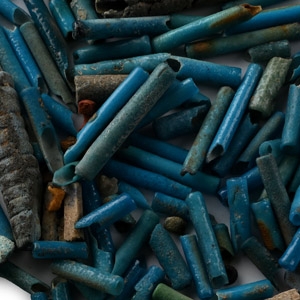
Egyptian Blue Faience Bead Group
Late Period, 664-332 B.C.Sold for (Inc. bp): £98
Comprising mainly long cylindrical beads with some larger beads. 7.7 grams total, 2-24 mm
Part of a group excavated by Petrie at Gurob, latterly in a London, UK, collection. This lot is accompanied by an illustrated lot declaration signed by the Head of the Antiquities Department, Dr Raffaele D'Amato.
