
LOT 3139
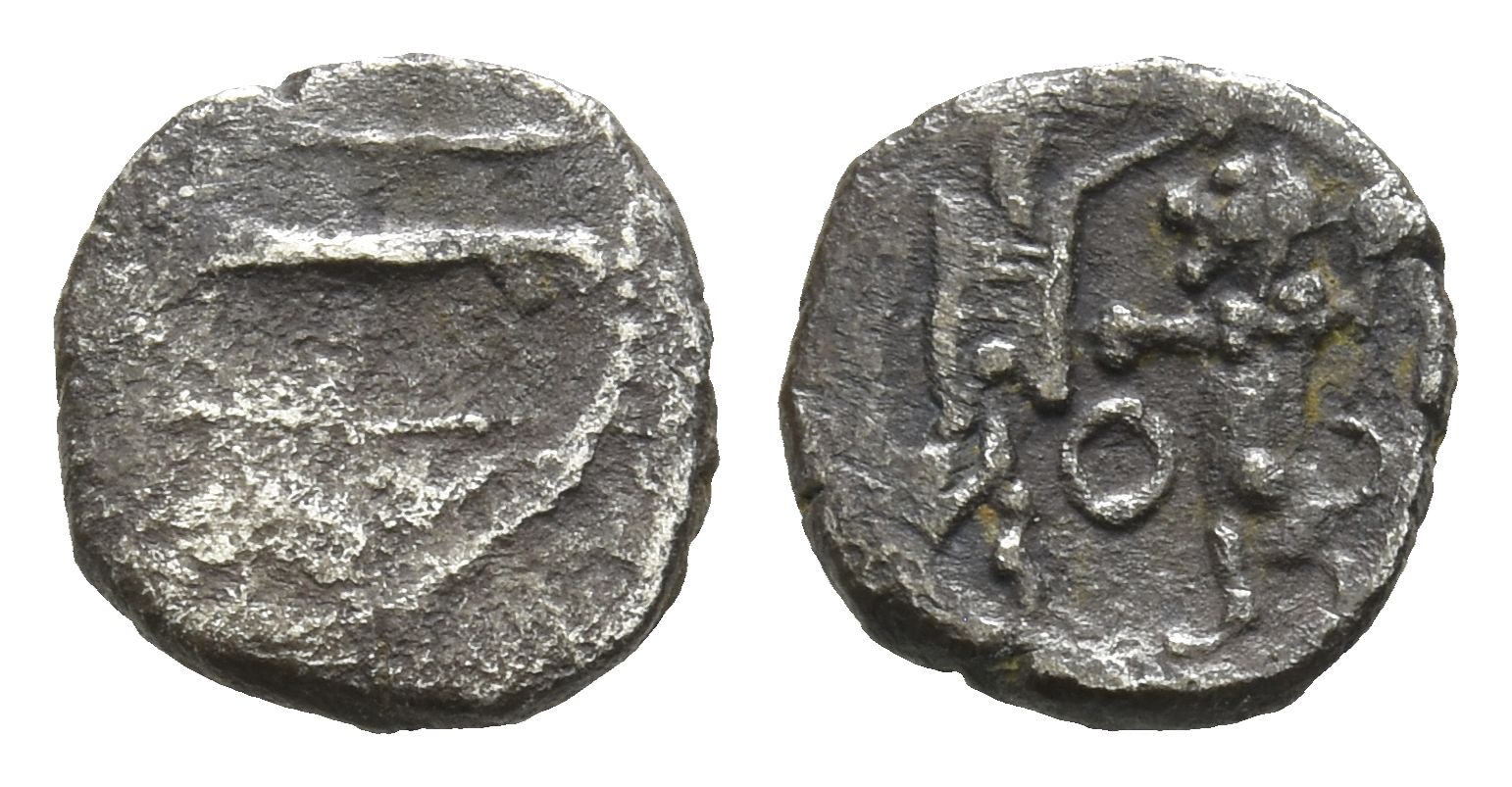
Phoenicia, Sidon. Uncertain Ruler AR Sixteenth Shekel. Circa 4th century BC.
Phoenician galley to left / Persian king or hero, holding dagger, standing to right, fighting lion standing to left on its hind legs; Phoenician letter between; all within incuse square. Cf. HGC 10, 240 (Sakton II). Near Very Fine.(0.63gr, 9mm, 12h.).
ProvenanceFrom the collection of a gentleman, acquired on the London art market in the 1990s.
TimeLine Auctions follows a vetting process to ensure the authenticity and legality of all items, reinforcing our commitment to integrity and responsible trading. Each antiquity, antique, and coin lot undergoes thorough examination by a vetting committee of at least ten external specialists, professional trade association members, scientists, and archaeologists: Our Vetting Process
AUCTIONS:
TimeLine is a leading auction house specialising in antiquities, ancient art, collectables, natural history, coins, medals, and books. Our auctions offer museums, collectors, historians, and enthusiasts the opportunity to acquire unique and historically significant pieces.
-
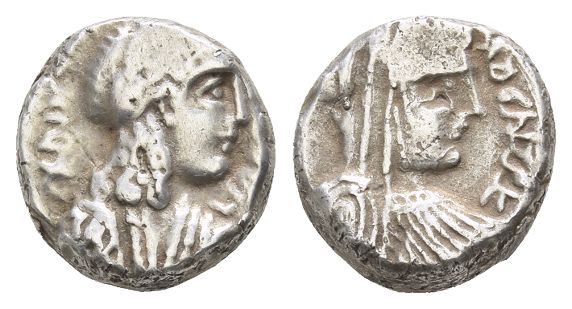
Nabataea, Rabbel II, with Shaqilat AR Sela'-Drachm. Dated RY 4 (AD 73/4). Petra mint.
Sold for (Inc. bp): £46
Laureate and draped bust of Rabbel to right; date in legend to left / Veiled, laureate, and draped bust of Shaqilat to right. Meshorer, Nabataea 145; DCA 984. 3.68gr, 13mm, 12h.
Near Very Fine.
From the collection of a gentleman, acquired on the London art market in the 1990s. -
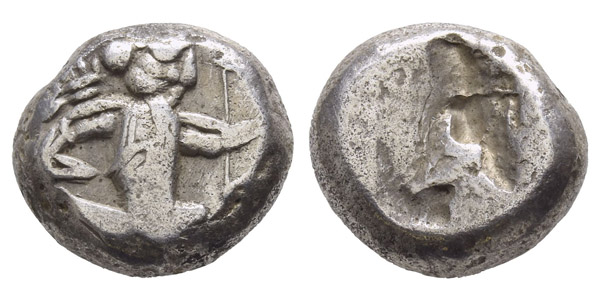
Persia. Achaemenid Empire, Time of Darius II to Artaxerxes II AR Siglos. Circa 420-375 BC. Sardes mint or subsidiary mint. Type IV (middle) B. Lydo-Milesian standard.
Sold for (Inc. bp): £52
Persian king or hero, wearing kidaris and kandys, quiver over shoulder, in kneeling-running stance to right, holding dagger in right hand, bow in left / Oblong incuse punch. Carradice Type IV, Group B. 5.54gr, 14mm, 12h.
Near Very Fine.
Ex 'V' gentleman's collection, Switzerland. From the property of a North London, UK, gentleman. -
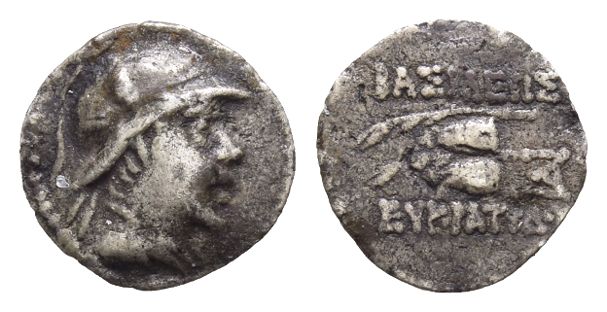
Greek King of Baktria, Eukratides I AR Obol. c.175-170 BC.
Sold for (Inc. bp): £39
Diademed and draped bust right, wearing horned Boiotian helmet, within bead-and-reel border / BAΣIΛEΩΣ – EΥKΡATIΔOY, caps of the Dioskouroi; monogram AN below. MIG 181a; HGC 12, 139. 0.62gr, 11mm, 12h.
Very Fine.
Property of a London, UK, private collector.
