
LOT 2673
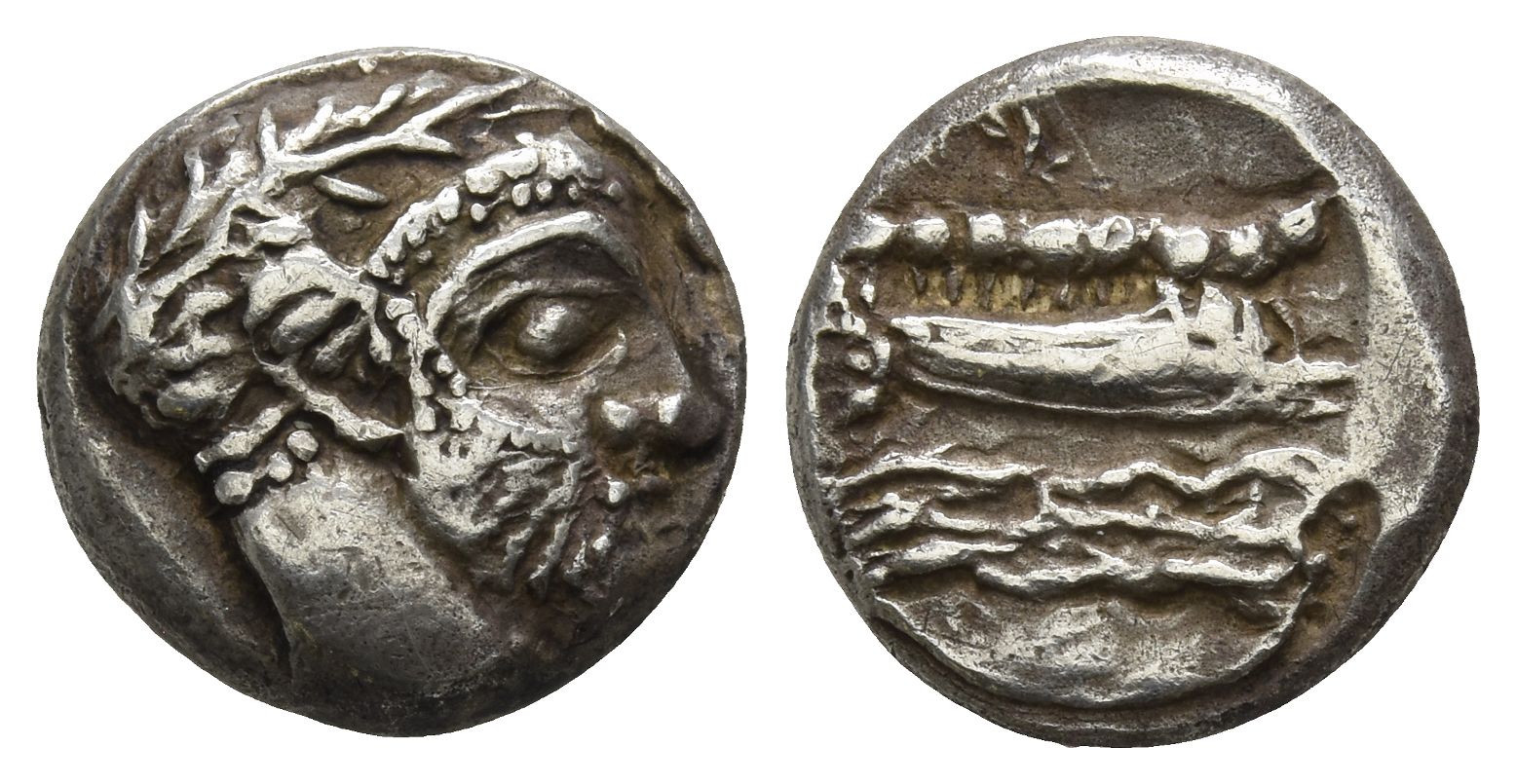
Phoenicia, Arados AR Third Shekel. Uncertain king, circa 370-346 BC.
Contemporary imitation. Laureate head of Ba'al-Arwad to right / Galley to right above waves; Aramaic letter above. For prototype: cf. E&E-A Group III; cf. HGC 10, 40-1. Very Fine. Lightly toned.(3.19gr, 14mm, 3h.).
ProvenanceFrom the collection of a gentleman, acquired on the London art market in the 1990s.
Ex Classical Numismatic Group, Electronic Auction 560, 17 April 2024, lot 237.
TimeLine Auctions follows a vetting process to ensure the authenticity and legality of all items, reinforcing our commitment to integrity and responsible trading. Each antiquity, antique, and coin lot undergoes thorough examination by a vetting committee of at least ten external specialists, professional trade association members, scientists, and archaeologists: Our Vetting Process
AUCTIONS:
TimeLine is a leading auction house specialising in antiquities, ancient art, collectables, natural history, coins, medals, and books. Our auctions offer museums, collectors, historians, and enthusiasts the opportunity to acquire unique and historically significant pieces.
LOT 2673
Phoenicia, Arados AR Third Shekel.
Estimate £70 - 90€81 - 104 (for guidance only)$95 - 122 (for guidance only)
-
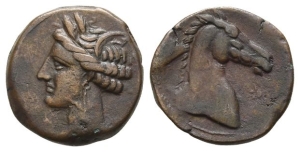
North Africa, Carthage AE 19mm. Circa 300-264 BC.
Sold for (Inc. bp): £130
Wreathed head of Tanit to left / Horse's head to right; sunburst before. Cf. MAA 57c; SNG Copenhagen 146. 4.34gr, 19mm, 3h.
Very Fine. Rare.
From the collection of a London antiquarian, formed since the 1980s. -
![Group of Five [5] AE Greek Coins.](https://timelineauctions.com/upload/images/items/small/224311-s.jpg)
Group of Five [5] AE Greek Coins. 2nd-1st century BC.
Sold for (Inc. bp): £33
Various rulers and cities. 19.68gr total.
Very Fine.
Ex 'V' gentleman's collection, Switzerland. From the property of a North London, UK, gentleman. -
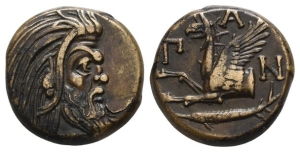
Cimmerian Bosporos, Pantikapaion AE 20mm. Circa 310-304/3 BC.
Sold for (Inc. bp): £98
Bearded head of satyr to right / Π-Α-Ν around forepart of griffin to left; below, sturgeon to left. Anokhin 1023; SNG BM Black Sea 869-71; SNG Stancomb 542; MacDonald 69; HGC 7, 113. 8.37gr, 20mm, 11h.
Good Very Fine.
From a private collection formed in Europe in the 1980s. From Westminster collection, central London, UK.
