
LOT 3194
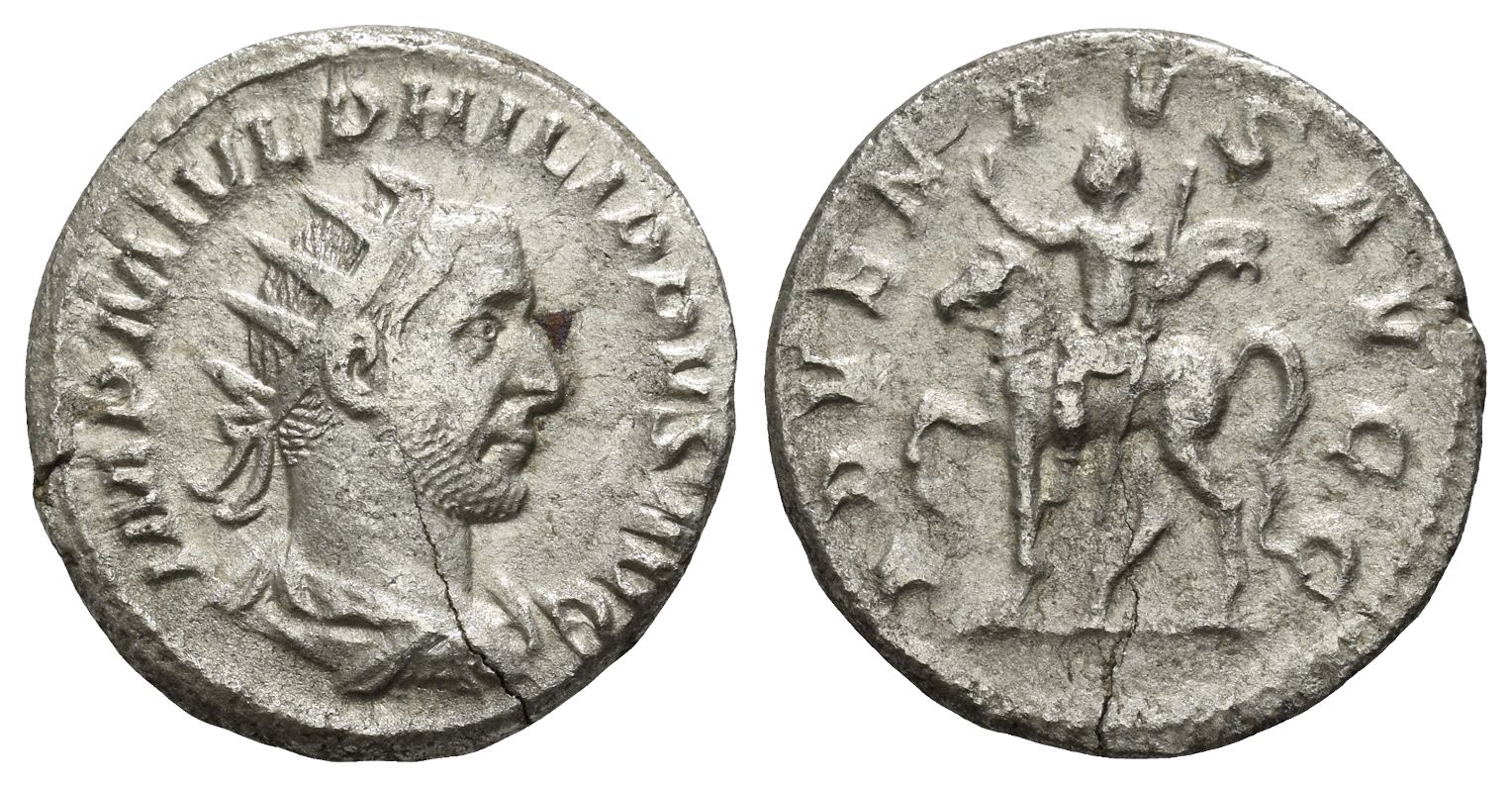
Philip I AR Antoninianus. AD 244-249.
Rome mint; struck AD 244-247. IMP M IVL PHILIPPVS AVG, radiate, draped and cuirassed bust to right / ADVENTVS AVGG, emperor on horseback advancing to left, raising right hand and holding spear with left. RIC IV 26b; RSC 3. Very Fine. Flan crack at 5h.(4.83gr, 22mm, 1h.).
ProvenanceEx German art market, 2000s.
Acquired from an EU collector living in London.
From the collection of a Surrey, UK, gentleman.
TimeLine Auctions follows a vetting process to ensure the authenticity and legality of all items, reinforcing our commitment to integrity and responsible trading. Each antiquity, antique, and coin lot undergoes thorough examination by a vetting committee of at least ten external specialists, professional trade association members, scientists, and archaeologists: Our Vetting Process
AUCTIONS:
TimeLine is a leading auction house specialising in antiquities, ancient art, collectables, natural history, coins, medals, and books. Our auctions offer museums, collectors, historians, and enthusiasts the opportunity to acquire unique and historically significant pieces.
-
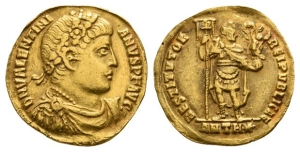
Valentinian I AV Solidus. AD 364-375.
Sold for (Inc. bp): £715
Antioch mint; struck AD 364-367. 8th officina. D N VALENTINIANVS P F AVG, rosette-diademed, draped and cuirassed bust to right / RESTITVTOR REIPVBLICAE, Valentinian standing facing, head to right, holding labarum with Staurogram in banner and Victory with wreath; ANTH✷ in exergue. RIC IX 2b.xxviii. 4.34gr, 20mm, 6h.
Very Fine.
From the private collection of Kenneth Machin (1936-2020). -
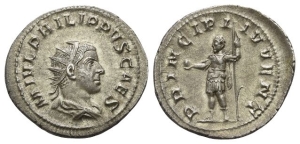
Philip II, as Caesar AR Antoninianus. AD 244-247.
Estimate: £250 - 350 (‡+bp*)
Opening Bid: £125
Rome mint; struck AD 246. M IVL PHILIPPVS CAES, radiate and draped bust to right / PRINCIPI IVVENT, Philip II in military dress standing to left, holding reversed spear with left hand and globe with right. RIC IV 218d var. (bust type); RSC 48 var. (same). 4.00gr, 24mm, 1h.
Extremely Fine. Beautiful toning.
Ex Pecunem / Gitbud & Naumann, Auction 14, 2 March 2014, lot 748. -
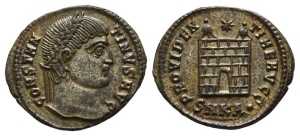
Constantine I BI Nummus. AD 307/310-337.
Sold for (Inc. bp): £33
Cyzicus mint; struck AD 325-326. 1st officina. CONSTAN-TINVS AVG, laureate head to right / PROVIDEN-TIAE AVGG, camp gate with two turrets and no doors; star above, SMKA• in exergue. RIC VII 34. 2.96gr, 21mm, 12h.
Extremely Fine. Original silvering fully intact.
Ex Den of Antiquity, Cambridgeshire, UK. Property of a Cambridgeshire, UK, gentleman.
