
LOT 3660
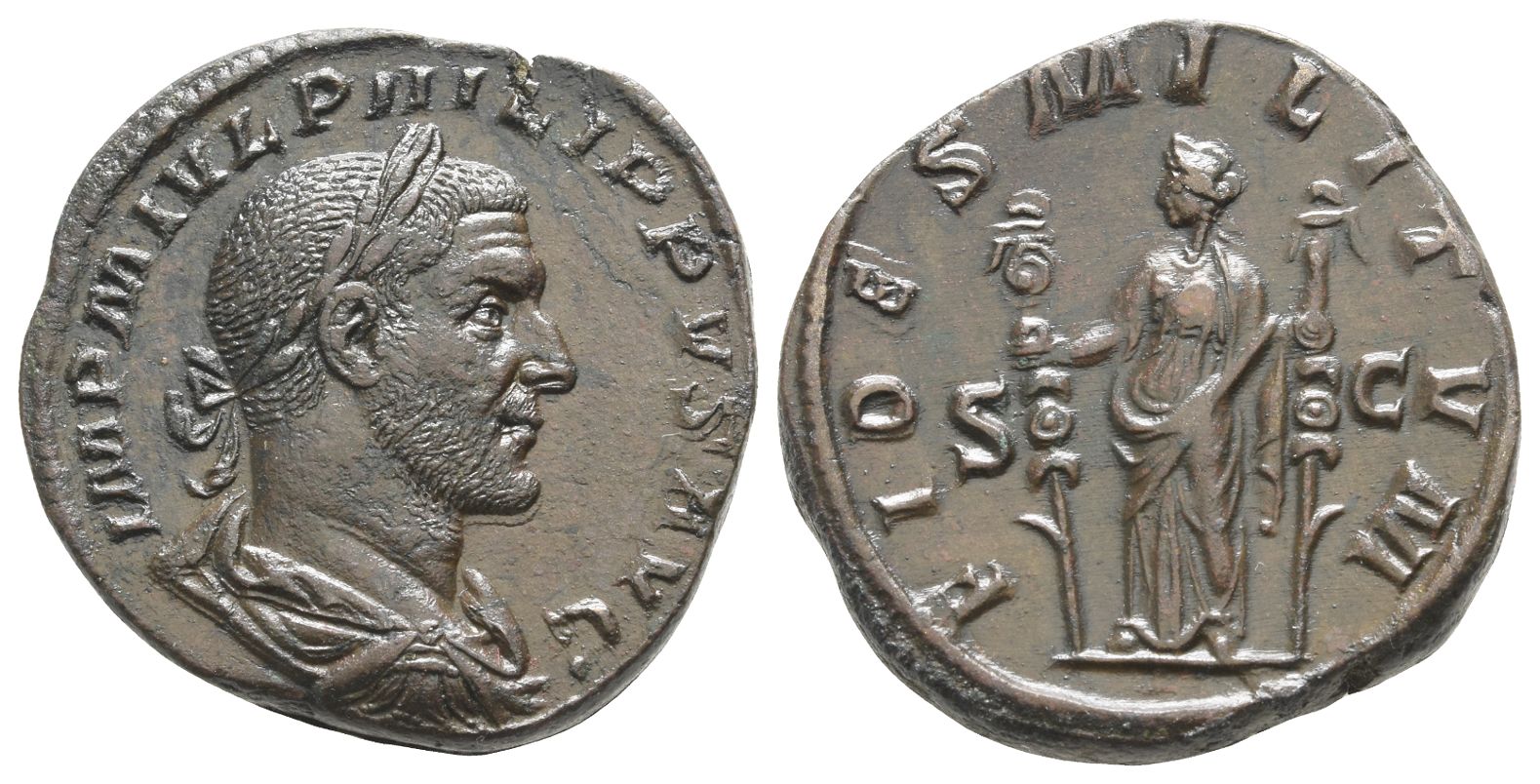
Philip I AE Sestertius. AD 244-249. Rome mint.
IMP M IVL PHILIPPVS AVG, laureate, draped and cuirassed bust to right / FIDES MILITVM, Fides standing to left, holding signum in each hand; S C across fields. RIC IV 172a; Cohen 59. Near Extremely Fine.(21.04gr, 30mm, 7h.).
ProvenanceEx London, UK, collection, 2000s.
TimeLine Auctions follows a vetting process to ensure the authenticity and legality of all items, reinforcing our commitment to integrity and responsible trading. Each antiquity, antique, and coin lot undergoes thorough examination by a vetting committee of at least ten external specialists, professional trade association members, scientists, and archaeologists: Our Vetting Process
AUCTIONS:
TimeLine is a leading auction house specialising in antiquities, ancient art, collectables, natural history, coins, medals, and books. Our auctions offer museums, collectors, historians, and enthusiasts the opportunity to acquire unique and historically significant pieces.
-
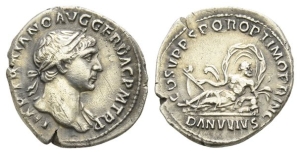
Trajan AR Denarius. AD 107-108. Rome mint.
Sold for (Inc. bp): £195
IMP TRAIANO AVG GER DAC P M TR P, laureate head to right, slight drapery on far shoulder / COS V P P S P Q R OPTIMO PRINC, Danube reclining to left on rocks, head to right, with billowing cloak above, placing his right hand on stern and resting his left arm on overturned urn; DANVVIVS in exergue. RIC II 100; BMCRE 395; Woytek 277b; RSC 136. 2.73gr, 19mm, 7h.
Near Extremely Fine. Attractive old cabinet tone. Some scratches.
From the private collection of a Canadian gentleman living in Essex, UK, formed since the 1920s-circa 1990. Property of an Essex lady until the late 1990s; thence by descent. From the private collection of an Essex gentleman since the late 1990s. -
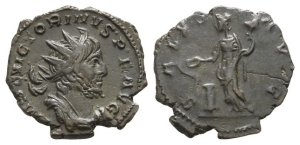
Victorinus, Romano-Gallic Emperor BI Antoninianus. AD 271. Treveri mint.
Sold for (Inc. bp): £20
IMP C VICTORINVS P F AVG, radiate and draped bust to right / SALVS AVG, Salus standing facing, head to left, holding long vertical sceptre and patera, feeding serpent which rises from altar. RIC V.2 71 (Southern mint). 2.77gr, 20mm, 12h.
Very Fine.
London, UK, dealership, 1990s. -
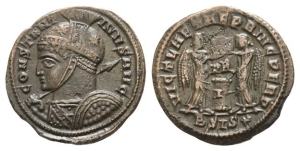
Constantine I BI Nummus. AD 319-320. Siscia mint.
Sold for (Inc. bp): £39
2nd officina. CONSTANTINVS AVG, helmeted and cuirassed bust to left, holding spear and shield / VICT LAETAE PRINC PERP, two Victories standing facing each other, holding shield inscribed VOT PR in two lines over altar inscribed I; BSIS(star) in exergue. RIC VII 95. 2.84gr, 20mm, 12h.
Good Very Fine.
Acquired on the UK art market. Property of a London, UK, antiquarian.
