Loading, please wait...

Use mousewheel to zoom in and out, click to enlarge

Details

LOT 2016

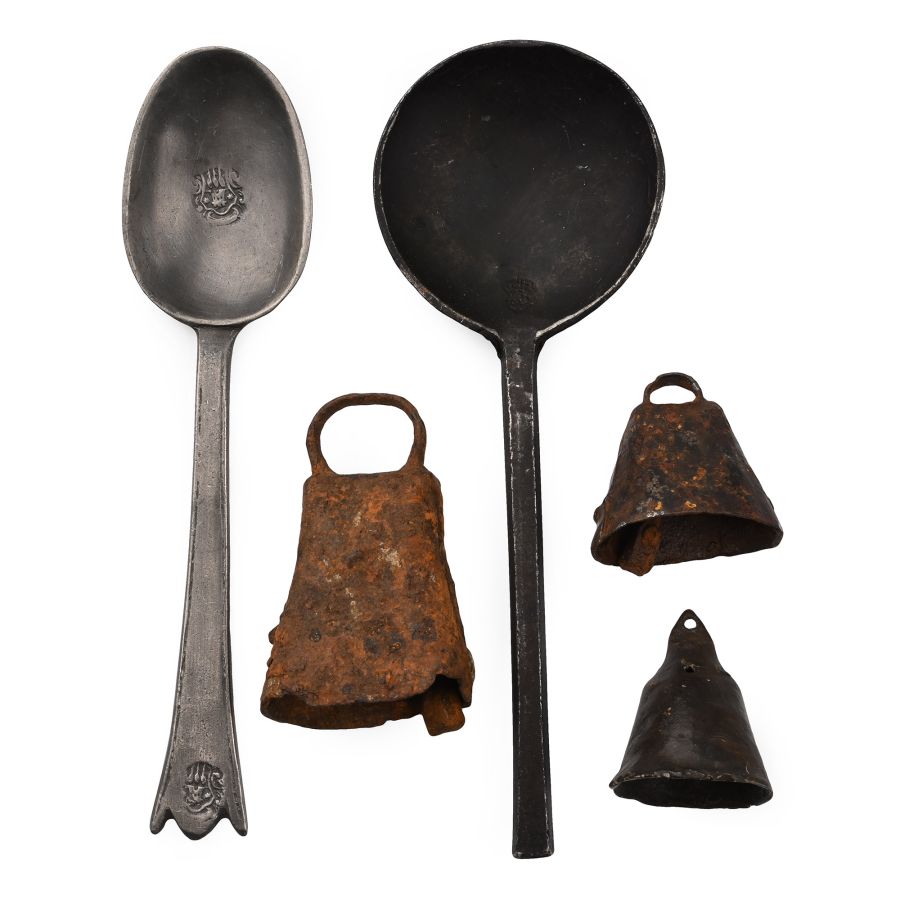
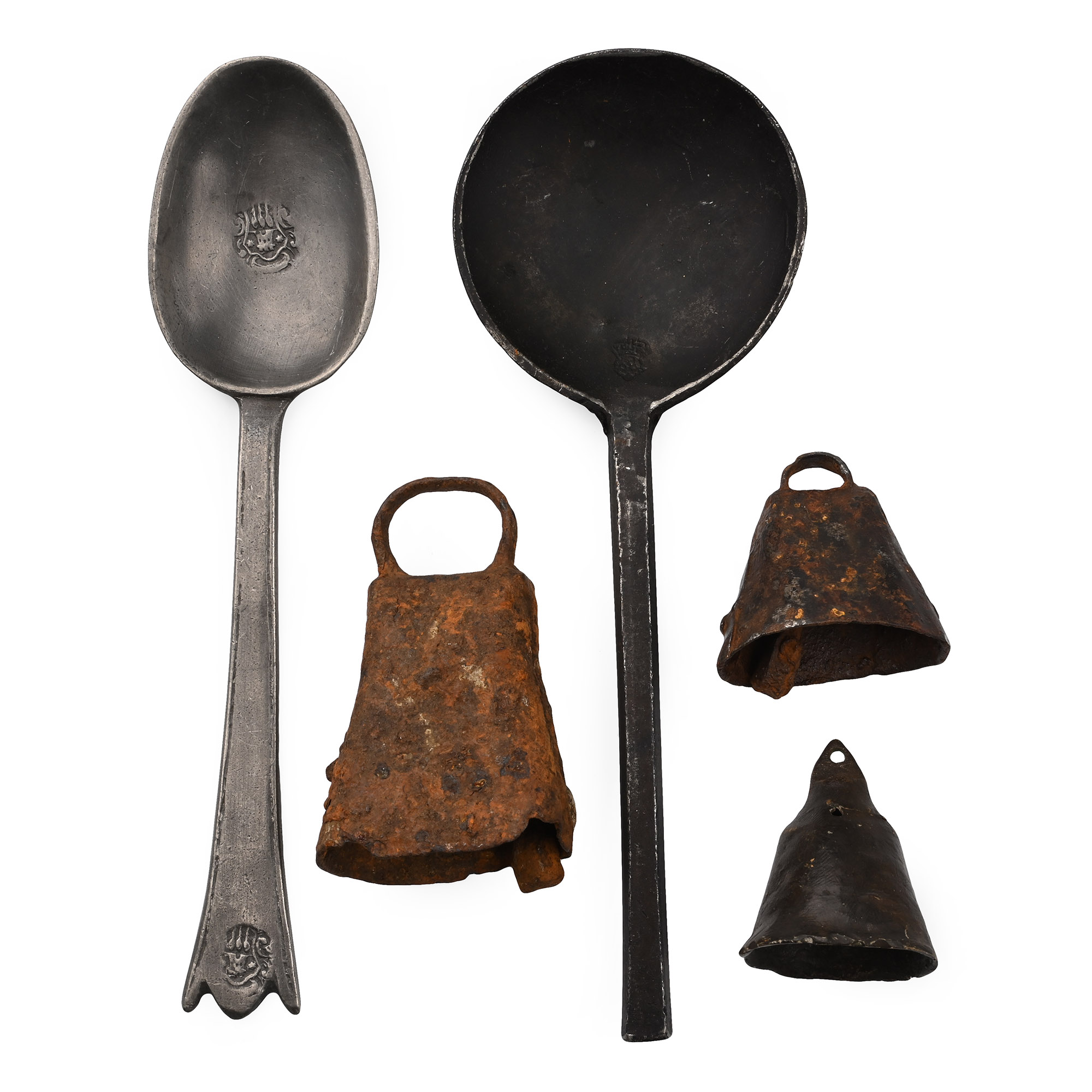
Pewter Spoon and Iron Bell Group

18TH-19TH CENTURY A.D.

1 1/2 - 6 3/4 in. (218 grams total, 3.9-17.1 cm).

Including a spoon with broad bowl and flat handle with stamped mark; another with flat handle and tulip finial, stamped on bowl and finial; three small clapper bells. [5, No Reserve]

Provenance

From the private collection of a Kent, UK, gentleman.
This lot is accompanied by an illustrated lot declaration signed by the Head of the Antiquities Department, Dr Raffaele D'Amato.

CONDITION

VETTING:

TimeLine Auctions follows a vetting process to ensure the authenticity and legality of all items, reinforcing our commitment to integrity and responsible trading. Each antiquity, antique, and coin lot undergoes thorough examination by a vetting committee of at least ten external specialists, professional trade association members, scientists, and archaeologists: Our Vetting Process


AUCTIONS:

TimeLine is a leading auction house specialising in antiquities, ancient art, collectables, natural history, coins, medals, and books. Our auctions offer museums, collectors, historians, and enthusiasts the opportunity to acquire unique and historically significant pieces.

LOT 2016

Pewter Spoon and Iron Bell Group

Sold for (Inc. bp): £20

Print page

RELATED LOTS

  • Large Icon of Archangel Michael Flanked by Saints Florus and Laurus
    Large Icon of Archangel Michael Flanked by Saints Florus and Laurus
    17th century A.D.

    Estimate: £5,000 - 7,000 (+bp*)

    Opening Bid: £2,500

    Tempera on wood, the central part of the composition showing the Archangel Michael, dressed in pseudo-Roman armour consisting of a quilted corset and pteryges hanging from the shoulders and waist, wearing tight Byzantine-style trousers and red imperial shoes, his green tunic contrasting with his pink cloak, holding a flickering flame in his left hand, symbolising his flaming sword; at his side Saints Florus and Lavrus, patrons of horses, dressed in cassocks, and red and green overgarments with gold ornaments at the hems, pink and green cloaks closed by a gold fibula on the right shoulder, the two martyrs in an attitude of veneration towards the Archangel; the lower part of the scene with three martyrs Speusippos, Meleusippos, and Eleusippos on horseback, the horses which Florus and Lavrus were patrons of before them; in the upper part, top left, God dressed in a pink tunic and green chlamys, sitting on a golden throne and assisted by angels with wings of fire, blessing the saints and the martyrs; at his side inscription in Greek letters 'ΙϹ ΧϹ' (ΙΗϹΟΥϹ ΧΡΙϹΤΟϹ = Jesus Christ); images of the saints Basil, Bishop of Caesarea and Blaise, Bishop of Sebastia visible on the borders. 4.2 kg, 70 x 50 cm

    Vertical crack and border restored.

    Acquired on the European art market. Private collection, London, UK. Accompanied by an academic report by Dr Raffaele D’Amato. This lot has been checked against the Interpol Database of stolen works of art and is accompanied by search certificate number no.12793-240884. This lot has been cleared against the Art Loss Register database, and is accompanied by an illustrated lot declaration signed by the Head of the Antiquities Department, Dr Raffaele D'Amato.

    The legend of the two saints tells that the Archangel Michael aided the brothers in the recovery of their lost horses and also in their care and training; so Florus and Lavrus became associated with horses.

    Lot Details

  • Vintage Italian Japanese Figure Pair by A. Giannelli
    Vintage Italian Japanese Figure Pair by A. Giannelli
    20th century A.D.

    Sold for (Inc. bp): £26

    Comprising two composite figures: male advancing with right hand on his head; female standing clutching a fish, signed to reverse and dated '1989'. 200 grams total, 14 cm high each


    From the private collection of a Canadian gentleman living in Essex, UK, formed since the 1920s-circa 1990. Property of an Essex lady until the late 1990s; thence by descent. From the private collection of an Essex gentleman since the late 1990s. This lot is accompanied by an illustrated lot declaration signed by the Head of the Antiquities Department, Dr Raffaele D'Amato.

    Lot Details

  • Bronze Grand Tour Statue of The Dying Gaul from the Capitoline Museum
    Bronze Grand Tour Statue of 'The Dying Gaul' from the Capitoline Museum
    Italy, circa 1880 A.D.

    Estimate: £1,000 - 1,400 (+bp*)

    Opening Bid: £500

    Copy of a Greek sculpture (now lost) from the Hellenistic period (323-31 BC) thought to have been made in bronze; a young Galatian warrior, wounded in the chest by a sword blow and dying, half-lying with his face turned downwards; with typical features of the idealised Celtic warrior: the high cheekbones, the hairstyle with thick and long locks, and the moustache (mytax); resting on a discarded shield with short sword under his right hand, straps and two tubular war-horns. 4 kg, 32 cm


    From the private collection of a S.W. London gentleman, acquired in the 1970s. This lot is accompanied by an illustrated lot declaration signed by the Head of the Antiquities Department, Dr Raffaele D'Amato.

    The Dying Gaul statue was rediscovered in Rome in the early 17th century, specifically in the 1620s, during excavations for the Villa Ludovisi. It was initially part of the Ludovisi collection and later acquired by Pope Clement XII for the Capitoline Museums. Except for a torque around the neck (a metal necklace typical of Celtic warriors), the figure is completely naked. It is possible to identify the figure tentatively as the ‘Trumpeter of Epigonos’ mentioned by Pliny (Natural History 34.88).

    Lot Details

Stay up-to-date with the latest from TimeLine Auctions by joining our mailing list