
Loading, please wait...
LOT 1175
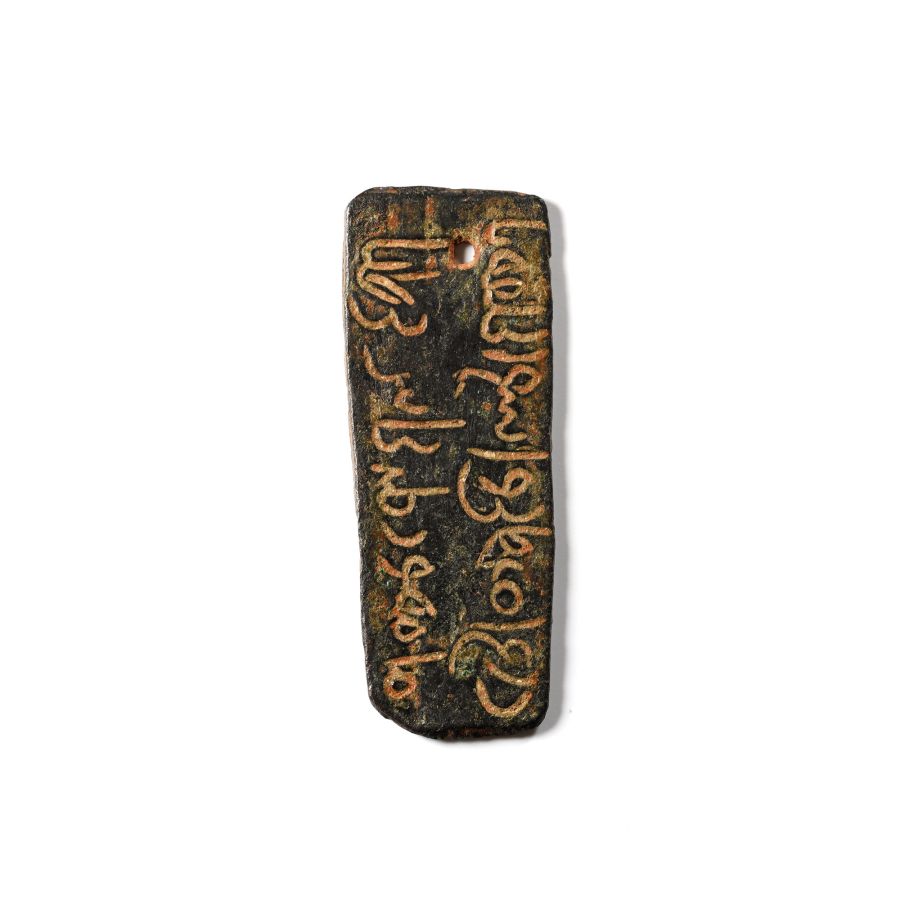
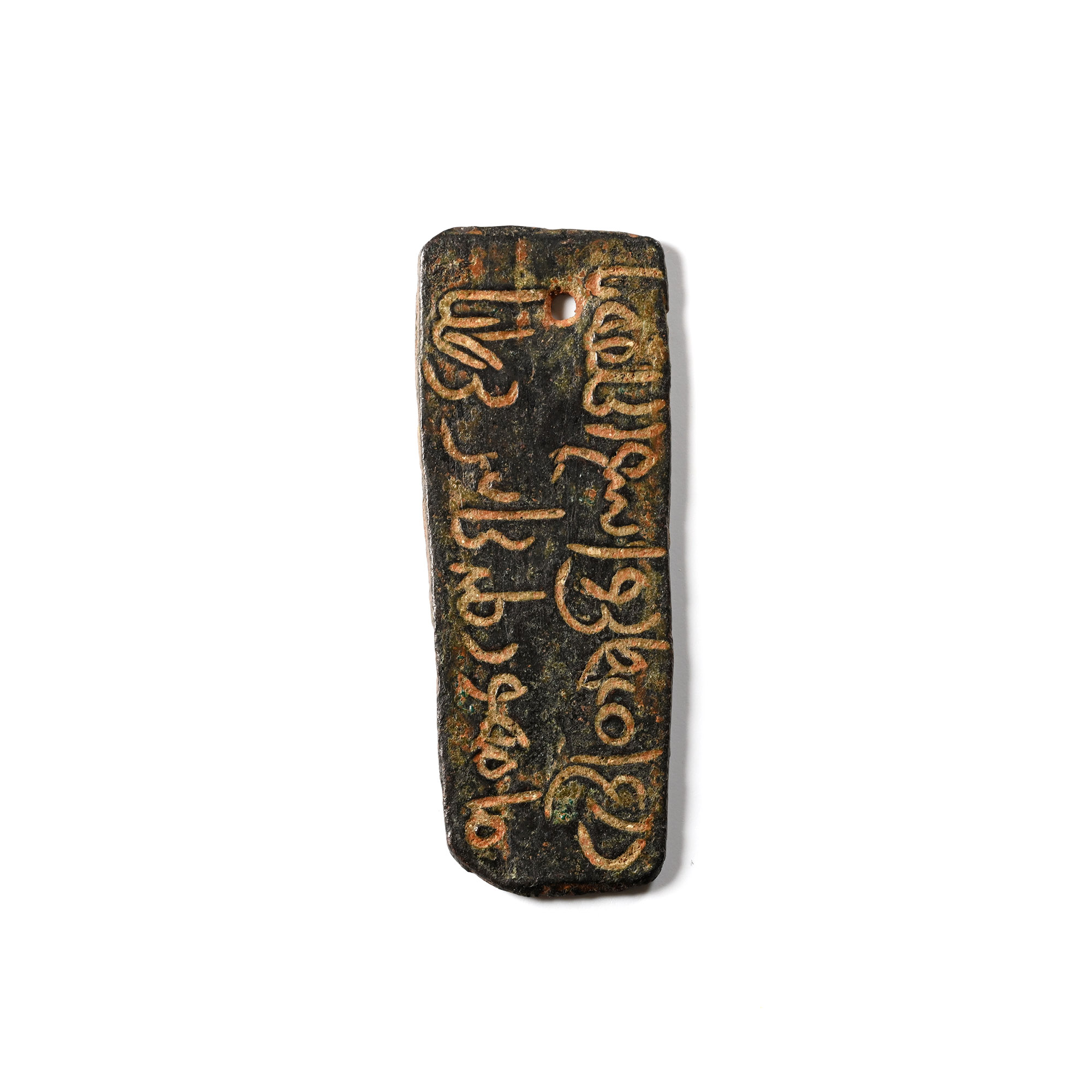
Personal Bronze Tag of Zahra Governor of Esphahan
14TH CENTURY A.D.
2 in. (10.6 grams, 51 mm).
A medieval period flat-section rectangular plaque pierced at the broad end with incised calligraphic legend: 'Zahra the splendid or the radiant governor of Esphahan ...', Zaraa or Zahra is a female name which also refers to boundless beauty (ذرع اصفهانی واسع الخلیفه با ما معمور).
ProvenanceFrom the collection of a gentleman, acquired on the London art market in the 1990s.
This lot has been cleared against the Art Loss Register database, and is accompanied by an illustrated lot declaration signed by the Head of the Antiquities Department, Dr Raffaele D'Amato.
TimeLine Auctions follows a vetting process to ensure the authenticity and legality of all items, reinforcing our commitment to integrity and responsible trading. Each antiquity, antique, and coin lot undergoes thorough examination by a vetting committee of at least ten external specialists, professional trade association members, scientists, and archaeologists: Our Vetting Process
AUCTIONS:
TimeLine is a leading auction house specialising in antiquities, ancient art, collectables, natural history, coins, medals, and books. Our auctions offer museums, collectors, historians, and enthusiasts the opportunity to acquire unique and historically significant pieces.
LOT 1175
Personal Bronze Tag of Zahra Governor of Esphahan
Estimate £350 - 450€410 - 520 (for guidance only)$470 - 610 (for guidance only)
-

Mesopotamian Stone Vessel
1st millennium B.C.Sold for (Inc. bp): £143
Squat jar with broad base, and shoulder, short neck and everted rim. 983 grams, 14.5 cm wide
From a collection formed before 1990. Ex Mayfair, London, UK, gallery, 2000s. This lot has been cleared against the Art Loss Register database, and is accompanied by an illustrated lot declaration signed by the Head of the Antiquities Department, Dr Raffaele D'Amato. -
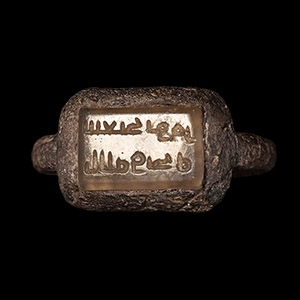
Western Asiatic Silver Ring with Inscribed Gemstone
12th-13th century A.D.Sold for (Inc. bp): £468
With round-section hoop, rectangular bezel set with an intaglio with two lines of Pahlavi inscription. 3.64 grams, 23.23 mm overall, 17.30 mm internal diameter (approximate size British M 1/2, USA 6 1/4, Europe 13.09, Japan 12)
Private collection of Mr K.A., acquired in the 1990s-early 2000s. This lot has been cleared against the Art Loss Register database, and is accompanied by an illustrated lot declaration signed by the Head of the Antiquities Department, Dr Raffaele D'Amato. -
.jpg)
Luristan Bronze Arrowhead Group
13th-6th century B.C.Sold for (Inc. bp): £195
Including barbed-and-tanged, leaf-shaped, tongue-shaped, and other types. 289 grams total, 33-95 mm
Acquired 1980-2015. Ex Abelita family collection. This lot has been cleared against the Art Loss Register database, and is accompanied by an illustrated lot declaration signed by the Head of the Antiquities Department, Dr Raffaele D'Amato.
