
Loading, please wait...
LOT 1722
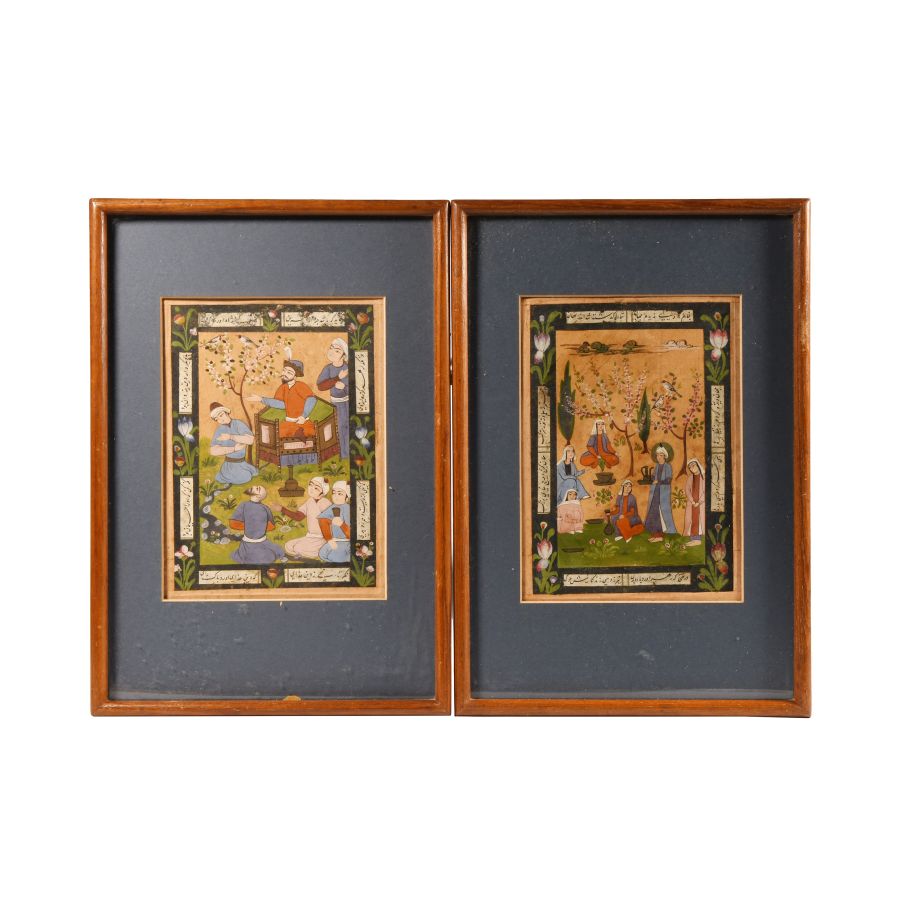
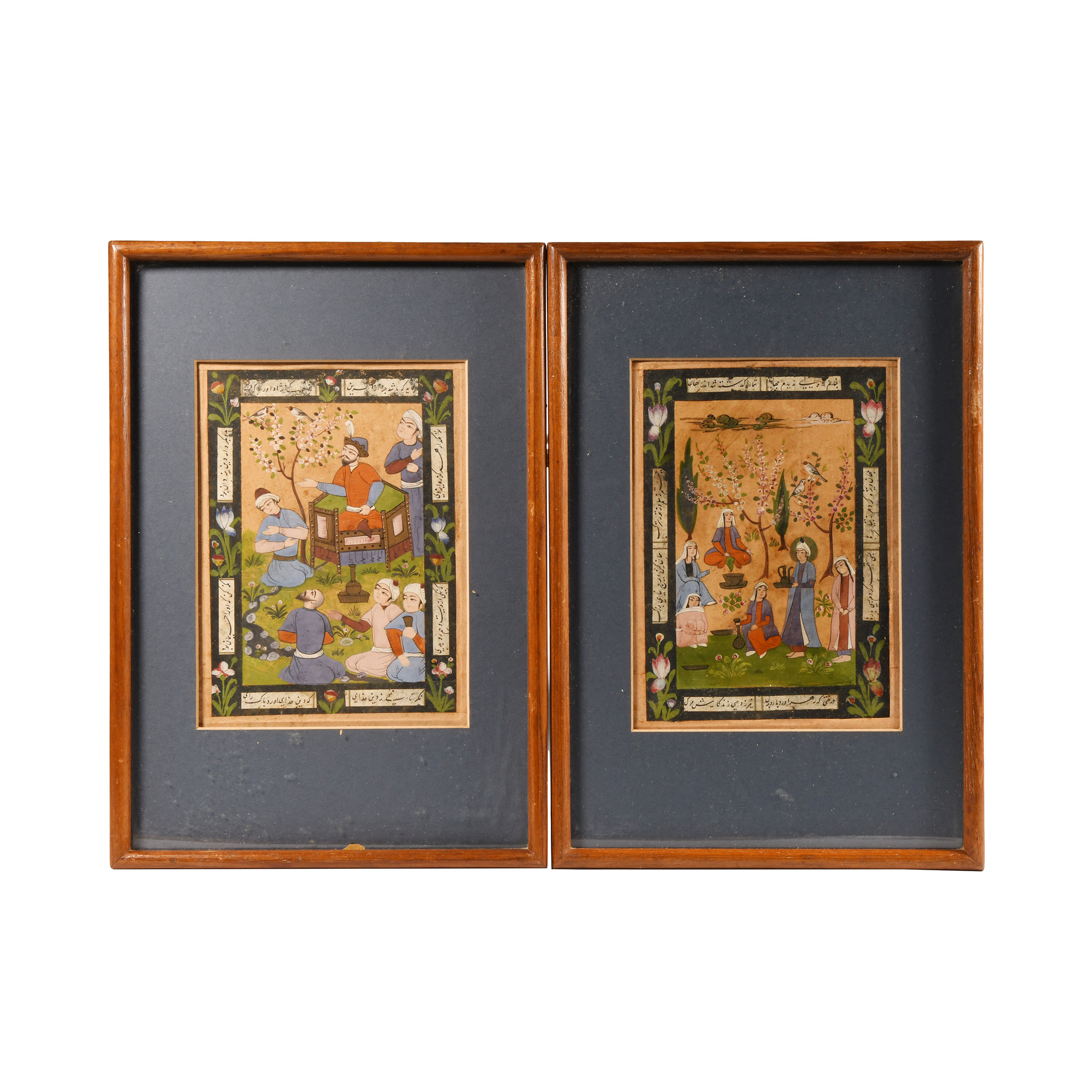
Persian Framed Watercolour Painting Group
LATE 19TH-EARLY 20TH CENTURY A.D.
12 1/4 x 8 1/2 in. (932 grams total, 31 x 21.5 cm each).
Framed and glazed and displaying polychrome figural scenes bordered by flowering plants and panels of script: one depicting a tea(?) ceremony set in a landscape featuring blossoming trees and birds; a prince or other figure seated on a bolster, in a landscape featuring a brook and blossoming trees, surrounded by attendants. [2, No Reserve]
ProvenanceAcquired by the vendor's father on the UK art market, before 1990.
CONDITIONTimeLine Auctions follows a vetting process to ensure the authenticity and legality of all items, reinforcing our commitment to integrity and responsible trading. Each antiquity, antique, and coin lot undergoes thorough examination by a vetting committee of at least ten external specialists, professional trade association members, scientists, and archaeologists: Our Vetting Process
AUCTIONS:
TimeLine is a leading auction house specialising in antiquities, ancient art, collectables, natural history, coins, medals, and books. Our auctions offer museums, collectors, historians, and enthusiasts the opportunity to acquire unique and historically significant pieces.
-
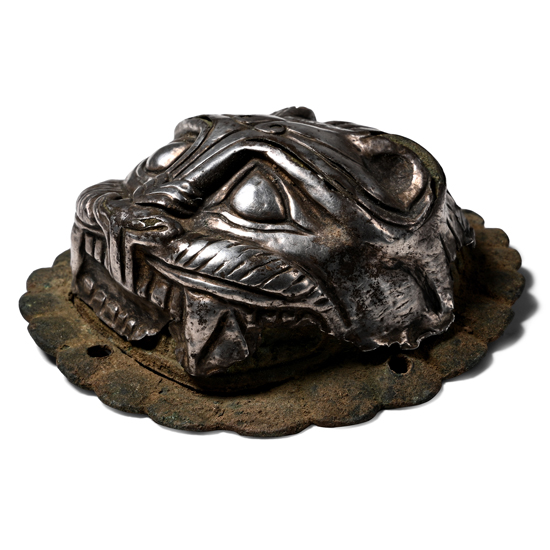
Sasanian Silver-Plated Lion Shield Boss
6th-7th century A.D.Estimate: £1,000 - 1,400 (+bp*)
Opening Bid: £500
With stylised repoussé head and face detailing showing two faces, one to the side and the other to the top, the mane represented by a scalloped border; sheet-silver cladding to the head over bronze; pierced for attachment. 80.9 grams, 78 mm
Ex London, UK, gallery, 1971-early 2000s. London, UK, collection. -
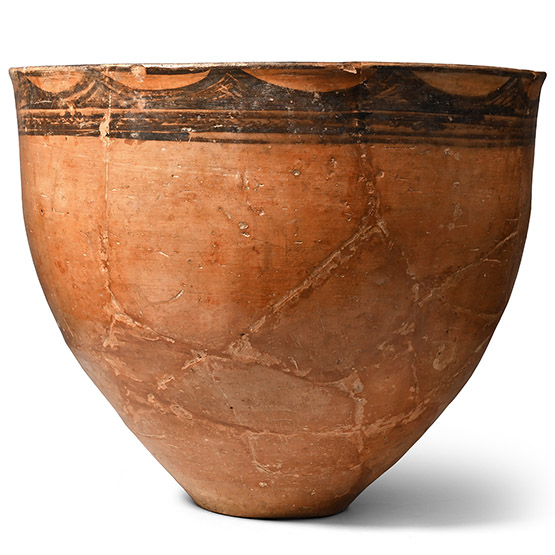
Large Western Asiatic Pottery Jar
Circa 3000 B.C.Sold for (Inc. bp): £442
Comprising a broad body with slightly flared rim and rounded body tapering to a narrow base; painted multilinear band below the rim with scoops above; repaired. 5 kg, 33.5 cm
with Mahboubian Gallery, London, UK, 1974. Private collection, London, UK. -
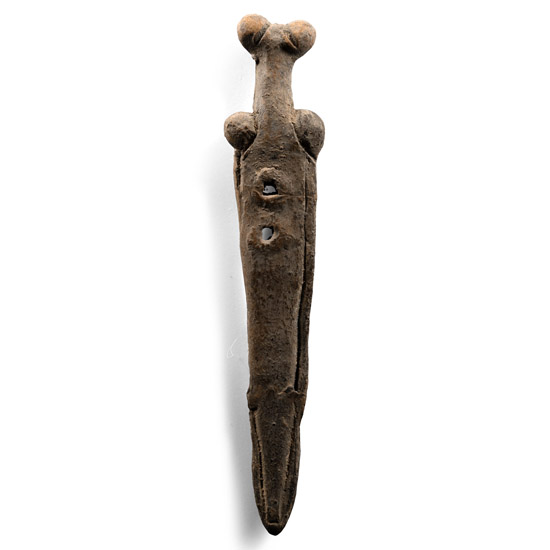
Western Asiatic Votive Terracotta Dagger
1st century B.C.Estimate: £250 - 350 (‡+bp*)
Opening Bid: £133
Model dagger with two-lobed pommel and similar guard, applied bands to the scabbard, two attachment points. 5.83 grams, 88 mm
Japanese private collection, assembled in the 1990s. Acquired from the above in 2010. European private collection.
