
LOT 2707
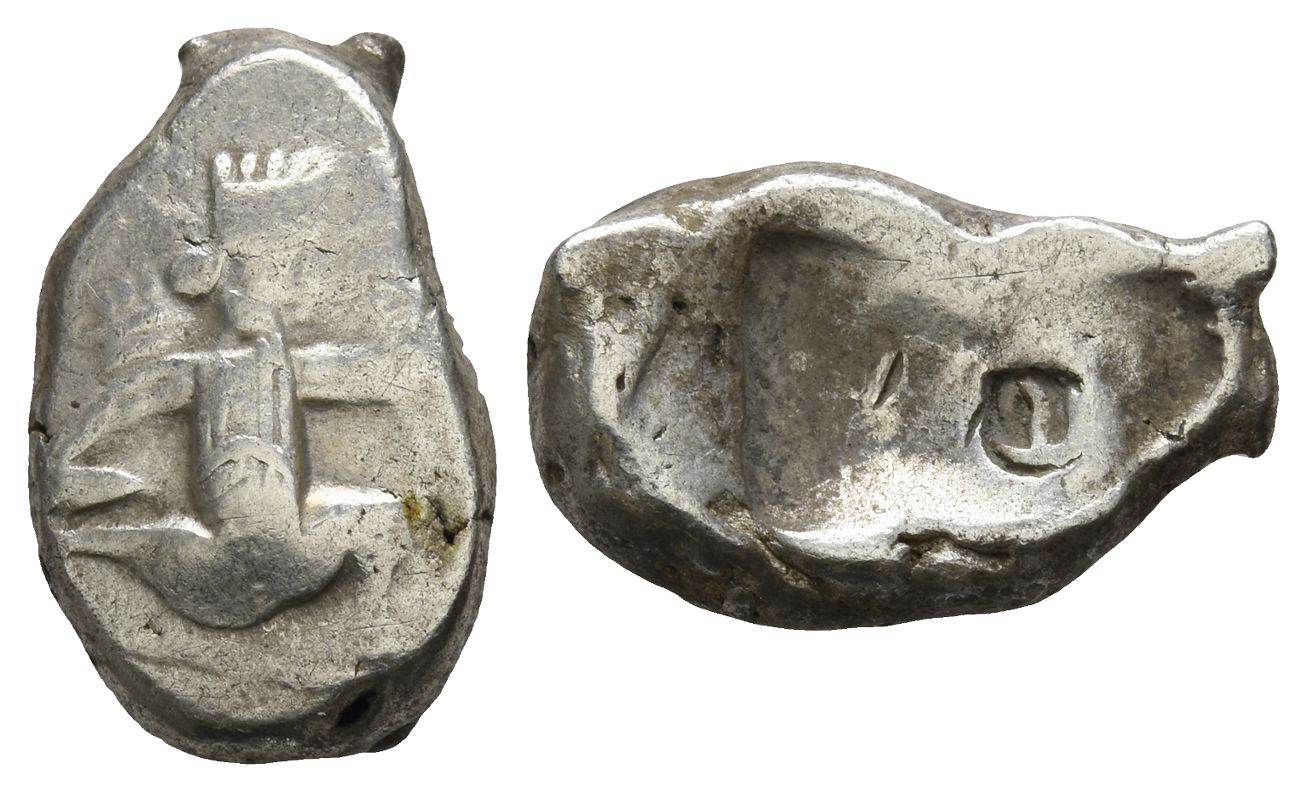
Persia. Achaemenid Empire, Time of Darius II to Artaxerxes II AR Siglos. Circa 420-375 BC.
Lydo-Milesian standard. Sardes or subsidiary mint. Type IV (middle) B. Persian king or hero, wearing kidaris and kandys, quiver over shoulder, in kneeling-running stance to right, holding dagger in right hand, bow in left / Oblong incuse punch; countermark: 118. Carradice Type IV, Group B (pl. XIV, 43); BMC Arabia pl. XXVII, 7; Sunrise -. Near Very Fine.(5.38gr, 20mm.).
ProvenanceEx 'V' gentleman's collection, Switzerland.
From the property of a North London, UK, gentleman.
The numbering of countermarks’ varieties has been done according to the chart published in BMC Arabia, p. cxxxvii.
TimeLine Auctions follows a vetting process to ensure the authenticity and legality of all items, reinforcing our commitment to integrity and responsible trading. Each antiquity, antique, and coin lot undergoes thorough examination by a vetting committee of at least ten external specialists, professional trade association members, scientists, and archaeologists: Our Vetting Process
AUCTIONS:
TimeLine is a leading auction house specialising in antiquities, ancient art, collectables, natural history, coins, medals, and books. Our auctions offer museums, collectors, historians, and enthusiasts the opportunity to acquire unique and historically significant pieces.
LOT 2707
Persia. Achaemenid Empire, Time of Darius II to Artaxerxes II AR Siglos.
Sold for (Inc. bp): £26
-
![Group of Four [4] AE Greek Coins.](https://timelineauctions.com/upload/images/items/small/224310-s.jpg)
Group of Four [4] AE Greek Coins. 2nd-1st century BC.
Sold for (Inc. bp): £46
Various cities. 26.10gr total.
Very Fine.
Ex 'V' gentleman's collection, Switzerland. From the property of a North London, UK, gentleman. -
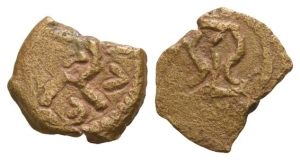
Judaea, Herod I AE Prutah. 40-4 BCE.
Sold for (Inc. bp): £20
Illegible inscription around small diadem with cross / Tripod table within dotted circle. HGC 10, 658. 1.45gr, 14mm, 2h.
Near Very Fine.
Property of a North London, UK, gentleman. -
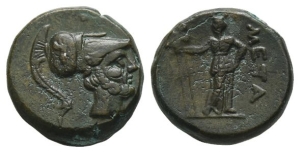
Lucania, Metapontion AE 17mm. Circa 250-207 BC.
Sold for (Inc. bp): £78
Helmetted head of Leukippos to right / Demeter standing facing, head to right, holding long-cross torch; META downwards to right. Johnston, Bronze 66; HN Italy 1702; HGC 1, 1099. 5.38gr, 17mm, 10h.
Good Very Fine.
From the collection of a London antiquarian, formed since the 1980s.
