
Loading, please wait...
LOT 0850
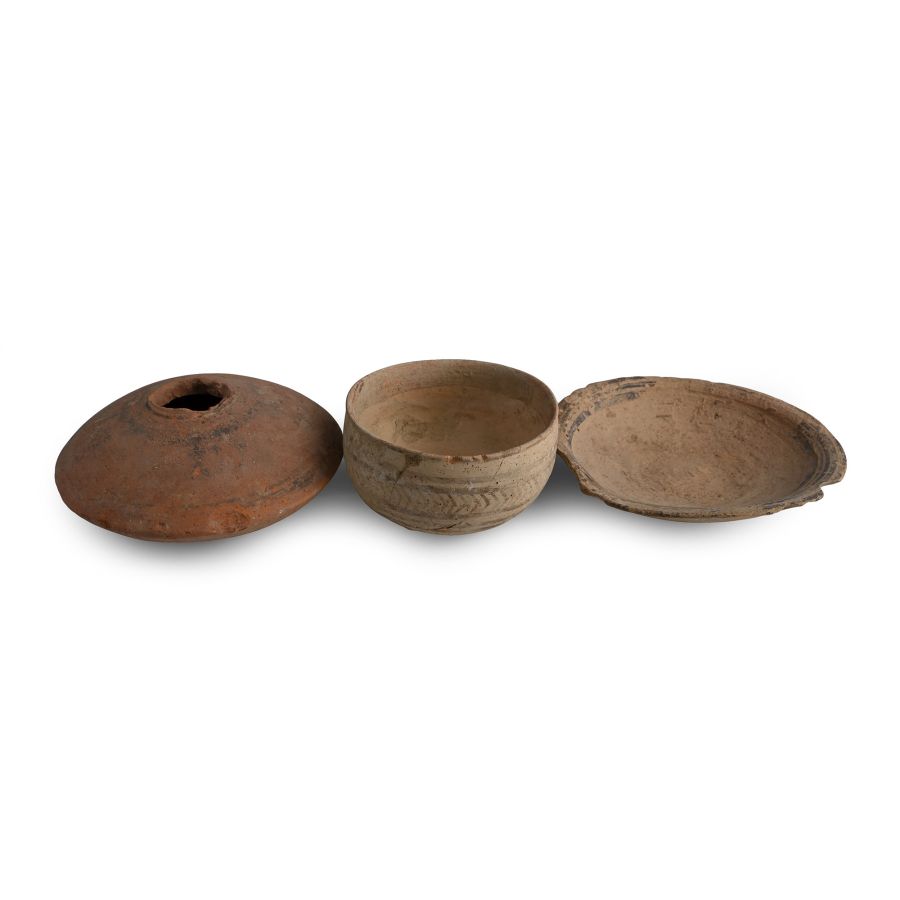
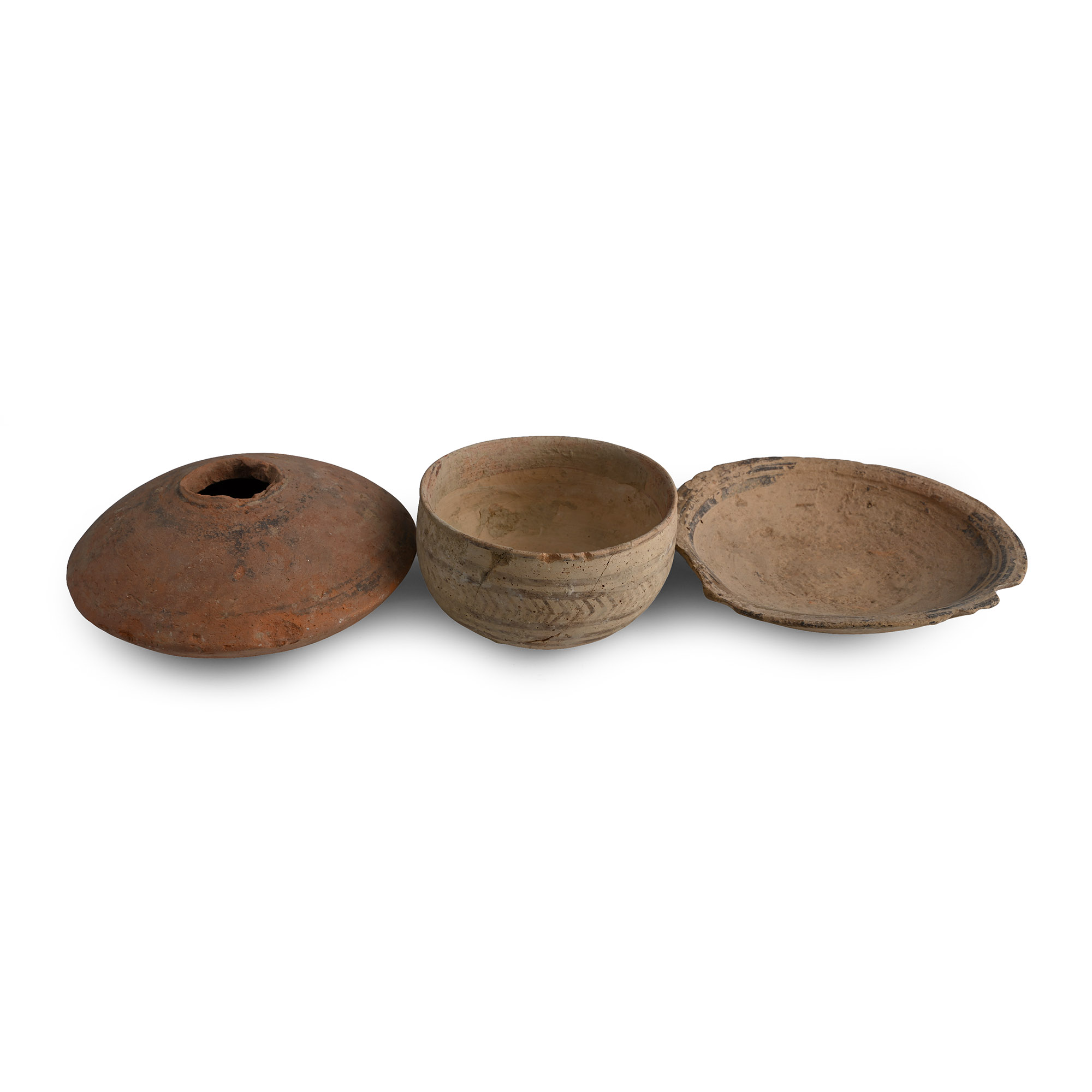
Parthian Terracotta Vessel Collection
2ND CENTURY B.C.-2ND CENTURY A.D.
3 1/4 - 4 1/2 in. (402 grams total, 8.2-11.4 cm).
Comprising: squat jat with painted rings and ropework to the shoulder (repaired); shallow dish with painted rings to the rim; biconvex vessel. [3, No Reserve]
ProvenanceAcquired on the UK art market since the 1990s.
From the property of a late Lincolnshire, UK, gentleman; thence by descent.
TimeLine Auctions follows a vetting process to ensure the authenticity and legality of all items, reinforcing our commitment to integrity and responsible trading. Each antiquity, antique, and coin lot undergoes thorough examination by a vetting committee of at least ten external specialists, professional trade association members, scientists, and archaeologists: Our Vetting Process
AUCTIONS:
TimeLine is a leading auction house specialising in antiquities, ancient art, collectables, natural history, coins, medals, and books. Our auctions offer museums, collectors, historians, and enthusiasts the opportunity to acquire unique and historically significant pieces.
LOT 0850
Parthian Terracotta Vessel Collection
Estimate £50 - 70€58 - 81 (for guidance only)$68 - 95 (for guidance only)
Opening Bid
£5 (EUR 6; USD 7) +BP*
-
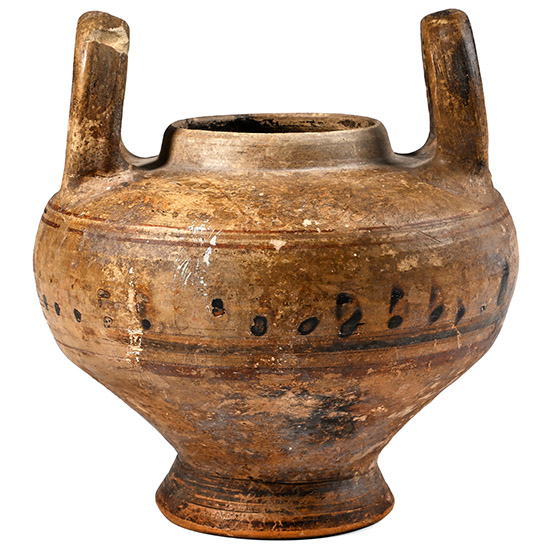
Greek Lebes Gamikos Vessel
Corinthian, 4th century B.C.Estimate: £100 - 140 (+bp*)
Opening Bid: £5
Comprising a conical body with flared foot, broad shoulder and low raised rim to the mouth; two lateral loop handles to the shoulder; circumferential red and black painted bands to the equator enclosing a band of vertical black strokes; repaired. 530 grams, 16 cm high
Acquired by the vendor's father in London, circa 1960. Acquired Cheffins Auctions, UK. -
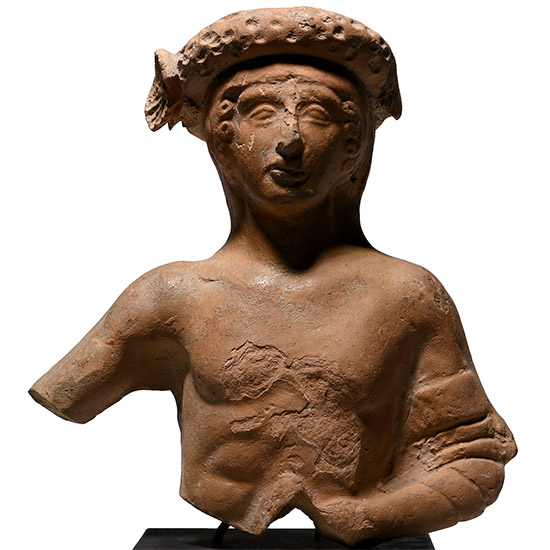
Greek Terracotta Figure of Young Dionysos
5th century B.C.Estimate: £1,200 - 1,700 (‡+bp*)
Opening Bid: £675
Modelled as a hollow torso nude of a youthful male, with a beardless face, full lips, tall nose and almond-shaped eyes; short curly hair with a thick wreath including a rosette, folded fabric draped over the right hand; mounted on a custom-made stand. 327 grams total, 15 cm including stand
Ex Prof. Hans Dahn (1919-2019), Lausanne; acquired 12 March 1954 from Donati in Basel (Dahn's list no.105).
It remains a matter of debate who these clay symposiasts- characterised by their specific, sometimes very imaginative headdresses- represent. They have been variously interpreted as Dionysos, heroised deceased persons or representative images of the urban elite. The type was particularly popular in Taranto. The recumbent man probably held a kantharos in his left hand and wore a coat that was tightly wrapped around his left arm. -
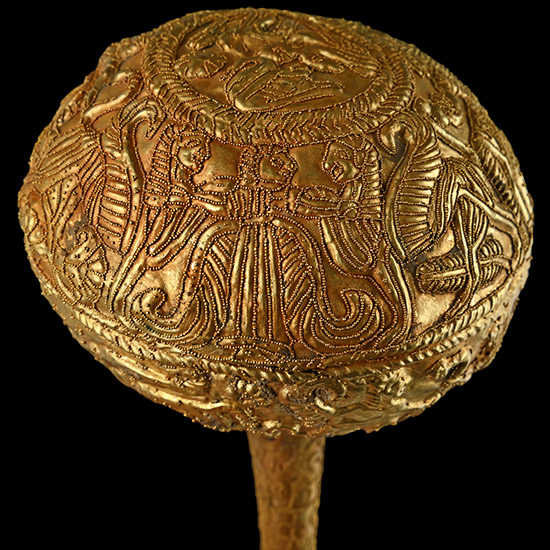
Large Greek Gold Repoussé Dress Pin with Figural Scenes
Archaic, circa 6th century B.C.Estimate: £5,000 - 7,000 (+bp*)
Bids: 5 | Current Bid: £50
Composed of a round-section stem tapering to a point (chipped), the upper section with five figural panels separated by horizontal bands of granulation; each panel with figures executed in granulation including opposed pairs of rearing lions, perching bird, dancing humans, two-headed figure with fronds; below these panels, an applied gold wire loop with recurved end; above, a hollow-formed bulbous finial with a repoussé frieze in two registers: below - winged heroes grappling with gryphons and other beasts in a landscape with granulated detailing, with ropework bands to the equator; above - opposed gryphons flanking a facing master of beasts with head turned, and horsemen advancing towards an anguiped; disc finial to the apex with three repoussé swans in profile. 71.1 grams, 28 cm
Acquired at auction in Geneva or Basel circa 1989. From the private collection of a Swiss gentleman collector, thence by descent 2018. Accompanied by an academic report by Dr Raffaele D'Amato. This lot has been checked against the Interpol Database of stolen works of art and is accompanied by search certificate no.13409- 259878.
Since Greek clothing was not sewn, straight pins and fibulae (safety pins) were used to fasten a garment at the shoulders, the sleeves, over the chest, and at other critical points. Pins were already in use in the Early Bronze Age, but highly decorated pins were in use from the 7th- 6th centuries B.C., when vertical incisions, grooves and mythical figures appeared on the spherical beads, pendants and heads of the pins. Gold pins with disc-shaped terminals and spherical heads have been recovered from the archaic tombs of Macedonia, where the decoration was developed on the surface of the spheres in filigree and repoussé techniques.
