
Loading, please wait...
LOT 0513
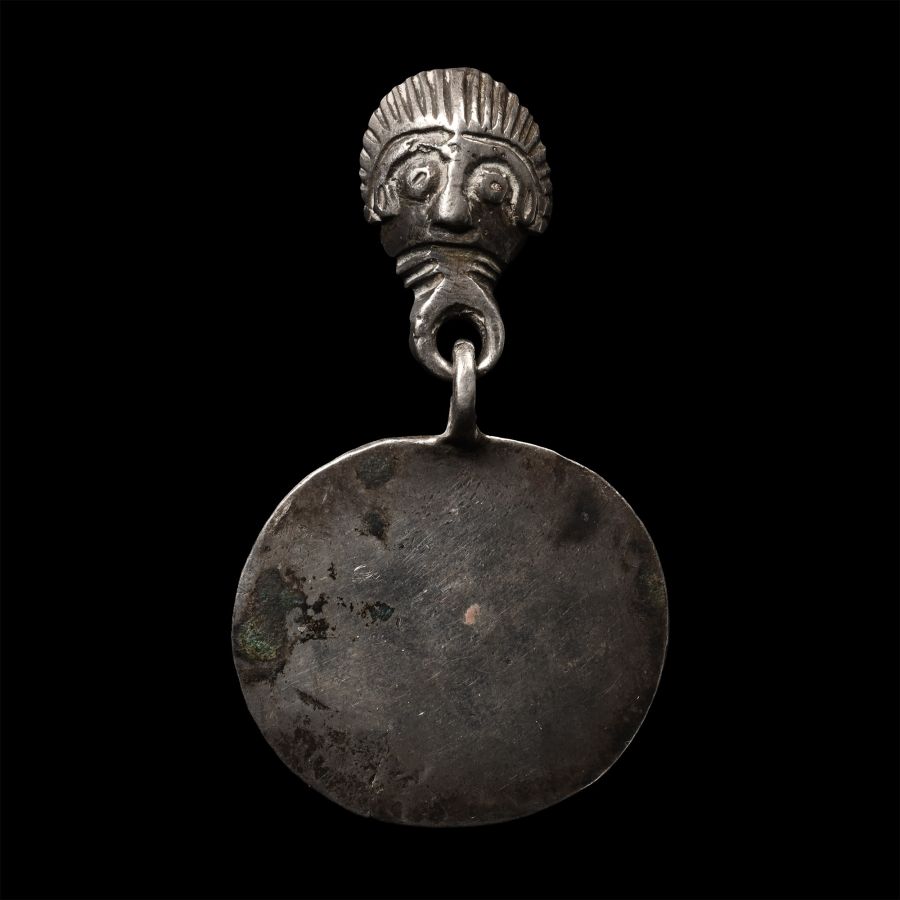
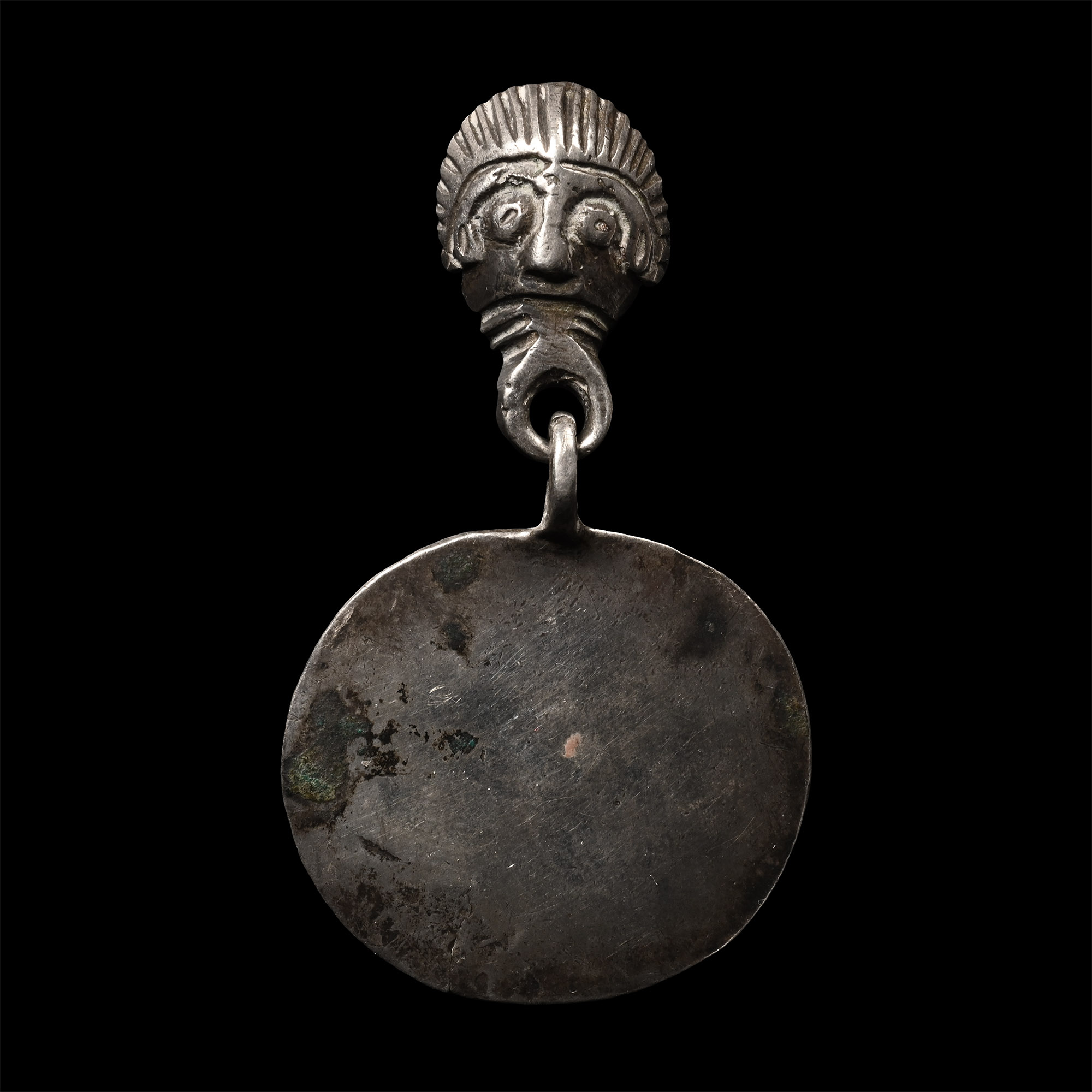
Parthian Silver Horse Harness Pendant Hanger with Face
3RD CENTURY B.C.-2ND CENTURY A.D.
2 3/8 in. (14.57 grams, 61 mm).
Domed stud with facial detailing, radiating ribbed hair, pellet eyes, transverse ribbed moustache, rivet to reverse; loop below with attached pendant disc.
ProvenanceAcquired before the early 1970s.
Ex London, UK, gallery.
Property of a London gentleman.
This lot is accompanied by an illustrated lot declaration signed by the Head of the Antiquities Department, Dr Raffaele D’Amato.
TimeLine Auctions follows a vetting process to ensure the authenticity and legality of all items, reinforcing our commitment to integrity and responsible trading. Each antiquity, antique, and coin lot undergoes thorough examination by a vetting committee of at least ten external specialists, professional trade association members, scientists, and archaeologists: Our Vetting Process
AUCTIONS:
TimeLine is a leading auction house specialising in antiquities, ancient art, collectables, natural history, coins, medals, and books. Our auctions offer museums, collectors, historians, and enthusiasts the opportunity to acquire unique and historically significant pieces.
-
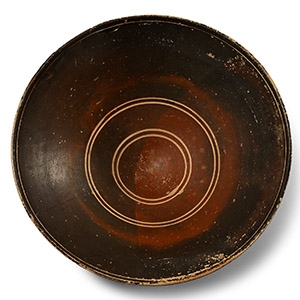
Greek Terracotta Deep Glazed Bowl
2nd-1st century B.C.Sold for (Inc. bp): £325
Broad conical vessel on a small flat base with interior and exterior glazed black; the inner face decorated with incised, reserved concentric circles and a partially-preserved rosette with a dotted frieze in added white; vertical fissure in the wall, two small fragments reattached to the rim; partially misfired, due to the way the vessels were stacked in the oven; supplied with a display stand. 335 grams, 21.5 cm wide
Property of a private collector. with Bonhams, London, 16 May 2002, no.551. Accompanied by a copy of an Art Loss Register certificate no.S00075157. Accompanied by copies of the relevant Bonhams catalogue pages. This lot is accompanied by an illustrated lot declaration signed by the Head of the Antiquities Department, Dr Raffaele D’Amato. -
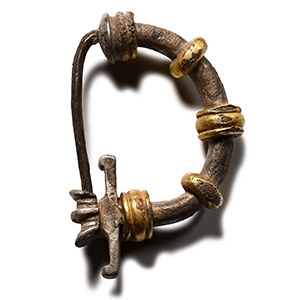
Greek Silver-Gilt Bow Brooch
6th-5th century B.C.Sold for (Inc. bp): £351
Comprising a thick tubular bow with applied gold collars, integral pin, hooked catchplate with lateral spurs. 18.7 grams, 46 mm
Ex German art market, 2000s. Acquired from an EU collector living in London. From the collection of Surrey, UK, gentleman. This lot is accompanied by an illustrated lot declaration signed by the Head of the Antiquities Department, Dr Raffaele D’Amato. -
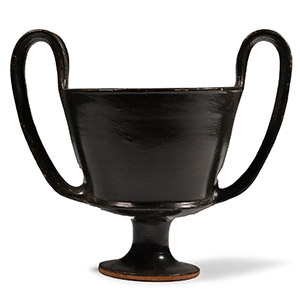
Greek Terracotta Black Glazed Kantharos
Boeotia, 5th century B.C.Estimate: £800 - 1,000 (‡+bp*)
Opening Bid: £360
With a tall flared foot, tapering body and two lateral high strap handles, the sidewall set off from the foot by a carination; reassembled from fragments. 360 grams, 19.5 cm wide
Ex Mr Bohler, Bern, Switzerland, prior 2001. Accompanied by a copy of an Art Loss Register certificate no.S00074898. This lot is accompanied by an illustrated lot declaration signed by the Head of the Antiquities Department, Dr Raffaele D’Amato.
