
Loading, please wait...
LOT 1421
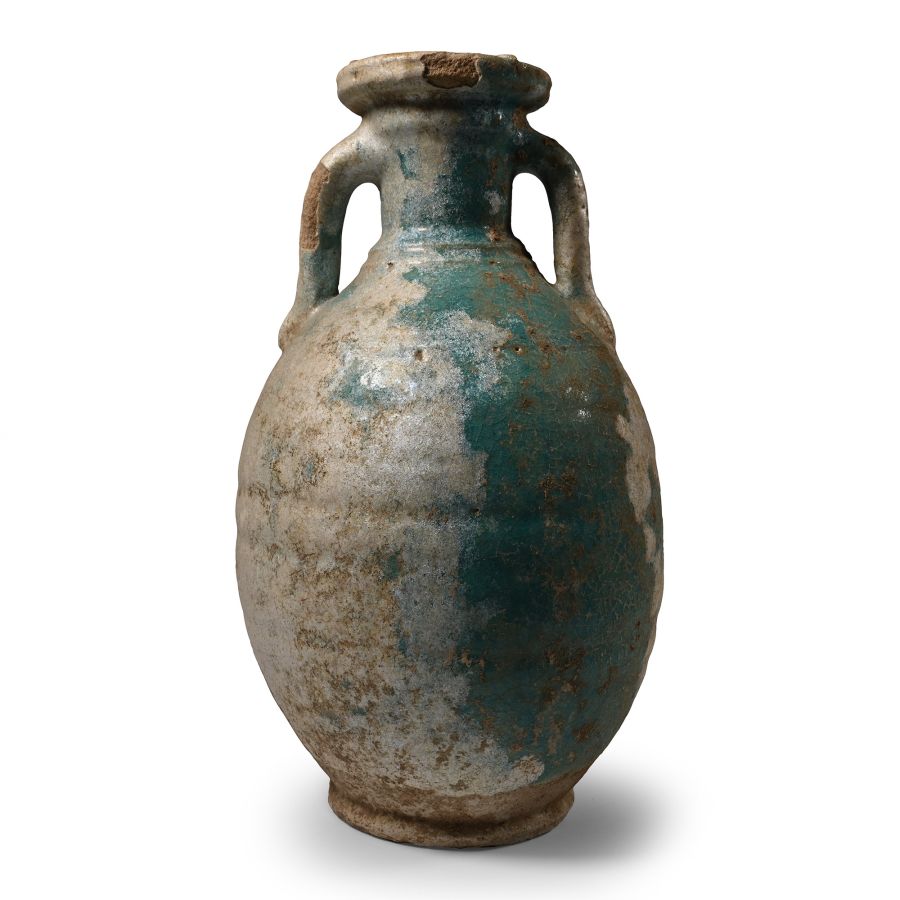
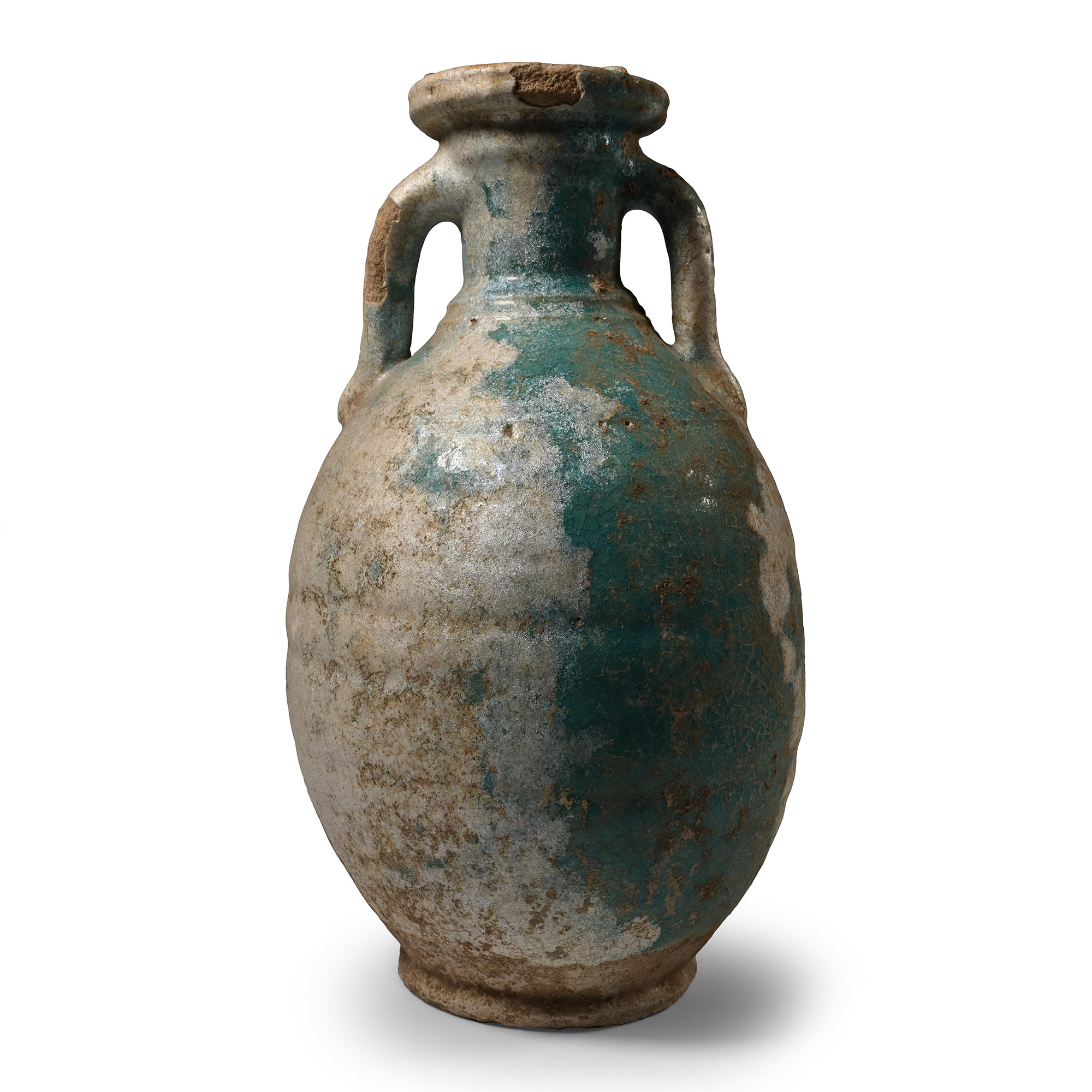
Parthian Lead-Glazed Amphora
1ST-3RD CENTURY A.D.
11 1/4 in. (1.5 kg, 28.5 cm).
Barrel-shaped in profile with basal ring, short neck with rolled rim and two lateral strap handles.
ProvenanceEx West London, UK, collection, 1990s.
CONDITIONTimeLine Auctions follows a vetting process to ensure the authenticity and legality of all items, reinforcing our commitment to integrity and responsible trading. Each antiquity, antique, and coin lot undergoes thorough examination by a vetting committee of at least ten external specialists, professional trade association members, scientists, and archaeologists: Our Vetting Process
AUCTIONS:
TimeLine is a leading auction house specialising in antiquities, ancient art, collectables, natural history, coins, medals, and books. Our auctions offer museums, collectors, historians, and enthusiasts the opportunity to acquire unique and historically significant pieces.
-
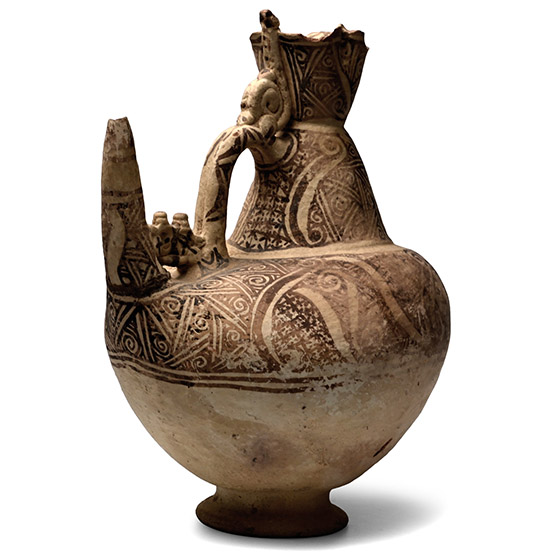
Large Western Asiatic Terracotta Bichrome Vessel with Handle
8th-9th century A.D.Estimate: £450 - 650 (+bp*)
Opening Bid: £225
With trumpet-shaped base, flared bulbous body, tapering spout with crested bar and strap handle connected to the waisted filler; dense painted scroll and floral designs with reserved scrolls and bands. 1.14 kg, 23 cm high
UK collection, 1990s. Acquired on the UK art market, before 2000. Private collection, Mr M.V., a London-based businessman. -
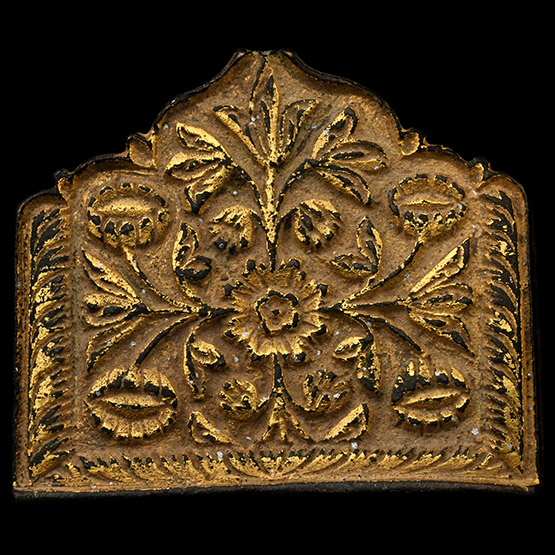
Western Asiatic Gilt Bronze Belt Element
12th-13th century A.D.Estimate: £250 - 350 (‡+bp*)
Opening Bid: £125
Pentagonal in plan with scooped ogival upper edge, shallow sides and slider-bar to reverse; high-relief decorative motifs of rosette and radiating stems and leaves. 18.25 grams, 43 mm
Acquired in the mid 1980s-1990s. Private collection, Switzerland, thence by descent. Private collection, since the late 1990s. -
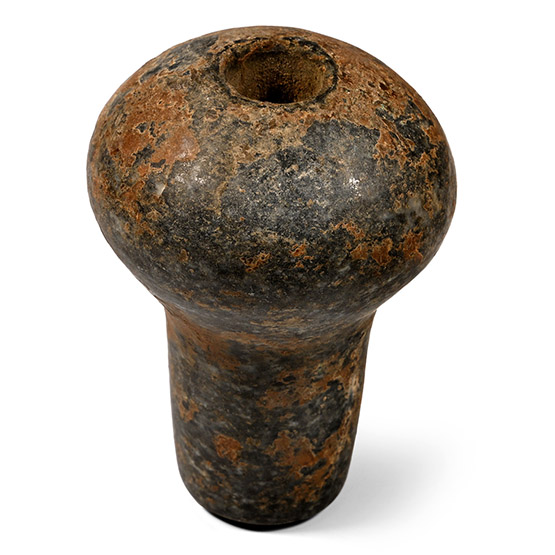
Western Asiatic Stone Macehead
3rd millennium B.C.Sold for (Inc. bp): £117
With plain globular body and circular short shaft. 310 grams, 83 mm
Ex London, UK, collection, 1990-2000s.
The mace in the Middle East was of great importance, and widely used in fighting activities at the end of the 4th millennium B.C. Many maces of simple spherical or pear-shaped profile have been found there, and they were quickly utilised by the military commanders as symbol of power and rank; limestone maces are still attested in the Marlik culture of 14th-10th century B.C.
