
Loading, please wait...
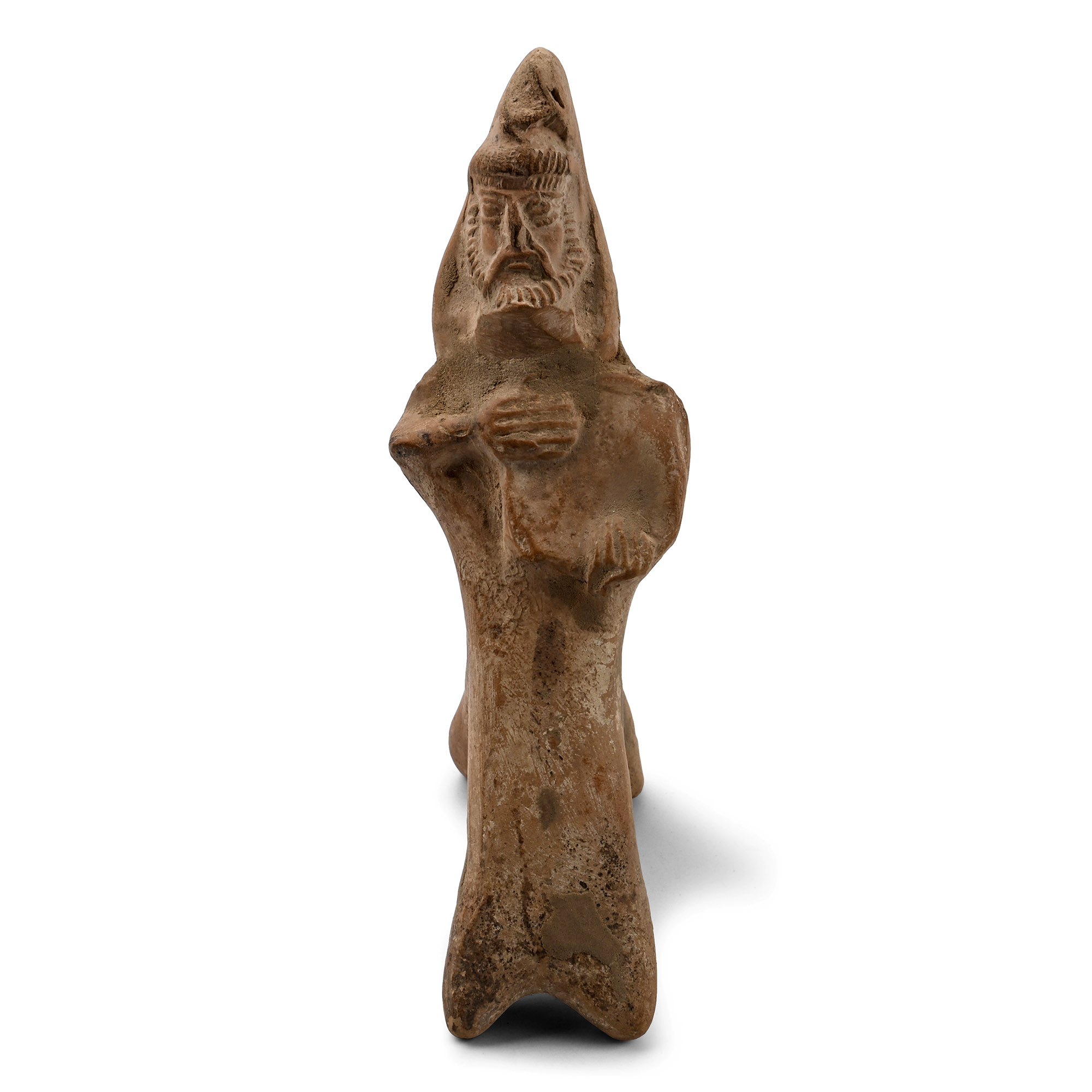
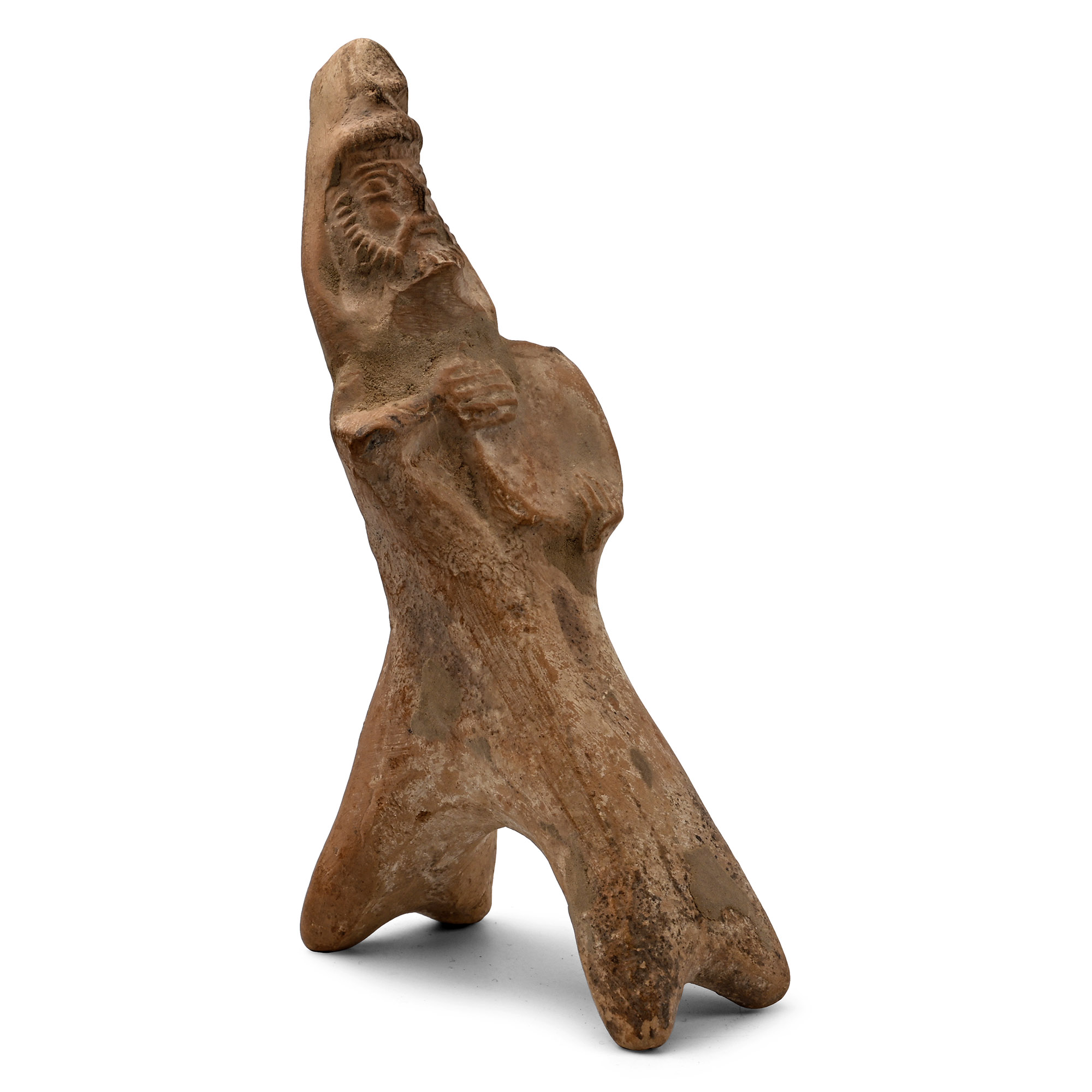
LOT 0570
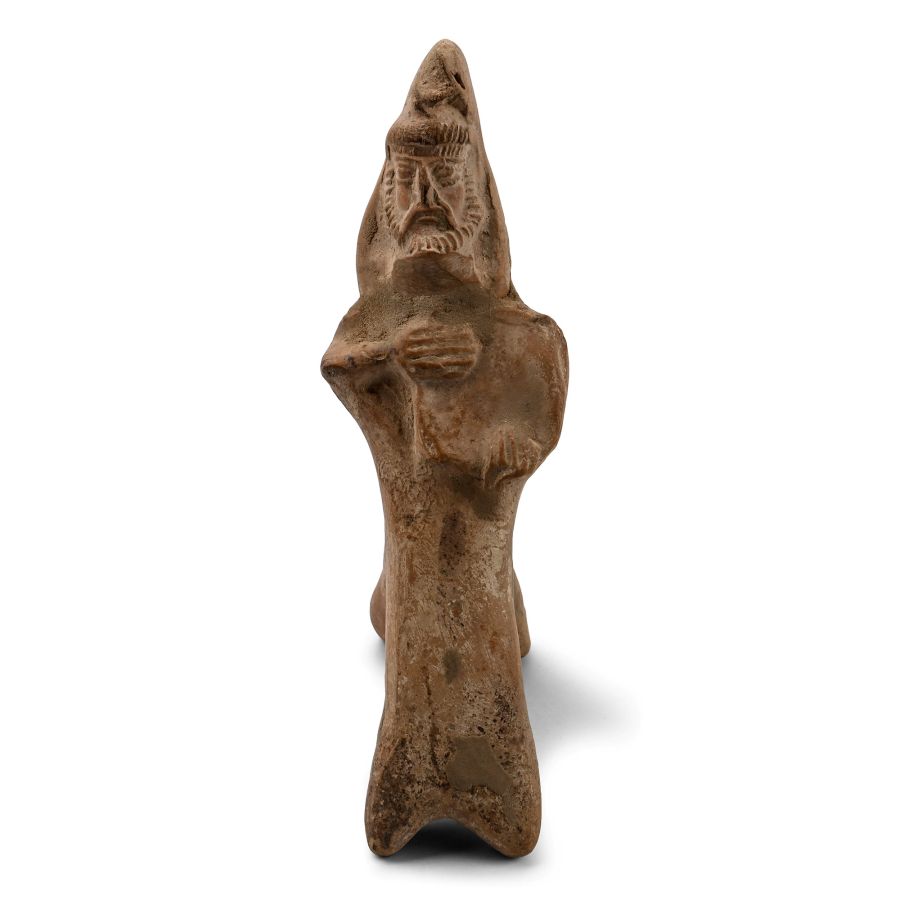
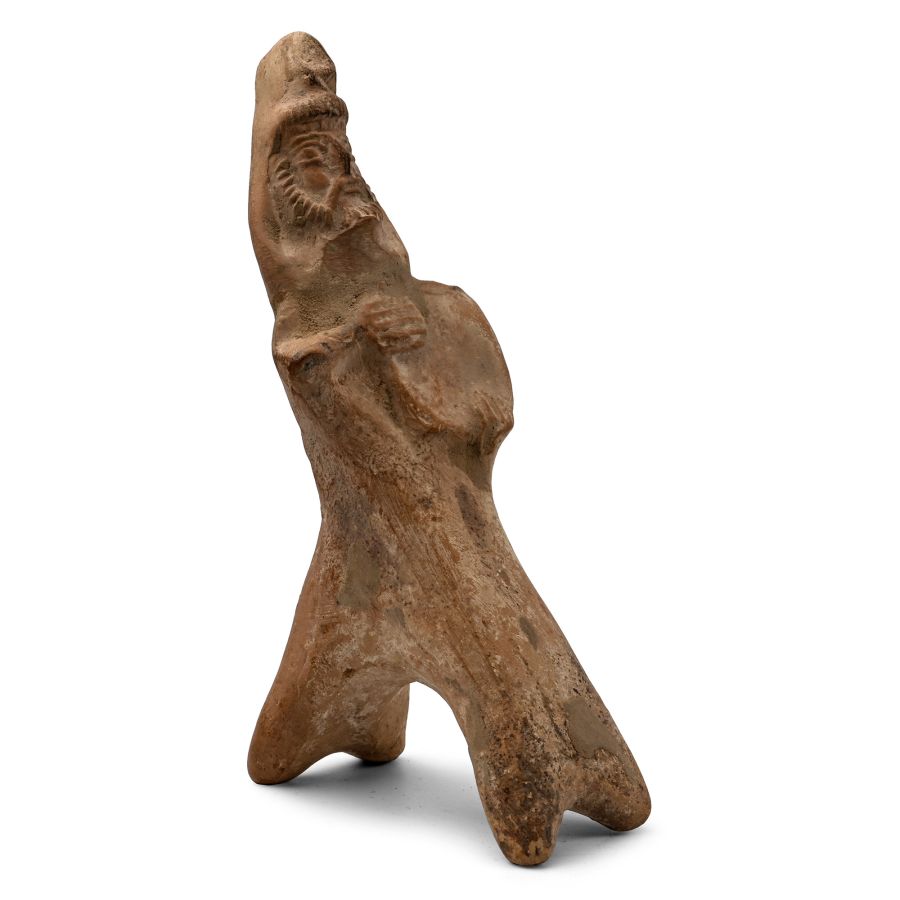
Parthian Horse and Rider Figurine
1ST CENTURY B.C.-3RD CENTURY A.D.
5 1/8 in. (97 grams, 12.9 cm).
Formed as a stylised horseman on four splayed legs, with finely modelled facial features and beard; the head of the horse integrated into the rider's body.
ProvenanceAcquied on the UK art market.
Private collection, London, UK.
TimeLine Auctions follows a vetting process to ensure the authenticity and legality of all items, reinforcing our commitment to integrity and responsible trading. Each antiquity, antique, and coin lot undergoes thorough examination by a vetting committee of at least ten external specialists, professional trade association members, scientists, and archaeologists: Our Vetting Process
AUCTIONS:
TimeLine is a leading auction house specialising in antiquities, ancient art, collectables, natural history, coins, medals, and books. Our auctions offer museums, collectors, historians, and enthusiasts the opportunity to acquire unique and historically significant pieces.
LOT 0570
Parthian Horse and Rider Figurine
Estimate £150 - 200€170 - 230 (for guidance only)$200 - 270 (for guidance only)
-
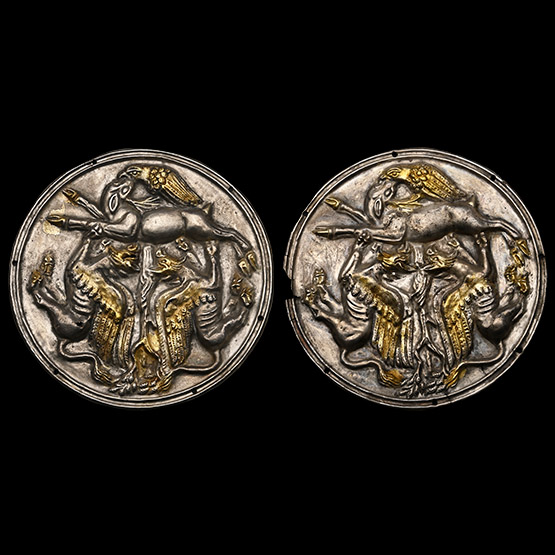
Greek Silver-Gilt Phalerae Depicting a Fight Between Gryphons, an Eagle and a Deer
Hellenistic, 1st century B.C.-1st century A.D.Sold for (Inc. bp): £31,200
A pair of circular horse trappings hammered from sheet-silver, each with a decoration of two gryphons and an eagle slaughtering a deer, the gryphons attacking the deer from below, and the eagle attacking its muzzle, a tree in the background; accompanied by a custom-made display case. 62 grams total, 13.2 cm
Private German collection, 1980s. Accompanied by an expertise from Striptwist Ltd, a London-based company run by historical precious metal specialist Dr Jack Ogden. Accompanied by an academic report by Dr Raffaele D’Amato. This lot has been checked against the Interpol Database of stolen works of art and is accompanied by a search certificate number no.13038-248044.
This phalera comes from the Hellenised East, and was likely used as decoration of the higher part of a horse harness, like the phalerae visible on the armoured and unarmoured horses of the famous graffiti of Dura Europos representing Parthian, Palmyrene or Roman clibanarii (D’Amato-Negin, 2018, pp.11,16-17,26). -
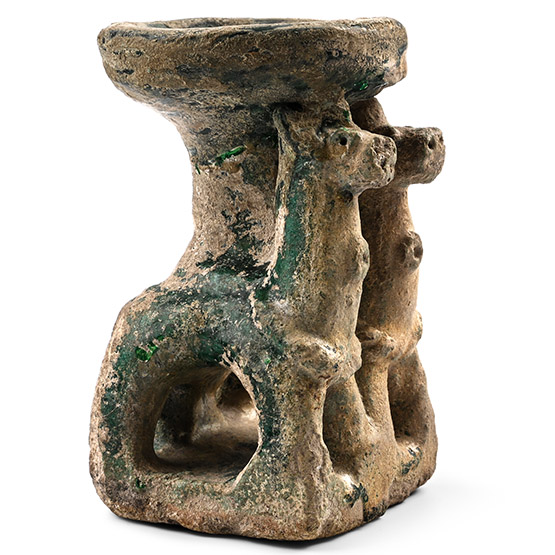
Parthian Faience Glazed Offering Chalice with Quadrupeds
Circa 3rd-1st century B.C.Sold for (Inc. bp): £546
Modelled in the round as two quadrupeds on a square base supporting a shallow bowl on a stem; the beasts with rope halter to the neck. 645 grams, 12.8 cm
Collected from 1979-1999. From the collection of the late Mr Shlomo Mousiaffee, London, UK. Acquired on the UK art market. Private collection, London, UK. -
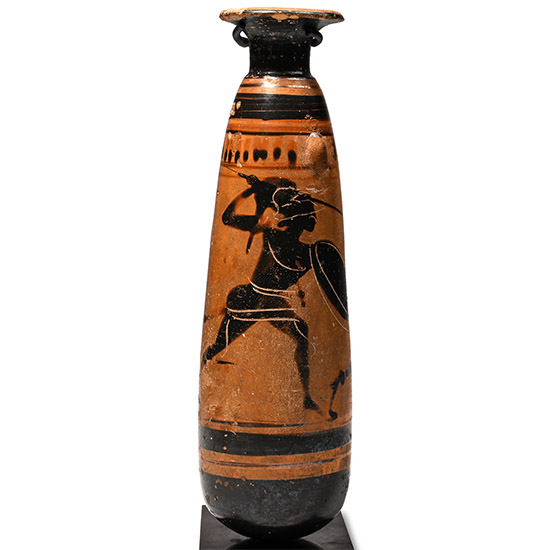
Greek Black-Figure Alabastron with Fighting Warriors
Attic, 500-480 B.C.Estimate: £30,000 - 40,000 (‡+bp*)
Opening Bid: £15,000
Of ovoid shape, short neck and expanded flat rim; painted in horizontal bands with black vertical strokes the shoulder, ovules in the upper part, the central scene representing a Greek Ekdromos fighting a Scythian archer; the Greek warrior, wearing a light sleeveless chiton, and a crested Corinthian helmet, carrying a wide hoplon shield, and a long spear with which he is slashing his opponent; the Scythian archer is wearing a typical tall cap flowing backwards and his long coat-suit, carrying a gorytos, (quiver) and composite bow with arrow; horizontal black stripes below; accompanied by a custom-made display stand. 262 grams total, 16 cm high including stand
Louis-Gabriel Bellon (1819-1899) collection, France. European private collection, 2009. Accompanied by an academic report by Dr Raffaele D’Amato. This lot has been checked against the Interpol Database of stolen works of art and is accompanied by a search certificate number no.13019-246753.
The importance of this alabastron is linked to its iconography, which represents episodes of the Persian Wars, fought 490-480 B.C. Such alabastra are part of a series realised during the period of the conflict and after, and they are an important source of information on the Persian and Greek armies. Here, the two opponents evoke the Greek victories, with a light-armed Greek ekdromos (hoplite fighting in light equipment) killing a Scythian archer, who formed part of the Persian army. The representation of Scythian costume in vase-painting reached its height of popularity between c. 530 and 490 B.C., and went out of fashion after the Graeco-Persian wars, when these clothes began to be associated with the Persian ethnic identity rather than the original Scythian.
