
Loading, please wait...
LOT 0516
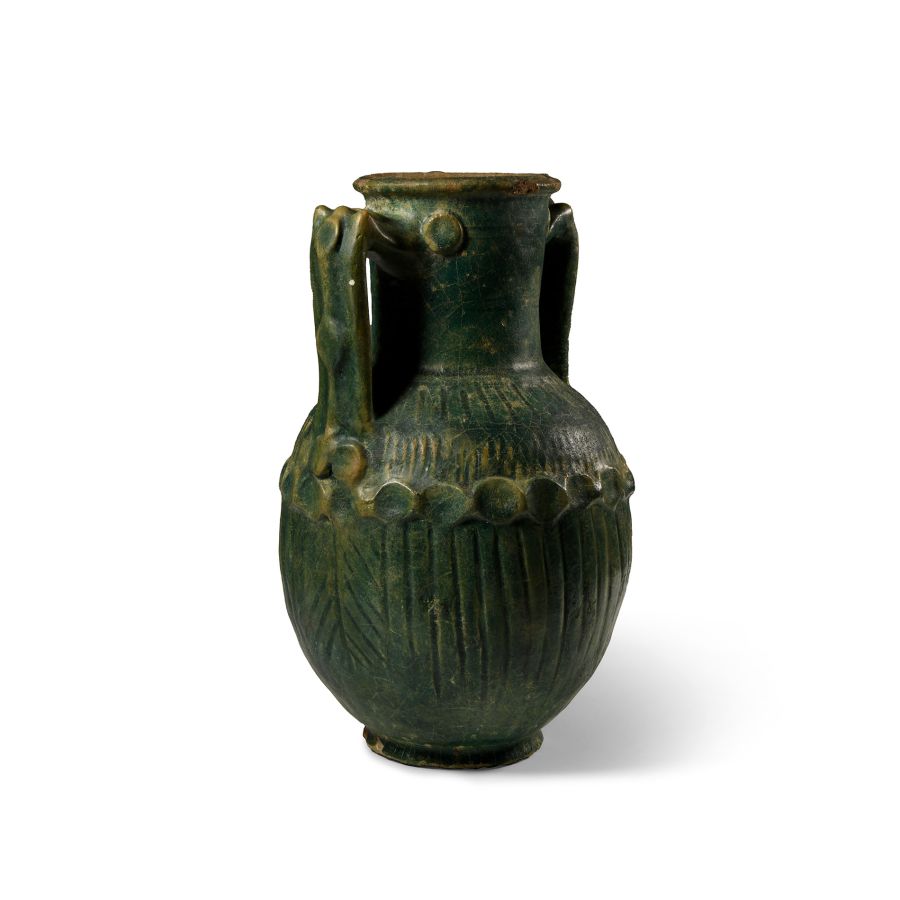
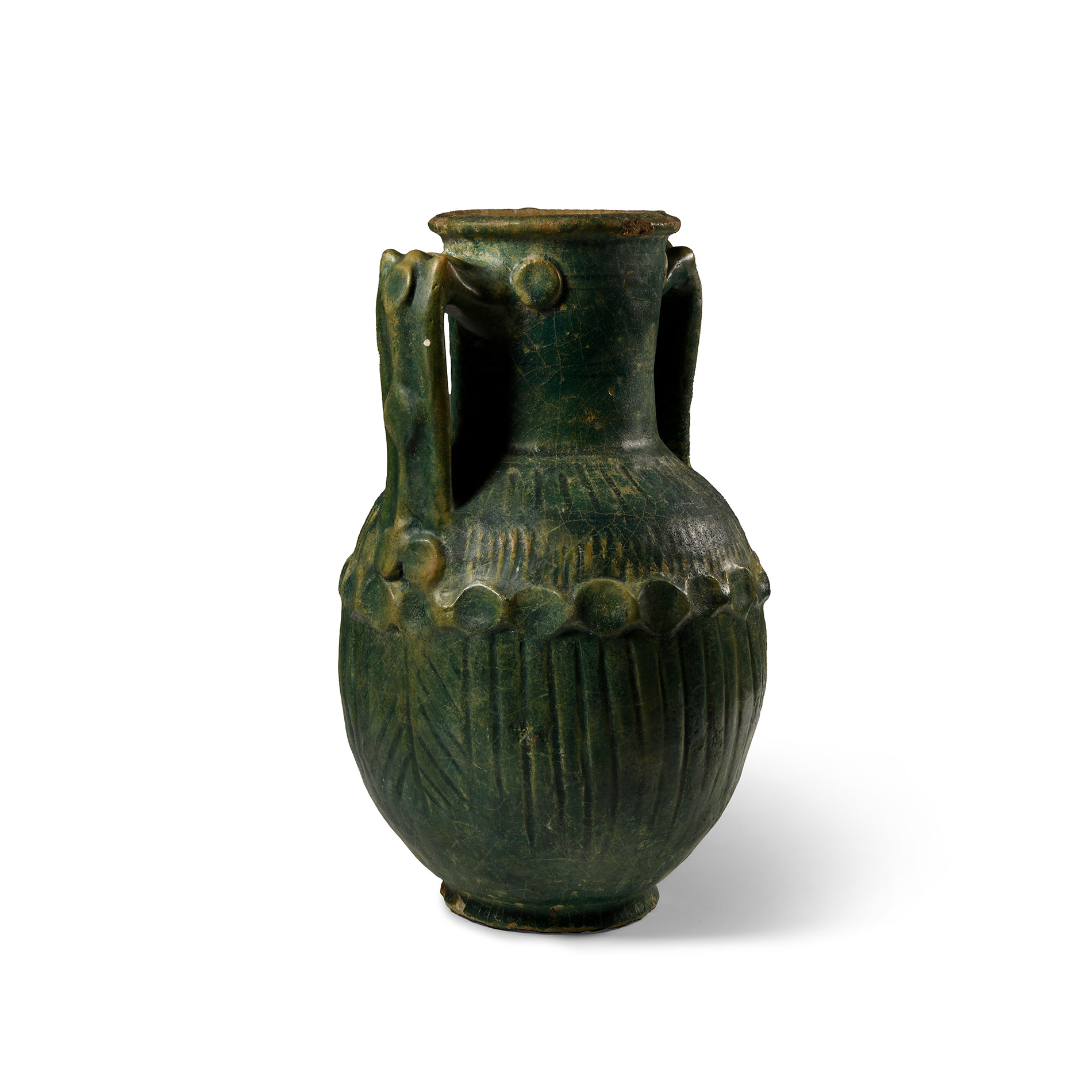
Parthian Green-Glazed Amphora
3RD CENTURY B.C.-2ND CENTURY A.D.
11 3/4 in. (1.67 kg, 30 cm high).
With broad columnar neck and everted rim, angled strap handles, vertical ribbing to the shoulder and body, bands of applied scooped discs to the handle and equator, feathered panels. [No Reserve]
ProvenanceHani Farsi collection, London, UK.
Acquired Christie's, King Street, London, circa 1990.
Ex central London gallery.
Cf. similar item in the Yale University Art gallery under accession number 1938.4835, from the excavations at Dura-Europos.
CONDITIONTimeLine Auctions follows a vetting process to ensure the authenticity and legality of all items, reinforcing our commitment to integrity and responsible trading. Each antiquity, antique, and coin lot undergoes thorough examination by a vetting committee of at least ten external specialists, professional trade association members, scientists, and archaeologists: Our Vetting Process
AUCTIONS:
TimeLine is a leading auction house specialising in antiquities, ancient art, collectables, natural history, coins, medals, and books. Our auctions offer museums, collectors, historians, and enthusiasts the opportunity to acquire unique and historically significant pieces.
-
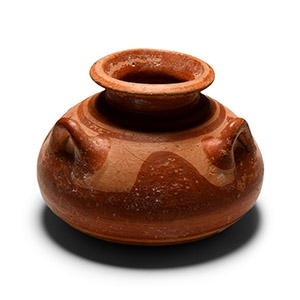
Mycenaean Painted Pottery Alabastron
14th-13th century B.C.Estimate: £2,000 - 3,000 (‡+bp*)
Opening Bid: £1,000
Formed with a squat globular body, everted rim and three lug handles to the shoulder; painted reddish-brown over a cream slip with concentric bands and rings to the mouth, neck, shoulder and base, larger solid undulating forms covering the lower body. 70 grams, 69 mm
Acquired from Royal Athena Gallery, 2003. This lot has been checked against the Interpol Database of stolen works of art and is accompanied by search certificate number no.11851-206833.
Late Helladic IIIA period of Mycenaean culture. -
.jpg)
Greek Bronze Bow Fibula
8th-7th century B.C.Sold for (Inc. bp): £124
The keeled bow with a central bulb, integral pin and large catch-plate. 29 grams, 89 mm
From the family collection of a Surrey gentleman since before 1960.
The function of the catch-plate fibulae was utilitarian and decorative, they were used for woollen clothing (Herodotus V, 87) and they have been found in houses, tombs and as votive offerings in sanctuaries. Our fibula is an early type, very often found in the graves of the Greek colonies of Southern Italy and widespread in the Magna Graecia. This typology was introduced there by the Greeks. Like all female fibulae, it functioned as a clothing fastener, usually worn as a pair on each shoulder. -
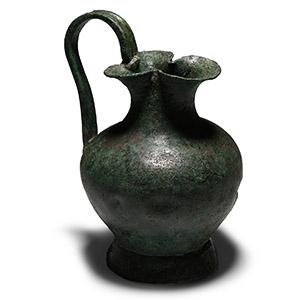
Greek Bronze Oinochoe
3rd-2nd century B.C.Sold for (Inc. bp): £468
With piriform body, strap handle, trefoil mouth with broad pouring lip. 747 grams, 20 cm high
Ex old English collection. London art market, 1980s.
