
Loading, please wait...
LOT 0208
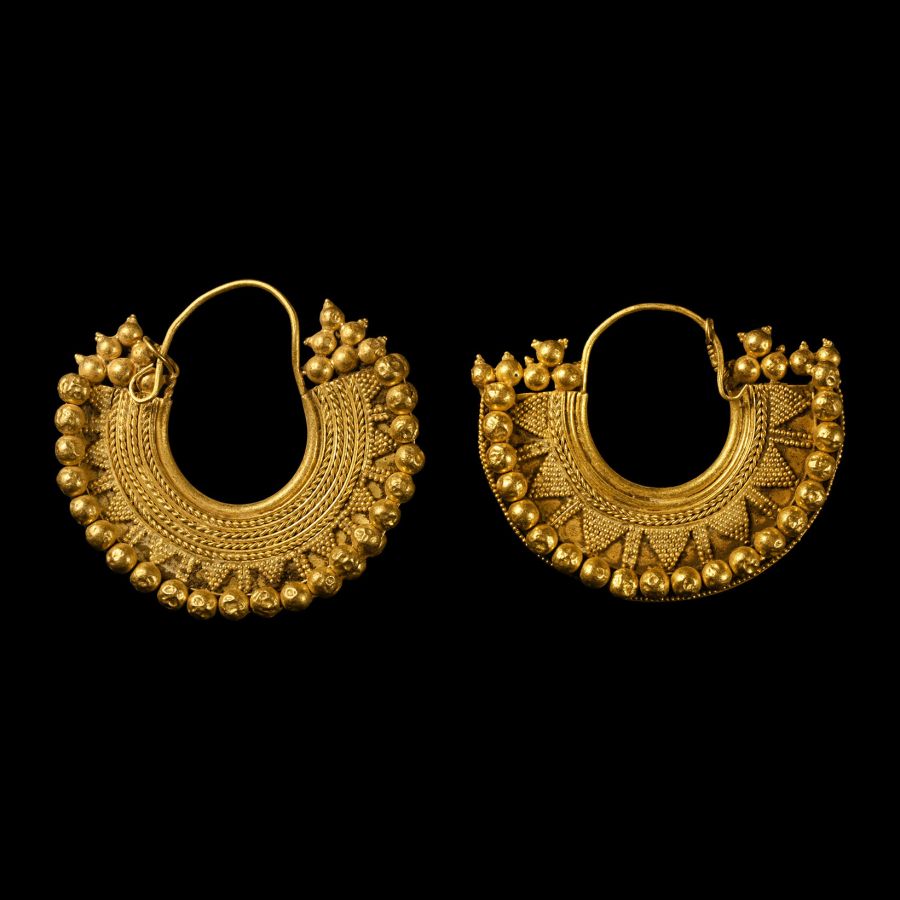
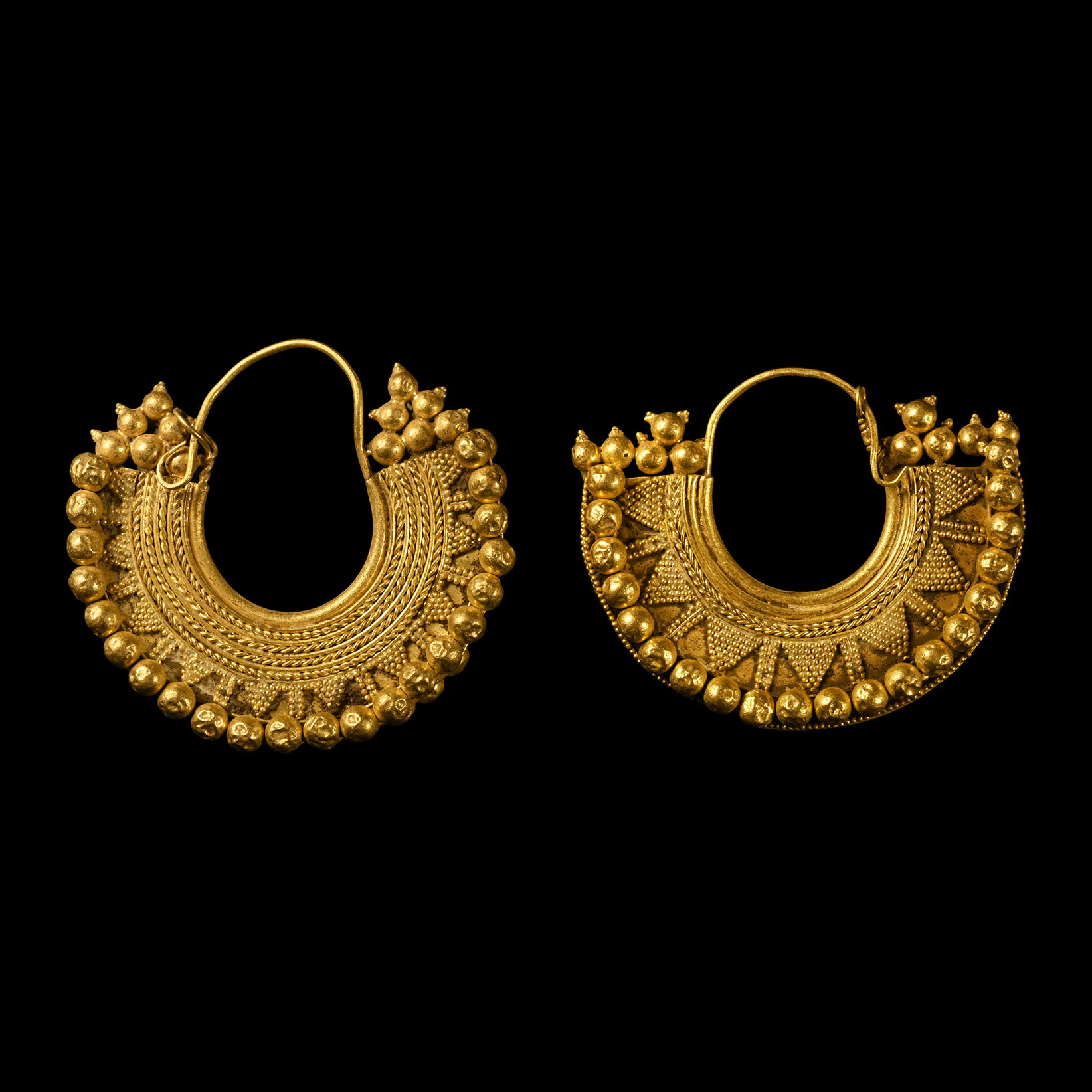
Parthian Gold Earrings
2ND CENTURY A.D.
1 1/4 in. (9.61 grams total, 32 mm wide each).
A group of two similar crescentic gold earrings with slender hook-and-eye hoop, bifacial ornament with gold bulbs to the lower perimeter of both faces and top edges, adorned with pyramid and flower head granules to front face, granule clusters to the inner edge to front face, plain, beaded and striptwist filigree wire crescents to the body, with alternating granulates triangles and rectangles below, repeated on the reverse. [2]
ProvenanceAcquired 1980-2015.
Ex Abelita family collection.
TimeLine Auctions follows a vetting process to ensure the authenticity and legality of all items, reinforcing our commitment to integrity and responsible trading. Each antiquity, antique, and coin lot undergoes thorough examination by a vetting committee of at least ten external specialists, professional trade association members, scientists, and archaeologists: Our Vetting Process
AUCTIONS:
TimeLine is a leading auction house specialising in antiquities, ancient art, collectables, natural history, coins, medals, and books. Our auctions offer museums, collectors, historians, and enthusiasts the opportunity to acquire unique and historically significant pieces.
-
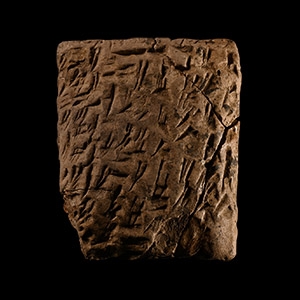
Neo-Babylonian Cuneiform Administrative Tablet from the Reign of Artaxerxes I, Achaemenid King of Persia
465-424 B.C.Sold for (Inc. bp): £910
A pillow-shaped administrative clay tablet bearing cuneiform text to both principal faces, relating to a barley debt; Aramaic graffiti to one edge. 114 grams, 67 mm wide
Specialised collection of cuneiform texts, the property of a London gentleman and housed in London before 1992. Thence by descent to family members. Examined by Professor Wilfrid George Lambert FBA (1926-2011), historian, archaeologist, and specialist in Assyriology and Near Eastern archaeology, in the late 1980s and early 1990s. The collection is exceptional for the variety of types, including some very rare and well preserved examples.
The tablet records a promissory note of a typical kind to pay for barley. It concludes with the names of witnesses, town and date. The Aramaic script transcribes the cuneiform name of the debtor into Aramaic script, making it easier for scribes to identify who each tablet refers to. It dates to the Achaemenid period, to the reign of Artaxerxes I (465-424 B.C.). Such late administrative tablets are typically carelessly written, as is apparent on our example as some script has been rendered slanting sharply downwards. -
.jpg)
Amlash Handled Jar
1st millennium B.C.Sold for (Inc. bp): £279
An unusual ceramic vessel with carinated body, cylindrical neck, everted rim, forked handle with finial at the apex, base composed of six applied pellets and cones, the handle and body decorated with pellets and incised chevrons. 670 grams, 27 cm
Fine condition, handle restored.
Acquired 1970s-2010. Ex important Japanese collection. -
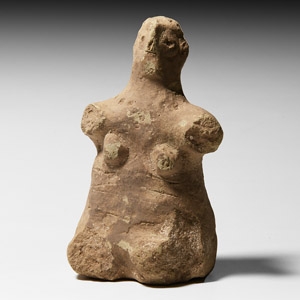
Mesopotamian Fertility Figure
4th-3rd millennium B.C.Estimate: £350 - 450 (+bp*)
Opening Bid: £194
A clay anthropomorphic female figure, stylised detailing to her face and hair, beaded necklace around her neck and small breasts; remains of outstretched arms; shallow U-shaped channel to reverse delineating her buttocks and spine. 225 grams, 11.5 cm high
Fine condition.
Acquired 1980-2015. Ex Abelita family collection.
