
Loading, please wait...
LOT 0563
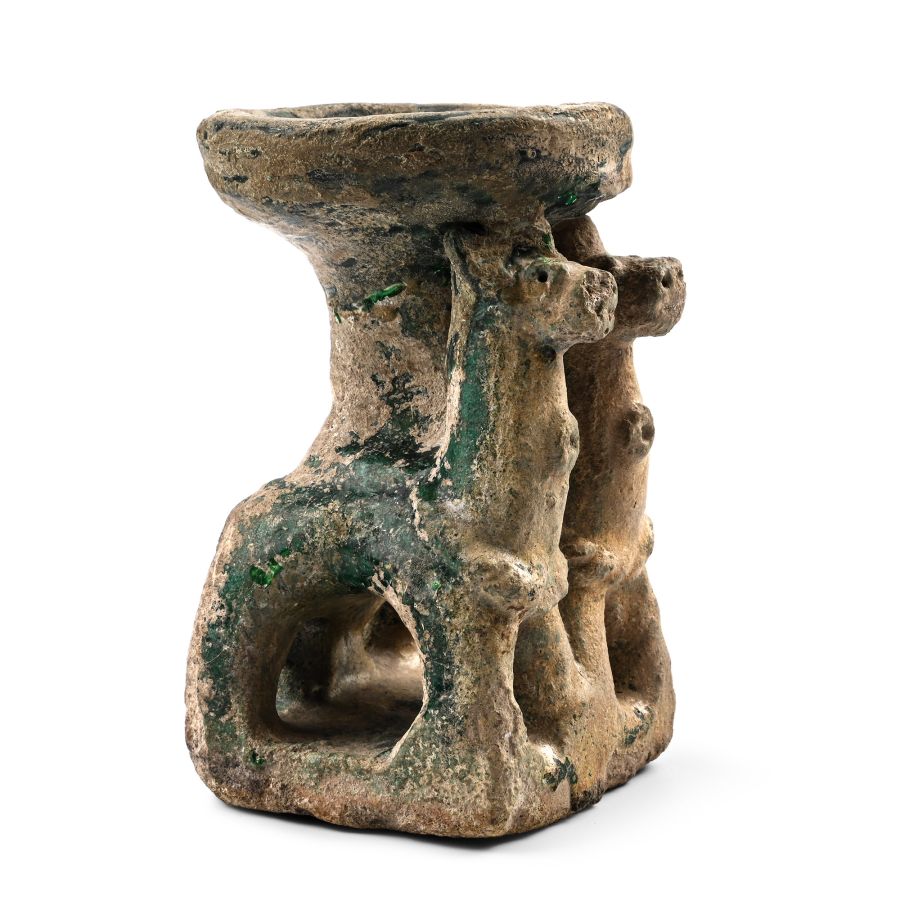
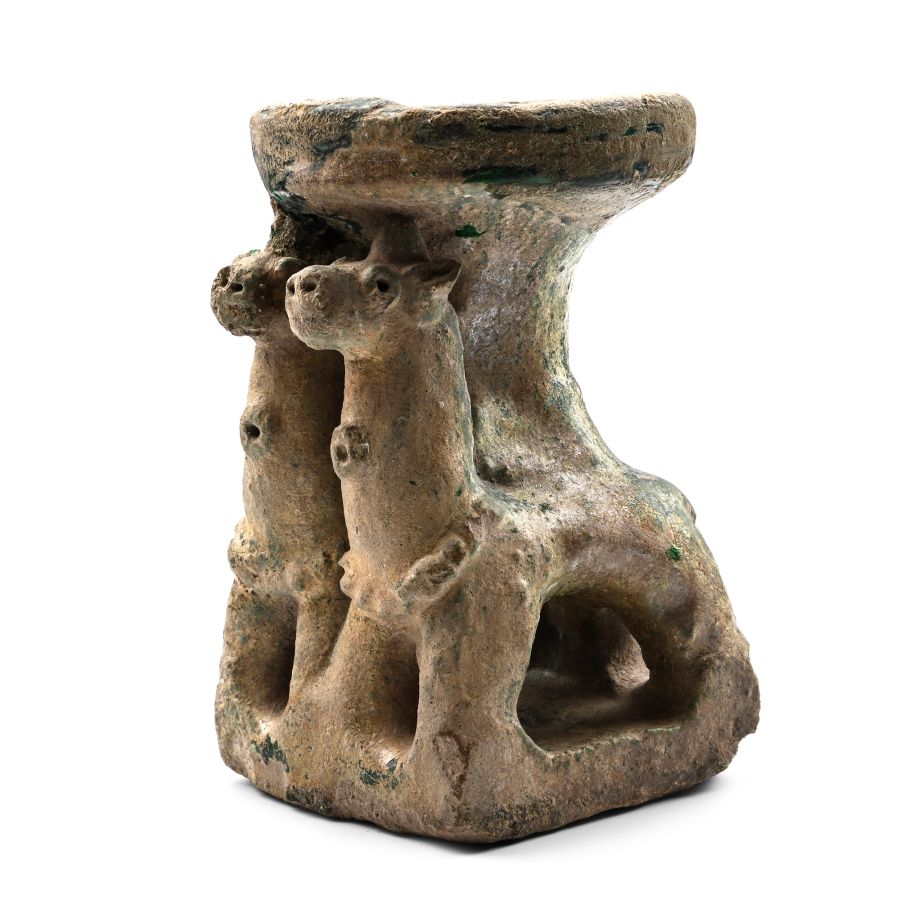
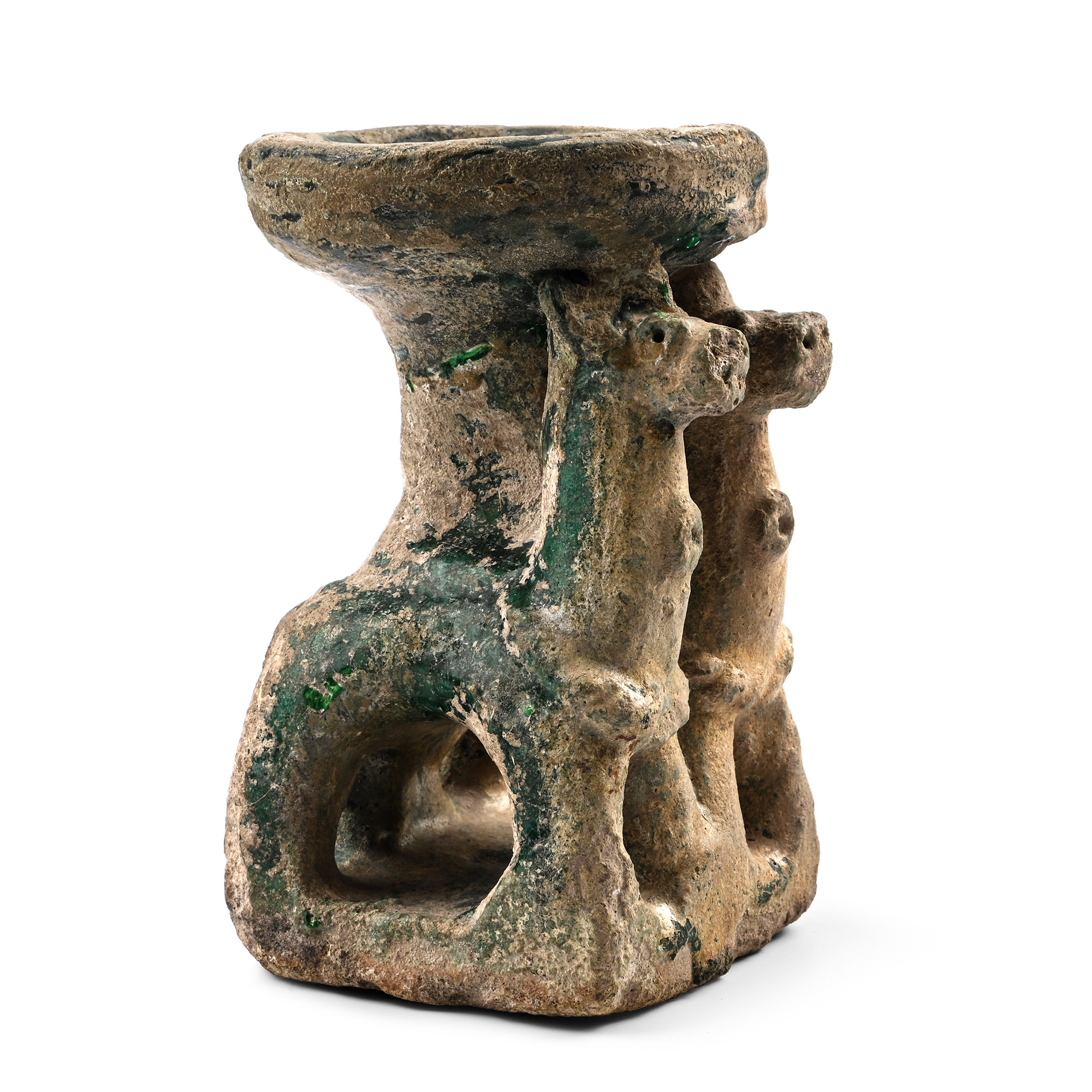
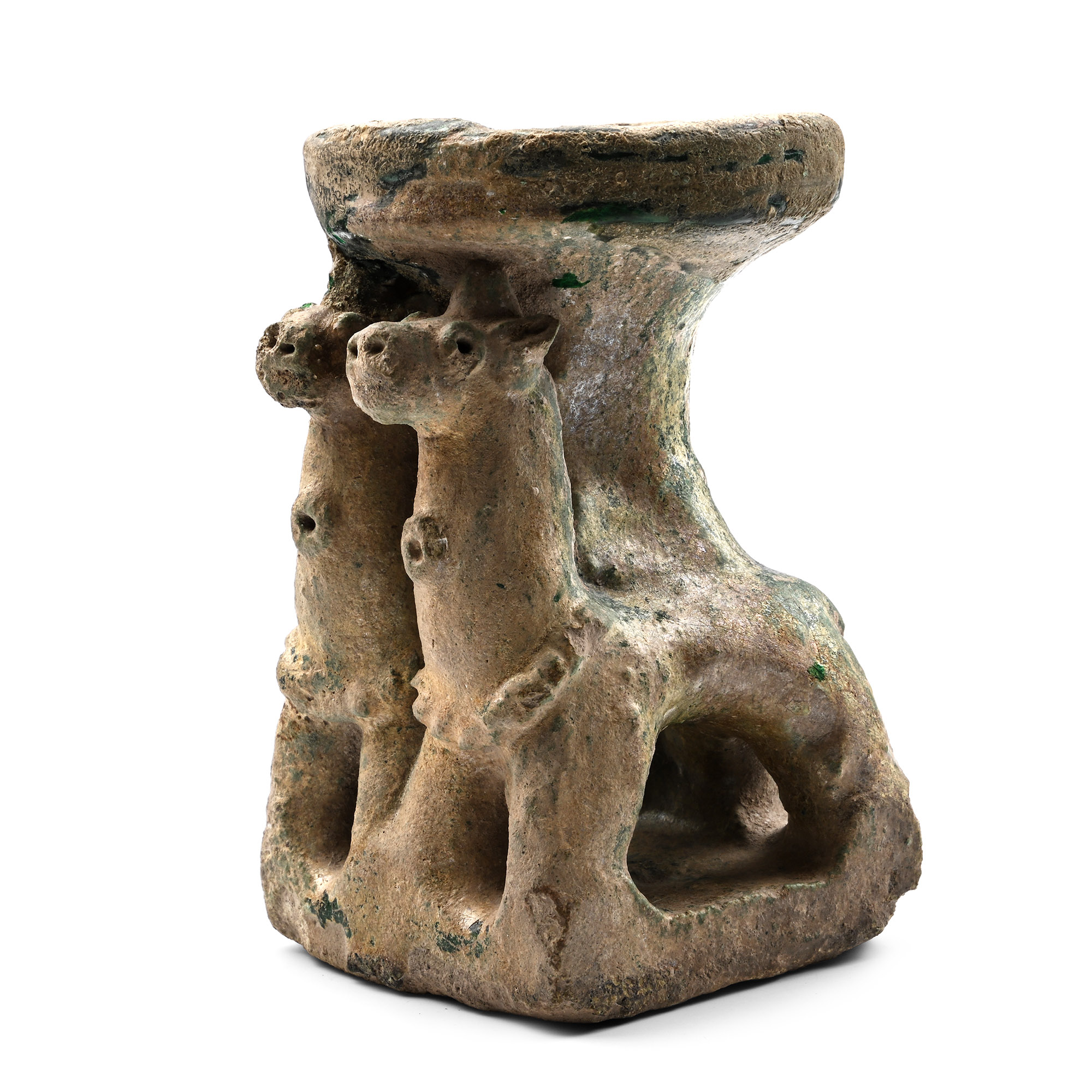
Parthian Faience Glazed Offering Chalice with Quadrupeds
CIRCA 3RD-1ST CENTURY B.C.
5 in. (645 grams, 12.8 cm).
Modelled in the round as two quadrupeds on a square base supporting a shallow bowl on a stem; the beasts with rope halter to the neck.
ProvenanceCollected from 1979-1999.
From the collection of the late Mr Shlomo Mousiaffee, London, UK.
Acquired on the UK art market.
Private collection, London, UK.
TimeLine Auctions follows a vetting process to ensure the authenticity and legality of all items, reinforcing our commitment to integrity and responsible trading. Each antiquity, antique, and coin lot undergoes thorough examination by a vetting committee of at least ten external specialists, professional trade association members, scientists, and archaeologists: Our Vetting Process
AUCTIONS:
TimeLine is a leading auction house specialising in antiquities, ancient art, collectables, natural history, coins, medals, and books. Our auctions offer museums, collectors, historians, and enthusiasts the opportunity to acquire unique and historically significant pieces.
LOT 0563
Parthian Faience Glazed Offering Chalice with Quadrupeds
Sold for (Inc. bp): £546
-
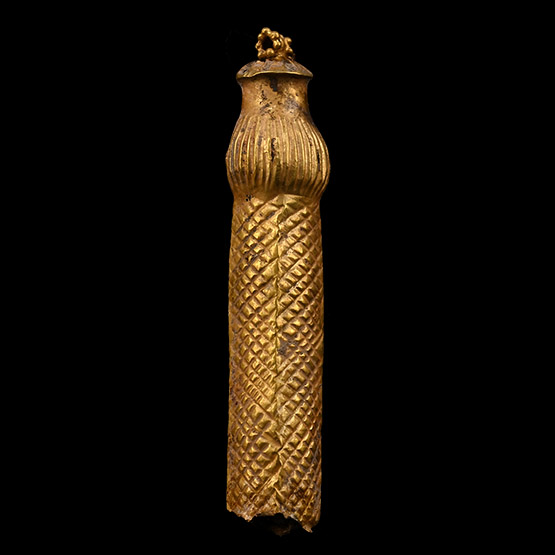
Large Greek Gold Bead Pendant
Circa 3rd-2ndcentury B.C.Sold for (Inc. bp): £351
Square in section with crosshatching to each face, hatched bulb with domed cap and loop with granulated edges. 4.79 grams, 50mm
From the London collection of the late Mr S.M., 1969-1999. -
.jpg)
Greek Attic Red-Figure Kylix Fragment of a Hand
Early 5th century B.C.Sold for (Inc. bp): £975
Irregular fragment framed by a meander on one side and finely painted hand; reverse depicting foot and part of the chiton of a standing figure. 10.63 grams, 52 mm
Private collection, Europe. -
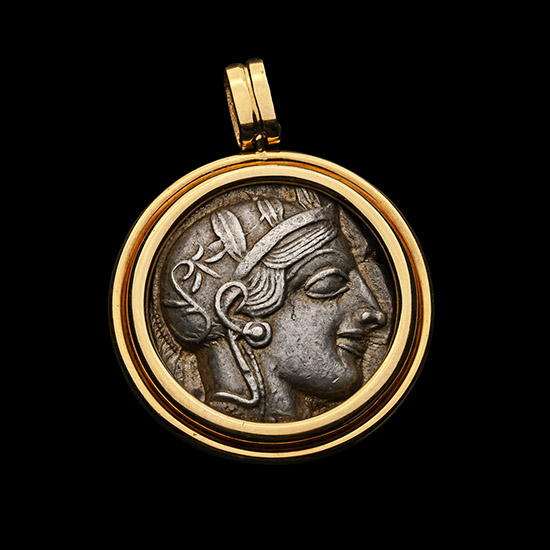
Greek Silver Tetradrachm of Athens in Gold Pendant
Circa 454-404 B.C.Sold for (Inc. bp): £2,340
Obv: head of Athena with profile eye to right, wearing disc earring, pearl necklace and a crested Attic helmet adorned with three olive leaves and a pi-style palmette. Rev: ΑΘΕ, owl standing to right, head facing the viewer, olive sprig with berry and crescent moon in upper left field, all within incuse square. Kroll 8; Dewing 1591-8; SNG Copenhagen 31; HGC 4, 1597; the coin enclosed inside a modern gold medallion pendant stamped '750' with double border. 24.36 grams, 37 mm
Roma Numismatics, E-LIVE Auction 4, 29 November 2018, no.155. Private collection of Mr K.A., France. with Kallos Gallery, London. This lot has been checked against the Interpol Database of stolen works of art and is accompanied by search certificate number no. 13024-246751.
The Athenian components of several of the hoards in which these tetradrachms were found, together with other published and unpublished tetradrachms, make it clear that this coinage of c.400/390 to 353 was not only substantial, but was one of the most prolific Greek coinages of the period.
