
Loading, please wait...
LOT 0205
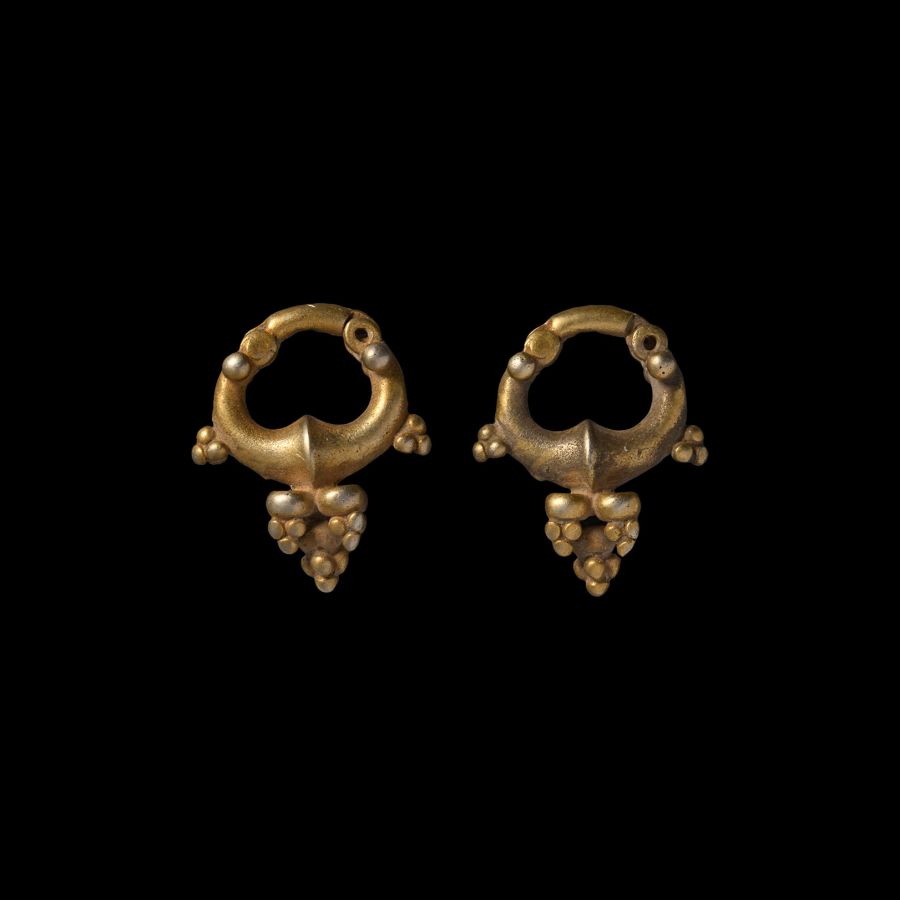
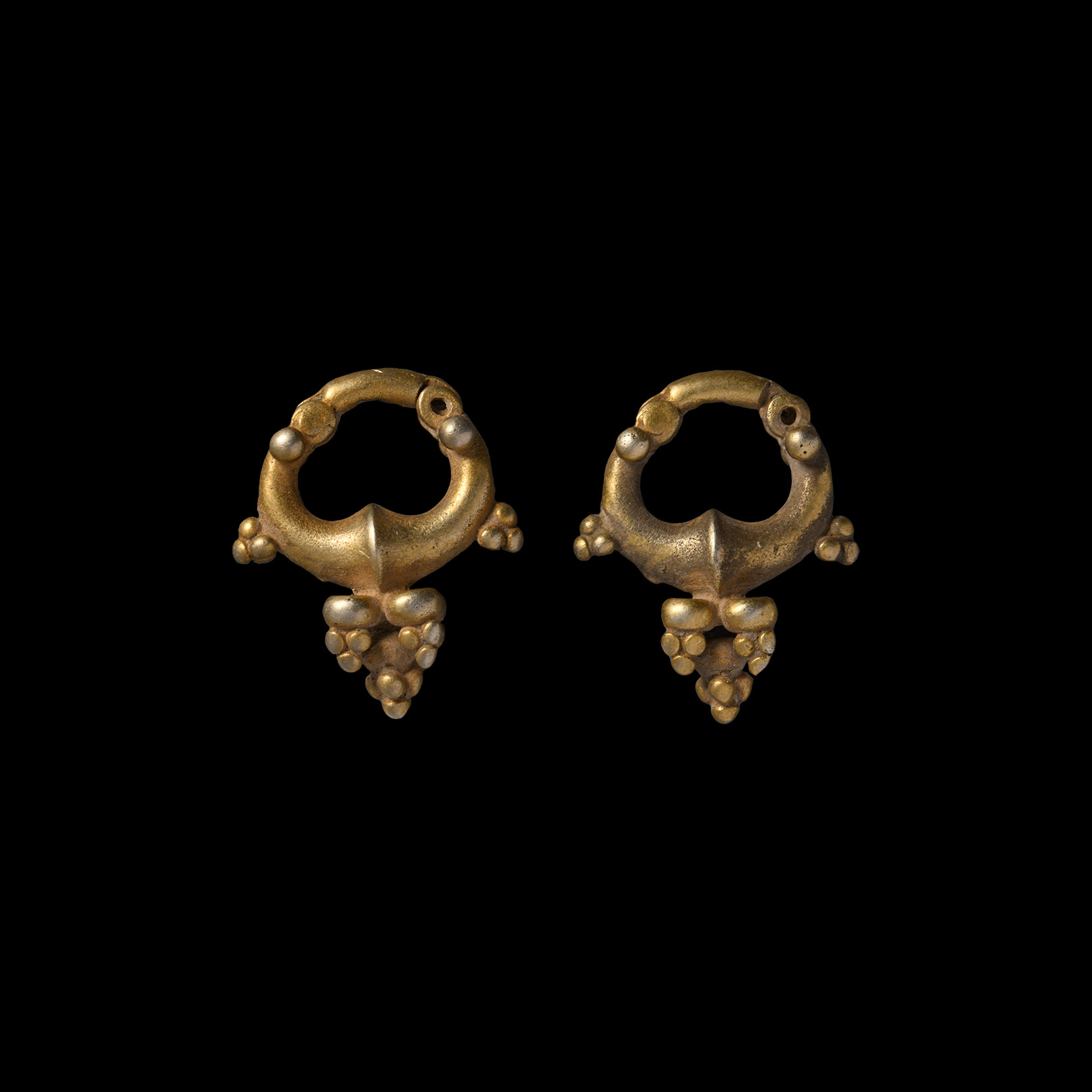
Parthian Electrum Earring Pair
2ND CENTURY B.C.-1ST CENTURY A.D.
7/8 in. (10.02 grams total, 21 mm each).
A matching pair of gold hoop earrings, each composed of a tapering hoop with expanded central section, adorned on both faces with gold pellets, pyramid clusters and a larger pyramid cluster finial with pyramid granules to each pellet; hinged closure. [2]
ProvenanceAcquired 1970-2010.
Collection of a late Japanese gentleman.
TimeLine Auctions follows a vetting process to ensure the authenticity and legality of all items, reinforcing our commitment to integrity and responsible trading. Each antiquity, antique, and coin lot undergoes thorough examination by a vetting committee of at least ten external specialists, professional trade association members, scientists, and archaeologists: Our Vetting Process
AUCTIONS:
TimeLine is a leading auction house specialising in antiquities, ancient art, collectables, natural history, coins, medals, and books. Our auctions offer museums, collectors, historians, and enthusiasts the opportunity to acquire unique and historically significant pieces.
-
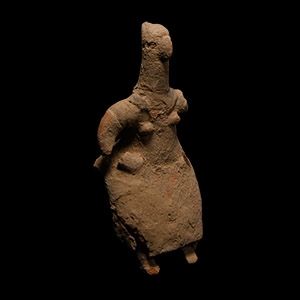
Chalcolithic Female Figurine
Circa 3rd millennium B.C.Estimate: £800 - 1,000 (+bp*)
Opening Bid: £444
A ceramic figure of a seated female with applied facial features, applied collar, arms bent and hands on the hips, flared skirt with separately moulded legs protruding. 135 grams, 12.5 cm
Collection of a deceased London gentleman, 1979-1999, by descent. Accompanied by a copy of a thermoluminescence analysis report no.N122k32 from Oxford Authentication. -
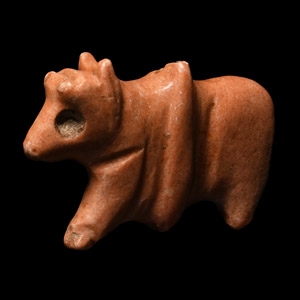
Sumerian Jemdet Nasr Period Animal Amulet
3rd millennium B.C.Sold for (Inc. bp): £279
A carved jasper amuletic pendant of a calf with a band and supporting loop to its middle, sockets for insertion of separate eyes. 18.11 grams, 43 mm
Fine condition, loop broken.
Acquired 1980-2000s. Important collection of a London gentleman. -
.jpg)
Palestinian Ware Net-Painted Vessel
Mid 2nd-mid 1st millennium B.C.Sold for (Inc. bp): £65
A ceramic vessel with hemispherical lower body and sloping shoulder, short neck and everted rim, painted with hatched triangles or stylised nets and circumferential bands. 182 grams, 98 mm wide
Fine condition.
UK collection, 1980s. Ex Lawrence's provincial auction. Property of a Cambridgeshire gentleman.
