
Loading, please wait...
_900x900.jpg "Parthian Carnelian Gemstone of a Goat-Headed Rhyton in Gold Ring")
_200x200.jpg "Parthian Carnelian Gemstone of a Goat-Headed Rhyton in Gold Ring")
_900x900.jpg "Parthian Carnelian Gemstone of a Goat-Headed Rhyton in Gold Ring")
_200x200.jpg "Parthian Carnelian Gemstone of a Goat-Headed Rhyton in Gold Ring")


.jpg "Parthian Carnelian Gemstone of a Goat-Headed Rhyton in Gold Ring")
.jpg "Parthian Carnelian Gemstone of a Goat-Headed Rhyton in Gold Ring")
LOT 0066
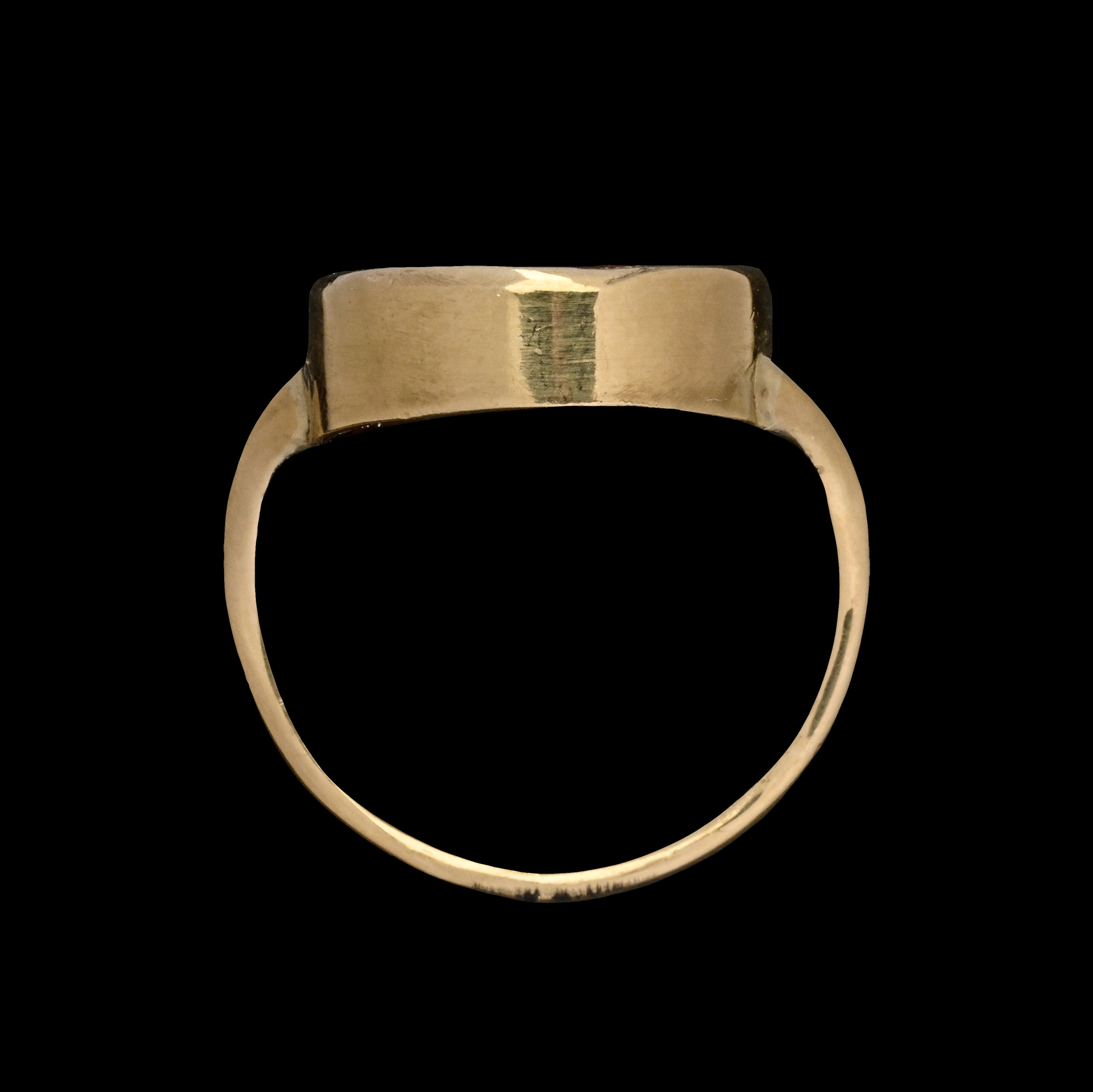
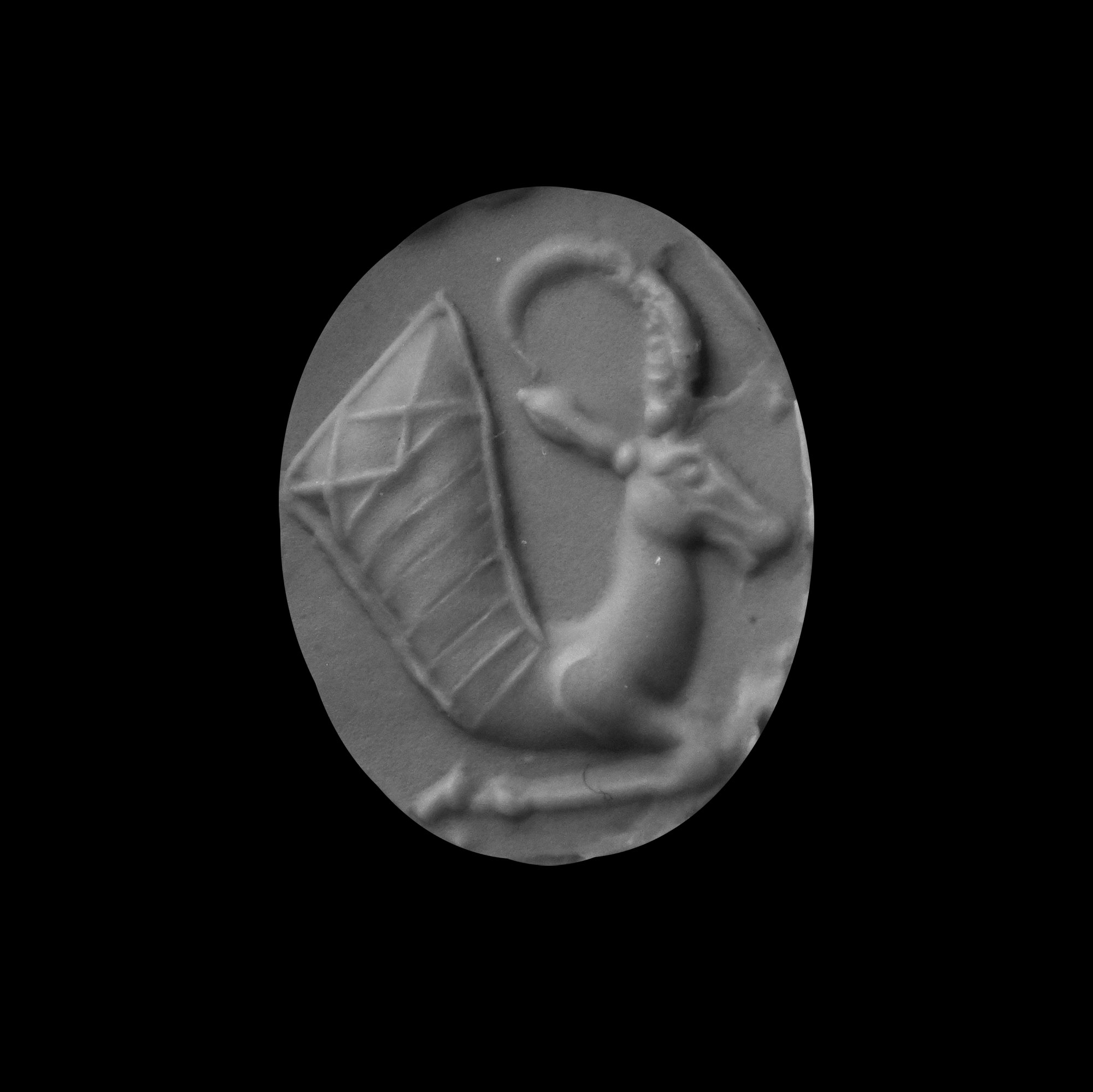
Parthian Carnelian Gemstone of a Goat-Headed Rhyton in Gold Ring
4TH CENTURY B.C.-220 A.D.
1 in. (8.51 grams, 24.02 mm overall, 21.18 mm internal diameter (approximate size British P, USA 7 1/2, Europe 16.23, Japan 15)).
Achaemenid or Parthian oval intaglio engraved with a style standing at the threshold between natural and stiff rigid linear style, depicting a goat-headed rhyton, the vessel terminating in the forepart of a wild goat with the front leg tucked under the body, the head rendered in profile with elegantly arched horns, pronounced muzzle, and carefully incised eye; the neck of the conical rhyton decorated with diagonal and cross-hatched incisions suggesting ribbing or chased metalwork; set in a modern gold ring with a small triangular area at the top left of the stone filled in with gold; supplied with a museum-quality impression.
ProvenanceAcquired on the European art market.
This lot has been checked against the Interpol Database of stolen works of art and is accompanied by search certificate number no.13356-257945.
See for rhyta of similar form and iconography, compare the silver and gold animal-headed rhyta from the Panagyurishte and Derveni Treasures in Seipel, W., Antike Goldschmiedekunst, Vienna, 1980; see also a rhyton terminating in a goat protome from the 5th century BC, in the collection of the Metropolitan Museum of Art, New York, acc. no. 1989.281.15.
FootnotesThe subject, a rhyton terminating in an animal protome, belongs to a well-established tradition in Eastern Greek and Achaemenid art of the late Archaic and Classical periods, in which zoomorphic libation vessels were used in ritual and ceremonial contexts. Goat-headed rhyta, though less commonly preserved in glyptic media, are attested in silver and ceramic examples, notably from Asia Minor and Thrace. The stylised horned animal, here likely a wild goat or ibex, is associated with vitality and mountain symbolism, while the rhyton itself signals elite drinking culture and votive use. The use of carnelian is typical of high-quality glyptic production in the 6th to 4th century BC, valued for its durability and ability to take a fine polish. The style and iconography suggest an Eastern Mediterranean origin, most probably Ionian or Anatolian.
CONDITIONTimeLine Auctions follows a vetting process to ensure the authenticity and legality of all items, reinforcing our commitment to integrity and responsible trading. Each antiquity, antique, and coin lot undergoes thorough examination by a vetting committee of at least ten external specialists, professional trade association members, scientists, and archaeologists: Our Vetting Process
AUCTIONS:
TimeLine is a leading auction house specialising in antiquities, ancient art, collectables, natural history, coins, medals, and books. Our auctions offer museums, collectors, historians, and enthusiasts the opportunity to acquire unique and historically significant pieces.
LOT 0066
Parthian Carnelian Gemstone of a Goat-Headed Rhyton in Gold Ring
Estimate £2,000 - 3,000€2,320 - 3,480 (for guidance only)$2,700 - 4,050 (for guidance only)
-
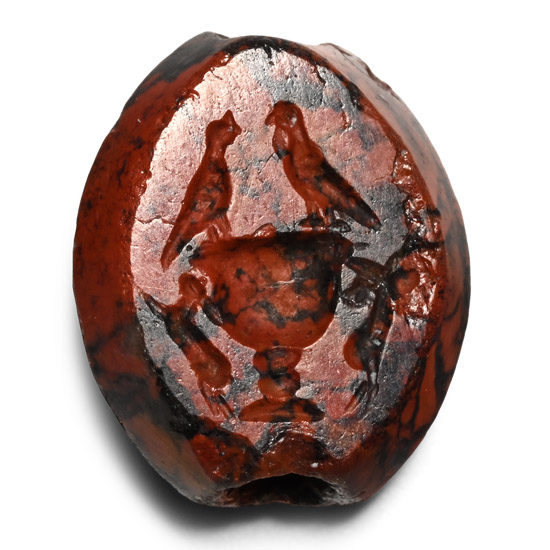
Greek Red Variegated Gemstone with Chalice and Birds
6th-4th century B.C.Sold for (Inc. bp): £234
Scaraboid type with incuse design to the underside of a footed chalice with two birds perched on the rim of the bowl; supplied with a museum-quality impression. 1.45 grams, 14 mm
From the private collection of a European gentleman (1942-2024), formed since the 1970s. -
.jpg)
Large Greek Black-Glazed Trefoil-Lipped Oinochoe
Apulia, 5th century B.C.Sold for (Inc. bp): £5,980
With a trefoil mouth, an applied D-section handle and a tiered foot. 405 grams, 22.1 cm
Property from a private collection. with Sotheby's, New York, 9 December 2003, no.9. Accompanied by copies of the relevant Sotheby's catalogue pages. -
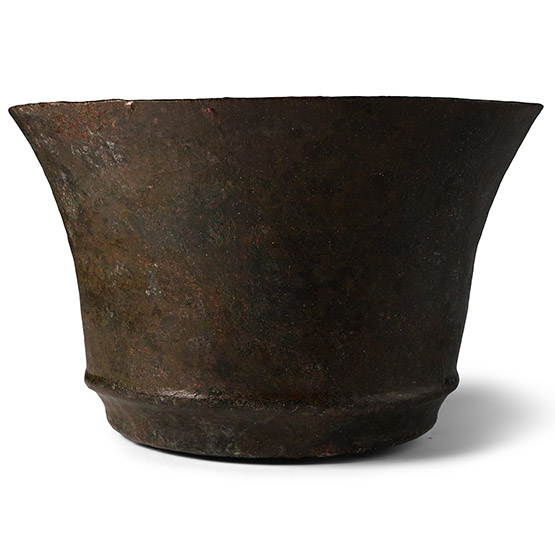
Cypro-Phoenician Bronze Cup
6th-4th century B.C.Sold for (Inc. bp): £182
Bell-shaped in profile with carination above the foot. 144 grams, 11.2 cm
Ex property of a London, UK, gentleman, Mayfair gallery, 1990s.
