
Loading, please wait...
LOT 1250
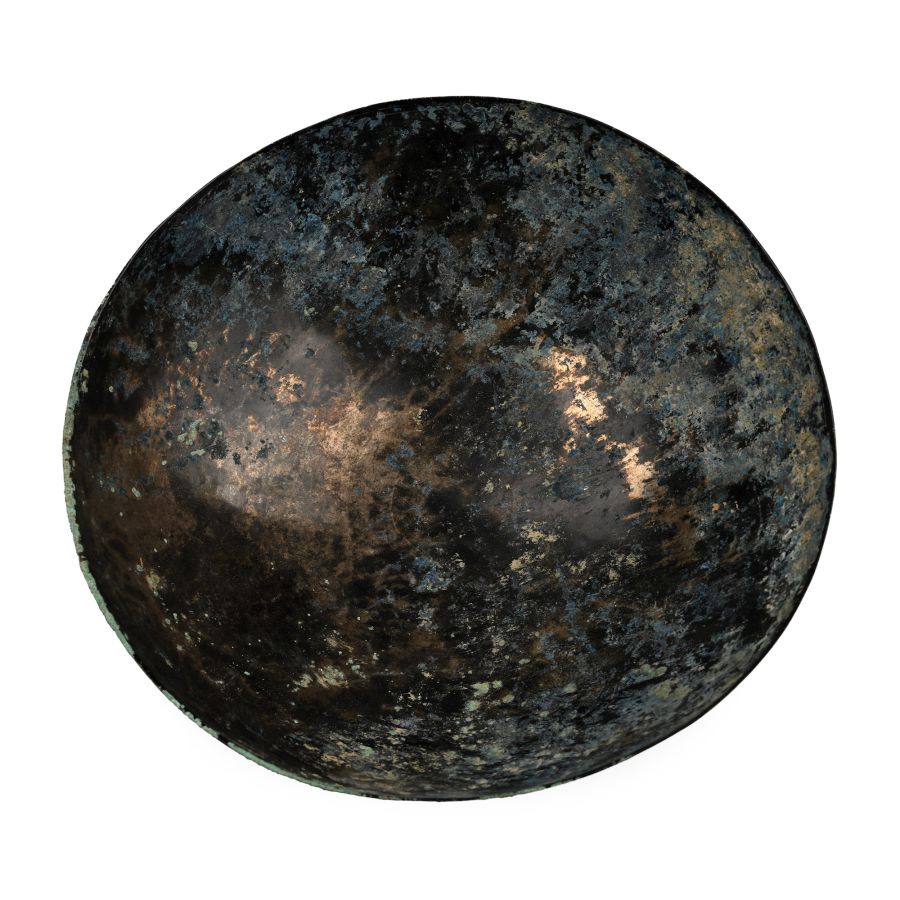
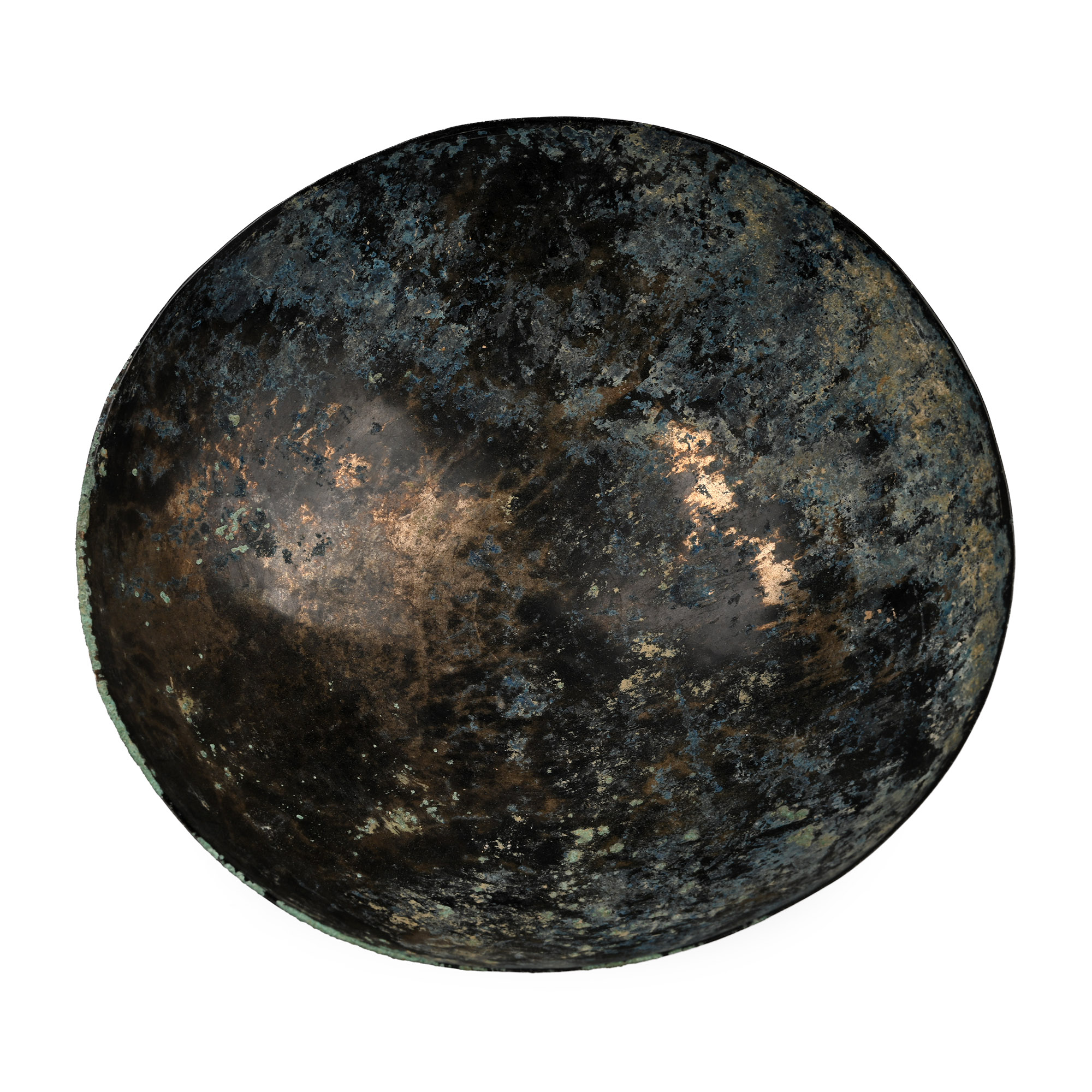
Parthian Bronze Vessel
2ND CENTURY B.C.-1ST CENTURY A.D.
6 1/8 in. (110 grams, 15.5 cm wide).
Hemispherical in form with broad mouth. [No Reserve]
ProvenanceEx London, UK, collection, 1990-2000.
This lot has been cleared against the Art Loss Register database, and is accompanied by an illustrated lot declaration signed by the Head of the Antiquities Department, Dr Raffaele D'Amato.
TimeLine Auctions follows a vetting process to ensure the authenticity and legality of all items, reinforcing our commitment to integrity and responsible trading. Each antiquity, antique, and coin lot undergoes thorough examination by a vetting committee of at least ten external specialists, professional trade association members, scientists, and archaeologists: Our Vetting Process
AUCTIONS:
TimeLine is a leading auction house specialising in antiquities, ancient art, collectables, natural history, coins, medals, and books. Our auctions offer museums, collectors, historians, and enthusiasts the opportunity to acquire unique and historically significant pieces.
-
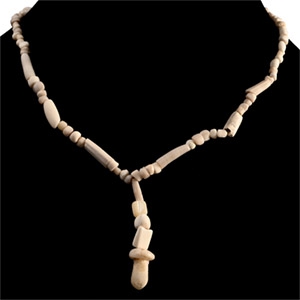
Western Asiatic White Stone and Shell Bead Necklace String
1st millennium B.C. and laterSold for (Inc. bp): £20
Composed of tubular beads interspersed with smaller oblate and other beads; restrung to a Y-shape with a drop-shaped pendant. 14.7 grams, 30 cm
From the London, UK, art market in the 1990s. This lot has been cleared against the Art Loss Register database, and is accompanied by an illustrated lot declaration signed by the Head of the Antiquities Department, Dr Raffaele D'Amato. -
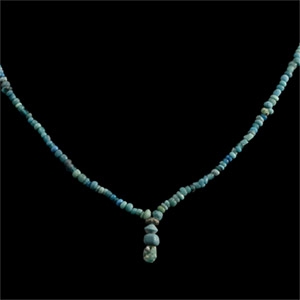
Achaemenid Blue Glass Bead Necklace String
6th-4th century B.C. and laterSold for (Inc. bp): £65
Composed of mainly oblate and annular beads with larger beads as a central feature; restrung. 5.55 grams, 38 cm
From the London, UK, art market in the 1990s. This lot has been cleared against the Art Loss Register database, and is accompanied by an illustrated lot declaration signed by the Head of the Antiquities Department, Dr Raffaele D'Amato. -
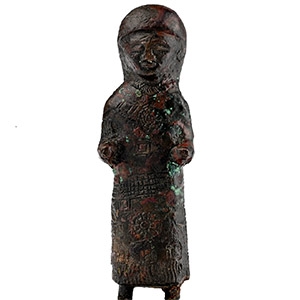
Urartu Copper Figure of a Goddess
8th-7th century B.C.Estimate: £6,000 - 8,000 (‡+bp*)
Opening Bid: £3,000
Columnar in form with bulbous hairstyle descending to a tapering tail; stub arms to the sides and small right-angled feet; impressed herringbone texture to the hair; robe with hatched detailing to the collar, belt and hem, rosette and other detailing; supplied with a custom-made display stand. 115 grams, 76 mm (130 grams, 95 mm including stand)
Private collection, Europe. Acquired in 2003. This lot has been checked against the Interpol Database of stolen works of art and is accompanied by a search certificate number no.12894-241695. This lot has been cleared against the Art Loss Register database, and is accompanied by an illustrated lot declaration signed by the Head of the Antiquities Department, Dr Raffaele D'Amato.
