
Loading, please wait...
LOT 0577
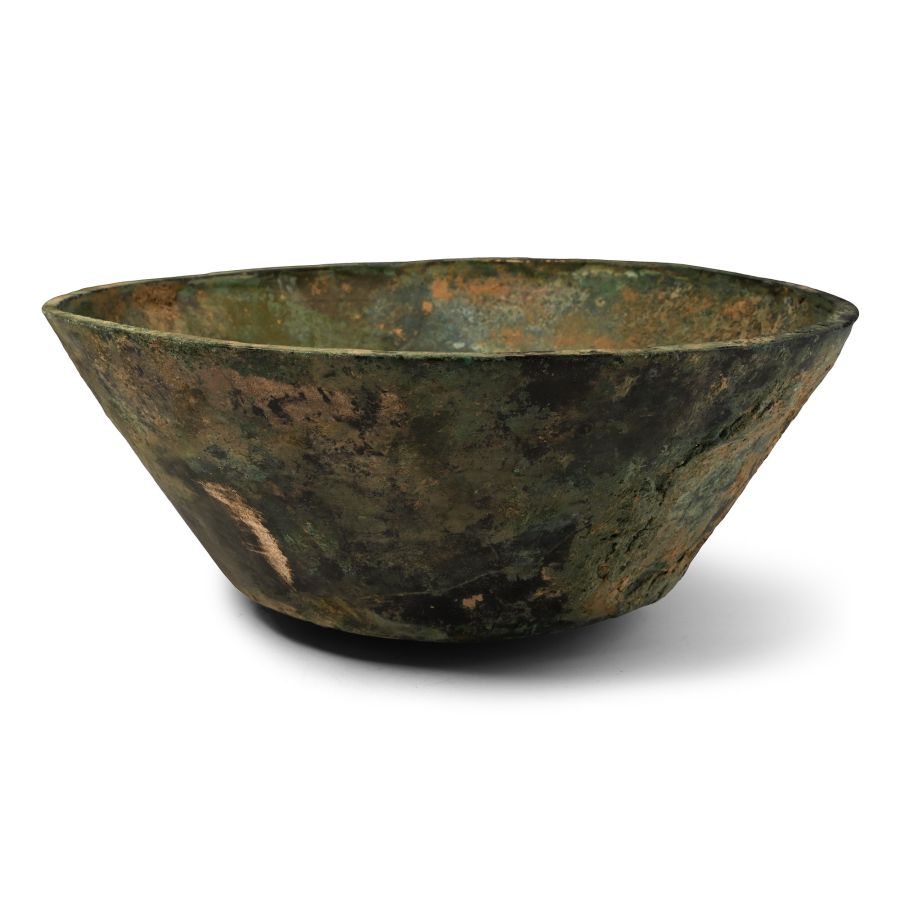
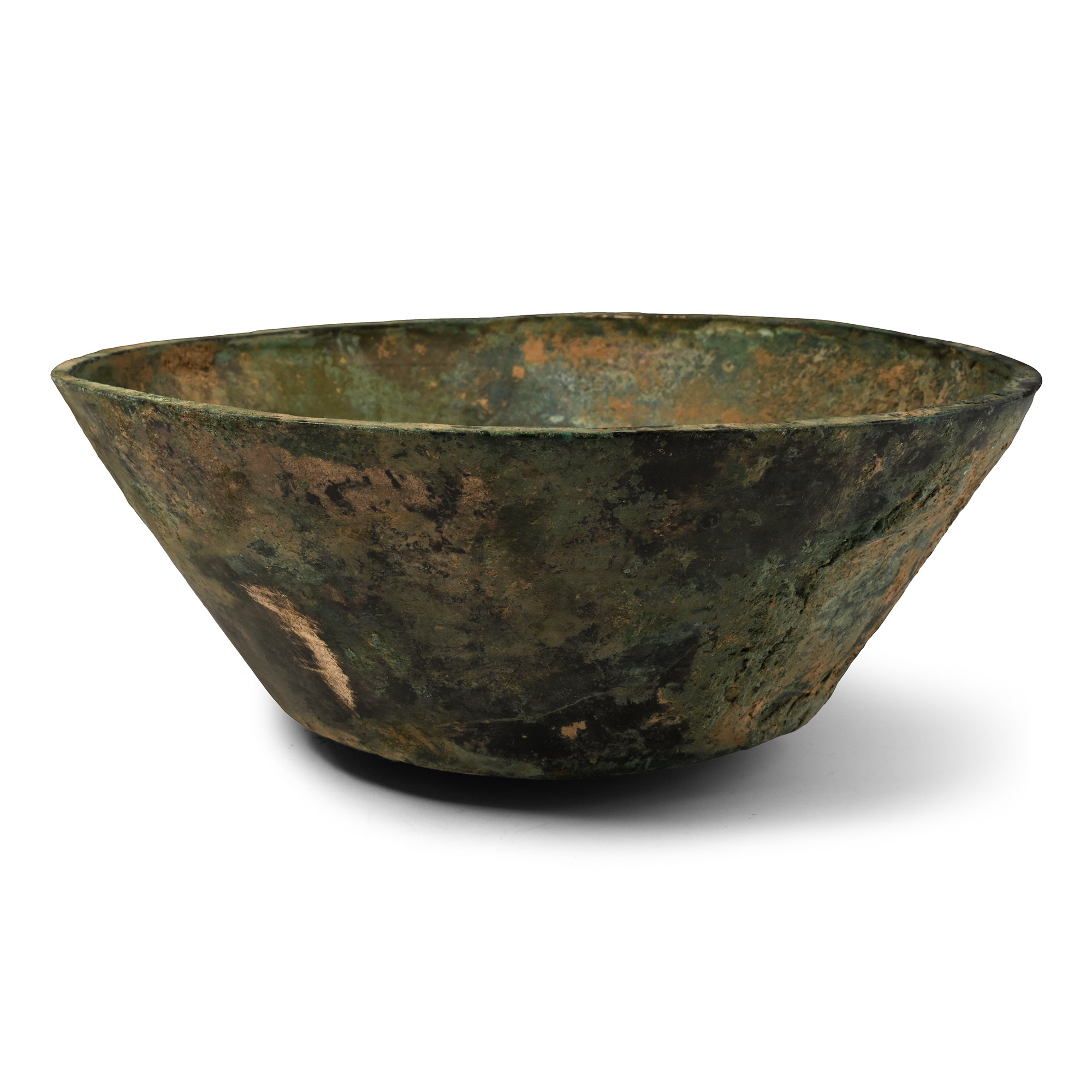
Parthian Bronze Bowl
2ND CENTURY B.C.-1ST CENTURY A.D.
6 3/8 in. (250 grams, 16.1 cm).
Broad and squat with flared sidewall and lip to the inner edge of the mouth. [No Reserve]
ProvenanceEx 1990s collection and with a central London gallery.
CONDITIONTimeLine Auctions follows a vetting process to ensure the authenticity and legality of all items, reinforcing our commitment to integrity and responsible trading. Each antiquity, antique, and coin lot undergoes thorough examination by a vetting committee of at least ten external specialists, professional trade association members, scientists, and archaeologists: Our Vetting Process
AUCTIONS:
TimeLine is a leading auction house specialising in antiquities, ancient art, collectables, natural history, coins, medals, and books. Our auctions offer museums, collectors, historians, and enthusiasts the opportunity to acquire unique and historically significant pieces.
-
.jpg)
Greek Miniature Bronze Hydria
Geometric Period, 8th-6th century B.C.Estimate: £500 - 700 (‡+bp*)
Opening Bid: £250
With a bulbous body, flared foot, lateral loop handles to the shoulder and a strap handle to the rear. 23.5 grams, 37 mm
Acquired by a Swiss family in the mid-1980s to late 1990s, thence by descent. Private collection, Switzerland, since the late 1990s. -
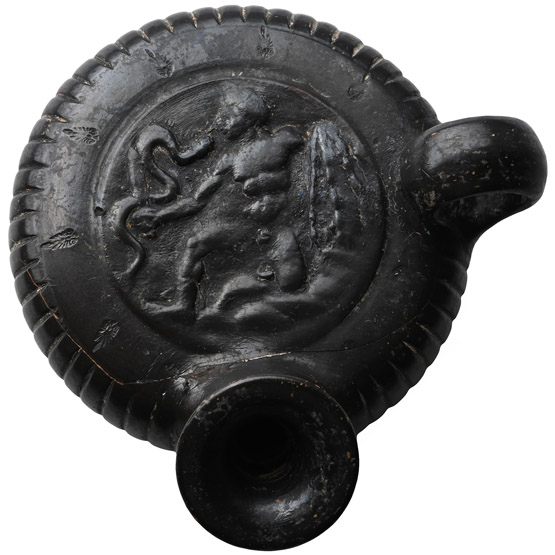
Greek Black-Glazed Guttus with Infant Hercules
Apulian, 3rd-2nd century B.C.Sold for (Inc. bp): £390
With basal ring, trumpet-shaped spout and ring handle, disc decorated with low-relief image of infant Hercules battling a snake, shoulder with palmettes; crack across the body. 165 grams, 11.5 cm
From the stock of a former UK antiquarian, acquired at trade fairs and from private collection formed in the 1980s-1990s. Private collection, Europe.
Angered by his infidelity, Zeus' wife Hera attempted to kill the infant Herakles by sending two snakes to his cradle, where he slept. As the snakes coiled around the baby Herakles woke and strangled them, thus displaying his superhuman strength at an early age. -
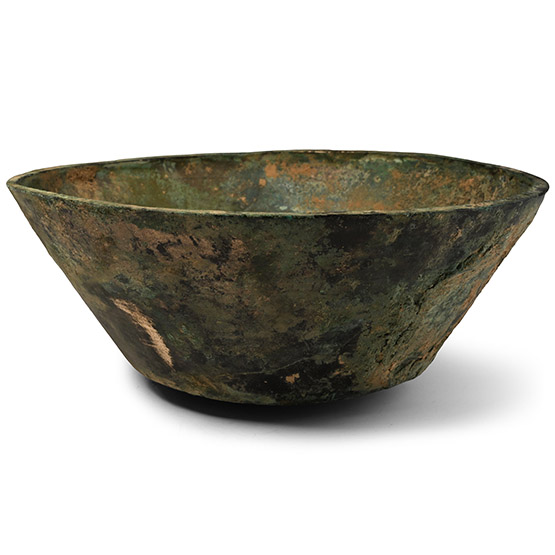
Parthian Bronze Bowl
2nd century B.C.-1st century A.D.Sold for (Inc. bp): £117
Broad and squat with flared sidewall and lip to the inner edge of the mouth. 250 grams, 16.1 cm
Ex 1990s collection and with a central London gallery.
