
Loading, please wait...
LOT 0622
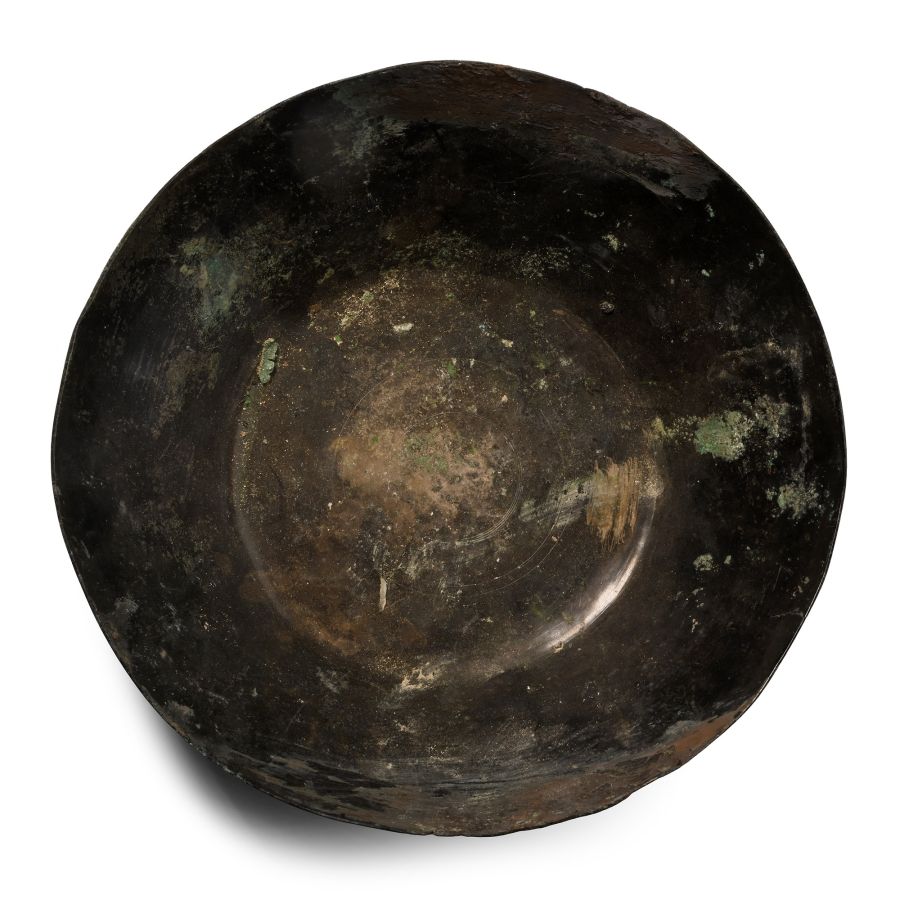
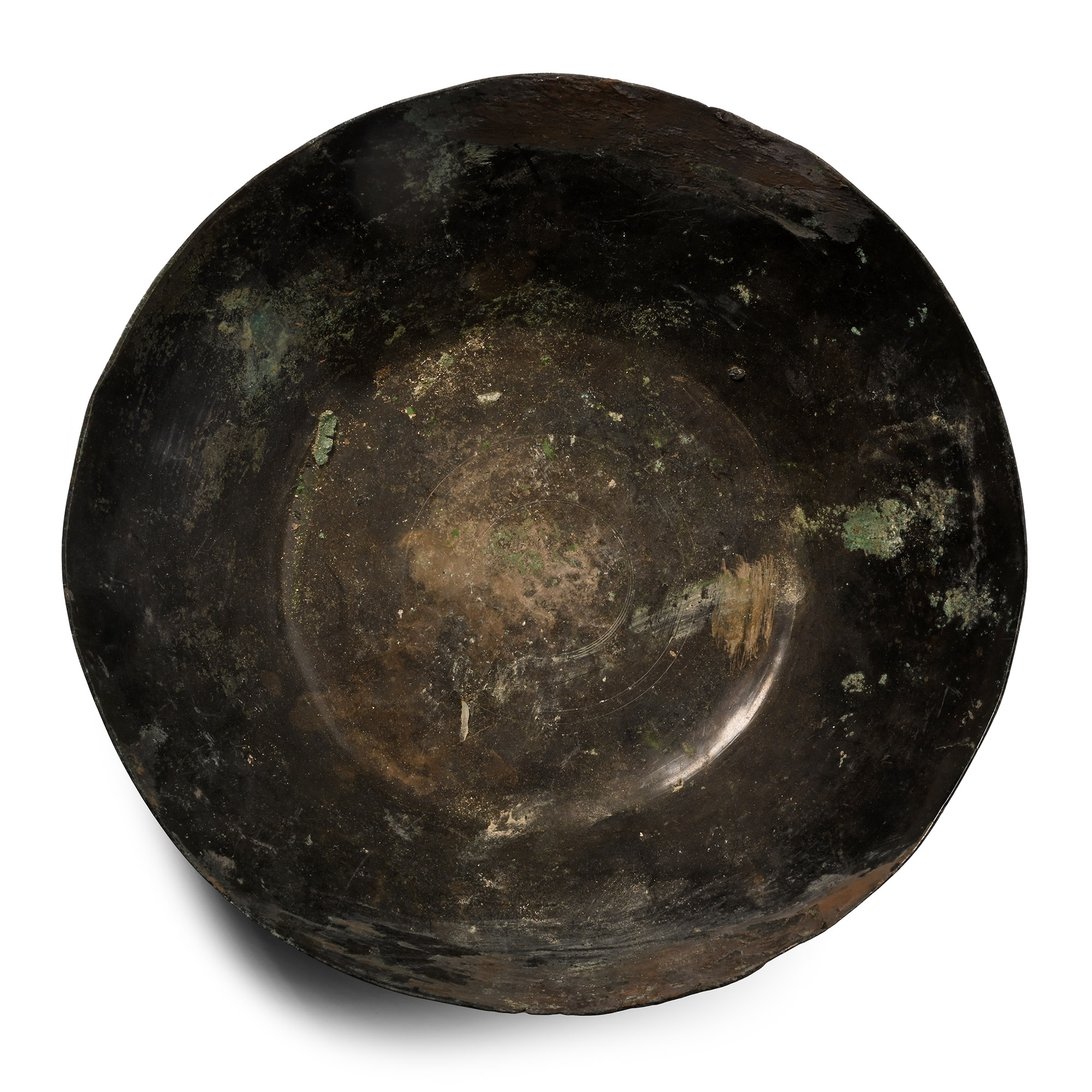
Parthian Bronze Bowl
2ND CENTURY B.C.-1ST CENTURY A.D.
6 7/8 in. (153 grams, 17.5 cm).
Broad and squat with flared sidewall. [No Reserve]
ProvenanceEx 1990s collection and with a central London gallery.
CONDITIONTimeLine Auctions follows a vetting process to ensure the authenticity and legality of all items, reinforcing our commitment to integrity and responsible trading. Each antiquity, antique, and coin lot undergoes thorough examination by a vetting committee of at least ten external specialists, professional trade association members, scientists, and archaeologists: Our Vetting Process
AUCTIONS:
TimeLine is a leading auction house specialising in antiquities, ancient art, collectables, natural history, coins, medals, and books. Our auctions offer museums, collectors, historians, and enthusiasts the opportunity to acquire unique and historically significant pieces.
-
.jpg)
Greek Red-Figure Kantharos with Lady of Fashion
Apulian, 3rd-2nd century B.C.Sold for (Inc. bp): £1,040
High-handled cup with flared body and a tall offset foot with a collar, coiled lateral handles; profile 'ladies of fashion' busts with white and cream detailing to the hair, diadem and earrings. 415 grams, 18.6 cm
Acquired on the art market between the late 1990s and mid-2000s. Estate of the late Barry Paul Buxton (1944–2024), Oakham, Rutland. Acquired on the UK art market, 2025. -
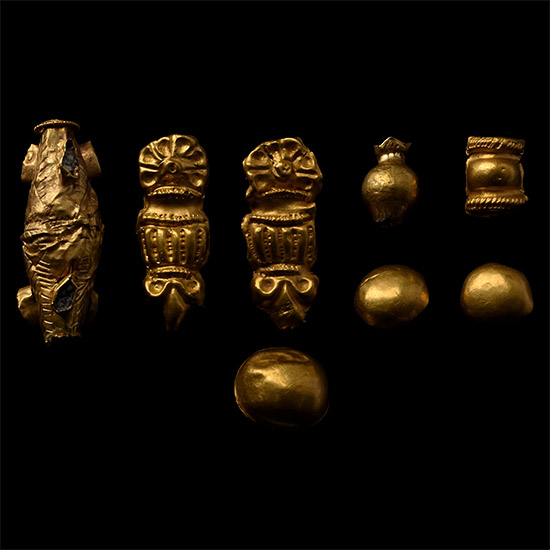
Greek Gold Bead Collection
4th-3rd century B.C.Estimate: £1,500 - 2,000 (‡+bp*)
Opening Bid: £750
A collection of necklace pendants and dress appliques comprising: a hollow bead with a truncated conical shape, featuring appliques for precious stone inserts; three studs with a hemispherical dome; a pair of appliques decorated with rosette and mask-shaped elements; a pendant in the form of a myrtle berry, and another fragment. 11.19 grams total, 10-31 mm
Acquired by a Swiss family in the mid-1980s to late 1990s, thence by descent. Private collection, Switzerland, since the late 1990s. This lot has been checked against the Interpol Database of stolen works of art and is accompanied by a search certificate number no.13023-246772.
The iconography of Hellenistic jewellery often incorporates vegetal motifs, reflecting the Greek value of fertility and a royal Greek female wearer’s obligation to produce heirs. With its heavy incorporation of plant motifs, including tendrils, blossoms, and a bursting pomegranate, the diadem design symbolises a woman’s reproductive potential and alludes to the female wearer’s social responsibility to produce offspring. -
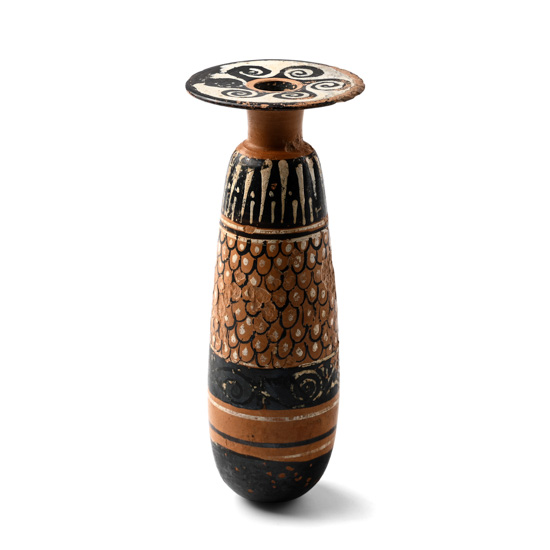
Greek Black-Figure Alabastron with Fish Scale Pattern, Possibly Attributed to the Bulas Group
Attic, early 4th century B.C.Sold for (Inc. bp): £2,340
Ovoid shape with short neck and expanded flat rim; painted with horizontal bands with vertical strokes on the shoulder, fish-scale pattern below and running scrolled tendrils; horizontal stripes below. 87 grams, 13 cm
partially repainted
Collection of M. Bouvier, Switzerland (1901-1980), Switzerland. Bouvier was a law professor in Alexandria prior to 1930. with Christie's, London, 7 October 2010, no.117. Private collection, 2010. Accompanied by an original thermoluminescence analysis report no.N125q42 by Oxford Authentication. Accompanied by copies of the Christie's catalogue pages. Accompanied by an academic report by Dr Raffaele D’Amato. This lot has been checked against the Interpol Database of stolen works of art and is accompanied by a search certificate number no.13008-246447.
The alabastra of the Bulas Group display scale-like patterns. They were painted with slip, a liquid clay which vitrifies when fired. This group is usually dated to the late 5th – early 4th century B.C. It was named after Kazimierz Bulas, who was the first to study them in depth in the 1930s. He characterised various shapes according to their decorative techniques (nets and floral patterns) and their functions.
