
Loading, please wait...
LOT 0072
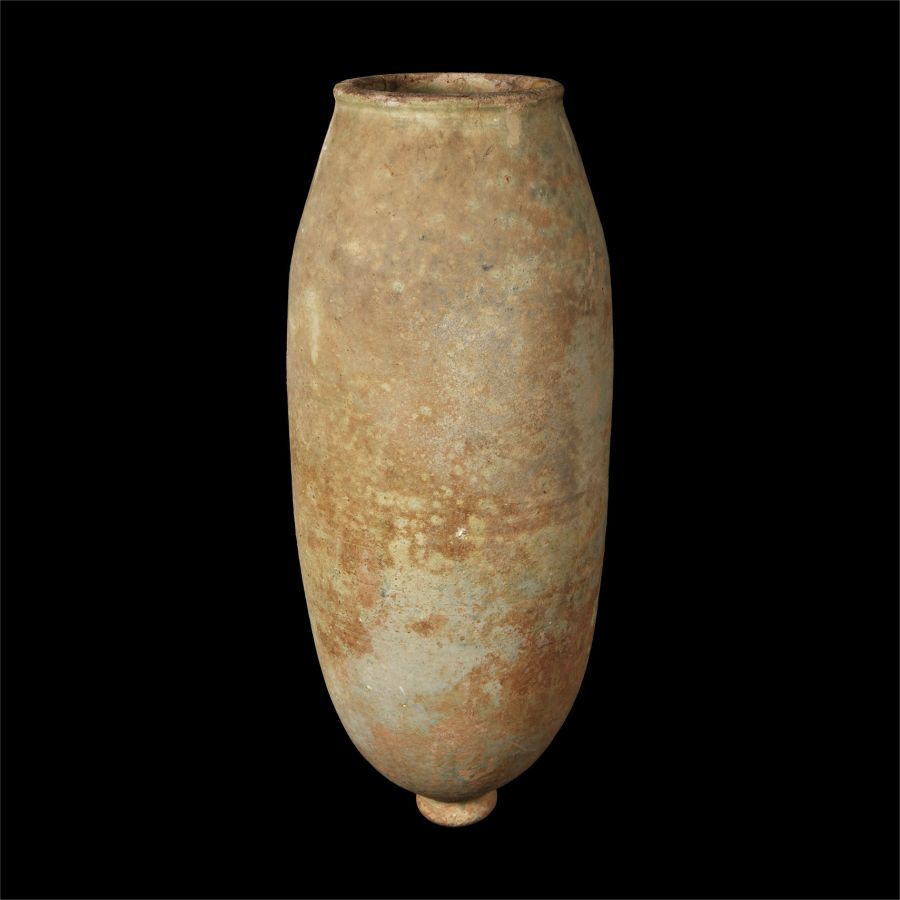
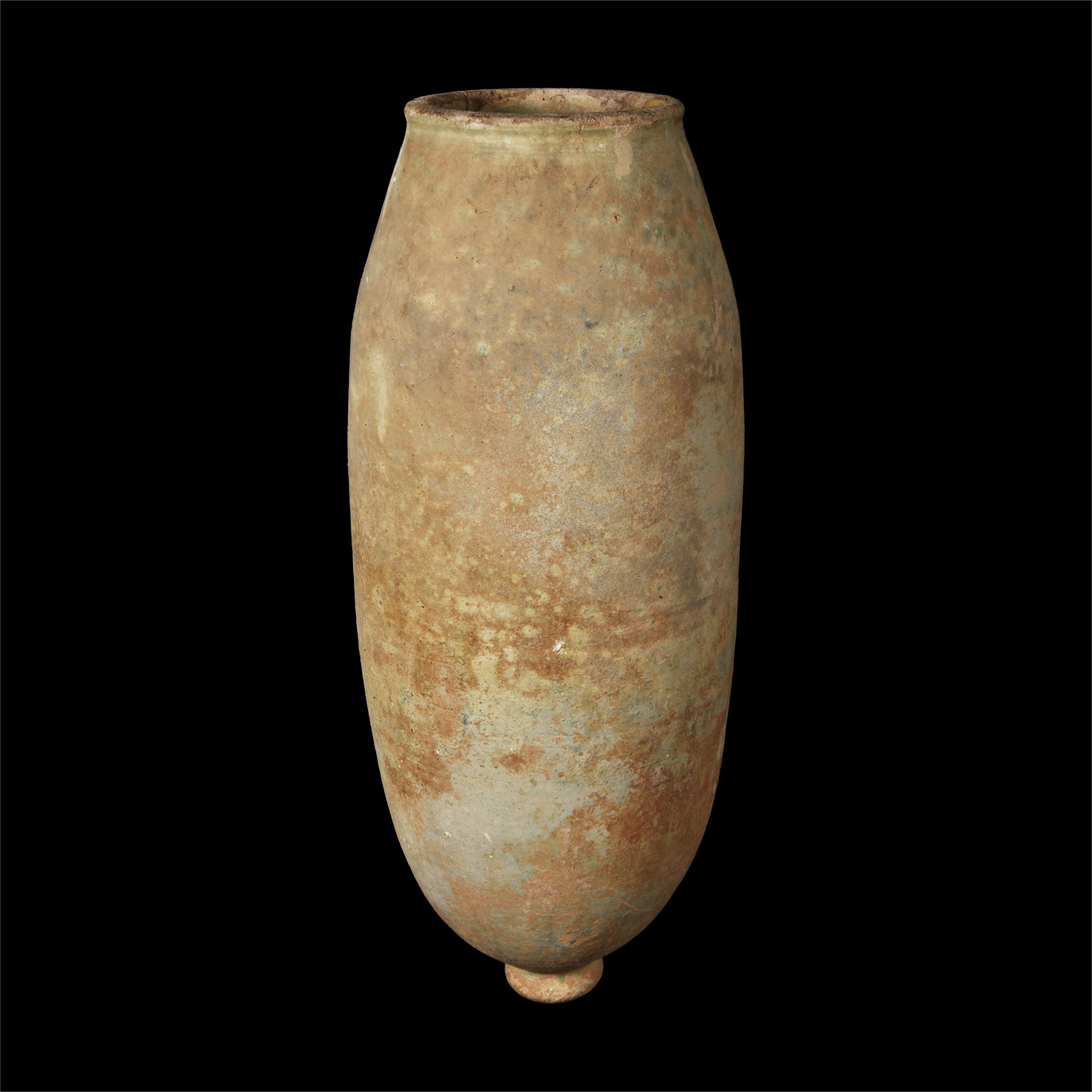
Parthian Blue Glazed Amphora-Type Vessel
2ND CENTURY B.C.-1ST CENTURY A.D. OR LATER
16 3/4 in. (4.1 kg, 42.5 cm).
The buff, capsule-shaped body with a tapering shoulder and pronounced rim, knop-shaped foot and remains of glaze to the mouth.
ProvenanceLondon, UK, gallery, 1971-early 2000s.
CONDITIONTimeLine Auctions follows a vetting process to ensure the authenticity and legality of all items, reinforcing our commitment to integrity and responsible trading. Each antiquity, antique, and coin lot undergoes thorough examination by a vetting committee of at least ten external specialists, professional trade association members, scientists, and archaeologists: Our Vetting Process
AUCTIONS:
TimeLine is a leading auction house specialising in antiquities, ancient art, collectables, natural history, coins, medals, and books. Our auctions offer museums, collectors, historians, and enthusiasts the opportunity to acquire unique and historically significant pieces.
-
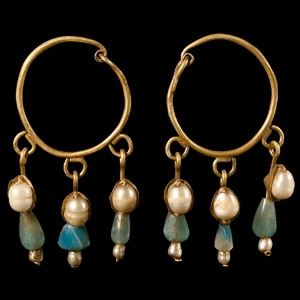
Hellenistic Gold Earrings with Beads and Pearls
Circa 2nd-1st century B.C.Estimate: £1,200 - 1,700 (+bp*)
Opening Bid: £625
Matched pair of gold hoop earrings with hook-and-eye closure; three applied loops to the lower edge each with a pearl in a cup setting, turquoise-coloured translucent gemstone beneath; restored. 12.27 grams total, 52-54 mm
From a collection of a London lady, acquired annually during 1990s-2000s.
The turquoise-coloured stones were artificially stained in antiquity. -
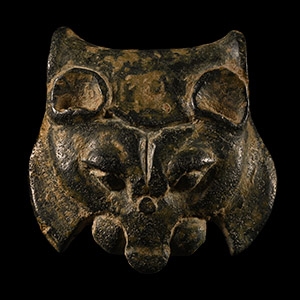
Greek Zoomorphic Bronze Hydria Handle Attachment
Circa 5th-4th century B.C.Sold for (Inc. bp): £442
Modelled as a skinned lion's head with fierce facial detailing; made for soldering to an articulated round handle. 98 grams, 51 mm high
Private collection, Germany, 1980s. Acquired on the UK art market 2010.
The handles were usually shaped as divinities or animals linked with gods (ie. lions for Herakles). A similar specimen can be seen in the Berlin Museum (inv.7491), from Athens. -
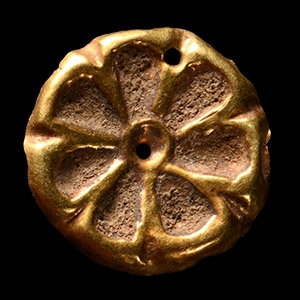
Greek Gold Floral Mount
Circa 4th-2nd century B.C.Sold for (Inc. bp): £104
The repoussé flower with seven petals and pierced through the pistil and once between the petals. 0.36 grams, 14 mm wide
Property of a UK gentleman, acquired 20 November 1981. Property of an East Sussex, UK, gentleman.
