
Loading, please wait...
LOT 0508
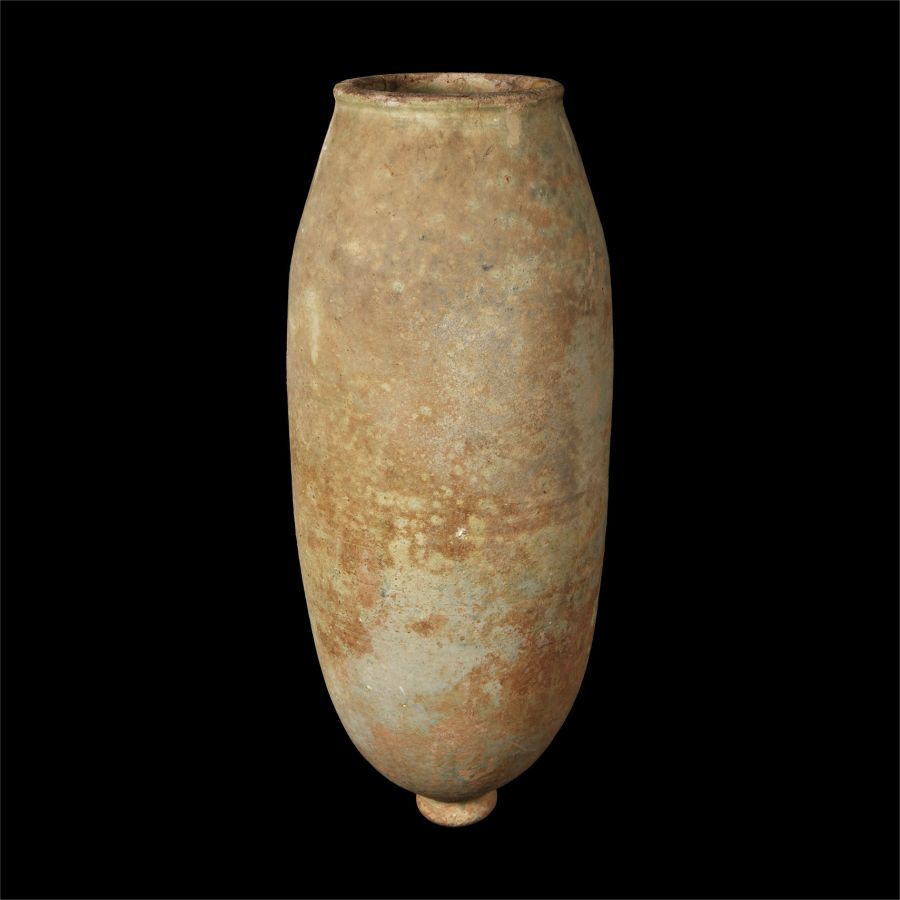
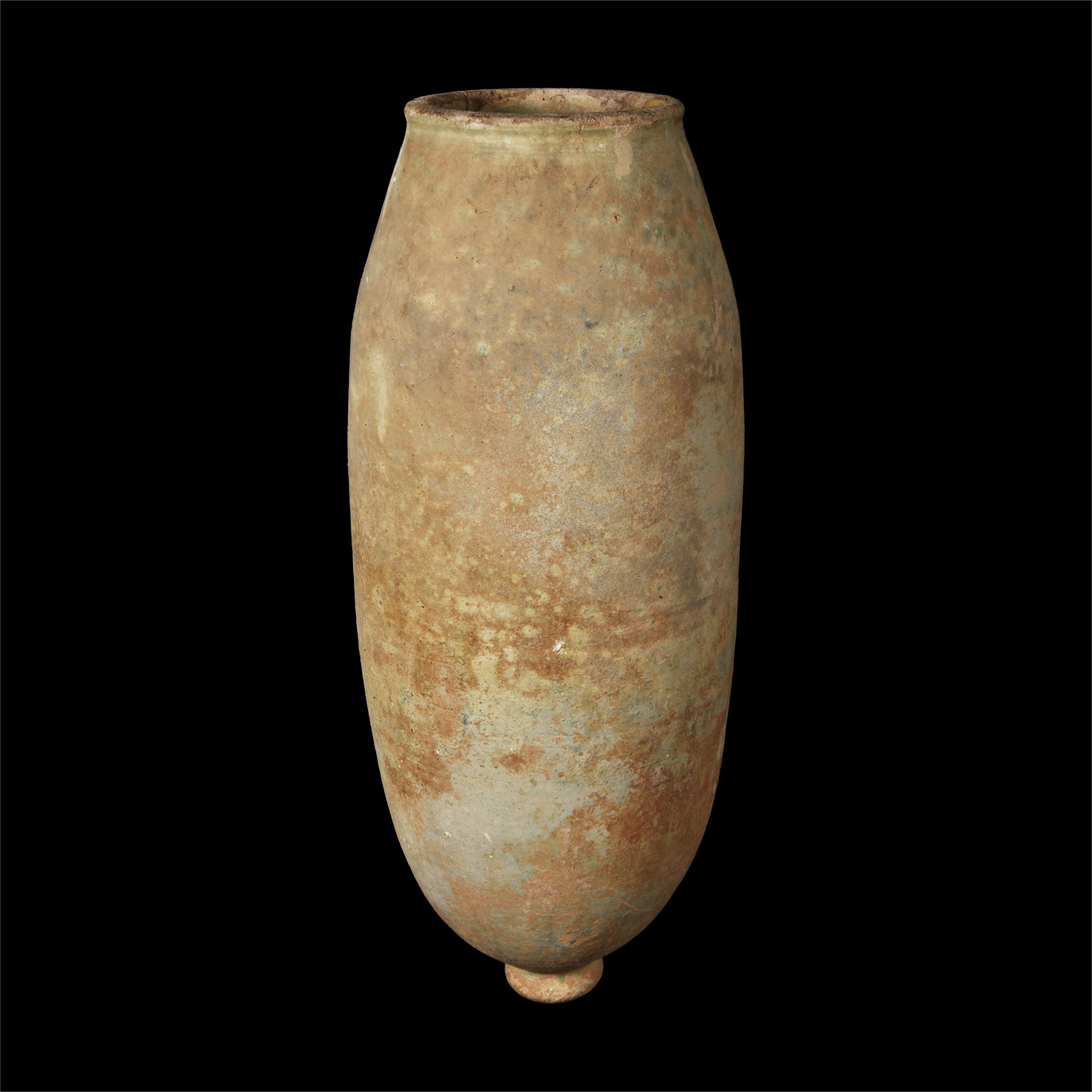
Parthian Blue Glazed Amphora-Type Vessel
2ND CENTURY B.C.-1ST CENTURY A.D. OR LATER
16 3/4 in. (4.1 kg, 42.5 cm).
The buff, capsule-shaped body with a tapering shoulder and pronounced rim, knop-shaped foot and remains of glaze to the mouth.
ProvenanceLondon, UK, gallery, 1971-early 2000s.
CONDITIONTimeLine Auctions follows a vetting process to ensure the authenticity and legality of all items, reinforcing our commitment to integrity and responsible trading. Each antiquity, antique, and coin lot undergoes thorough examination by a vetting committee of at least ten external specialists, professional trade association members, scientists, and archaeologists: Our Vetting Process
AUCTIONS:
TimeLine is a leading auction house specialising in antiquities, ancient art, collectables, natural history, coins, medals, and books. Our auctions offer museums, collectors, historians, and enthusiasts the opportunity to acquire unique and historically significant pieces.
LOT 0508
Parthian Blue Glazed Amphora-Type Vessel
Estimate £500 - 700€580 - 810 (for guidance only)$680 - 950 (for guidance only)
-
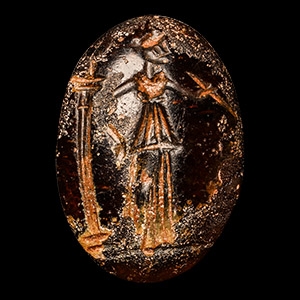
Hellenistic Glass Gem with Goddess
3rd-2nd century B.C.Estimate: £600 - 800 (+bp*)
Opening Bid: £333
Engraved with a goddess (Aphrodite?), facing right, peplos around her hips, her left elbow resting on a column and her left hand behind her body; the right hand outstretched and holding a sceptre; a snake(?) before. 2.52 grams, 22 mm
Acquired in the late 1980s-early 1990s. Important North West London collection.
In the famous Greek myth of the Gorgon, Aphrodite, jealous of their beauty, placed a curse on Medusa and her sisters, transforming their hair into snakes and making their gaze turn anyone into stone. -
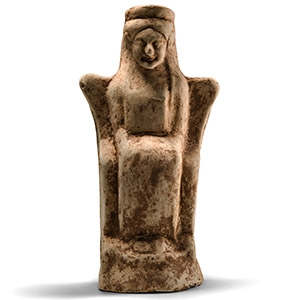
Archaic Greek Terracotta Seated Goddess
5th century B.C.Sold for (Inc. bp): £650
Represented in the typical female attire wearing a long chiton and a polos headgear; seated upon a throne with side horns, hands upon her knees; flat back. 413 grams, 18.5 cm
Acquired in Europe before 1996.
The typical 5th century B.C. terracotta female figurine was a standing or seated woman wearing a chiton and a himation. It usually represented the goddess Demeter, and it was a votive figure offered to the shrines or temples. Attica was one of the principal centres of figurine production, but Corinth continued to produce solid standing or seated females with moulded fronts and flat backs. -
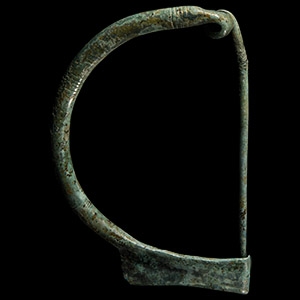
Italic Bronze Bow Brooch
8th-7th century B.C.Sold for (Inc. bp): £117
With a simple curved arch decorated with engraved banding; integral pin and large catchplate. 32 grams, 88 mm
From the family collection of a Surrey gentleman since before 1960.
Chronological and geographical variations of the Italic fibulae are dependent on the decoration of the arch. The use of bronze and iron (and even silver and electrum in the south) is less of a factor within the individual type series than it is for the overall trend of styles. The rare use of iron in the seventh century and increasingly frequent use throughout the sixth century never rivalled the popularity of bronze, which remained more practical and convenient for working with familiar techniques.
