
Loading, please wait...
LOT 1518
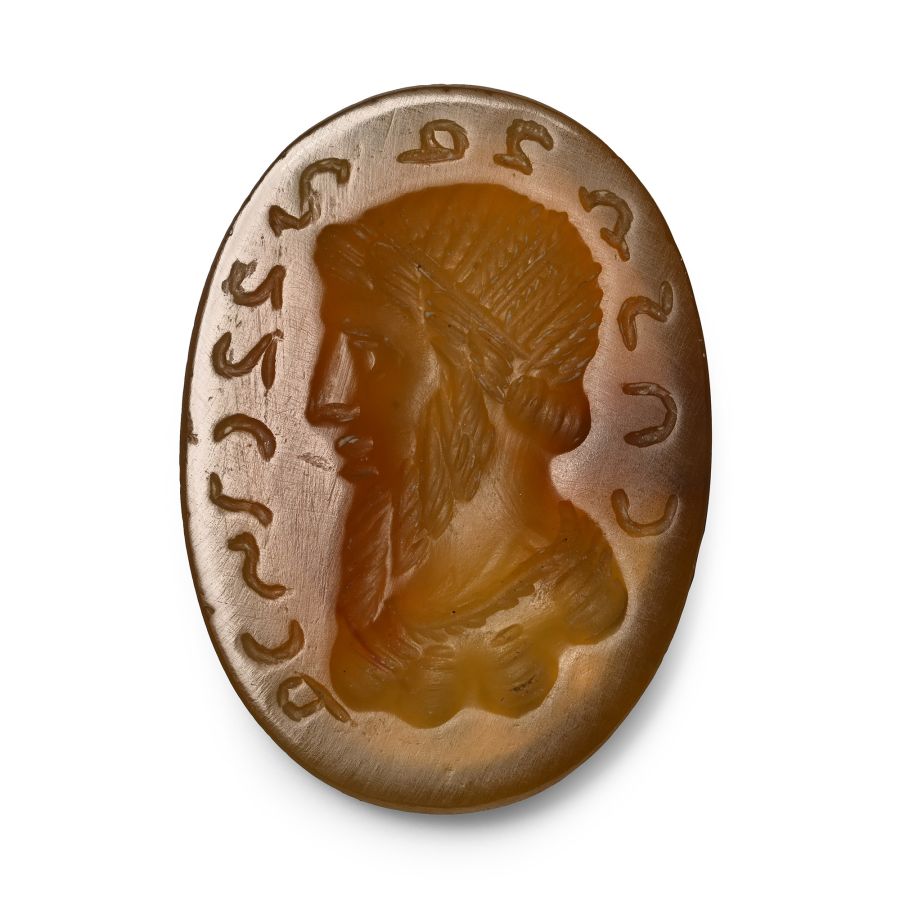
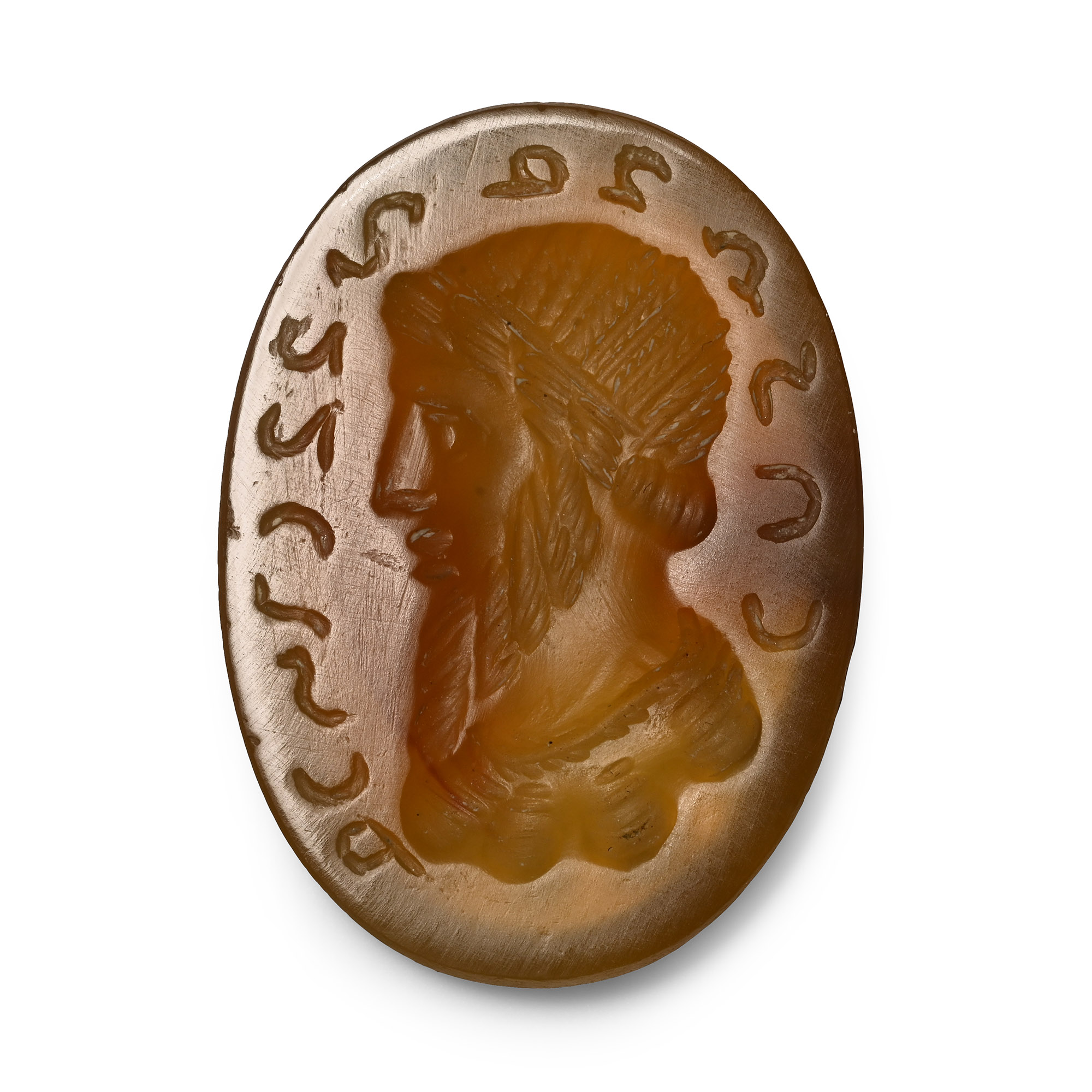
Parthian Agate Gemstone with Bust
CIRCA 1ST CENTURY B.C.
7/8 in. (2.12 grams, 23 mm).
Ellipsoid carnelian cloison with central intaglio profile bearded bust, epigraphic Pahlavi legend to the rim. [No Reserve]
ProvenanceFrom the collection of a London antiquarian, formed since the 1980s.
This lot has been cleared against the Art Loss Register database, and is accompanied by an illustrated lot declaration signed by the Head of the Antiquities Department, Dr Raffaele D'Amato.
Cf. Gyselen, R., Catalogue des sceaux, camées et bulles sassanides I, no.10, for a later seal of similar type.
CONDITIONTimeLine Auctions follows a vetting process to ensure the authenticity and legality of all items, reinforcing our commitment to integrity and responsible trading. Each antiquity, antique, and coin lot undergoes thorough examination by a vetting committee of at least ten external specialists, professional trade association members, scientists, and archaeologists: Our Vetting Process
AUCTIONS:
TimeLine is a leading auction house specialising in antiquities, ancient art, collectables, natural history, coins, medals, and books. Our auctions offer museums, collectors, historians, and enthusiasts the opportunity to acquire unique and historically significant pieces.
-
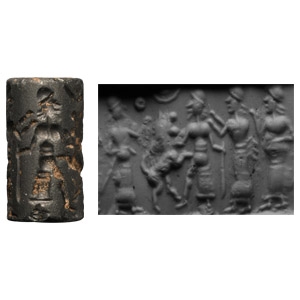
Old Babylonian Haematite Cylinder Seal
Early 2nd millennium B.C.Sold for (Inc. bp): £494
With frieze depicting a line of three standing warriors each wearing a close-fitting headdress and ankle-length robe and carrying a weapon, the first grappling with a rearing lion; fourth warrior advancing behind the lion wit sword at his hip; objects in the field; supplied with a museum-quality impression. 6.5 grams, 18 mm
From the 'S' collection, acquired 1970-1990s. The collection was seen and studied by W.G. Lambert, late Professor of Assyriology at the University of Birmingham, 1970-1993. This lot has been cleared against the Art Loss Register database, and is accompanied by an illustrated lot declaration signed by the Head of the Antiquities Department, Dr Raffaele D'Amato. -
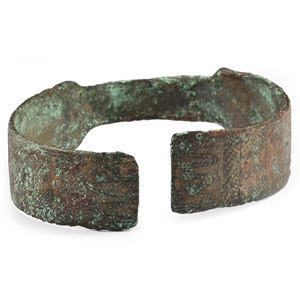
Western Asiatic Bronze Decorated Bracelet
1st millennium B.C.Sold for (Inc. bp): £98
Penannular in form with low-relief hatched panels and other ornament. 47 grams, 72 mm
UK private collection before 2000. Acquired on the UK art market. Property of a London, UK, gentleman. This lot has been cleared against the Art Loss Register database, and is accompanied by an illustrated lot declaration signed by the Head of the Antiquities Department, Dr Raffaele D'Amato. -
.jpg)
Aramaic Lead Magical Text Scroll Fragment
2nd-8th century A.D.Sold for (Inc. bp): £351
The remains of a bifacial magical lead scroll with letters written in a form of Aramaic and Greek, incised on a lead tablet preserved in a sub-rectangular fragment. 8.13 grams, 73 mm
Fine condition.
Acquired 1979-1999. London collection of the late Mr S.M., thence by descent. This lot has been cleared against the Art Loss Register database, and is accompanied by an illustrated lot declaration signed by the Head of the Antiquities Department, Dr Raffaele D'Amato.
